Results by title
41 books match the query 'Buddhist'
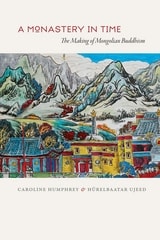
A Monastery in Time
The Making of Mongolian BuddhismCaroline Humphrey and Hurelbaatar Ujeed
University of Chicago Press, 2013

A Poisonous Cocktail?
Aum Shinrikyo's Path to ViolenceIan Reader
National University of Singapore Press, 1996
This highly acclaimed study describes Aum Shinrikyo’s history, examines the various conflicts it was involved in, and discusses the contents of Asahara’s sermons and prophecies. Reader suggests that the Aum case is not unique but similar to other cases of religious violence.
The March 1995 gas attack on the Tokyo subway system killed 12 people and injured thousands. Massive police raids and the subsequent investigation linked this attack (plus a variety of other criminal activities including murders) to Aum Shinrikyo, a small religious movement whose leader, Asahara Shoko, had prophesied that Armageddon was at hand.
Many questions have been raised by the Aum affair. What were Aum's spiritual roots and the focus of Asahara's teaching? Why did a religious movement ostensibly focused on yoga, meditation, asceticism and the pursuit of enlightenment become involved in violent activities? What factors brought Aum into conflict with society at large, caused it to believe it was the victim of a huge conspiracy to destroy it, and impelled it to experiment with making nerve gasses, build weapons and form its own 'alternative government'?
Ian Reader examines these questions by describing Aum's history, examining the various conflicts it was involved in, and discussing the contents of Asahara's sermons and prophesies. In so doing, he points to a combination of factors which together took Aum down a path of violence. Suggesting that the Aum case is not unique, he shows how it displays similarities with other cases of violence and conflict among religious and political movements in Japan and elsewhere.
Avatar Bodies
A Tantra For PosthumanismAnn Weinstone
University of Minnesota Press, 2004
An ethically-based approach to human relations for the media age
Otherness, alterity, the alien—over the course of the past fifty years many of us have based our hopes for more ethical relationships on concepts of difference. Combining philosophy, literary criticism, fiction, autobiography, and real and imagined correspondence, Ann Weinstone proposes that only when we stop ordering the other to be other—whether technological, animal, or simply inanimate—will we truly become posthuman.
Posthumanism has thus far focused nearly exclusively on human–technology relations. Avatar Bodies develops a posthumanist vocabulary for human-to-human relationships that turns our capacities for devotion, personality, and pleasure. Drawing on both the philosophies and practices of Indian Tantra, Weinstone argues for the impossibility of absolute otherness; we are all avatar bodies, consisting of undecidably shared gestures, skills, memories, sensations, beliefs, and affects.
Weinstone calls her book a “tantra”—by which she means a set of instructions for practices aimed at sensitizing the reader to the inherent permeability of self to other, self to world. This tantra for posthumanism elaborates devotional gestures that will expose us to more unfettered contacts and the transformative touch.
Breaking the Circle
Death and the Afterlife in BuddhismCarl B. Becker
Southern Illinois University Press, 1993
In this much-needed examination of Buddhist views of death and the afterlife, Carl B. Becker bridges the gap between books on death in the West and books on Buddhism in the East.
Other Western writers have addressed the mysteries surrounding death and the afterlife, but few have approached the topic from a Buddhist perspective. Here, Becker resolves questions that have troubled scholars since the beginning of Buddhism: How can Buddhism reconcile its belief in karma and rebirth with its denial of a permanent soul? What is reborn? And when, exactly, is the moment of death?
By systematically tracing Buddhism’s migration from India through China, Japan, and Tibet, Becker demonstrates how culture and environment affect Buddhist religious tradition.
In addition to discussing historical Buddhism, Becker shows how Buddhism resolves controversial current issues as well. In the face of modern medicine’s trend toward depersonalization, traditional Buddhist practices imbue the dying process with respect and dignity. At the same time, Buddhist tradition offers documented precedents for decision making in cases of suicide and euthanasia.
Buddhism Betrayed?
Religion, Politics, and Violence in Sri LankaStanley Jeyaraja Tambiah
University of Chicago Press, 1992
Burma’s Mass Lay Meditation Movement
Buddhism and the Cultural Construction of PowerIngrid Jordt
Ohio University Press, 2007
Burma's Mass Lay Meditation Movement: Buddhism and the Cultural Construction of Power describes a transformation in Buddhist practice in contemporary Burma. This revitalization movement has had real consequences for how the oppressive military junta, in power since the early 1960s, governs the country.
Drawing on more than ten years of extensive fieldwork in Burma, Ingrid Jordt explains how vipassanā meditation has brought about a change of worldview for millions of individuals, enabling them to think and act independently of the totalitarian regime. She addresses human rights as well as the relationship between politics and religion in a country in which neither the government nor the people clearly separates the two. Jordt explains how the movement has been successful in its challenge to the Burmese military dictatorship where democratically inspired resistance movements have failed.
Jordt's unsurpassed access to the centers of political and religious power in Burma becomes the reader's opportunity to witness the political workings of one of the world's most secretive and tyrannically ruled countries. Burma's Mass Lay Meditation Movement is a valuable contribution to Buddhist studies as well as anthropology, religious studies, and political science.
Charismatic Monks of Lanna Buddhism
Edited by Paul T. Cohen
National University of Singapore Press, 2017
Charming Cadavers
Horrific Figurations of the Feminine in Indian Buddhist Hagiographic LiteratureLiz Wilson
University of Chicago Press, 1996
Liz Wilson investigates first-millennium Buddhist notions of
spirituality. She argues that despite the marginal role women played in
monastic life, they occupied a very conspicuous place in Buddhist
hagiographic literature. In narratives used for the edification of
Buddhist monks, women's bodies in decay (diseased, dying, and after
death) served as a central object for meditation, inspiring spiritual
growth through sexual abstention and repulsion in the immediate world.
Taking up a set of universal concerns connected with the representation
of women, Wilson displays the pervasiveness of androcentrism in Buddhist
literature and practice. She also makes persuasive use of recent
historical work on the religious lives of women in medieval
Christianity, finding common ground in the role of miraculous
afflictions.
This lively and readable study brings provocative new tools and insights
to the study of women in religious life.
Critical Terms for the Study of Buddhism
Edited by Donald S. Lopez Jr.
University of Chicago Press, 2005
This volume provides a unique introduction to Buddhism by examining categories essential for a nuanced understanding of its traditions. Each of the fifteen essays here shows students how a fundamental term—from art to word—illuminates the practice of Buddhism, both in traditional Buddhist societies and in the realms of modernity. Apart from Buddha, the list of terms in this collection deliberately includes none that are intrinsic to the religion. Instead, the contributors explore terms that are important for many fields and that invite interdisciplinary reflection. Through incisive discussions of topics ranging from practice, power, and pedagogy to ritual, history, sex, and death, the authors offer new directions for the understanding of Buddhism, taking constructive and sometimes polemical positions in an effort both to demonstrate the shortcomings of assumptions about the religion and the potential power of revisionary approaches.
Following the tradition of Critical Terms for Religious Studies, this volume is not only an invaluable resource for the classroom but one that belongs on the short list of essential books for anyone seriously interested in Buddhism and Asian religions.
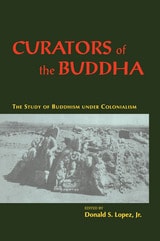
Curators of the Buddha
The Study of Buddhism under ColonialismEdited by Donald S. Lopez Jr.
University of Chicago Press, 1995
After an overview of the origins of Buddhist studies in the early nineteenth century, the essays focus on important "curators of the Buddha," such as Aurel Stein, D. T. Suzuki, and Carl Jung, who, as they created and maintained the discipline, played a significant role in disseminating knowledge about Buddhism in the West. The essays bring to life many of the important but unexamined social, political, and cultural conditions that have shaped the course of Buddhist studies for more than a century—and have frequently distorted the understanding of a complex set of traditions. Contributors Charles Hallisey, Gustavo Benavides, Stanley Abe, Luis Gómez, Robert Sharf, and Donald Lopez challenge some of the most enduring ideas in Buddhist studies: that Zen Buddhism is, above all, an experience; that Tibetan Buddhism is polluted, or pristine; that the Buddha image is of Greek or Roman origin; that the classical text supersedes the vernacular, as the manuscript supersedes the informant; and many others.
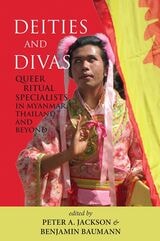
Deities and Divas
Queer Ritual Specialists in Myanmar, Thailand and BeyondEdited by Peter A. Jackson and Benjamin Baumann
National University of Singapore Press, 2022
Hare Krishna
(Studies in Contemporary Religion)Federico Squarcini
Signature Books, 2004
When Bhaktivedanta arrived in America, it was a bold step because historically a guru who ventured outside of India was stripped of his Brahman status. However, the effort bore fruit—not the least of which was the type of intercultural understanding promoted by the current authors through their study of ISKCON’s place within the religion and culture of India.
Heartwood
The First Generation of Theravada Buddhism in AmericaWendy Cadge
University of Chicago Press, 2004
Wendy Cadge first provides a historical overview of Theravada Buddhism and considers its specific origins here in the United States. She then brings her findings to bear on issues of personal identity, immigration, cultural assimilation, and the nature of religion in everyday life. Her work is the first systematic comparison of the ways in which immigrant and convert Buddhists understand, practice, and adapt the Buddhist tradition in America. The men and women whom Cadge meets and observes speak directly to us in this work, both in their personal testimonials and as they meditate, pray, and practice Buddhism.
Creative and insightful, Heartwood will be of enormous value to sociologists of religion and anyone wishing to understand the rise of Buddhism in the Western world.
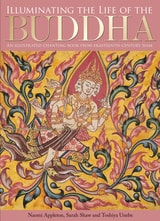
Illuminating the Life of the Buddha
An Illustrated Chanting Book from Eighteenth-Century SiamNaomi Appleton, Sarah Shaw, and Toshiya Unebe
Bodleian Library Publishing, 2013
Affording readers immense insight into a spectacular eighteenth-century manuscript, and Thai Buddhist manuscripts and temple culture as a whole, this book will be of great interest to art historians and scholars of Buddhism and Southeast Asia.
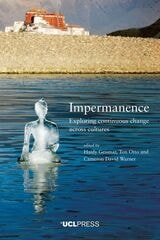
Impermanence
Exploring Continuous Change across CulturesEdited by Haidy Geismar, Ton Otto, and Cameron David Warner
University College London, 2022
Nothing lasts forever. This common experience can be the source of much anxiety, but also of hope. The concept of impermanence or continuous change opens up a range of timely questions and discussions that speak to globally shared experiences of transformation and concerns for the future. Impermanence engages with an emergent body of social theory that emphasizes flux and transformation and brings it into a dialogue with other traditions of thought and practice, such as Buddhism, that have sustained a long-lasting and sophisticated meditation on impermanence.
In cases drawn from all over the world, this volume investigates the significance of impermanence in such diverse contexts as social death, atheism, alcoholism, migration, ritual, fashion, oncology, museums, cultural heritage, and art. The authors draw on a wide range of disciplines, including anthropology, archaeology, art history, Buddhist studies, cultural geography, and museology. This volume also includes numerous photographs, artworks, and poems that evocatively communicate notions and experiences of impermanence.
Making a Canon
Ananda K. Coomaraswamy, Sri Lanka, and the Place of Buddhist ArtJanice Leoshko
University of Chicago Press, 2024
An early interpreter of Buddhist art to the West, Ananda Kentish Coomaraswamy laid the foundation of what would become the South Asian visual canon, particularly through his efforts to understand how Buddhist art emerged and developed. In Making a Canon, Janice Leoshko examines how Coomaraswamy’s experience as the director of a mineralogical survey in Sri Lanka shaped his understanding of South Asian art and religion. Along the way, she reveals how Coomaraswamy’s distinctive repetition of Sri Lankan visual images in his work influenced the direction of South Asia’s canon formation and left a lasting impression on our understanding of Buddhist art.
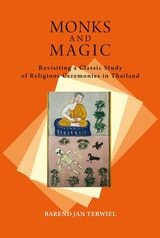
Monks and Magic
Revisiting a Classic Study of Religious Ceremonies in ThailandBarend Jan Terwiel
National University of Singapore Press, 2012

Notebooks, 1914-1916
Ludwig Wittgenstein
University of Chicago Press, 1984
"When the first edition of this collection of remarks appeared in 1961 we were provided with a glimpse of the workings of Wittgenstein's mind during the period when the seminal ideas of the Tractatus Logico-Philosophicus were being worked out. This second edition provided the occasion to be struck anew by the breadth, rigor, and above all the restlessness of that mind."—T. Michael McNulty, S. J., The Modern Schoolman
Nothing
Three Inquiries in BuddhismMarcus Boon, Eric Cazdyn, and Timothy Morton
University of Chicago Press, 2015
Ocean, as Much as Rain
Stories, Lyrical Prose, and Poems from TibetTsering Woeser. Edited and Translated by Fiona Sze-Lorrain with Dechen Pemba.
Duke University Press, 2026
Once the Buddha Was a Monkey
Arya Sura's "Jatakamala"Arya Sùra
University of Chicago Press, 1989
Written most probably in the fourth century A.D., the Jatakamala is generally considered the masterpiece of Buddhist literature in Sanskrit. In elegant, courtly style, Arya Sura retells thirty-four traditional stories about the Buddha in his previous incarnations, human and animal. Whether as a king, a brahmin, a monkey, or a hare, the Great One is shown in assiduous pursuit of virtue and compassion. Though primarily intended as exemplary tales illustrating the Buddhist virtues, these stories also provide a vivid picture of life at a high point in ancient Indian culture—city life in ordinary households or at the royal court, and country life against a backdrop of mountain, desert, and jungle.
Fresh study of the Sanskrit manuscripts, now scattered in libraries all over the world, has enabled Peter Khoroche to make this new translation faithful to the original in both style and content. His explanatory notes will assist student and general reader alike in appreciating this classic from an ancient and exotic civilization.
“One would be a fool not to welcome the chance to read this book.”—Richard Gombrich, Journal of the Royal Asiatic Society
Original Buddhist Sources
A ReaderOlson, Carl
Rutgers University Press, 2005
Bringing together essential materials on the origins and development of Buddhist traditions from India, Sri Lanka, Tibet, China, and Japan, this anthology provides the broadest selection of primary source Buddhist literature available to date.
The volume is divided into two major parts: Theravada and Mahayana forms of Buddhism. The first section presents selections that explore major themes in Buddhist thought such as causality, Four Noble Truths, the doctrine of non-self, nibbana, meditation, and ethics, as well as literature about monastic life and regulations, women, and hagiography.
The second part includes selections from so-called wisdom literature and texts that represent the three major schools of Mahayana Buddhism: Pure Land, Madhyamika, and Yogacara. Selections also include sources from some of the major Chinese Buddhist schools such as Hua-yen, T'ien T'ai, Pure Land, and Ch'an. Readings by thinkers such as Tantric Buddhist reformer Tsong Khapa, Pure Land leaders Honen, Shinran, and Nichiren, as well as Zen Buddhists Dogen and Hakuin provide a perspective on regional and national traditions.
In addition to the general introduction, each major section is introduced by an essay that places the selections within the context of Buddhist history. This comprehensive reader stands on its own as an indispensable anthology of original textual sources for courses in Buddhism, while also serving as a companion volume to the text The Different Paths of Buddhism: A Narrative-Historical Introduction.
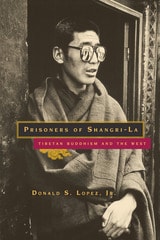
Prisoners of Shangri-La
Tibetan Buddhism and the WestDonald S. Lopez Jr.
University of Chicago Press, 1998
"Lopez lifts the veil on America's romantic vision of Tibet to reveal a country and a spiritual history more complex and less ideal than popular perceptions allow. . . . Lively and engaging, Lopez's book raises important questions about how Eastern religions are often co-opted, assimilated and misunderstood by Western culture."—Publishers Weekly
"Proceeding with care and precision, Lopez reveals the extent to which scholars have behaved like intellectual colonialists. . . . Someone had to burst the bubble of pop Tibetology, and few could have done it as resoundingly as Lopez."—Booklist
"Fascinating. . . [A] provocative exploration. Lopez conveys the full dizziness of the Western encounter with Tibet and Tibetan Buddhism."—Fred Pheil, Tricycle: The Buddhist Review
"A timely and courageous exploration. . . . [Lopez's] book will sharpen the terms of the debate over what the Tibetans and their observers can or should be doing about the place and the idea of Tibet. And that alone is what will give us all back our Shambhala."—Jonathan Spence, Lingua Franca Book Review
"Lopez's most important theme is that we should be wary of the idea . . . that Tibet has what the West lacks, that if we were only to look there we would find the answers to our problems. Lopez's book shows that, on the contrary, when the West has looked at Tibet, all that it has seen is a distorted reflection of itself."—Ben Jackson, Times Higher Education Supplement
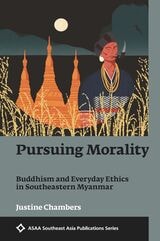
Pursuing Morality
Buddhism and Everyday Ethics in Southeastern MyanmarJustine Chambers
National University of Singapore Press, 2024
Pursuing Morality is an in-depth and fascinating study of ordinary life in Myanmar’s southeast through a unique ethnographic focus on Buddhist Plong (Pwo) Karen. Based on extensive in-depth fieldwork in the small city of Hpa-an, the capital of Karen State, Justine Chambers shines a new light on Plong Buddhists’ lives and the many ways they broker, traverse, enact, cultivate, defend, and pursue moral lives.
This is the first ethnographic study of Myanmar to add to a growing body of anthropological scholarship that is referred to as the “moral turn.” Each chapter examines the lives of Plong Buddhists from different vantage points, calling into question many assumptions about Southeast Asian values and the nature of Buddhist Theravada practice. Critiquing the notion that moral coherence is necessary for ethical selfhood, Chambers demonstrates how the pursuit of morality is varied, performative, and embedded in an affective notion of the self as a moral agent in a relationship with wider structural political forces. This vivid account of everyday life in Myanmar complements existing scholarship on the region and offers a deeper understanding of Buddhism, moral anthropology, and ethics in Southeast Asia.
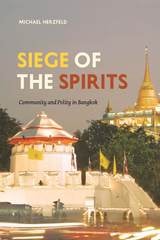
Siege of the Spirits
Community and Polity in BangkokMichael Herzfeld
University of Chicago Press, 2016
Herzfeld argues that even though the residents of Pom Mahakan have lost every legal battle the city government has dragged them into, they have won every public relations contest, highlighting their struggle as one against bureaucrats who do not respect the age-old values of Thai/Siamese social and cultural order. Such values include compassion for the poor and an understanding of urban space as deeply embedded in social and ritual relations. In a gripping account of their standoff, Herzfeld—who simultaneously argues for the importance of activism in scholarship—traces the agile political tactics and styles of the community’s leadership, using their struggle to illuminate the larger difficulties, tensions, and unresolved debates that continue to roil Thai society to this day.
Soka Gakkai
Studies in Contemporary ReligionKarel Dobbelaere
Signature Books, 2001
Professor Dobbelaere points to several reasons for its growth. Soka Gakkai emphasizes inner peace rather than rules of behavior or hierarchical allegiance. Sociologists describe it as “trans-modern,” meaning that it blends ancient and contemporary sensitivities such as Buddhist mysticism, science, art and music, a concern for the environment, and social activism.
Initially there was a reliance on aggressive proselyting, later replaced with a more moderate encouragement to share with friends. The movement now engages other faiths in cultural and intellectual exchanges and in pursuit of common ethical objectives. This adaptability and sincere concern for its membership and for society as a whole bode well for its future success.
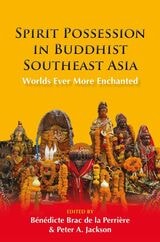
Spirit Possession in Buddhist Southeast Asia
Worlds Ever More EnchantedEdited by Bénédicte Brac de la Perrière and Peter A. Jackson
National University of Singapore Press, 2022
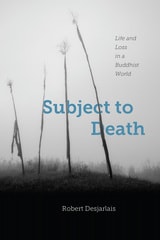
Subject to Death
Life and Loss in a Buddhist WorldRobert Desjarlais
University of Chicago Press, 2016

The Beautiful Agonies
Adrie Kusserow
Duke University Press, 2027
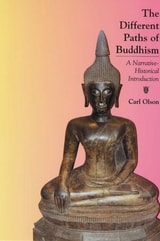
The Different Paths of Buddhism
A Narrative-Historical IntroductionCarl Olson
Rutgers University Press, 2005
For centuries, Buddhist teachers and laypeople have used stories, symbols, cultural metaphors, and anecdotes to teach and express their religious views. In this introductory textbook, Carl Olson draws on these narrative traditions to detail the development of Buddhism from the life of the historical Buddha to the present. By organizing the text according to the structure of Buddhist thought and teaching, Olson avoids imposing a Western perspective that traditional texts commonly bring to the subject.
The book offers a comprehensive introduction to the main branches of the Buddhist tradition in both the Mahayana and Theravada schools, including the Madhyamika school, the Yogacara school, Pure Land devotionalism, Tibetan Tantric Buddhism, Zen Buddhism, and village folk Buddhist traditions. Chapters explore the life and teachings of the Buddha in historical context, the early development and institutionalization of Buddhism, its geographic spread across Asia and eventually to the United States, philosophy and ethics, the relationship between monks and laity, political and ethical implications, the role of women in the Buddhist tradition, and contemporary reinterpretations of Buddhism.
Drawn from decades of classroom experience, this creative and ambitious textcombines expert scholarship and engaging stories that offer a much-needed perspective to the existing literature on the topic.

The Fate of Rural Hell
Asceticism and Desire in Buddhist Thailand, New EditionBenedict Anderson
Seagull Books, 2016
A new edition of Benedict Anderson's masterpiece of political and social interpretation, which asks what a rural Thai “hell temple” reveals about Buddhism and modern life.
In 1975, political scientist Benedict Anderson encountered Wat Phai Rong Wua, a vast temple complex conceived by the monk Luang Phor Khom. Built as a cautionary museum, it uses striking tableaux, hell scenes, didactic statues, and eclectic displays, to imagine karmic consequence and to draw steady flows of Thai visitors.
Returning to the temple over several decades, Anderson treats the site as a travelogue, an ethnographic puzzle, and a social commentary. He asks what kinds of piety, hierarchy, and desire are staged there, and what local community sustains it. The temple also becomes his lens on how capitalism and rural change reshape religious practice in Thailand.

The Feast of the Sorcerer
Practices of Consciousness and PowerBruce Kapferer
University of Chicago Press, 1997
Kapferer focuses on sorcery among Sinhalese Buddhists in Sri Lanka to explore how the art of sorcery is in fact deeply connected to social practices and lived experiences such as birth, death, sickness, and war. He describes in great detail the central ritual of exorcism, a study which opens up new avenues of thought that challenge anthropological approaches to such topics as the psychological forces of emotion and the dynamics of power. Overcoming both "orientalist" bias and postmodern permissiveness, Kapferer compellingly reframes sorcery as a pragmatic, conscious practice which, through its dynamic of destruction and creation, makes it possible for humans to reconstruct repeatedly their relation to the world.
The Healing Body
Creative Responses to Illness, Aging, and AfflictionDrew Leder
Northwestern University Press, 2024
As we grapple with the impacts of an aging population, the millions who struggle with chronic pain and illness, and the unknown number of COVID survivors dealing with long-term impairment, our individual and collective trust in our bodies is shaken. How to adapt? And how to live well, even when medical cure is unavailable? In The Healing Body: Creative Responses to Illness, Aging, and Affliction, philosopher and medical doctor Drew Leder shows how the phenomenology of lived embodiment makes available a variety of existential healing responses to bodily breakdown. Leder also turns to socially marginalized groups—people who have been incarcerated and those deemed “elderly”—to explore how individuals creatively cope with societal as well as physical challenges.
This book forwards current phenomenological research on the body, pain and suffering, disability, and aging. It deeply engages with the legacies of continental philosophy while also drawing insights from the traditions of Hinduism, Buddhism, and Taoism. The Healing Body is a uniquely creative and refreshingly innovative contribution to contemporary philosophy, demonstrating the importance of the philosophical method to the wider culture.
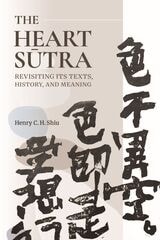
The Heart Sutra
Revisiting Its Texts, History, and MeaningHenry C.H. Shiu
Hong Kong University Press, 2025
A nuanced reconsideration of the Heart Sutra, one of the most celebrated and widely chanted texts in Mahayana Buddhism.
In The Heart Sutra: Revisiting Its Texts, History, and Meaning, Henry C. H. Shiu investigates the historical origins of the Heart Sutra, a significant Buddhist scripture. He compares the Sanskrit texts with their Chinese and Tibetan translations to analyse whether the Heart Sutra might be a Chinese apocryphon, through detailed linguistic examination. To achieve this goal, Shiu thoroughly examines the primary sources from which the scripture was extracted. He emphasises the necessity of reading the Heart Sutra in the larger context of the Perfection of Wisdom literature, which contains the essence of Mahayana Buddhist teaching. In this monograph, Shiu successfully transcends the boundaries between the Chinese, Indian, and Tibetan Buddhist traditions and provides a revisionist interpretation of the Heart Sutra.
The Heart of Buddhist Philosophy
Nolan Pliny Jacobson
Southern Illinois University Press, 1988
In arriving at the heart of Buddhist philosophy, Nolan Pliny Jacobson attempts to eliminate some of the confusion in the West (and perhaps in the East as well) concerning the Buddhist view of what is concrete and ultimately real in the world.
Jacobson presents Nāgārjuna, the Plato of the Buddhist tradition, as the major exemplar of the Buddhist expression of life. In his comparison of Buddhism and Western theology, Jacobson demonstrates that some efforts in Western religious thought approach the Buddhist empirical stance.
The Holy Land Reborn
Pilgrimage and the Tibetan Reinvention of Buddhist IndiaToni Huber
University of Chicago Press, 2008
Focusing on the Tibetan creation and recreation of India as a destination, a landscape, and a kind of other, in both real and idealized terms, Huber explores how Tibetans have used the idea of India as a religious territory and a sacred geography in the development of their own religion and society. In a timely closing chapter, Huber also takes up the meaning of India for the Tibetans who live in exile in their Buddhist holy land.
A major contribution to the study of Buddhism, The Holy Land Reborn describes changes in Tibetan constructs of India over the centuries, ultimately challenging largely static views of the sacred geography of Buddhism in India.

The Moon in the Water
Reflections on an Aging ParentKathy J. Phillips
Vanderbilt University Press, 2008
In a series of moving vignettes, the author begins by describing a particular representation of Water-Moon Kuan Yin, a Buddhist teacher and goddess associated with compassion, who often sits on a precarious overhang or floats on a flimsy petal. Then Kuan Yin steps out of the frame to join the author in the mundane challenges of caring for her father-transferring his health insurance, struggling with a wheelchair van, managing adult diapers, or playing in the fictions of dementia. From perplexed to poignant to funny, the vignettes record the working-class English of a fading but still wise dad, and they find other human versions of Kuan Yin in a doctor who will still make house calls or kind strangers in the street.
The book includes ten illustrations: both classical representations of Kuan Yin and also the author's own drawings, which adapt Kuan Yin in an act of practical spirituality, reading art through life and life through art. Each vignette invites the harried caregiver to take a deep breath and meditate on the trials and joys of caring for an aging parent.
The Work of Kings
H. L. Seneviratne
University of Chicago Press, 2000
Beginning with Anagarika Dharmapala's "rationalization" of Buddhism in the early twentieth century, which called for monks to take on a more activist role in the community, Seneviratne shows how the monks have gradually revised their role to include involvement in political and economic spheres. The altruistic, morally pure monks of Dharamapala's dreams have become, Seneviratne trenchantly argues, self-centered and arrogant, concealing self-aggrandizement behind a façade of "social service."
A compelling call for reform and a forceful analysis, The Work of Kings is essential to anthropologists, historians of religion, and those interested in colonialism, nationalism, and postcolonial politics.
Understanding Buddhism
Nolan Pliny Jacobson
Southern Illinois University Press, 1986
Jacobson presents Buddhism unencumbered by Western categories and concepts, free from the cognitive bias, from the concept-oriented, definition-minded preoccupations inherited from the ancient Greeks. It is an interpretation of the central ideas that have characterized all forms of Buddhism for 25 centuries.
Watsuji on Nature
Japanese Philosophy in the Wake of HeideggerDavid W. Johnson
Northwestern University Press, 2019
In an engagingly lucid and deft analysis, Watsuji on Nature radically expands our appreciation of twentieth-century Japanese philosophy and shows what it has to offer to a global philosophical conversation.
Wayward Distractions
Ornament, Emotion, Zombies and the Study of Buddhism in ThailandJustin Thomas McDaniel
National University of Singapore Press, 2021
In Thailand, Buddhism is deeply integrated into national institutions and ideologies, making it tempting to think of Buddhism in Thailand as a textual, institutional, cultural, and conceptual whole. At the same time, religious expression in the country reflects anything but a single order. Often gaudy, cacophonous, variegated, and jumbled, diversity and apparent contradiction abound. A more open engagement with Buddhism in Thailand requires a willingness to be distracted, to step away from received hierarchies and follow the intriguing detail in the ornate design, the odd textual reference, and to prefer "thin description" over a search for meaning. Justin McDaniel's well-known book-length writings in Buddhist and Theravada studies cannot be fully understood without taking into account his shorter writings, what he calls his wayward distractions. Collected together for the first time, these essays cover subjects ranging from ornamental art to marriage and emotion, the role of Hinduism, neglected gender and ethnic diversity, Buddhist inflections in contemporary art practice, and the boundaries between the living, dead, and undead. These writings will be of importance to students of Theravada and Thailand, of religion in Southeast Asia and more generally, of the materialist turn in studies of religion.