Results by title
6 books match the query 'Business writing'
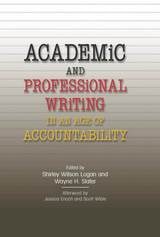
Academic and Professional Writing in an Age of Accountability
Edited by Shirley Wilson Logan and Wayne H. Slater, with an Afterword by Jessica Enoch and Scott Wible
Southern Illinois University Press, 2018
The first two essays in the book provide a history of the academic and professional writing program at the University of Maryland. Subsequent essays explore successes and challenges in the establishment and development of writing programs at four other major institutions, identify the features of language that facilitate academic and professional communication, look at the ways digital practices in academic and professional writing have shaped how writers compose and respond to texts, and examine the role of assessment in curriculum and pedagogy. An afterword by distinguished rhetoric and composition scholars Jessica Enoch and Scott Wible offers perspectives on the future of academic and professional writing.
This collection takes stock of the historical, rhetorical, linguistic, digital, and evaluative aspects of the teaching of writing in higher education. Among the critical issues addressed are how university writing programs were first established and what early challenges they faced, where writing programs were housed and who administered them, how the language backgrounds of composition students inform the way writing is taught, the ways in which current writing technologies create new digital environments, and how student learning and programmatic outcomes should be assessed.
Rewriting Work
Lora Anderson
University Press of Colorado, 2024
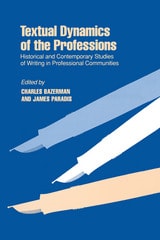
Textual Dynamics
Historical & Contemporary Studies OfCharles Bazerman
University of Wisconsin Press, 1991
Invaluable to the new pedagogical field of “writing across the curriculum,” Textual Dynamics of the Professions is also a significant intervention into the studies of rhetoric, writing theory, and the sociology of knowledge.
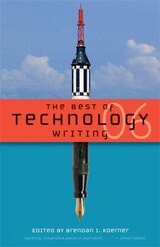
The Best of Technology Writing 2006
Brendan I. Koerner, Editor
University of Michigan Press, 2006
—James Fallows, National Correspondent for Atlantic Monthly
“The human experience is being shaped by our symbiotic relationship to technology. What makes this collection wonderful is that it’s not about the technology, per se, but it’s about this changing human experience. I will look forward to it every year.”
—Po Bronson, author of What Should I Do With My Life?
The Best of Technology Writing 2006 brings together some of the most important, timely, and just plain readable writing in the fast-paced, high-stakes field of technology. The first annual collection to target this vibrant and versatile area, The Best of Technology Writing 2006 features innovative work from an unusually diverse array of writers: best-selling authors, noted academics, and indie journalists and bloggers. The culmination of an open, on-line nominating process, this collection covers topics ranging from jetpacks, to the ethics of genetically cloned pets, to the meaning of life in the information age. By turns epic and intimate, serious and playful, The Best of Technology Writing 2006 captures the vitality, importance, and complexity of technology today. Koerner
Featuring contributions from:
digitalculturebooks is an imprint of the University of Michigan Press and the Scholarly Publishing Office of the University of Michigan Library dedicated to publishing innovative and accessible work exploring new media and their impact on society, culture, and scholarly communication. Visit the website at www.digitalculture.org.
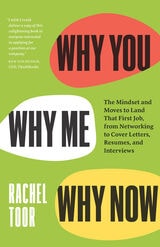
Why You, Why Me, Why Now
The Mindset and Moves to Land That First Job, from Networking to Cover Letters, Resumes, and InterviewsRachel Toor
University of Chicago Press, 2024
Searching for a job can be hard and demoralizing work. In Why You, Why Me, Why Now, Rachel Toor delivers some good news. The most important thing is within your control—a mindset that shows you know the goals of the organization you want to work for and that you’re ready and eager to contribute. Toor provides, with compassion and enthusiasm, strategies to make it easy for hiring managers to say “yes.” Through useful and funny anecdotes, she offers advice from professionals across industries and focuses on the attitude applicants can adopt to find success. Revealing traits employers seek, Toor shows how to craft winning cover letters, ways to tailor resumes for each job, and practical tips to get past AI screening. She also explains how to use LinkedIn and gives tips on preparing for interviews. Throughout, the book features Toor’s notes on writing well to help in landing a first job and beyond. Encouraging, entertaining, and blunt, this is a job-search guide like no other.
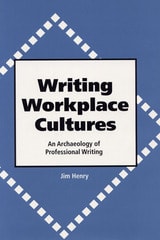
Writing Workplace Cultures
An Archaeology of Professional WritingJim Henry
Southern Illinois University Press, 2000
In Writing Workplace Cultures: An Archaeology of Professional Writing, Jim Henry analyzes eighty-three workplace writing ethnographies composed over seven years in a variety of organizations. He views the findings as so many shards in an archaeology on professional writing at the beginning of the twenty-first century.
These ethnographies were composed by either practicing or aspiring writers participating in a Master’s program in professional writing and editing. Henry solicited the writers' participation in "informed intersubjective research" focused on issues and questions of their own determination. Most writers studied their own workplace, composing "auto-ethnographies" that problematize these workplaces' local cultures even as they depict writing practices within them.
Henry establishes links between current professional writing practices and composition instruction as both were shaped by national economic development and local postsecondary reorganization throughout the twentieth century. He insists that if we accept basic principles of social constructionism, the text demonstrates ways in which writers "write" workplace cultures to produce goods and services whose effects go far beyond the immediate needs of its clients.