Results by title
25 books match the query 'Businesspeople'
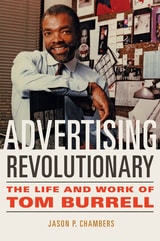
Advertising Revolutionary
The Life and Work of Tom BurrellJason P. Chambers
University of Illinois Press, 2024
Over a forty-year career, Chicagoan Tom Burrell changed the face of advertising and revolutionized the industry’s approach to African Americans as human beings and consumers. Jason P. Chambers offers a biography of the groundbreaking creator and entrepreneur that explores Burrell’s role in building brands like McDonald’s and Coca-Cola within a deeply felt vision of folding positive images of Black people into mainstream American life. While detailing Burrell’s successes, Chambers tells a parallel story of what Burrell tried to do that sheds light on the motivations of advertising creators who viewed their work as being about more than just selling. Chambers also highlights how Burrell used his entrepreneurial gifts to build an agency that opened the door for Black artists, copywriters, directors, and other professionals to earn livings, build careers, and become leaders within the industry.
Compelling and multidimensional, Advertising Revolutionary combines archival research and interviews with Burrell and his colleagues to provide a long overdue portrait of an advertising industry legend and his times.

Bonds of Enterprise
John Murray Forbes and Western Development in America's Railway AgeJohn Lauritz Larson
University of Iowa Press, 2001
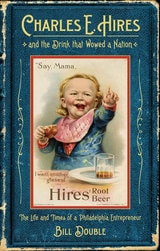
Charles E. Hires and the Drink that Wowed a Nation
The Life and Times of a Philadelphia EntrepreneurBill Double
Temple University Press, 2018
Introduced at the 1876 Centennial Exposition and powered by an historic advertising campaign, Hires Root Beer—launched 10 years before Coca-Cola—blazed the trail for development of the American soft drink industry. Its inventor, Charles Elmer Hires, has been described as “a tycoon with the soul of a chemist.” In addition to creating root beer, Hires, a devoted family man and a pillar of the Quaker community, became a leading importer of botanical commodities, an authority on the vanilla bean. Starting from scratch, he also built one of the world’s largest condensed milk companies.
Charles E. Hires and the Drink that Wowed a Nation chronicles the humble origin and meteoric business success of this extraordinary entrepreneur. Author Bill Double uses published interviews, correspondence, newspaper reports, magazine articles, financial data, and a small family archive to tell this story of native ingenuity. Here, the rough-hewn capitalism of the gilded age, the evolution of the neighborhood drugstore, the rise of advertising in creating mass markets, and the emerging temperance movement all come together in a biography that, well, fizzes with entrepreneurial spirit.
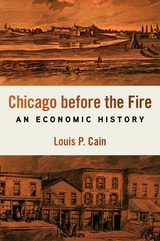
Chicago Before the Fire
An Economic HistoryLouis P. Cain
University of Illinois Press, 2025
An advantageous location and entrepreneurial passion helped fuel Chicago’s transformation from a fur trading post to a thriving city. Louis P. Cain’s economic history places pre-1871 Chicago within the narrative of national expansion and examines infrastructure, finance, and other areas of city life. Business histories tell the story of fortunes made with essential products like meat and grain. Sketches of titans like William Ogden and Cyrus McCormick reveal how real estate, farm equipment, and other industries became engines of local growth. Cain also details public health improvements that made Lake Michigan safe as a water supply while census data informs a portrait of Chicago’s population and the lives of the free Blacks and Irish immigrants at the bottom of the socioeconomic ladder.
Panoramic and up to date, Chicago before the Fire looks at how an intersection of geography, vision, and investment built a great American city.
Entrepreneurial Selves
Neoliberal Respectability and the Making of a Caribbean Middle ClassCarla Freeman
Duke University Press, 2014
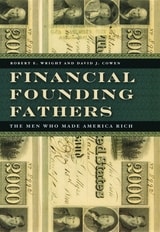
Financial Founding Fathers
The Men Who Made America RichRobert E. Wright and David J. Cowen
University of Chicago Press, 2006
Robert E. Wright and David J. Cowen here chronicle how a different group of founding fathers forged the wealth and institutions necessary to transform the American colonies from a diffuse alliance of contending business interests into one cohesive economic superpower. From Alexander Hamilton to Andrew Jackson, the authors focus on the lives of nine Americans in particular—some famous, some unknown, others misunderstood, but all among our nation’s financial founding fathers. Such men were instrumental in creating and nurturing a financial system that drove economic growth in the nascent United States because they were quick to realize that wealth was as crucial as the Constitution in securing the blessings of liberty and promoting the general welfare. The astonishing economic development made possible by our financial founding fathers was indispensable to the preservation of national unity and of support for a government that was then still a profoundly radical and delicate political experiment.
Grand in scope and vision, Financial Founding Fathers is an entertaining and inspiring history of the men who made America rich and steered her toward greatness.
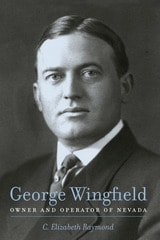
George Wingfield
Owner And Operator Of NevadaC. Elizabeth Raymond
University of Nevada Press, 2013
Banker, hotel owner, and political powerhouse George Wingfield was a significant figure in Nevada history. He was influential in developing Reno's gambling-and-divorce-related tourism. Raymond's biography depicts the man and his times, from his birth in Arkansas in 1876 until his death in Reno in 1959. Wilbur S. Shepperson Series in History and Humanities.
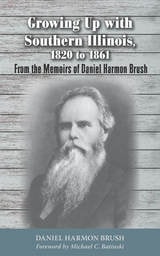
Growing Up with Southern Illinois, 1820 to 1861
From the Memoirs of Daniel Harmon BrushDaniel Harmon Brush, with a Foreword by Michael C. Batinski
Southern Illinois University Press, 2017
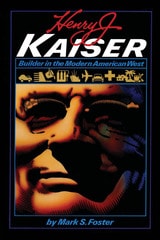
Henry J. Kaiser
Builder in the Modern American WestBy Mark S. Foster
University of Texas Press, 1989
In the 1940s Henry J. Kaiser was a household name, as familiar then as Warren Buffett and Donald Trump are now. Like a Horatio Alger hero, Kaiser rose from lower-middle-class origins to become an enormously wealthy entrepreneur, building roads, bridges, dams, and housing. He established giant businesses in cement, aluminum, chemicals, steel, health care, and tourism. During World War II, his companies built cargo planes and Liberty ships. After the war, he manufactured the Kaiser-Frazer automobile. Along the way, he also became a major force in the development of the western United States, including Hawaii.
Henry J. Kaiser: Builder in the Modern American West is the first biography of this remarkable man. Drawing on a wealth of archival material never before utilized, Mark Foster paints an evenhanded portrait of a man of driving ambition and integrity, perhaps the ultimate "can-do" capitalist. He covers Kaiser's entire life (1882–1967), emphasizing many business ventures. He demonstrates that Kaiser was the prototypical "frontier" entrepreneur who often used government and union support to tame the "wilderness."
Though today the Kaiser industries are no longer under family management, the Kaiser legacy remains great. Kaiser played a major role in building the Hoover, Bonneville, Grand Coulee, and Shasta dams. The Kaiser-Permanente Medical Care Program still provides comprehensive health care for millions of subscribers. Kaiser-planned communities remain in Los Angeles; San Francisco; Portland, Oregon; and Boulder City, Nevada. Kaiser Engineers was actively engaged in hundreds of huge construction jobs across the nation and around the world.
U.S. and business historians, scholars of the modern West, and general readers will all find much to absorb them in this well-written biography.
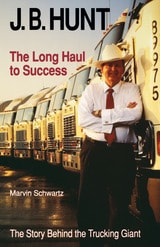
J. B. Hunt
The Long Haul to SuccessMarvin Schwartz
University of Arkansas Press, 1992
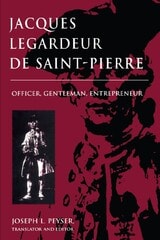
Jacques Legardeur De Saint-Pierre
Officer, Gentleman, EntrepeneurJoseph L. Peyser
Michigan State University Press, 1996
The documentary biography of Jacques Legardeur de Saint-Pierre, an officer in the Troupes de la Marine, who served throughout New France, sheds new light on the business activity of French colonial officers stationed in the West. Many of the eighty previously untranslated documents in Jacques Legardeur de Saint-Pierre demonstrate the extent and profitability of Saint-Pierre's pursuit of business activities while performing official duties in eighteenth-century French North America. The quest for profit permeated Saint- Pierre's career, particularly his command of the Western Sea Post after he succeeded the fabled Pierre Gaultier de Varennes et de la Vérendrye. Saint-Pierre and his secret partner General Jacques-Pierre de Taffanel de La Jonquière, Intendant François Bigot, and Meret, secretary to La Jonquière, used their positions to engage in extensive trade, especially brandy, with the Cree and Assiniboine northwest of Lake Superior. Saint-Pierre's activities provide fresh insights into the North American fur trade.
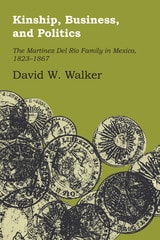
Kinship, Business, and Politics
The Martinez Del Rio Family in Mexico, 1823-1867By David W. Walker
University of Texas Press, 1987
The Martínez del Río family was a vigorous contestant in the highly politicized economy of early national Mexico. David Walker’s case study of its successes and failures provides a unique insider’s view of the trials and tribulations of doing business in a hostile environment. The family’s ordeal in Mexico—a series of personal dislocations and traumas—mirrored the painful contractions of an old society reluctantly giving birth to a new nation.
Using previously undiscovered primary source materials (including the private correspondence and business records of the family, public notary documents, transcripts of judicial proceedings, and the archives of Mexico’s Ministry of Foreign Relations and the British Foreign Office), Walker employs family history to analyze problems relating more generally to the development of state and society in newly independent Mexico.
The processes of socioeconomic formation in Mexico differed from those of Western Europe and the United States; accordingly, entrepreneurial activity had markedly contrasting implications for economic development and class formation. In the downwardly spiraling economy of nineteenth-century Mexico, economic activity was a zero-sum game. No new wealth was being created; most sectors remained stagnant and unproductive. To make their fortunes, empresarios, the Mexican capitalists, could not rely on income generated from authentic economic growth. Instead, they exploited the arbitrary acts of the interventionist Mexican state, which proscribed the free movement of factors within the marketplace. Speculation in the public debt took the place of more substantive undertakings. Coercive state power was diverted to create artificial environments in which otherwise inefficient and unproductive enterprises could flourish. But however well the empresarios might imitate the outward forms of industrial capitalism, they could not unlock the productive capacity of the Mexican economy. Instead, they and their allies and rivals engaged in destructive struggles to manipulate the state for personal gain, to the detriment of class interests, economic growth, and political stability.
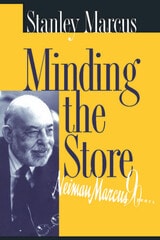
Minding the Store
A MemoirStanley Marcus
University of North Texas Press, 1997

New Routes to Library Success
100+ Ideas from Outside the StacksElisabeth Doucett
American Library Association, 2015
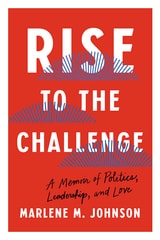
Rise to the Challenge
A Memoir of Politics, Leadership, and LoveJohnson
University of Minnesota Press, 2024
The inspiring life story of Minnesota’s first woman lieutenant governor: breaking political ground, navigating patriarchal tradition, and persevering through great personal loss
Marking a milestone for women in state government, Marlene M. Johnson became Minnesota’s first woman lieutenant governor under Rudy Perpich’s gubernatorial administration in January 1983. That same year, she met her husband, Peter, and their deeply loving relationship profoundly sustained her for twenty-seven years. Rise to the Challenge weaves these personal and professional stories together in a courageous portrait of dedication and leadership.
Growing up in rural Minnesota, Johnson began organizing and advocating for change early, beginning with a campaign to introduce foreign languages into her high school curriculum. Pursuing a deeply felt commitment to improving the lives of others, she continued to sharpen her leadership skills throughout her life, participating in activist work in college, cofounding organizations to support women entrepreneurs and politicians, and eventually running an international education nonprofit.
A stalwart supporter, her husband gave Marlene strength and encouragement to face the challenges of the political landscape and its gender biases. Then, in 2010, he suffered a traumatic brain injury that would change both of their lives. Learning how to be a medical advocate and, eventually, facing the sorrow of Peter’s death, Marlene relied on the hard-fought resilience and belief in herself that Peter had helped her to develop.
A story of learning and leadership in politics, business, and public service, Rise to the Challenge is a moving portrayal of spirit, perseverance, and grace in the face of daunting personal challenges, supported by unwavering faith in the public good.
Samuel Bronfman
The Life and Times of Seagram’s Mr. SamMichael R. Marrus
Brandeis University Press, 1991
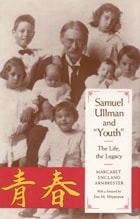
Samuel Ullman and "Youth"
The Life, the LegacyMargaret E. Armbrester
University of Alabama Press, 2009
Thousands of wonderful and sometimes strange fads have captured the public fancy in the almost five decades since the end of World War II. Most have been short-lived and soon faded away. There is, however, a poem that has not only withstood the vicissitudes of time, but has spread around the world like the waves lapping at a beach. This is the poem "Youth," by Samuel Ullman.
In December 1945, the Reader’s Digest published the poem and reported that General Douglas MacArthur, Commander of the Allied Forces, Far East, kept a copy of the poem near his desk.
Around that time, Yoshio Okada, a Japanese businessman, bought a copy of that December 1945 edition of the Reader's Digest, read the poem and was deeply affected by it. He translated it into Japanese and displayed it in his office as a guiding inspiration. Many of Okada's friends read the poem and were fascinated by its beauty. It began to receive national publicity through newspapers and magazines and became popular throughout Japan, especially among the intellectual community. Part of the reason for this widespread popularity is the excellence of the translation. Yoshio Okada, a man of noble character, gifted with a profound philosophy of life and literary talent, translated the poem into a beautiful, soulstirring Japanese version.
Samuel Ullman's “Youth” reflects the truth of life, and his outcry of spirituality touches the intrinsic nature of man.

Start-Up Poland
The People Who Transformed an EconomyJan Cienski
University of Chicago Press, 2018
As the Warsaw bureau chief for the Financial Times, Jan Cienski spent more than a decade talking with the people who did something that had never been done before: recreating a market economy out of a socialist one. Poland had always lagged behind wealthier Western Europe, but in the 1980s the gap had grown to its widest in centuries. But the corrupt Polish version of communism also created the conditions for its eventual revitalization, bringing forth a remarkably resilient and entrepreneurial people prepared to brave red tape and limited access to capital. In the 1990s, more than a million Polish people opened their own businesses, selling everything from bicycles to leather jackets, Japanese VCRs, and romance novels. The most business-savvy turned those primitive operations into complex corporations that now have global reach.
Well researched and accessibly and entertainingly written, Start-Up Poland tells the story of the opening bell in the East, painting lively portraits of the men and women who built successful businesses there, what their lives were like, and what they did to catapult their ideas to incredible success. At a time when Poland’s new right-wing government plays on past grievances and forms part of the populist and nationalist revolution sweeping the Western world, Cienski’s book also serves as a reminder that the past century has been the most successful in Poland’s history.
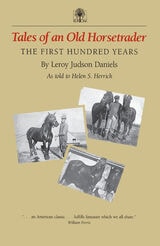
Tales of an Old Horsetrader
The First Hundred YearsLeroy Judson Daniels
University of Iowa Press, 1987
Leroy Daniels was born in 1882 near Adair, Iowa. When he was ten, his father gave him a pony and a checkbook and sent him out to buy cattle. By the time he was sixteen, he was alone on a ranch in Montana with a herd of seventy wild horses to break. At twenty-one, he was trading horses in the Chicago stockyards, where he told Henry Ford that a horse was better than a car any day. At one hundred, he retired to tell his memoirs.
The years in between are well worth reading about. Lee Daniels followed a plow all day long, worked coal to make ends meet, raised and traded and sold all manner of four-legged stock. But horses were always part of his life. Daniels traded them in Chicago for decades, sold them to Italy, England, France, and Belgium during World War I, inspected them for the army once the U.S. joined the Allies, bought them for eighty dollars in the morning and sold them for thousands by noon. He handled show horses, work horses, and trick horses, traveled the country over to fill his show barn with the best of them, befriended, understood, and loved them.
These pages tell the tale of a unique and vigorous American whose every word reveals his love of this land and its animals. If you weren't lucky enough to live like Lee Daniels, reading about his life is the next best thing.

The Breakaway
The Inside Story of the Wirtz Family Business and the Chicago BlackhawksBryan Smith
Northwestern University Press, 2018
When Rocky Wirtz took over the Wirtz Corporation in 2007, including management of the Chicago Blackhawks, the fiercely beloved hockey team had fallen to a humiliating nadir. As chronic losers playing to a deserted stadium, they were worse than bad—they were irrelevant. ESPN named the franchise the worst in all of sports. Rocky's resurrection of the team's fortunes was—publicly, at least—a feel-good tale of shrewd acumen. Behind the scenes, however, it would trigger a father, son, and brother-against-brother drama of Shakespearean proportions. The Breakaway reveals that untold story.
Arthur Wirtz founded the family's business empire during the Depression. From roots in real estate, "King Arthur" soon expanded into liquor and banking, running his operations with an iron hand and a devotion to profit that earned him the nickname Baron of the Bottom Line. His son Bill further expanded the conglomerate, taking the helm of the Blackhawks in 1966. "Dollar Bill" Wirtz demanded unflinching adherence to Arthur's traditions and was notorious for an equally fierce temperament.
Yet when Rocky took the reins of the business after Bill's death, it was an organization out of step with the times and financially adrift. The Hawks weren't only failing on the ice—the parlous state of the team's finances imperiled every facet of the Wirtz empire. To save the team and the company, Rocky launched a radical turnaround campaign. Yet his modest proposal to televise the Hawks' home games provoked fierce opposition from Wirtz family insiders, who considered any deviation from Arthur and Bill's doctrines to be heresy.
Rocky's break with the edicts of his grandfather and father led to a reversal for the ages—three Stanley Cup championships in six years, a feat Fortune magazine called "the greatest turnaround in sports business history." But this resurrection came at a price, a fracturing of Rocky's relationships with his brother and other siblings. In riveting prose that recounts a story spanning three generations, The Breakaway reveals an insider's view of a brilliant but difficult Chicago business and sports dynasty and the inspiring story of perseverance and courage in the face of intense family pressures.

The Conservative Frontier
Texas and the Origins of the New RightJeff Roche
University of Texas Press, 2025
2026 Al Lowman Memorial Prize, Texas State Historical Association (TSHA)
2026 Bonney MacDonald Outstanding Book Award Winner, Center for the Study of the American West at West Texas A&M University (CSAW)
How West Texas business and culture molded the rise of conservatism in the United States.
Much of what we understand as modern American political conservatism was born in West Texas, where today it predominates. How did the people of such a vast region—larger than New England and encompassing big cities like Lubbock and Amarillo, as well as tiny towns from Anson to Dalhart—develop such a uniform political culture? And why and how did it go national?
Jeff Roche finds answers in the history of what he calls cowboy conservatism. Political power players matter in this story, but so do football coaches, newspaper editors, and a breakfast cereal tycoon who founded a capitalist utopia. The Conservative Frontier follows these and other figures as they promoted an ideology grounded in the entrepreneurial and proto-libertarian attitudes of nineteenth-century Texas ranchers, including a fierce devotion to both individualism and small-town notions of community responsibility. This political sensibility was in turn popularized by its association with the mythology and iconography of the cowboy as imagined in twentieth-century mass media. By the 1970s and the rise of Ronald Reagan, Roche shows, it was clear that the cowboy conservatism of West Texas had set the stage for the emergence of the New Right—the more professionalized and tech-savvy operation that dominated national conservative politics for the next quarter century.

This Great Symbol
Pierre de Coubertin and the Origins of the Modern Olympic GamesJohn J. MacAloon
University of Chicago Press, 1981

Thomas Taggart
Public Servant, Political Boss, 1856-1929James Phillip Fadely
Indiana Historical Society Press, 1997

WERNER VON SIEMENS
INVENTOR AND INTERNATIONAL ENTREPRENEURWILFRIED FELDENKIRCHEN
The Ohio State University Press, 1994
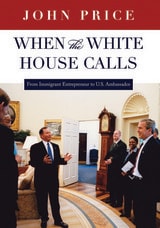
When the White House Calls
From Immigrant Entrepreneur to U.S. AmbassadorJohn Price
University of Utah Press, 2011
When the White House Calls tells the life story of John Price, one of Utah’s most prominent citizens, beginning with his birth in Germany through his years as a successful builder and real estate developer—with business interests in broadcasting, manufacturing, distribution, and banking—to his life as a diplomat. Born in Berlin on August 18, 1933, Hans Joachim Praiss was five years old when he and his family fled Nazi Germany in April 1939. The family found temporary refuge in Panama, finally arriving at Ellis Island in September 1940 and settling in New York City. Following the advice of a professor at CCNY, Price traveled west to fulfill a geology fieldwork course requirement, but upon seeing the snow-capped mountains surrounding Salt Lake City, knew he would stay. He earned his Bachelor of Science in Geological Engineering from the University of Utah in 1956. He practiced in that field before tiring of the often rigorous travel requirements and the desolate nature of the work. He soon turned to new opportunities.
Years later, after operating successful business enterprises throughout the Intermountain region and nationally, and serving on numerous local, state, and national boards, Price had become the consummate entrepreneur, businessman, and community leader. He was ready to serve his country when the White House called. In February 2002 he was sworn in as U.S. Ambassador to the Republic of Mauritius, the Republic of Seychelles, and the Union of the Comoros, three Indian Ocean island nations off the east coast of Africa, where he served until 2005.
In this telling autobiography, John Price focuses on his years as an ambassador and includes his thoughts on the future of sub-Saharan Africa. The account of his service as a diplomat offers readers a view of the daily life of an ambassador—the protocol for official meetings with heads of state, the routine of the office, the process of handling official communications, and the intricacies of diplomacy. More than that, in a world concerned with the global war on terror, he reflects on the three island nations where he served and on the region’s increasing strategic importance to the national security of the United States.
In the years since the 2001 attacks on the World Trade Center and the Pentagon, the al-Qaeda movement has grown and its members have dispersed throughout the world, including the region known as the Horn of Africa and East Africa. Price calls attention to the vulnerability of sub-Saharan Africa as a haven for terrorists, and the critical need for our engagement of this desperate continent with economic development, health care, and education to counter this threat. His concern for this region of Africa is carefully articulated in the text, as well as in interviews (included as appendixes) with notable country leaders. When the White House Calls is a compelling story of the American Dream realized, and the importance of service to country. This is a book that will both educate and inspire young people, their mentors, and others, as they work to make a difference in the world.