Results by title
24 books match the query 'Byzantine Empire'
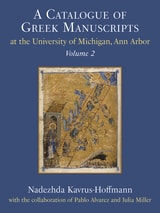
A Catalogue of Greek Manuscripts at the University of Michigan, Ann Arbor, Volume 2
Nadezhda Kavrus-Hoffmann with the collaboration of Pablo Alvarez and Julia Miller
University of Michigan Press, 2026
A Catalogue of Greek Manuscripts at the University of Michigan, Ann Arbor, Volume II unveils the rich diversity and enduring legacy of the Greek manuscript tradition preserved in one of North America's largest collections. Building on the acclaimed first volume, this second and concluding volume offers comprehensive illustrated descriptions of eighty-four manuscripts and fragments housed in the University of Michigan Library's Special Collections Research Center. The discovery of twenty-three previously unknown manuscripts and fragments significantly expands our understanding of Byzantine and post-Byzantine book culture, illuminating the remarkable continuity of Greek scholarly, liturgical, and artistic traditions from the ninth through the nineteenth centuries.
Each entry integrates codicological features, handwriting analysis, textual content, decoration, binding, provenance, and references to earlier scholarship as well as high-quality color plates to illustrate representative pages, script types, and illuminations. Among the exceptional highlights are a fragment of The Great Calculation According to the Indians by Maximos Planoudes, preserving portions of this rare mathematical treatise otherwise lost; an illuminated 1371 copy of The Heavenly Ladder by John Klimax, created by the renowned scribe Joasaph II of the Hodegon Monastery in Constantinople; and a newly identified manuscript containing rare patristic homilies linked to the sixteenth-century Choniates scriptorium in Venice.
Arguing it Out
Discussion in Twelfth-Century ByzantiumAveril Cameron
Central European University Press, 2016
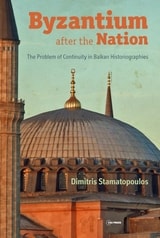
Byzantium after the Nation
The Problem of Continuity in Balkan HistoriographiesDimitris Stamatopoulos
Central European University Press, 2023
Stamatopoulos undertakes the first systematic comparison of the dominant ethnic historiographic models and divergences elaborated by Greek, Bulgarian, Serbian, Albanian, Romanian, Turkish, and Russian intellectuals with reference to the ambiguous inheritance of Byzantium. The title alludes to the seminal work of Nicolae Iorga in the 1930s, Byzantium after Byzantium, that argued for the continuity between the Byzantine and the Ottoman empires. Rival Balkan nationalisms engaged in a “war of interpretation” as to the nature of Byzantium, assuming different positions of adoption or rejection of its imperial model and leading to various schemes of continuity in each national historiographic canon.
Stamatopoulos discusses what Byzantium represented for nineteenth-, and twentieth-century scholars and how their perceptions related to their treatment of the imperial model: whether a different perception of the medieval Byzantine period prevailed in the Greek national center as opposed to Constantinople; how nineteenth-century Balkan nationalists and Russian scholars used Byzantium to invent their own medieval period (and, by extension, their own antiquity); and finally, whether there exist continuities or discontinuities in these modes of making ideological use of the past.
Byzantium
Church, Society, and Civilization Seen through Contemporary EyesDeno John Geanakoplos
University of Chicago Press, 1984
Byzantium is much more than a sourcebook. The running commentary reflects the most recent scholarly research in Byzantine studies and places each translated source in its precise historical context. Through the use of both primary sources and commentary, Geanakoplos has represented in all its richness and complexity one of the world's great civilizations. There is no comparable book on Byzantine history and civilization in any language.
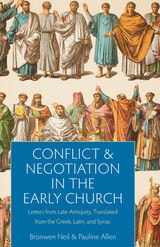
Conflict and Negotiation in the Early Church
Letters from Late Antiquity, Translated from the Greek, Latin, and SyriacBronwen Neil
Catholic University of America Press, 2020
Conflict and Negotiation in the Early Church focuses on the period 500 to 700 CE, one of the least documented periods in the history of the church, but also one of the most formative, whose conflicts resonate still in contemporary Christian communities, especially in the Middle East.
To uncover the hidden history of this period and its theological controversies, Neil and Allen have tapped a little known written source, the letters that were exchanged by bishops, emperors and other civic leaders of the sixth and seventh centuries. This was an era of crisis for the Byzantine empire, at war first with Persia, and then with the Arab forces united under the new faith of Islam. Official letters were used by the churches of Rome and Constantinople to pursue and defend their claims to universal and local authority, a constant source of conflict. As well as the east-west struggle, Christological disagreements with the Syrian church demanded increasing attention from the episcopal and imperial rulers in Constantinople, even as Rome set itself adrift and looked to the West for new allies.
From this troubled period, 1500 letters survive in Greek, Latin, and Syriac. With translations of a number of these, many rendered into English for the first time, Conflict and Negotiation in the Early Church examines the ways in which diplomatic relations between churches were developed, and in some cases hindered or even permanently ruptured, through letter-exchange at the end of Late Antiquity.
Constantinople and the West
Essays on the Late Byzantine (Palaeologan) and Italian Renaissances and the Byzantine and Roman ChurchesDeno John Geanakoplos
University of Wisconsin Press, 1989
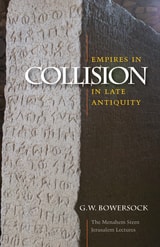
Empires in Collision in Late Antiquity
G. W. Bowersock
Brandeis University Press, 2012
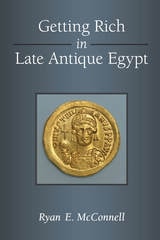
Getting Rich in Late Antique Egypt
Ryan E. McConnell
University of Michigan Press, 2017
Ryan E. McConnell connects the family’s rise in wealth and status to its role in tax collection on behalf of the Byzantine state, rather than a reliance on productive surpluses. Close analysis of low- and high-level accounts from the Apion estate, as well as documentation from comparable Roman and Byzantine Egyptian estates, corroborate this conclusion. Additionally, McConnell offers a third way into the ongoing debate over whether the Apions’ relationship with the state was antagonistic or cooperative, concluding that the relationship was that of parties in a negotiation, with each side seeking to maximize its own benefit. The application of modern economic concepts—as well as comparisons to the economies of Athens, Rome, Ptolemaic Egypt, and Early Modern France—further illuminate the structure and function of the estate in Late Antique Egypt.
Getting Rich in Late Antique Egypt will be a valuable resource for philologists, archaeologists, papyrologists, and scholars of Late Antiquity. It will also interest scholars of agricultural, social, and economic history.
History of the Byzantine Empire, 324–1453, Volume I
Alexander A. Vasiliev
University of Wisconsin Press, 1958
History of the Byzantine Empire, 324–1453, Volume II
Alexander A. Vasiliev
University of Wisconsin Press, 1958

Open Data in Ancient and Byzantine Studies
Edited by Valeria Vitale and Gabriel Bodard
University of London Press, 2026
Exploring the impact of open-access and openly licensed data and code in classical and Byzantine studies.
Open Data in Ancient and Byzantine Studies shows how openness supports transparency, collaboration, the identification of biases, and new interpretive and data‑driven approaches to ancient sources. Through practical case studies, the book demonstrates how methods such as epigraphic transcription, textual criticism, and archaeological modeling have advanced open data standards and practices.
This book highlights the potential of interoperability, documentation, and open workflows for broader approaches to the ancient world. Bringing together work from classics, Byzantine studies, archaeology, linguistics, and digital humanities, it presents open scholarship as a transformative model for academic knowledge production.
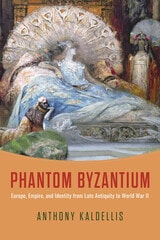
Phantom Byzantium
Europe, Empire, and Identity from Late Antiquity to World War IIAnthony Kaldellis
University of Chicago Press, 2026
Unveiling the ideological foundations of Byzantine studies, Phantom Byzantium is a pioneering survey of western European perceptions of the eastern Roman empire (also known as Byzantium) spanning late antiquity to World War II. Through ten chronological chapters, Anthony Kaldellis makes the case that western Europe gradually formed its identity by adopting prestigious cultural elements from the eastern empire but simultaneously portraying the east as inferior. The West modeled its Roman imperial style on Constantinople while minimizing the latter as Greek rather than Roman; appropriated a host of Christian traditions from the east while casting the east as schismatic, heretical, or treacherous; and, during the Renaissance, used classical Hellenic philology from Greek scholars before marginalizing them as unworthy bearers of that tradition. This orientalizing impulse worked to buttress western exceptionalism and resulted in the fictitious construction of “Byzantium” as Europe’s evil doppelgänger, embodying the worst versions of traditions fundamental to European identity and casting the region as despotic, superstitious, and degenerate.
Explaining the creation, history, and functions of the ideological construct of Byzantium in the western imagination and European self-fashioning, this book has critical implications for contemporary views of European history.

The Art of Living in Avant-Garde Paris
Ethics and Self-Making in Dada, Simultanism, and SurrealismRachel Silveri
University of Chicago Press, 2026
With The Art of Living in Avant-Garde Paris, Rachel Silveri takes a fresh look at the desire to unify art and life, an ambition long regarded as foundational to the European historical avant-gardes. She reveals how many early twentieth-century artists saw their own everyday lives—their bodies, identities, and relationships—as a type of creative material and a central component to their avant-garde practice. These artists abandoned traditional forms of artmaking and venues of art viewing, instead aspiring to integrate art with everyday life, creating an “art of living.”
Considering Tristan Tzara’s performances of Dadaist identity, Sonia Delaunay’s simultaneous fashions and self-branding, and the collective endeavor to open and operate the Surrealist Research Bureau, Silveri offers a new narrative about how the artists of interwar Paris developed experiential life practices that resisted dominant forms of “lifestyle” and normative discourses surrounding gender, ethnicity, and office work. This book argues that ethical questions of “How should I live?” and “How should I relate to others?” were as important to the avant-garde as politics, and that aspirations to change the world played out in daily practices of self-making.
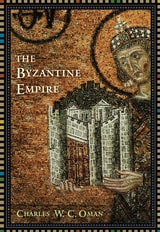
The Byzantine Empire
Charles W. C. Oman
Westholme Publishing, 2009
The Byzantine Empire centered at the city of Constantinople grew from a small Greek colonial village into the capital of the Eastern Roman empire. Ultimately, Byzantium represented what remained of Roman power in late antiquity. Established as the seat of Constantine the Great in 328 AD, the empire grew and matured over the centuries, reaching its pinnacle in the sixth century during the reign of Justinian and his loyal general, Belisarius. In the process of empire building, Byzantium battled the Goths, the Germanic tribes, the Persians, the Lombards, and ultimately the Islamic armies of the Near East. Byzantium remained a buffer against Muslim expansion, and by the time the remnants of the empire and the city of Constantinople were finally conquered by the Ottomans in the fourteenth century, European states to the west were able to resist any further encroachment.
In tracing the empire’s history from its humble beginnings through its ascendancy and final decay, distinguished historian Charles W. C. Oman blends his engaging narrative style with his impeccable command of primary source material. Here, Oman dispels the misconception that the Byzantine court was one plagued by corruption and intrigue—a canard that added “Byzantine” to the English language; instead, Byzantium was one of the most stable governments of late antiquity. Never before reprinted in paperback, The Byzantine Empire is a model of concise popular scholarship.
The Byzantine Empire (Revised Edition)
Robert Browning
Catholic University of America Press, 1992
The Byzantines
Edited by Guglielmo Cavallo
University of Chicago Press, 1997
Through a series of remarkably detailed composite portraits, an international collection of distinguished scholars has created a startlingly clear vision of the Byzantines and their social world. Paupers, peasants, soldiers, teachers, bureaucrats, clerics, emperors, and saints—all are vividly and authentically presented in the context of ordinary Byzantine life. No comparable volume exists that so fascinatingly recovers from the past the men and women of Byzantium, their culture and their lifeways, and their strikingly modern worldview.
The Codex and Crafts in Late Antiquity
Georgios Boudalis
Bard Graduate Center, 2018
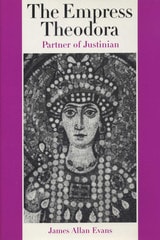
The Empress Theodora
Partner of JustinianBy James Allan Evans
University of Texas Press, 2002
Even by modern standards, the Empress Theodora (?-548) had a remarkable rise to power. Born into the lowest class of Byzantine society, she worked as an actress in burlesque theater. Yet she attracted the love of the future emperor Justinian, who, to the astonishment of proper society, made her not only his wife but also his partner in government. Justinian's respect for and trust in Theodora gave her power in her own right unmatched by almost any other Roman or Byzantine empress.
In this book, James Allan Evans provides a scholarly, yet highly accessible account of the life and times of the Empress Theodora. He follows her from her childhood as a Hippodrome bearkeeper's daughter to her imperial roles as Justinian's most trusted counselor and as an effective and powerful advocate for the downtrodden. In particular, he focuses on the ways in which Theodora worked to improve the lives of women. He also explores the pivotal role Theodora played in the great religious controversy of her time, involving a breach between sects in the Christian church.
The Gothic War
Justinian's Campaign to Reclaim ItalyTorsten Cumberland Jacobsen
Westholme Publishing, 2009
“Jacobsen brings to the story an intimate knowledge of Italy. The battles took place on terrain Jacobsen knows well. . . Recommended.”—Choice
“Jacobsen provides an operational history of Justinian’s campaign. Throughout he traces the military strategies and tactical intrigues of leaders such as the Roman general Belisarius and the Goth leader Totila.”—Publishers Weekly
“Jacobsen knows the sites he writes about, he has read Procopius diligently . . . and his military reconstruction can be faulted only in attributing to both sides rather better command and control than the ancient armies could generally manage. . . . Jacobsen has offered wargamers a tool they will appreciate.”—The Classical Review
A period of stability in the early sixth century A.D. gave the Eastern Roman emperor Justinian an opportunity to recapture parts of the Western Empire which had been lost to invading barbarians in the preceding centuries. The climactic conflict over Italy between 535 and 554—the Gothic War—decided the political future of Europe, holding in its balance the possibility that the Roman Empire might rise again. While large portions of the original territory of the ancient Roman Empire were recaptured, the Eastern Empire was incapable of retaining much of its hard-won advances, and soon the empire once again retracted. As a result of the Gothic War, Italy was invaded by the Lombards who began their important kingdom, the Franks began transforming Gaul into France, and without any major force remaining in North Africa, that territory was quickly overrun by the first wave of Muslim expansion in the ensuing century. Written as a general overview of this critical period, The Gothic War: Justinian’s Campaign to Reclaim Italy opens with a history of the conflict with Persia and the great Roman general Belisarius’s successful conquest of the Vandals in North Africa. After an account of the Ostrogothic tribe and their history, the campaigns of the long war for Italy are described in detail, including the three sieges of Rome, which turned the great city from a bustling metropolis into a desolate ruin. In addition to Belisarius, the Gothic War featured many of history’s most colorful antagonists, including Rome’s Narses the Eunuch, and the Goths’ ruthless and brilliant tactician, Totila. Two appendices provide information about the armies of the Romans and Ostrogoths, including their organization, weapons, and tactics, all of which changed over the course of the war.
The Opuscula and the Dispute with Pyrrhus
The Theological and Polemical WorksKevin M. St. Maximus the Confessor
Catholic University of America Press, 2026
The Orphans of Byzantium
Child Welfare in the Christian EmpireTimothy S. Miller
Catholic University of America Press, 2003
The Perfect Servant
Eunuchs and the Social Construction of Gender in ByzantiumKathryn M. Ringrose
University of Chicago Press, 2003
Accepted for generations as a legitimate and functional part of Byzantine civilization, eunuchs were prominent in both the imperial court and the church. They were distinctive in physical appearance, dress, and manner and were considered uniquely suited for important roles in Byzantine life. Transcending conventional notions of male and female, eunuchs lived outside of normal patterns of procreation and inheritance and were assigned a unique capacity for mediating across social and spiritual boundaries. This allowed them to perform tasks from which prominent men and women were constrained, making them, in essence, perfect servants.
Written with precision and meticulously researched, The Perfect Servant will immediately take its place as a major study on Byzantium and the history of gender.
The Sasanian Empire at War
Persia, Rome, and the Rise of Islam, 224–651Michael J. Decker
Westholme Publishing, 2025
A comprehensive military history of one of the most important empires of Late Antiquity
The Sasanian Empire at War: Persia, Rome, and the Rise of Islam, 224–651 is the first comprehensive study in English examining war and society in one of the most important empires in world history: the Persian Empire of 224-651 AD, ruled by the Sasanian clan. At its height the Sasanians governed lands from the Indus River in the east to Egypt and the Mediterranean in the west. Adversaries of Rome, they also faced grave challenges from nomadic powers from Central Asia, notably the Huns and Turks. The Sasanians were able to maintain their empire for hundreds of years through nearly constant warfare, but when their expansion was checked in the north by the Byzantines at Constantinople in 626, and with the Muslim invasions to their south and west beginning in the 630s, the empire could no longer be sustained, and it finally collapsed.
In this book, Michael J. Decker examines Sasanian warfare, including military capabilities, major confrontations, organization and weapons of the Persian army. In addition to providing a comprehensive overview of the conflicts that marked this vital period in the history of Eurasia, The Sasanian Empire at War challenges long cherished notions of the inferiority of Sasanian military capabilities and renders a new image of a sophisticated, confident culture astride the heart of Eurasia at the end of the ancient world and birth of the Silk Road. Persian arms were among the many features of their culture that drew widespread admiration and was one of the keys to the survival of Iranian culture beyond the Arab Conquest and into the present day.
The Secrets We Keep
Hidden Histories of the Byzantine EmpireRoland Betancourt
J. Paul Getty Trust, The, 2024
Secrecy has played a role throughout human history and continues to capture the popular imagination. Some of the most seductive aspects of the Byzantine Empire—such as the relics of the imperial palace and the military uses of Greek fire—have been shrouded in mystery for centuries. This book provides a brief history of secrecy in Byzantium and examines the role of the art historian in uncovering the truth, demonstrating how visual evidence can not only reveal new findings but also purposely conceal answers.
Art historians face many challenges in their search for hidden knowledge, including accessing accounts preserved in fragmentary glimpses and reconciling how practices of speculation and reconstruction result in different, and sometimes contradictory, understandings. With pressing urgency, this book asks scholars to consider their role in articulating the stories of marginalized people, particularly for queer and trans history.
At the core of these investigations is the quest to discover how clandestine knowledge was transmitted and how relationships were strengthened by collective secret keeping, as well as how concealment is used as a strategy for exercising power. With insights into the religious, imperial, military, and cultural uses of secrecy, this book offers an intriguing look at the ways secrecy manifested itself during the Byzantine Empire and the implications it has for the issues we face today.