Results by title
3 books match the query 'Camille'
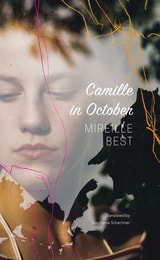
Camille in October
Mireille Best
Seagull Books, 2019
But an intellectual and sexual relationship with her dentist’s wife opens a world of new possibilities to Camille. Where will this lead her? Suicide, murder, accidental death—all are possible in this unconventional narrative from Mireille Best. As a young adult, Camille is not always the most reliable narrator, but she charms with her intelligence, lack of pretention, and strong connection to her roots. Through Camille’s eyes, we embark on a fundamental and universal quest to balance where we come from with who we need to become.
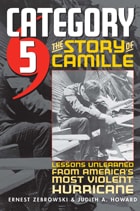
Category 5
The Story of Camille, Lessons Unlearned from America's Most Violent HurricaneErnest Zebrowski and Judith A. Howard
University of Michigan Press, 2005
"This highly readable account aimed at a general audience excels at telling the plight of the victims and how local political authorities reacted. The saddest lesson is how little the public and the government learned from Camille. Highly recommended for all public libraries, especially those on the Gulf and East coasts."
—Library Journal online
As the unsettled social and political weather of summer 1969 played itself out amid the heat of antiwar marches and the battle for civil rights, three regions of the rural South were devastated by the horrifying force of Category 5 Hurricane Camille.
Camille's nearly 200 mile per hour winds and 28-foot storm surge swept away thousands of homes and businesses along the Gulf Coast of Louisiana and Mississippi. Twenty-four oceangoing ships sank or were beached; six offshore drilling platforms collapsed; 198 people drowned. Two days later, Camille dropped 108 billion tons of moisture drawn from the Gulf onto the rural communities of Nelson County, Virginia-nearly three feet of rain in 24 hours. Mountainsides were washed away; quiet brooks became raging torrents; homes and whole communities were simply washed off the face of the earth.
In this gripping account, Ernest Zebrowski and Judith Howard tell the heroic story of America's forgotten rural underclass coping with immense adversity and inconceivable tragedy.
Category 5 shows, through the riveting stories of Camille's victims and survivors, the disproportionate impact of natural disasters on the nation's poorest communities. It is, ultimately, a story of the lessons learned-and, in some cases, tragically unlearned-from that storm: hard lessons that were driven home once again in the awful wake of Hurricane Katrina.
"Emergency responses to Katrina were uncoordinated, slow, and--at least in the early days--woefully inadequate. Politicians argued about whether there had been one disaster or two, as if that mattered. And before the last survivors were even evacuated, a flurry of finger-pointing had begun. The question most neglected was: What is the shelf life of a historical lesson?"
Ernest Zebrowski is founder of the doctoral program in science and math education at Southern University, a historically black university in Baton Rouge, Louisiana, and Professor of Physics at Pennsylvania State University's Pennsylvania College of Technology. His previous books include Perils of a Restless Planet: Scientific Perspectives on Natural Disasters. Judith Howard earned her Ph.D. in clinical social work from UCLA, and writes a regular political column for the Ruston, Louisiana, Morning Paper.
"Category 5 examines with sensitivity the overwhelming challenges presented by the human and physical impacts from a catastrophic disaster and the value of emergency management to sound decisions and sustainability."
--John C. Pine, Chair, Department of Geography & Anthropology and Director of Disaster Science & Management, Louisiana State University
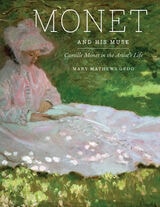
Monet and His Muse
Camille Monet in the Artist's LifeMary Mathews Gedo
University of Chicago Press, 2010
“The mourning never stops, it just changes.” (Edward Albee)
For Claude Monet (1840–1926), the founder of French Impressionist painting, these words are a fitting testament to his lifelong relationship with the female muse, most notably—and most hauntingly—with his first wife, the model Camille Doncieux.
For the esteemed clinical psychologist and art historian Mary Mathews Gedo, Monet and His Muse represents a project twenty years in the making. Artfully interweaving biographical insight with psychoanalytic criticism, Gedo takes us on an exploration of Claude Monet’s conflicted relationships with women, complete with exquisitely researched material never before understood about one of our most popular—and inimitable—artists. Beginning with Monet’s childhood, Gedo delves into his relationships with a distant, unreliable father and his beloved, doting mother—whose death when Monet was just sixteen, the author establishes, inspired a lifetime preoccupation with the sea, its lushly imagined flora, and the figurative landscapes Monet painted to such acclaim.
And then—Camille. Entering Monet’s life when he was still a young man, becoming first his model and then mistress and then—finally—his wife, Camille Doncieux always fulfilled the function of muse, even after her life had ended, as Monet not only painted her one last time on her deathbed, but preserved her memory through the gardens he planted at his home in Giverny. Demonstrating how Monet’s connections with women were exceedingly complex, fraught with abusive impulses and infantile longing, Gedo sensitively uses Monet and Camille as exemplars in order to explore links between artists and muses in our modern age.