Results by title
28 books match the query 'Caregivers'

All the Leavings
Laurie Easter
Oregon State University Press, 2021
Whether recounting the home birth of her second child, encounters with cougars, the fraught dynamics of mother-daughter relationships, the destructive power of wildfires, or the community bonds challenged by a tragic suicide, Easter’s writing is firmly grounded in place. She takes readers deep into the heart of a still-wild Oregon, perilous yet rich with natural beauty.
Written from one woman’s perspective as a mother, wife, and friend, All the Leavings is ultimately a book about love—for the child who faces a health crisis, for the friend dying of AIDS, for the one entangled by addiction who then disappears. Long after the final page is turned, it will resonate with readers interested in essays, memoir, alternative lifestyles, and the literature of the West.
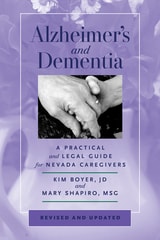
Alzheimer's and Dementia
A Practical and Legal Guide for Nevada Caregivers, Revised and UpdatedKim Boyer
University of Nevada Press, 2025
The book, specific to Nevada, covers state laws including Medicaid planning, asset protection, guardianship, probate, advance directives, and patient rights. It also addresses estate and financial planning, and provides a detailed list of resources available to assist caregivers. Written by an elder law attorney and a gerontologist, Alzheimer’s and Dementiaoffers insights from two professionals who provide practical solutions to common obstacles faced by caregivers, helping them support the needs and overcome the challenges facing those coping with these diseases.
Boyer and Shapiro coauthored The Essential Eldercare Handbook for Nevada also available from the University of Nevada Press.
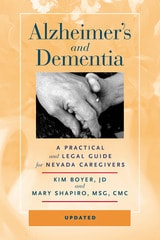
Alzheimer’s and Dementia
A Practical and Legal Guide for Nevada CaregiversKim Boyer
University of Nevada Press, 2012
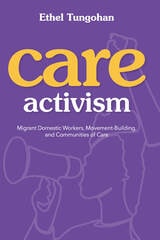
Care Activism
Migrant Domestic Workers, Movement-Building, and Communities of CareEthel Tungohan
University of Illinois Press, 2023
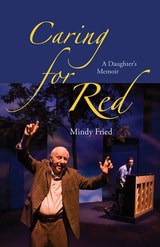
Caring for Red
A Daughter's MemoirMindy Fried
Vanderbilt University Press, 2016
Caring for Red is Mindy Fried's moving and colorful account of caring for her ninety-seven-year-old father, Manny--an actor, writer, and labor organizer--in the final year of his life. This memoir chronicles the actions of two sisters as they discover concentric circles of support for their father and attempt to provide him with an experience of "engaged aging" in an assisted living facility.
The story is also that of a daughter of a powerful and outspoken man who took risks throughout his life and whose political beliefs had an enduring impact on his family. (After Manny was called before the House Un-American Activities Committee, he was blacklisted and his family was shunned.)
As an actor, Manny was affiliated with Elia Kazan's Group Theatre and the Federal Theatre Project. He did Shakespeare, Chekhov, and Ibsen, and played everything from the tormented father in Arthur Miller's All My Sons to an infant in a baby carriage in Thornton Wilder's Infancy, from the Rabbi in Fiddler on the Roof to--poignantly for this book--the role of Morrie in Tuesdays with Morrie.
As she devotes herself to caring for her dying father, Mindy grapples anew with the complexity of their relationship. She questions whether she can be there for him and how to assert her own voice as her father's caregiver in his last days.
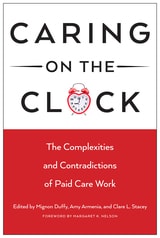
Caring on the Clock
The Complexities and Contradictions of Paid Care WorkDuffy, Mignon
Rutgers University Press, 2015
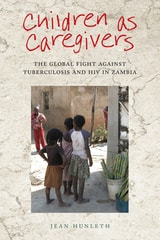
Children as Caregivers
The Global Fight against Tuberculosis and HIV in ZambiaHunleth, Jean
Rutgers University Press, 2017
In Zambia, due to the rise of tuberculosis and the closely connected HIV epidemic, a large number of children have experienced the illness or death of at least one parent. Children as Caregivers examines how well intentioned practitioners fail to realize that children take on active caregiving roles when their guardians become seriously ill and demonstrates why understanding children’s care is crucial for global health policy.
Using ethnographic methods, and listening to the voices of the young as well as adults, Jean Hunleth makes the caregiving work of children visible. She shows how children actively seek to “get closer” to ill guardians by providing good care. Both children and ill adults define good care as attentiveness of the young to adults’ physical needs, the ability to carry out treatment and medication programs in the home, and above all, the need to maintain physical closeness and proximity. Children understand that losing their guardians will not only be emotionally devastating, but that such loss is likely to set them adrift in Zambian society, where education and advancement depend on maintaining familial, reciprocal relationships.
View a gallery of images from the book (https://www.flickr.com/photos/childrenascaregivers)
Download the open access ebook.
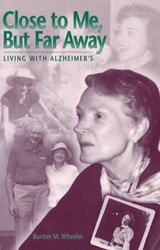
Close to Me, but Far Away
Living with Alzheimer'sBurton M. Wheeler
University of Missouri Press, 2001
Each day Burt Wheeler is plagued by the same question. When did it happen? If he could pinpoint the beginning, then he might begin to make peace with himself. He vividly remembers when the doctor diagnosed Kee, his loving wife of over fifty years, with "Alzheimer-type dementia." But, as hard as he tries, it's impossible for him to determine when his wife's dementia started. He remembers her bout with depression, but that, he thinks, was surely due to her breast cancer. There was their dream vacation to Greece when Kee seemed so tired and indifferent. There were the unopened books, when reading had always been such a source of pleasure to her. And, he recalls, the gradual personality changes with friends, and even with family.
Wheeler started writing this book as a form of self-therapy when he found himself thrust into the role of caretaker to his wife--a role for which he felt unprepared. He wrote in memory of the very special woman his wife had been—a wonderful mother, charming and gracious, as well as a deeply respected psychotherapist. She was also his best friend, and he loved her. So, to some degree, this is a love story—a story about two people who have shared life's ups and downs for over fifty years. It's also about commitment.
In Close to Me, but Far Away, Wheeler provides insight into what a caregiver's day is like, as he shares his most intimate thoughts with us. The book provides a window into the author's personal life as he seeks to confront his own ineptitude and the occasional despair he feels as he deals daily with Alzheimer's. He also touches on the question of what keeps him going through times of exhaustion and frustration. Part of his answer lies in holding tenaciously to memories, and part lies in what he believes is a human's extraordinary capacity to continue plodding along simply because he must. Wheeler also believes in rejoicing in the beauty that can be experienced, and he believes in humor, humor achieved only by distancing ourselves from the events that so deeply engage us. And, of course, there is also the indefinable nature of love.
Alzheimer's is a terrifying and horrible disease, as much for loved ones as for the patient. Those who are caregivers or friends of Alzheimer's patients or caregivers will empathize with Burton Wheeler's story. And some might receive comfort from his words or learn from him. Because Alzheimer's is a disease that could affect anyone, Close to Me, but Far Away is a story that should be read by all.
Club Icarus
Matt W. Miller
University of North Texas Press, 2013

Decolonial Care
Reimagining Caregiving in the French CaribbeanJennifer Boum Make
Rutgers University Press, 2025
Dementia Caregivers Share Their Stories
A Support Group in a BookLynda A. Markut
Vanderbilt University Press, 2005
Highlighting the ingenuity and resourcefulness of caregivers, the book brims with inspirational stories, practical advice, and creative approaches to problem-solving. Among the issues addressed are:
Becoming a caregiver, whether for a spouse or parent
Dealing with the personality changes caused by dementia, from anxiety and paranoia to hallucinations and impulsive behavior
Keeping dementia sufferers meaningfully involved in life
Handling the emotions and stresses of caregiving
Seeking help through support groups and other sources, including medical professionals, clergy, and other family members The authors, who have both been caregivers themselves, augment their interviewees' stories with connective commentary and their own personal stories. A useful resource section is included to refer readers to associations and help-lines.
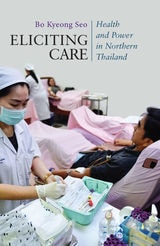
Eliciting Care
Health and Power in Northern ThailandBo Kyeong Seo
University of Wisconsin Press, 2020
Using the broader concept of elicitation, Seo analyzes the social encounters and forces that shape caregivers. These dynamics challenge dichotomies of subjugation and resistance, consent and coercion, and dependence and autonomy. The intimate and moving stories at the core of Eliciting Care from patients and providers draw attention to a broader, critically important phenomenon at the hospital level. Seo's poignant ethnography engages with feminist theory on the ethics of care, and in so doing, makes a significant contribution to emerging work in the field of health policy and politics.

For Love or Money
Care Provision in the United StatesNancy Folbre
Russell Sage Foundation, 2013

Forget Burial
HIV Kinship, Disability, and Queer/Trans Narratives of CareMarty Fink
Rutgers University Press, 2021
Queers and trans people in the 1980s and early ‘90s were dying of AIDS and the government failed to care. Lovers, strangers, artists, and community activists came together take care of each other in the face of state violence. In revisiting these histories alongside ongoing queer and trans movements, this book uncovers how early HIV care-giving narratives actually shape how we continue to understand our genders and our disabilities. The queer and trans care-giving kinships that formed in response to HIV continue to inspire how we have sex and build chosen families in the present. In unearthing HIV community newsletters, media, zines, porn, literature, and even vampires, Forget Burial bridges early HIV care-giving activisms with contemporary disability movements. In refusing to bury the legacies of long-term survivors and of those we have lost, this book brings early HIV kinships together with ongoing movements for queer and trans body self-determination.

Hospital Time
Amy Hoffman
Duke University Press, 1997
Hoffman became central to Riegle’s caregiving when he asked her to be his health-care proxy, and although she willingly chose to do this, she explores her conflicting feelings about herself in this role and about her involvement with Riegle and his grueling struggle with hospitalization, illness, and, finally, death. She tells of the waves of grief that echoed throughout her life, awakening memories of other losses, entering her dreams and fantasies, and altering her relationships with friends, family, and even total strangers.
Hoffman’s memoir gives voice to the psychological and emotional havoc AIDS creates for those in the difficult role of caring for the terminally ill and it gives recognition to the role that lesbians continue to play in the AIDS emergency. A foreword by Urvashi Vaid, former executive director of the National Gay and Lesbian Task Force, offers a meditation on the politics of AIDS and the role of family in the lives of lesbians and gay men.
It Shouldn't Be This Way
The Failure of Long-Term CareRobert L. Kane
Vanderbilt University Press, 2005
Part memoir, part practical guide, part prescription for change, It Shouldn't Be This Way is a unique look at the problems of long-term care. Robert L. Kane, a highly experienced physician and gerontologist, and his sister, Joan C. West, tell the painful story of what happened to their mother after she suffered a debilitating stroke and spent the last years of her life in rehabilitation, assisted-living facilities, and finally a nursing home. Along the way, her adult children encountered some professionals who were kind and considerate but also many frustrations—inadequate care and the need to hire private duty aides, as well as poor communication and lack of coordination throughout the system. The situation, they found, proved far more difficult than it needed to be.
As the authors recount their mother's story, they impart various lessons they learned from each phase of the experience. They alert those who are confronting such situations for the first time about what they will likely face and how to approach the problems. Closing with a broader look at why long-term care is the way it is, they propose steps to make necessary reforms, including the development of national organizations to work for change. Their message to families, care professionals, and policy-makers could not be more urgent.

Living in the Land of Limbo
Fiction and Poetry about Family CaregivingCarol Levine
Vanderbilt University Press, 2014
Many of the authors are well-known poets and writers, but others have not been published in mainstream media. They represent a range of cultural backgrounds. Although their works approach caregiving in very different ways, the authors share a commitment to emotional truth, unvarnished by societal ideals of what caregivers should feel and do. These stories and poems paint profoundly moving and revealing portraits of family caregivers.
Making Care Count
A Century of Gender, Race, and Paid Care WorkMignon Duffy
Rutgers University Press, 2011
There are fundamental tasks common to every society: children have to be raised, homes need to be cleaned, meals need to be prepared, and people who are elderly, ill, or disabled need care. Day in, day out, these responsibilities can involve both monotonous drudgery and untold rewards for those performing them, whether they are family members, friends, or paid workers. These are jobs that cannot be outsourced, because they involve the most intimate spaces of our everyday lives--our homes, our bodies, and our families.
Mignon Duffy uses a historical and comparative approach to examine and critique the entire twentieth-century history of paid care work--including health care, education and child care, and social services--drawing on an in-depth analysis of U.S. Census data as well as a range of occupational histories. Making Care Count focuses on change and continuity in the social organization along with cultural construction of the labor of care and its relationship to gender, racial-ethnic, and class inequalities. Debunking popular understandings of how we came to be in a "care crisis," this book stands apart as an historical quantitative study in a literature crowded with contemporary, qualitative studies, proposing well-developed policy approaches that grow out of the theoretical and empirical arguments.

My Mother's Hip
Lessons From The World Of EldercareLuisa Margolies
Temple University Press, 2004

Spiritual Caregiving
Healthcare As A MinistryVerna Benner Carson
Templeton Press, 2004
With today's cumbersome insurance procedures, government regulations, endless paperwork, and concerns about malpractice rates, many health care professionals are asking: "Why am I doing this? Am I making a difference to my patients? Is there a better way—and if so, what is it?" In this book, Carson and Koenig examine the state of the health care system with the goal of providing healthcare professionals and caregivers the inspiration and practical tools to reclaim their sense of purpose.
The book begins with an evaluation of the current system from the perspective of the spiritual vision that initially motivated and nourished many caregivers. The authors then pose a vision of a health care system that supports and nurtures the spirituality of patients and their families, of which some elements already exist.
An overview is provided on the preparation necessary for health care professionals to offer spiritual care when there are major implications—for people with chronic illnesses, psychiatric issues, devastating injuries, and those preparing for surgery, facing death, and those living with chronic pain. Also explored are ways that health professionals and caregivers can maintain their own spiritual health even as they work to bring about healing, comfort, and solace to others.
Woven throughout the book are the personal narratives of physicians, nurses, chaplains, health care educators, community resource workers, administrators, therapists, and psychologists—all from a wide range of religious traditions. Their examples inspire and assist professionals in renewing the spiritual focus of health care.
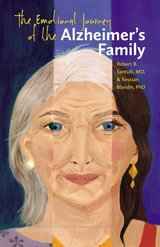
The Emotional Journey of the Alzheimer's Family
Robert B. Santulli and Kesstan Blandin
Dartmouth College Press, 2015
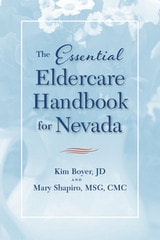
The Essential Eldercare Handbook for Nevada
Kim Boyer
University of Nevada Press, 2014
Boyer and Shapiro provide Nevada-specific information\--medical, legal, and financial\--on the wide range of problems that arise during the elder years. Case studies show how a typical family copes with troubles such as failing health or financial cares and what options they have. This guide will help any Nevada resident plan for their own senior years and take care of aging parents, spouses, and other loved ones.
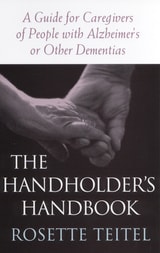
The Handholder's Handbook
A Guide for Caregivers of People with Alzheimer's or Other DementiasTeitel, Rosette
Rutgers University Press, 2001

The Moon in the Water
Reflections on an Aging ParentKathy J. Phillips
Vanderbilt University Press, 2008
In a series of moving vignettes, the author begins by describing a particular representation of Water-Moon Kuan Yin, a Buddhist teacher and goddess associated with compassion, who often sits on a precarious overhang or floats on a flimsy petal. Then Kuan Yin steps out of the frame to join the author in the mundane challenges of caring for her father-transferring his health insurance, struggling with a wheelchair van, managing adult diapers, or playing in the fictions of dementia. From perplexed to poignant to funny, the vignettes record the working-class English of a fading but still wise dad, and they find other human versions of Kuan Yin in a doctor who will still make house calls or kind strangers in the street.
The book includes ten illustrations: both classical representations of Kuan Yin and also the author's own drawings, which adapt Kuan Yin in an act of practical spirituality, reading art through life and life through art. Each vignette invites the harried caregiver to take a deep breath and meditate on the trials and joys of caring for an aging parent.
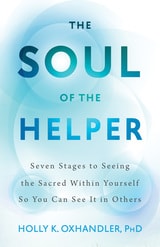
The Soul of the Helper
Seven Stages to Seeing the Sacred within Yourself So You Can See It in OthersHolly K. Oxhandler
Templeton Press, 2025
In their devotion to the well-being of others, caregivers routinely put their own well-being last and can unintentionally burn themselves out physically, emotionally, and spiritually. Their self-neglect, paired alongside a deep desire to help others, has the potential to stir up feelings of anger and resentment, leading to a sense of guilt and shame. They often believe that if they were to grant themselves any rest or grace, they would be at risk of failing in their duty.
In The Soul of the Helper, Dr. Holly K. Oxhandler shows caregivers and fellow helpers a more self-compassionate way to cope with their overwhelming responsibilities and to attend to their own needs, particularly when it comes to their mental health and spiritual journey. She invites them to pause and realize that if they let their personal resources run dry, they cannot possibly care for others as fully as they wish. In fact, their efforts are likely to cause more harm than good.
With a background in spiritually-integrated mental health, Dr. Oxhandler teaches helpers a seven-step process to slow down and reconnect with the stillness within themselves. It is in this space of stillness that Oxhandler guides helpers to reconnect with the “sacred spark” within their soul. By allowing themselves to enter that stillness, caregivers will recognize that they, too, are worthy of care. And with that realization, they will see anew the sacred spark that dwells inside everyone else, especially within those they’re helping.
As a social worker, researcher, and person of faith, Dr. Oxhandler writes in a warm and welcoming style, shares many relatable stories, and widens her scope to include believers of all faiths and spiritual traditions. Her book is for caregivers everywhere who sense the sacred spark within them saying, in effect: “Come to me, all you who are weary and burdened, and I will give you rest.”

Unsettled Labors
Migrant Care Work in Palestine/IsraelRachel H. Brown
Duke University Press, 2024
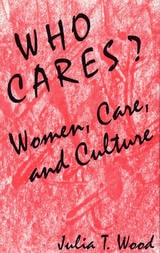
Who Cares? Women, Care, and Culture
Julia T. Wood
Southern Illinois University Press, 1994
At a time when studies suggest the average American woman spends seventeen years caring for children and eighteen years caring for aging parents, Julia T. Wood examines how culture creates and sustains our definitions of caring, determines who cares along gender lines, and assigns the diminished value that caring has in our society.
Wood argues that America’s expanding need for caring is currently being met at an unacceptably high cost to caregivers. It is time, she believes, to examine caregiving roles and the personal, political, and social issues that surround the question of who cares. Caring must be recognized and promoted as an activity that commands the respect and participation of all members of our society—men and women alike.
Only by implementing changes in the basic fabric of American culture, affecting both the structure and the policies of our society and government, can we, Wood concludes, carve out a system of caring that will recognize caring as everyone’s responsibility.
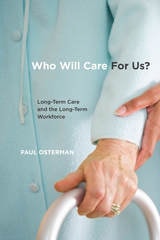
Who Will Care For Us?
Long-Term Care and the Long-Term WorkforcePaul Osterman
Russell Sage Foundation, 2017
Using national surveys, administrative data, and nearly 120 original interviews with workers, employers, advocates, and policymakers, Osterman finds that direct care workers are marginalized and often invisible in the health care system. While doctors and families alike agree that good home care aides and CNAs are crucial to the well-being of their patients, the workers report poverty-level wages, erratic schedules, exclusion from care teams, and frequent incidences of physical injury on the job. Direct care workers are also highly constrained by policies that specify what they are allowed to do on the job, and in some states are even prevented from simple tasks such as administering eye drops.
Osterman concludes that broadening the scope of care workers’ duties will simultaneously boost the quality of care for patients and lead to better jobs and higher wages. He proposes integrating home care aides and CNAs into larger medical teams and training them as “health coaches” who educate patients on concerns such as managing chronic conditions and transitioning out of hospitals. Osterman shows that restructuring direct care workers’ jobs, and providing the appropriate training, could lower health spending in the long term by reducing unnecessary emergency room and hospital visits, limiting the use of nursing homes, and lowering the rate of turnover among care workers.
As the Baby Boom generation ages, Who Will Care for Us? demonstrates the importance of restructuring the long-term care industry and establishing a new relationship between direct care workers, patients, and the medical system.