Results by title
4 books match the query 'Carnivals'
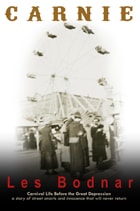
Carnie
Les Bodnar
St. Augustine's Press, 2010
Les Bodnar is a respected orthopedic surgeon and former physician for the Notre Dame football team. His memoir, however, is from an era long before that fame, when he was 12 and 13, and a part of his father’s carnival. The romance of carnival life, of escaping the 9-5 doldrums and somehow recapturing yourself, is there, but so too the hard work and trials, the difficulty of putting on a show day after day and week after week for people who both love the show and are apprehensive of the people who put it on.
The year is 1928, and the Boom is booming in our great cities, but life in the small towns in the Indiana, Illinois, and Wisconsin remains tenuous. Bodnar writes about putting the show together, handling the sometimes-unpredictable people who perform and run the games, holding on to the core that made the carnival that expectant joy for kids everywhere and of all ages. It’s a world filled with shills and cons, freak shows (some of them real) and rides galore, trust given to unlikely characters and the security of family, above all family, despite all the absences and hardships.
In the background the coming end of the Boom whispers, and soon the country will plunge into what will be called in America “the Great Depression.” It is not the innocence experienced before the Great War. Childhood had witnessed something too unspeakable and horrific to write about then; it demanded poetry. We hunkered down within our own, and did our best to forget, and only occasionally, as when Bodnar witnessed a Ku Klux Klan rally, did the ugliness that can be the world intrude on our sensibilities, and the reader finds himself or herself sharing this street-smart innocence of a never-to-return era.
Complete with period photographs, a lexicon, a bibliography, and a look at the way carnivals operate to this day, Carnie will inform, charm, and perhaps edify.
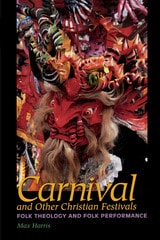
Carnival and Other Christian Festivals
Folk Theology and Folk PerformanceBy Max Harris
University of Texas Press, 2003
With a riotous mix of saints and devils, street theater and dancing, and music and fireworks, Christian festivals are some of the most lively and colorful spectacles that occur in Spain and its former European and American possessions. That these folk celebrations, with roots reaching back to medieval times, remain vibrant in the high-tech culture of the twenty-first century strongly suggests that they also provide an indispensable vehicle for expressing hopes, fears, and desires that people can articulate in no other way.
In this book, Max Harris explores and develops principles for understanding the folk theology underlying patronal saints' day festivals, feasts of Corpus Christi, and Carnivals through a series of vivid, first-hand accounts of these festivities throughout Spain and in Puerto Rico, Mexico, Peru, Trinidad, Bolivia, and Belgium. Paying close attention to the signs encoded in folk performances, he finds in these festivals a folk theology of social justice that—however obscured by official rhetoric, by distracting theories of archaic origin, or by the performers' own need to mask their resistance to authority—is often in articulate and complex dialogue with the power structures that surround it. This discovery sheds important new light on the meanings of religious festivals celebrated from Belgium to Peru and on the sophisticated theatrical performances they embody.
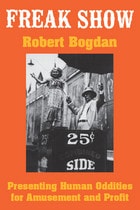
Freak Show
Presenting Human Oddities for Amusement and ProfitRobert Bogdan
University of Chicago Press, 1990
Robert Bogdan's fascinating social history brings to life the world of the freak show and explores the culture that nurtured and, later, abandoned it. In uncovering this neglected chapter of show business, he describes in detail the flimflam artistry behind the shows, the promoters and the audiences, and the gradual evolution of public opinion from awe to embarrassment. Freaks were not born, Bogdan reveals; they were manufactured by the amusement world, usually with the active participation of the freaks themselves. Many of the "human curiosities" found fame and fortune, becoming the celebrities of their time, until the ascent of professional medicine transformed them from marvels into pathological specimans.
Hurricanes and Carnivals
Essays by Chicanos, Pochos, Pachucos, Mexicanos, and ExpatriatesEdited by Lee Gutkind, with an Introduction by Ilan Stavans
University of Arizona Press, 2007