Results by title
80 books match the query 'Catalogs' and 11 start with a
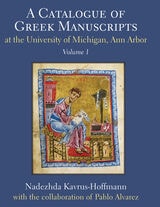
A Catalogue of Greek Manuscripts at the University of Michigan, Ann Arbor, Volume 1
Nadezhda Kavrus-Hoffmann with the collaboration of Pablo Alvarez
University of Michigan Press, 2021
A Catalogue of Greek Manuscripts at the University of Michigan, Ann Arbor is a comprehensive, fully illustrated catalogue of the largest collection of Greek manuscripts in America, including 110 codices and fragments ranging from the fourth to the nineteenth century. The collection, held in the Special Collections Research Center of the University of Michigan Library, contains many manuscripts from Epirus and the Meteora monasteries built on high pinnacles of rocks in Thessaly. Nadezhda Kavrus-Hoffmann has based the manuscript descriptions on the latest developments in the fields of paleography and codicology, including the newest recommendations of the Institute for Research and History of Texts in Paris. The catalogue includes high-resolution plates of all the manuscripts, allowing researchers to compare the entries with other Greek manuscripts around the world. This catalogue contains a trove of fascinating information related to Byzantine culture that will be available for the first time to scholars working on various disciplines of the humanities such as Classical and Byzantine Studies, Art History, Medieval Studies, Theology, and History.
This is the first volume of a projected two-volume set. Volume 2, also by Nadezhda Kavrus-Hoffmann, will contain descriptions of remaining Greek manuscripts in the Library’s collection, starting with Mich. Ms. 59 and ending with Mich. Ms. 238, for a total of 53 manuscripts and 8 fragments. Both volumes will have the same format – catalogue entries for each manuscript together with extensive illustrations. The publication date for Volume 2 has not been established.
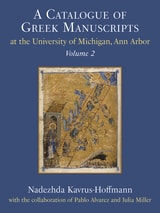
A Catalogue of Greek Manuscripts at the University of Michigan, Ann Arbor, Volume 2
Nadezhda Kavrus-Hoffmann with the collaboration of Pablo Alvarez and Julia Miller
University of Michigan Press, 2026
A Catalogue of Greek Manuscripts at the University of Michigan, Ann Arbor, Volume II unveils the rich diversity and enduring legacy of the Greek manuscript tradition preserved in one of North America's largest collections. Building on the acclaimed first volume, this second and concluding volume offers comprehensive illustrated descriptions of eighty-four manuscripts and fragments housed in the University of Michigan Library's Special Collections Research Center. The discovery of twenty-three previously unknown manuscripts and fragments significantly expands our understanding of Byzantine and post-Byzantine book culture, illuminating the remarkable continuity of Greek scholarly, liturgical, and artistic traditions from the ninth through the nineteenth centuries.
Each entry integrates codicological features, handwriting analysis, textual content, decoration, binding, provenance, and references to earlier scholarship as well as high-quality color plates to illustrate representative pages, script types, and illuminations. Among the exceptional highlights are a fragment of The Great Calculation According to the Indians by Maximos Planoudes, preserving portions of this rare mathematical treatise otherwise lost; an illuminated 1371 copy of The Heavenly Ladder by John Klimax, created by the renowned scribe Joasaph II of the Hodegon Monastery in Constantinople; and a newly identified manuscript containing rare patristic homilies linked to the sixteenth-century Choniates scriptorium in Venice.

A Catalogue of the Pre-1500 Western Manuscript Books at the Newberry Library
Paul Saenger
University of Chicago Press, 1989
Some of the books, such as those from the libraries of Philip the Good and Anne of Brittany, are beautifully illuminated. But the collection also includes an unusual array of "typical" medieval books, chosen not for their beauty but for their paleographical, codicological, and textual interest. Such codices include an eleventh-century Carthusian monk, and numerous books of hours adapted for feminine use. Paul Saenger has painstakingly identified the text, illumination, physical structure, and provenance for each of the more than 200 books in the collection to provide an exemplary guide to literate culture in the late Middle Ages.
This catalogue, carefully researched and handsomely illustrated, will be an invaluable resource for historians, art historians, paleographers, bibliographers, and collectors.
A Visitable Past
Views of Venice by American Artists, 1860-1915Margaretta M. Lovell
University of Chicago Press, 1988

Albums of James Tissot
Willard Misfeldt
University of Wisconsin Press, 1982
Artist James Tissot compiled photographs of his work in three albums, which are reproduced in this book.
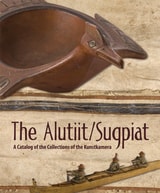
Alutiit/Sugpiat
A Catalog of the Collections of the KunstkameraEdited by Yuri E. Berezkin
University of Alaska Press, 2012
This beautifully photographed book catalogs the collection of nearly five hundred Alutiiq cultural items held by the Peter the Great Museum of Anthropology and Ethnography, or the Kunstkamera, in St. Petersburg, Russia. Gathered between 1780 and 1867, many of the artifacts are composed of fur, feathers, gut, hair, and other delicate materials, which prevent their transport for display or study.
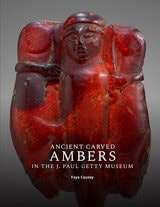
Ancient Carved Ambers in the J. Paul Getty Museum
Faya Causey
J. Paul Getty Trust, The, 0
The catalogue is preceded by a general introduction to ancient amber (which was also published in 2012 as a stand-alone print volume titled Amber and the Ancient World). Through exquisite visual examples and vivid classical texts, this book examines the myths and legends woven around amber—its employment in magic and medicine, its transport and carving, and its incorporation into jewelry, amulets, and other objects of prestige. This publication highlights a group of remarkable amber carvings at the J. Paul Getty Museum.
This catalogue was first published in 2012 at museumcatalogues.getty.edu/amber/. The present online edition of this open-access publication was migrated in 2019 to www.getty.edu/publications/ambers/; it features zoomable, high-resolution photography; free PDF, EPUB, and Kindle/MOBI downloads of the book; and JPG downloads of the catalogue images.
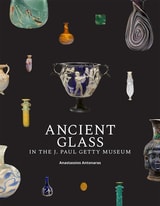
Ancient Glass in the J. Paul Getty Museum
Anastassios Antonaras
J. Paul Getty Trust, The, 2024
The J. Paul Getty Museum’s collection of ancient glass—astonishingly delicate, richly hued, and fancifully shaped—is among the most celebrated in the United States. Ranging from the Bronze Age to the medieval period (1500 BCE–1000 CE), the 584 objects included in this publication originated from a wide geographical area, including the Middle East, the Mediterranean, and central Europe.
This catalogue, written by acclaimed scholar Anastassios Antonaras, begins with a fascinating essay on the history of glassmaking—a highly technical art form that is still practiced similarly today—and continues with detailed and informative entries on the works. Each entry is accompanied by vivid photography. The book also includes a history of the collection, glossary of glassmaking terms, technical study, and full bibliography.
The free online edition of this open-access publication is available at getty.edu/publications/ancient-glass/ and includes 360-degree views and zoomable high-resolution photography. Also available are free PDF and EPUB downloads of the book, and JPG downloads of the main catalogue images.
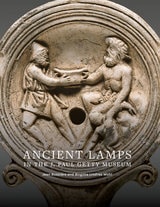
Ancient Lamps in the J. Paul Getty Museum
Jean Bussière
J. Paul Getty Trust, The, 2017
Reflecting the Getty's commitment to open content, Ancient Lamps in the J. Paul Getty Museum is available online at http://www.getty.edu/publications/ancientlamps and may be downloaded free of charge in multiple formats, including PDF, MOBI/Kindle, and EPUB, and features zoomable images and multiple views of every lamp, an interactive map drawn from the Ancient World Mapping Center, and bibliographic references.
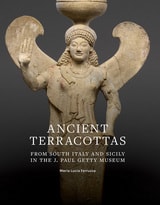
Ancient Terracottas from South Italy and Sicily in the J. Paul Getty Museum
Maria Lucia Ferruzza
J. Paul Getty Trust, The, 2016
Reflecting the Getty's commitment to open content, Ancient Terracottas from South Italy and Sicily in the J. Paul Getty Museum is available online at www.getty.edu/publications/terracottas and may be downloaded for free.

Arnold Newman
At WorkBy Roy Flukinger
University of Texas Press, 2013
A driven perfectionist with inexhaustible curiosity about people, Arnold Newman was one of the twentieth century’s greatest and most prolific photographers. In a career that spanned nearly seven decades and produced many iconic works, Newman became renowned for making “pictures of people” (he objected to the term “portraits”) in the places where they worked and lived—the spaces that were most expressive of their inner lives. Refusing the label of “art photographer,” Newman also accepted magazine and advertising commissions and executed them to the same exacting standards that characterized all of his work. He spent countless hours training aspiring photographers, sharing his own vast experience, but allowing them the freedom to experiment and discover.
Rich with materials from Newman’s extensive archive in the Harry Ransom Center at the University of Texas at Austin, Arnold Newman offers unprecedented, firsthand insights into the evolution of the photographer’s creativity. Reproduced here are not only many of Newman’s signature images, but also contact sheets, Polaroids, and work prints with his handwritten notes, which allow us to see the process by which he produced the images. Pages from his copious notebooks and calendars reveal Newman’s meticulous preparation and exhausting schedule. Adsheets and magazine covers from Holiday, LIFE, Newsweek, Look, Esquire, Seventeen, Time, and Sports Illustrated show the range of Newman’s largely unknown editorial work. Roy Flukinger provides a contextual overview of the archive, and Marianne Fulton’s introduction highlights the essential moments in the development of Newman’s life and work.