Results by title
5 books match the query 'Catalonia'
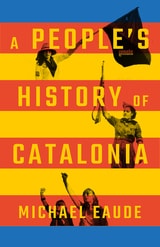
A People's History of Catalonia
Michael Eaude
Pluto Press, 2022
The fight of an oppressed nation for its sovereignty has often dovetailed with that of a militant working class for social justice.
At every home game of FC Barcelona, at 17 minutes and 14 seconds of play, the 100,000-capacity Camp Nou stadium is filled by the roar of “IN-DE-PEN-DÈN-CI-A!” Time stops for a second. History lives in the present...
Catalonia's national consciousness has deep roots. There are countries twice the size with histories half as interesting. A People's History of Catalonia tells that history, from below, in all its richness and complexity. The region's struggle for independence has, for centuries, been violently resisted, the Catalan language suppressed and its leaders jailed.
From the peasant revolts of the 15th century and the siege of Barcelona in 1714, to defeat in the Spanish Civil War, and the slow re-emergence of the workers' movement and anti-Francoist resistance in the years that followed, Michael Eaude tells a compelling story whose ending has yet to be written.
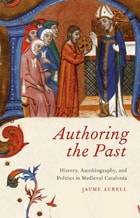
Authoring the Past
History, Autobiography, and Politics in Medieval CataloniaJaume Aurell
University of Chicago Press, 2012
Authoring the Past surveys medieval Catalan historiography, shedding light on the emergence and evolution of historical writing and autobiography in the Middle Ages, on questions of authority and authorship, and on the links between history and politics during the period. Jaume Aurell examines texts from the late twelfth to the late fourteenth century—including the Latin Gesta comitum Barcinonensium and four texts in medieval Catalan: James I’s Llibre dels fets, the Crònica of Bernat Desclot, the Crònica of Ramon Muntaner, and the Crònica of Peter the Ceremonious—and outlines the different motivations for the writing of each.
For Aurell, these chronicles are not mere archaeological artifacts but rather documents that speak to their writers’ specific contemporary social and political purposes. He argues that these Catalonian counts and Aragonese kings were attempting to use their role as authors to legitimize their monarchical status, their growing political and economic power, and their aggressive expansionist policies in the Mediterranean. By analyzing these texts alongside one another, Aurell demonstrates the shifting contexts in which chronicles were conceived, written, and read throughout the Middle Ages.
The first study of its kind to make medieval Catalonian writings available to English-speaking audiences, Authoring the Past will be of interest to scholars of history and comparative literature, students of Hispanic and Romance medieval studies, and medievalists who study the chronicle tradition in other languages.
Books against Tyranny
Catalan Publishers under FrancoLaura Vilardell
Vanderbilt University Press, 2022
Author Laura Vilardell examines documents including firsthand witness accounts, correspondence, memoirs, censorship files, newspapers, original interviews, and unpublished material housed in various Spanish archives. As such, Books against Tyranny opens up the field and serves as an informative tool for scholars of Franco's Spain, Catalan social movements, and censorship more generally.
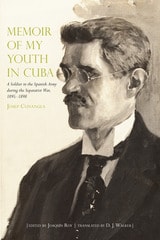
Memoir of My Youth in Cuba
A Soldier in the Spanish Army during the Separatist War, 1895–1898Dolores J. Walker
University of Alabama Press, 2017
A historically significant memoir offering a firsthand perspective on life, identity, and cultural transformation in nineteenth-century Cuba.
Memoir of My Youth in Cuba: A Soldier in the Spanish Army during the Separatist War, 1895–1898 is a translation of the memoir Memorias de mi juventud en Cuba: Un soldado del ejército español en la guerra separatista (1895–1898) by Josep Conangla. The English edition is based on the Spanish version edited by Joaquín Roy, who found the memoir and was given access to the Conangla family archives. Conangla’s memoir, now available in English, is an important addition to the accounts of Spanish and Cuban soldiers who served in Cuba’s second War of Independence.
Spaniard Josep Conangla was conscripted at the age of twenty and sent to Cuba. In the course of his time there, he reaffirmed his pacifism and support of Cuban independence. The young man was a believer who unfailingly connected his view of events to the Christian humanitarianism on which he prided himself. Conangla’s advanced education and the influence of well-placed friends facilitated his assignment to safe bureaucratic positions during the war, ensuring that he would not see combat. From his privileged position, he was a keen observer of his surroundings. He described some of the decisions he made—which at times put him at odds with the military bureaucracy he served—along with what he saw as the consequences of General Valeriano Weyler’s decree mandating the reconcentración, an early version of concentration camps. What Conangla saw fueled his revulsion at the collusion of the Spanish state and its state-sponsored religion in that policy. “Red Mass,” published six years after the War of Independence and included in his memoir, is a vivid expression in verse of his abhorrence.
Conangla’s recollections of the contacts between Spaniards and Cubans in the areas to which he was assigned reveal his ability to forge friendships even with Creole opponents of the insurrection. As an aspiring poet and writer, Conangla included material on fellow writers, Cuban and Spanish, who managed to meet and exchange ideas despite their circumstances. His accounts of the Spanish defeat, the scene in Havana around the end of the war, along with his return to Spain, are stirring.

Negotiating Spain and Catalonia
Competing Narratives of National IdentityFernando León-Solís
Intellect Books, 2013
The two case studies included in this book (dealing with the Football World Cups of 1994 and 2002, and the general elections of 1996 and 2000) examine competing discourses of Spain, Catalonia and their national identities, as constructed in the Spanish press. The conservative discourse offers traditional and unified images of Spain close to the stereotype, whereas more liberal visions of the country regard 'Europeanism' and 'reason' (not 'passive') as the values Spain should aspire to. From a peripheral perspective, Catalan self-definition is of a people that is hardworking, thoughtful, truly European, and different from the rest of the Spaniards.
However, these differences between the discourses are not always so clear-cut. Central to Negotiating Spain and Catalonia is the idea of the constant renegotiation of Spanish and Catalan identities in order to adapt them to the political circumstance: both case studies show how radically different narratives of Spanishness and Catalanicity offered in the turbulent political past tend to merge into the more tranquil present.