Results by title
14 books match the query 'Catholicism'
Catholicism and Liberal Democracy
Forgotten Roots and Future ProspectsJames Martin Carr
Catholic University of America Press, 2022
Catholicism and Politics in Communist Societies
Pedro Ramet, ed.
Duke University Press, 1990
Catholicism has, on the one hand, traditionally regarded earthly life as of secondary importance—as an instrument of spiritual transformation—and, on the other, has ascribed great value to the early institutions of the church, taking great interest in temporal matters that affects its institutional concerns. Against the backdrop of this duality, the church has changed over the centuries, adapting to local and national conditions. Catholicism and Politics in Communist Societies surveys these local and national adaptations in their historical contexts, linking the past experience of the church to its present circumstances. Organized around themes of tradition vs. modernity, hierarchy vs. lower clergy, and institutional structure vs. grass-roots organization, this comprehensive volume presents a detailed, country-by-country portrait of the political and social status of the church today in communist and socialist settings.
Contributors. Pedro Ramet, Arthur F. McGovern, Roman Solchanyk, Ivan Hvat, Robert F. Goeckel, C. Chrypinski, Milan J. Reban, Leslie Laszlo, Janice Broun, Eric O. Hanson, Stephen Denney, Thomas E. Quigley, Humberto Belli, Hansjakob Stehle, George H. Williams
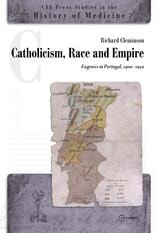
Catholicism, Race and Empire
Eugenics in Portugal, 1900-1950Richard Cleminson
Central European University Press, 2014
Comic Fascism
Ideology, Catholicism, and Americanism in Italian Children’s PeriodicalsZane Elward
The Ohio State University Press, 2025
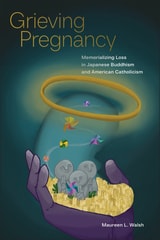
Grieving Pregnancy
Memorializing Loss in Japanese Buddhism and American CatholicismMaureen L. Walsh
Rutgers University Press, 2025
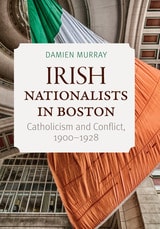
Irish Nationalists in Boston
Catholicism and Conflict, 1900-1928Damien Murray
Catholic University of America Press, 2018
For a brief period after World War I, Irish-American nationalism in Boston became a vehicle for the promotion of wider democratic reform. Though the movement was unable to survive the disagreements surrounding the Anglo-Irish Treaty of 1921, it had been a source of ethnic unity that enabled Boston’s Irish community to negotiate the challenges of the postwar years including the anti-socialist Red Scare and the divisions caused by the Boston Police Strike in the fall of 1919. Furthermore, Boston’s Irish nationalists drew heavily on Catholic Church teachings such that Irish ethnicity came to be more clearly identified with the advocacy of both cultural pluralism and the rights of immigrant and working families in Boston and America.
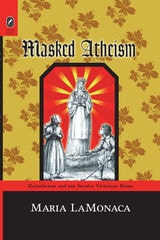
Masked Atheism
Catholicism and the Secular Victorian HomeMaria LaMonaca
The Ohio State University Press, 2008
Why did the Victorians hate and fear Roman Catholics so much? This question has long preoccupied literary and cultural scholars alike. Masked Atheism: Catholicism and the Secular Victorian Home by Maria LaMonaca begins with the assumption that anti-Catholicism reveals far more about the Victorians than simple theological disagreements or religious prejudice. An analysis of anti-Catholicism exposes a host of anxieties, contradictions, and controversies dividing Great Britain, the world’s most powerful nation by the mid-nineteenth century.
Noting that Catholicism was frequently caricatured by the Victorians as “masked atheism”—that is, heathenism and paganism masquerading as legitimate Christianity—LaMonaca’s study suggests that much anti-Catholic rhetoric in Victorian England was fueled by fears of encroaching secularism and anxieties about the disappearance of God in the modern world. For both male and female writers, Catholicism became a synonym for larger, “ungodly” forces threatening traditional ways of life: industrialization, rising standards of living, and religious skepticism.
LaMonaca situates texts by Charlotte Brontë, George Eliot, Christina Rossetti, Elizabeth Barrett Browning, Michael Field, and others against a rich background of discourses about the growing visibility of Anglo and Roman Catholicism in Victorian England. In so doing, she demonstrates the influence of both pro- and anti-Catholic sentiment on constructs of Victorian domesticity, and explores how writers appropriated elements of Catholicism to voice anxieties about the growing secularization of the domestic sphere: a bold challenge to sentimental notions of the home as a “sacred” space. Masked Atheism will contribute a fresh perspective to an ongoing conversation about the significance of Catholicism in Victorian literature and culture.

Medicine, Health Care, & Ethics
Catholic VoicesJohn F. Morris
Catholic University of America Press, 2007
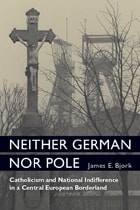
Neither German nor Pole
Catholicism and National Indifference in a Central European BorderlandJames E. Bjork
University of Michigan Press, 2009
"This is a fascinating local story with major implications for studies of nationalism and regional identities throughout Europe more generally."
---Dennis Sweeney, University of Alberta
"James Bjork has produced a finely crafted, insightful, indeed, pathbreaking study of the interplay between religious and national identity in late nineteenth-century Central Europe."
---Anthony Steinhoff, University of Tennessee at Chattanooga
Neither German nor Pole examines how the inhabitants of one of Europe's most densely populated industrial districts managed to defy clear-cut national categorization, even in the heyday of nationalizing pressures at the turn of the twentieth century. As James E. Bjork argues, the "civic national" project of turning inhabitants of Upper Silesia into Germans and the "ethnic national" project of awakening them as Poles both enjoyed successes, but these often canceled one another out, exacerbating rather than eliminating doubts about people's national allegiances. In this deadlock, it was a different kind of identification---religion---that provided both the ideological framework and the social space for Upper Silesia to navigate between German and Polish orientations. A fine-grained, microhistorical study of how confessional politics and the daily rhythms of bilingual Roman Catholic religious practice subverted national identification, Neither German nor Pole moves beyond local history to address broad questions about the relationship between nationalism, religion, and modernity.
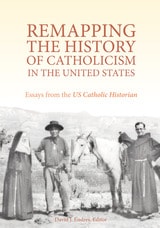
Remapping the History of Catholicism in the United States
David J. Endres
Catholic University of America Press, 2017
Timothy Matovina’s opening essay sets the theme for the volume, encouraging a remapping of U.S. Catholic history to more widely encompass its various localities and peoples, especially the significance of non-European ethnic groups and the role of Catholics in the American Southwest. Jeanne Petit explores Catholic womanhood’s strength and organizational zeal in the post-World War I era, noting the obstacles and successes of women’s attempts to be recognized fully as American citizens and members of the Church. Anne Klejment weaves together the lives of Dorothy Day and Cesar Chavez to illustrate their use of nonviolence and “weapons of the spirit” to respond to societal injustice. Amanda Bresie provides a window into the life of Mother Katharine Drexel, noting the generosity of the millionaire heiress, but also her meticulous record keeping and close supervision of her funding of educational and evangelization eorts among Native and African Americans. Kristine Ashton Gunnell analyzes the ways in which the Daughters of Charity crossed cultural boundaries to offer charitable assistance to Mexican and Japanese communities in Los Angeles. Matthew Cressler explores the intersection of Black Power and distinctive African American-inspired liturgies, arguing that the liturgy became a site of struggle as black self-determination and nationalism impacted worship and black Catholic identity. Finally, Joseph Chinnici offers an important essay on re-envisioning post-conciliar U.S. Catholicism in its global context, offering a new approach to how we consider the American Catholic narrative and write its history.
Together these path-breaking studies serve as a model for historians seeking to engage in the cartographic task of remapping the U.S. Catholic experience.
The Light of Christ
An Introduction to CatholicismThomas Joseph White, OP
Catholic University of America Press, 2017
At the same time, The Light of Christ also addresses topics such as evolution, the modern historical study of Jesus and the Bible, and objections to Catholic moral teaching. Touching on the concerns of contemporary readers, Fr. White examines questions such as whether Christianity is compatible with the findings of the modern sciences, do historical Jesus studies disrupt or confirm the teaching of the faith, and does history confirm the antiquity of Catholic claims.
This book serves as an excellent introduction for young professionals with no specialized background in theology who are interested in learning more about Catholicism, or as an introduction to Catholic theology. It will also serve as a helpful text for theology courses in a university context.
As Fr. White states in the book’s introduction: “This is a book that offers itself as a companion. I do not presume to argue the reader into the truths of the Catholic faith, though I will make arguments. My goal is to make explicit in a few broad strokes the shape of Catholicism. I hope to outline its inherent intelligibility or form as a mystery that is at once visible and invisible, ancient and contemporary, mystical and reasonable.”
The Privilege of Being Banal
Art, Secularism, and Catholicism in ParisElayne Oliphant
University of Chicago Press, 2021
Exploring the violent histories and alternate trajectories effaced through this banal backgrounding of a crucial aspect of French history and culture, this richly textured ethnography lays bare the profound nostalgia that undergirds Catholicism’s circulation in nonreligious sites such as museums, corporate spaces, and political debates. Oliphant’s aim is to unravel the contradictions of religion and secularism and, in the process, show how aesthetics and politics come together in contemporary France to foster the kind of banality that Hannah Arendt warned against: the incapacity to take on another person’s experience of the world. A creative meditation on the power of the taken-for-granted, The Privilege of Being Banal is a landmark study of religion, aesthetics, and public space.
The Two Churches
Catholicism and Capitalism in the World SystemMichael L. Budde
Duke University Press, 1992
Budde's argument here is twofold. He contends that world Catholicism, led by its Third World majority (most notably in Latin America), will continue to develop in an increasingly anticapitalist direction; and he suggests that once-dominant First World Catholic churches (exemplified by the U.S. Catholic church), are poorly placed to respond in solidarity with their coreligionists from the Third World.
Covering a wide range of theoretical and substantive matters, The Two Churches examines religion as a source of both social legitimation and social rebellion. It demonstrates the importance of ecclesiology, a branch of theology dealing with "theories of the church," and it highlights the effect of capitalism on world Catholicism, as well as the latter's influence on the development of the capitalist order.
In his original, far-reaching analysis of the Catholic church's role in world affairs, Budde revises current views of religious institutions as subordinate social phenomena. By relating developments in the world political economy to material conditions in the Third World and in turn to the practice of Catholicism, he reveals how the Catholic church functions as a worldwide institution. He also shows how core-periphery conflicts within the church affect transnational capitalism.
As the Third World becomes more and more volatile, and as its relations with the First World further complicate the politics of the Catholic church, the questions addressed in The Two Churches demand attention with increasing urgency. Timely, thoughtful, and lucid, this book will inform and enhance our understanding of this complex, pressing issue.
Vital Conflicts in Medical Ethics
A Virtue Approach to Craniotomy and Tubal PregnanciesMartin Rhonheimer
Catholic University of America Press, 2009