Results by title
14 books match the query 'Caves'
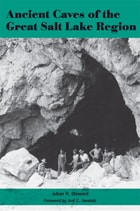
Ancient Caves of the Great Salt Lake Region
Julian H Steward
University of Utah Press, 2009
First published in 1937 by the Bureau of American Ethnology, this edition of Ancient Caves of the Great Salt Lake Region features a new foreword by Joel Janetski.
Archaeological Explorations in Caves of the Point of Pines Region, Arizona
James C. Gifford
University of Arizona Press, 1980
Basketmaker Caves in the Prayer Rock District, Northeastern Arizona
Elizabeth Ann Morris
University of Arizona Press, 1980
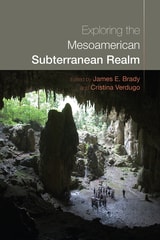
Exploring the Mesoamerican Subterranean Realm
James E. Brady
University Press of Colorado, 2025
The volume expands the study of caves to focus on the broader realm of subterranean space, introducing the concept of the constructed subterranean, a space in which the Maya deliberately created sacred landmarks through excavation. Chapters critically examine chultuns, previously thought to be subterranean storage chambers, and sascaberas, previously considered mines, demonstrating that the traditional archaeological models are deeply flawed. A wealth of data on both features is used to envision a new sacred landscape filled with thousands of subterranean sacred landmarks. Natural caves are also examined; a survey conducted around the ancient site of Yaxchilan considers the obvious importance of large stalagmites set up in the site core as monuments. Long-distance pilgrimages to these caves fundamentally reevaluates the nature of pilgrimage and reveals an economic and political importance that structured settlement and activities around the pilgrimage sites. Finally, evidence is analyzed to show that the human bones recovered from Midnight Terror Cave, Belize, were the result of human sacrifice.
Dealing equally with the archaeology of both natural and constructed subterranean spaces, Exploring the Mesoamerican Subterranean Realm challenges preconceived notions of these spaces and their meanings, dramatically shifting the field’s focus and extending the understanding of the critical importance of this “dark side” of archaeology.
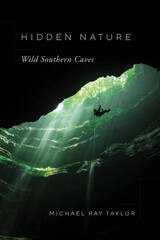
Hidden Nature
Wild Southern CavesMichael Ray Taylor
Vanderbilt University Press, 2020
More than ten thousand known caves lie beneath the state of Tennessee according to the Tennessee Cave Survey, a nonprofit organization that catalogs and maps them. Thousands more riddle surrounding states. In Hidden Nature, Michael Ray Taylor tells the story of this vast underground wilderness. In addition to describing the sheer physical majesty of the region’s wild caverns and the concurrent joys and dangers of exploring them, he examines their rich natural history and scientific import, their relationship to clean water and a healthy surface environment, and their uncertain future.
As a longtime caver and the author of three popular books related to caving—Cave Passages, Dark Life, and Caves—Taylor enjoys (for a journalist) unusual access to this secretive world. He is personally acquainted with many of the region’s most accomplished cave explorers and scientists, and they in turn are familiar with his popular writing on caves in books; in magazines such as Audubon, Outside, and Sports Illustrated; and on websites such as those of the Discovery Channel and the PBS science series Nova.
Hidden Nature is structured as a comprehensive work of well-researched fact that reads like a personal narrative of the author’s long attraction to these caves and the people who dare enter their hidden chambers.
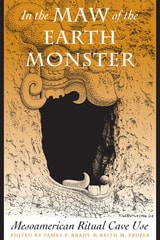
In the Maw of the Earth Monster
Mesoamerican Ritual Cave UseEdited by James E. Brady and Keith M. Prufer
University of Texas Press, 2005
As portals to the supernatural realm that creates and animates the universe, caves have always been held sacred by the peoples of Mesoamerica. From ancient times to the present, Mesoamericans have made pilgrimages to caves for ceremonies ranging from rituals of passage to petitions for rain and a plentiful harvest. So important were caves to the pre-Hispanic peoples that they are mentioned in Maya hieroglyphic writing and portrayed in the Central Mexican and Oaxacan pictorial codices. Many ancient settlements were located in proximity to caves.
This volume gathers papers from twenty prominent Mesoamerican archaeologists, linguists, and ethnographers to present a state-of-the-art survey of ritual cave use in Mesoamerica from Pre-Columbian times to the present. Organized geographically, the book examines cave use in Central Mexico, Oaxaca, and the Maya region. Some reports present detailed site studies, while others offer new theoretical understandings of cave rituals. As a whole, the collection validates cave study as the cutting edge of scientific investigation of indigenous ritual and belief. It confirms that the indigenous religious system of Mesoamerica was and still is much more terrestrially focused that has been generally appreciated.
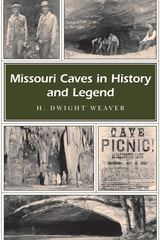
Missouri Caves in History and Legend
H. Dwight Weaver
University of Missouri Press, 2007
Missouri has been likened to a “cave factory” because its limestone bedrock can be slowly dissolved by groundwater to form caverns, and the state boasts more than six thousand caves in an unbelievable variety of sizes, lengths, and shapes. Dwight Weaver has been fascinated by Missouri’s caves since boyhood and now distills a lifetime of exploration and research in a book that will equally fascinate readers of all ages.
Missouri Caves in History and Legend records a cultural heritage stretching from the end of the ice age to the twenty-first century. In a grand tour of the state’s darkest places, Weaver takes readers deep underground to shed light on the historical significance of caves, correct misinformation about them, and describe the ways in which people have used and abused these resources.
Weaver tells how these underground places have enriched our knowledge of extinct animals and early Native Americans. He explores the early uses of caves: for the mining of saltpeter, onyx, and guano; as sources of water; for cold storage; and as livestock shelters. And he tells how caves were used for burial sites and moonshine stills, as hideouts for Civil War soldiers and outlaws—revealing how Jesse James became associated with Missouri caves—and even as venues for underground dance parties in the late nineteenth century.
Bringing caves into the modern era, Weaver relates the history of Missouri’s “show caves” over a hundred years—from the opening of Mark Twain Cave in 1886 to that of Onyx Mountain Caverns in 1990—and tells of the men and women who played a major role in expanding the state’s tourism industry. He also tracks the hunt for the buried treasure and uranium ore that have captivated cave explorers, documents the emergence of organized caving, and explains how caves now play a role in wildlife management by providing a sanctuary for endangered bats and other creatures.
Included in the book is an overview of cave resources in twelve regions, covering all the counties that currently have recorded caves, as well as a superb selection of photos from the author’s extensive collection, depicting the history and natural features of these underground wonders. Missouri Caves in History and Legend is a riveting account that marks an important contribution to the state’s heritage and brings this world of darkness into the light of day.
Of Caves and Shell Mounds
Edited by Kenneth C. Carstens and Patty Jo Watson
University of Alabama Press, 1996
Ancient human groups in the Eastern Woodlands of North America were long viewed as homogeneous and stable hunter-gatherers, changing little until the late prehistoric period when Mesoamerican influences were thought to have stimulated important economic and social developments. The authors in this volume offer new, contrary evidence to dispute this earlier assumption, and their studies demonstrate the vigor and complexity of prehistoric peoples in the North American Midwest and Midsouth. These peoples gathered at favored places along midcontinental streams to harvest mussels and other wild foods and to inter their dead in the shell mounds that had resulted from their riverside activities. They created a highly successful, pre-maize agricultural system beginning more than 4,000 years ago, established far-flung trade networks, and explored and mined the world's longest cave—the Mammoth Cave System in Kentucky.
Contributors include:
Kenneth C. Carstens, Cheryl Ann Munson, Guy Prentice, Kenneth B. Tankersley, Philip J. DiBlasi, Mary C. Kennedy, Jan Marie Hemberger, Gail E. Wagner, Christine K. Hensley, Valerie A. Haskins, Nicholas P. Herrmann, Mary Lucas Powell, Cheryl Claassen, David H. Dye, and Patty Jo Watson

Owls, Caves and Fossils
Predation, Preservation and Accumulation of Small Mammal Bones in Caves, with an Analysis of the Pleistocene Cave Faunas From Westbury-Sub-Mendip, Somerset, U.K.Peter Andrews
University of Chicago Press, 1990
Sacred Darkness
A Global Perspective on the Ritual Use of CavesHolley Moyes
University Press of Colorado, 2014
Covering the ritual use of caves in Europe, Asia, Australia, Africa, Mesoamerica, and the US Southwest and Eastern woodlands, this book brings together case studies by prominent scholars whose research spans from the Paleolithic period to the present day. These contributions demonstrate that cave sites are as fruitful as surface contexts in promoting the understanding of both ancient and modern religious beliefs and practices.
This state-of-the-art survey of ritual cave use will be one of the most valuable resources for understanding the role of caves in studies of religion, sacred landscape, or cosmology and a must-read for any archaeologist interested in caves.
Stone Houses and Earth Lords
Maya Religion in the Cave ContextKeith M. Prufer
University Press of Colorado, 2021
Demonstrating the importance of these subterranean spaces to Maya archaeology, contributors provide interpretations of archaeological remains that yield insights into Maya ritual and cosmology. Compiling the best current scholarship in this fast-growing area of research, Stone Houses and Earth Lords is a vital reference for Mayanists, Mesoamerican specialists, and others interested in the human use of caves in the New World. Contributors include: Juan Luis Bonor, James E. Brady, Robert Burnett, Allan B. Cobb, Pierre Robert Colas, Cesar Espinosa, Sergio Garza, David M. Glassman, Christina T. Halperin, Amalia Kenward, Andrew Kindon, Patricia McAnany, Christopher Morehart, Holley Moyes, Vanessa A. Owen, Shankari Patel, Polly Peterson, Keith M. Prufer, Timothy. W. Pugh, Frank Saul, Julie Saul, Ann M. Scott, Andrea Stone, and Vera Tiesler.
Subterranean Twin Cities
Greg Brick
University of Minnesota Press, 2009
We tend to send things underground that we are not interested in ever seeing again. Sewage. Garbage. In the past, we have used the underground to age such provisions as cheese and beer. In Subterranean Twin Cities, geologist, historian, and urban speleologist Greg Brick takes us on an adventurous, educational, and—thankfully—sanitary tour beneath the streets and into the myriad tunnels, caves, and industrial spaces that make up the Twin Cities’ fascinating and surprisingly vast underground landscape.
In this groundbreaking tour, the first of its kind of the Twin Cities, Brick mines the stories that lie below the city surface. Beginning with an accessible history on the geology of the area—including the giant cone-shaped mollusk Endoceras, whose thirteen-foot-long fossils are found in the Mississippi gorge—Brick guides us into a series of astounding firsthand expeditions. We follow him into St. Paul’s historic Carver’s Cave, with its stories of sunken treasure; through the many caves constructed for brewing, cheese ripening, and mushroom farming; and into the world of nineteenth-century show caves for tourists. We even find ourselves in the “Shangri-la” of urban caves: the extensive Schiek’s Cave seventy-five feet beneath the busy streets of downtown Minneapolis.
From spending the onset of Y2K in Carver’s Cave (just in case) to long hours wading in underground rivers, Brick proves himself a knowledgeable, wry, and daring guide. Subterranean Twin Cities shines a headlamp (with extra batteries, of course) into the captivating labyrinths beneath the Twin Cities and reminds us that what we see aboveground is really only half of the story.
The Devil's Book of Culture
History, Mushrooms, and Caves in Southern MexicoBy Benjamin Feinberg
University of Texas Press, 2003
Since the 1950s, the Sierra Mazateca of Oaxaca, Mexico, has drawn a strange assortment of visitors and pilgrims—schoolteachers and government workers, North American and European spelunkers exploring the region's vast cave system, and counterculturalists from hippies (John Lennon and other celebrities supposedly among them) to New Age seekers, all chasing a firsthand experience of transcendence and otherness through the ingestion of psychedelic mushrooms "in context" with a Mazatec shaman. Over time, this steady incursion of the outside world has significantly influenced the Mazatec sense of identity, giving rise to an ongoing discourse about what it means to be "us" and "them."
In this highly original ethnography, Benjamin Feinberg investigates how different understandings of Mazatec identity and culture emerge through talk that circulates within and among various groups, including Mazatec-speaking businessmen, curers, peasants, intellectuals, anthropologists, bureaucrats, cavers, and mushroom-seeking tourists. Specifically, he traces how these groups express their sense of culture and identity through narratives about three nearby yet strange discursive "worlds"—the "magic world" of psychedelic mushrooms and shamanic practices, the underground world of caves and its associated folklore of supernatural beings and magical wealth, and the world of the past or the past/present relationship. Feinberg's research refutes the notion of a static Mazatec identity now changed by contact with the outside world, showing instead that identity forms at the intersection of multiple transnational discourses.
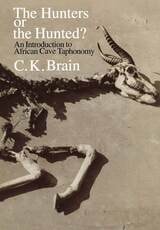
The Hunters or the Hunted?
An Introduction to African Cave TaphonomyC. K. Brain
University of Chicago Press, 1981