Results by title
28 books match the query 'Center'
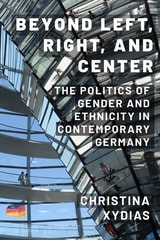
Beyond Left, Right, and Center
The Politics of Gender and Ethnicity in Contemporary GermanyChristina Xydias
Temple University Press, 2024
Christina Xydias shows that some right-leaning parties advocate for women’s rights and interests, while left- and right-leaning parties can be equally indifferent to lack of representation for women from marginalized groups. These findings follow from analyses of election results, transcripts from debates and speeches, and personal interviews, as well as from a close reading of intertwined military and citizenship policies that illustrate how women’s and ethnic minority groups’ rights are constructed.
Beyond Left, Right, and Center concludes with an analysis of women’s representation across OECD countries, showing that right-leaning parties are more likely to support women’s rights and interests in societies that are more egalitarian.
By Those Who Knew Them
French Modernists Left, Right, and CenterHarvey Hill
Catholic University of America Press, 2008

Center
Ideas and InstitutionsEdited by Liah Greenfeld and Michel Martin
University of Chicago Press, 1988
"Center" is a commonly used term with a variety of meanings. According to editors Liah Greenfeld and Michel Martin, "center" carries a twofold meaning when used as a concept. In its first sense, it is a synonym for "central value system," referring to irreducible values and beliefs that establish the identity of individuals and bind them into a common universe. In its second sense, "center" refers to "central institutional system," the authoritative institutions and persons who often express or embody the central value system. Both meanings imply a corresponding idea of "periphery," referring both to the elements of society that need to be integrated and to institutions and persons who lack authority.
The original essays compiled in this volume examine and apply the concept of the center in different contexts. The contributors come from a broad range of disciplines—classics, religion, philosophy, history, literary criticism, anthropology, political science, and sociology—which serves to underscore the far-reaching significance of the Shilsean theory of society. The interrelated subsets of the "center-periphery" theme addressed here include: symbolic systems, intellectuals, the expansion of the center into the periphery, parallel concepts in the work of other scholars besides Shils, and the paths of research inspired by these concepts. The volume features an introspective essay by Shils himself, in which he reexamines his central ideas in the light of new experiences and the ideas of others, some of them contained in this volume.
By drawing together such diverse scholars around a unified idea, this collection achieves a cohesion that makes it an exciting contribution to the comparative analysis of social and cultural systems. A collective effort in social theory, Center: Ideas and Institutions is a testimony to the breadth and complexity of one of man's ideas.
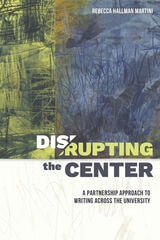
Disrupting the Center
A Partnership Approach to Writing Across the UniversityRebecca Hallman Martini
Utah State University Press, 2021
Using on-site research and critical ethnographic study from one university writing center, Rebecca Hallman Martini establishes an innovative, cross-disciplinary partnership approach to writing instruction in which peer tutoring plays an integral curricular role. Case studies detail three partnerships that respond directly to existing or potential disruptive innovations in higher education and showcase important concepts: mapping mutual benefit and stakeholder engagement in an online studio/hybrid first-year writing program partnership in response to online education, creating negotiated space to work through ethical issues involved when working with a public-private partnership to develop a required extracurricular portfolio project in a business school, and building transformational partnerships through establishing a writing-in-the-professions curriculum in the College of Engineering in response to career readiness initiatives.
Disrupting the Center uses interviews, observations, focus groups, analysis of consultations, meetings, and shared documents such as annual reports, budgets, assessment data, assignments, and syllabi to generate a wide view of how systems work. Writing centers are flexible university-wide service spaces where students go for one-on-one and group writing support that can become dynamic spaces for writing pedagogy by disrupting, revitalizing, and reinventing the epistemic foundations of current rhetoric and composition landscapes and traditional approaches to writing.
Facing the Center
Toward an Identity Politics of One-to-One MentoringHarry C. Denny
Utah State University Press, 2010
The face of the writing center, be it mainstream or marginal, majority or miority, orthodox or subversive, always has implications for teaching and learning. Facing the Center will extend current research in writing center theory to bring it in touch with theories now common in cultural studies curricula. Denny takes up issues of power, agency, language, and meaning, and pushes his readers to ask how they themselves, or the centers in which they work, might be perpetuating cultures that undermine inclusive, progressive education.

Feminist Theory
From Margin to CenterBell Hooks
Pluto Press, 2000

From the Center of America
Steamboats and Shipyards Along the Lower Ohio RiverRobert H. Swenson
Southern Illinois University Press, 2026
Charting the legacy of mid-America's shipyards and iconic steamboats
Before the railroad stitched together the American landscape, the dominant mode of transportation in the United States was by steamboat. These grand vessels, their iconic paddlewheels churning the country’s rivers, have long captured the national imagination as symbols of innovation and adventure.
In the heart of America, four major rivers converge—the Cumberland and Tennessee with the Ohio; then the Ohio with the Mississippi. These three confluences, which author Robert Swenson christens the Four Rivers Reach, played a unique role in the development of the steamboats that dominated American continental transport for almost 100 years. Between 1825 and 1936, the river towns of Smithland, Paducah, Metropolis, Mound City, and Cairo launched 295 wood-hulled, steam-powered vessels. Drawing from a wealth of archival sources, Swenson presents detailed histories of these steamboats over a span of 110 years, accompanied by nearly one hundred illustrations and photographs.
The book focuses on distinct events in steamboat history, tracing the impact of these shipyards on the economies and communities of the river towns where they were built. It reveals how the availability of steamboats along this sixty-mile Reach affected migration, politics, and the US economy of the nineteenth century. Steamboats built at the Four Rivers Reach played pivotal roles in the forced relocation of Native Americans from southern Appalachia to Oklahoma, the outcome of the Civil War, and the Montana gold rush. From the Center of America demonstrates how steamboat building shaped the culture, people, and economy of this region—and how, in turn, the area and its steamships influenced the growth of the young United States.
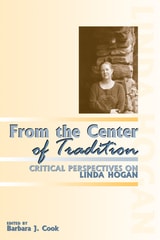
From the Center of Tradition
Critical Perspective on Linda HoganBarbara J. Cook
University Press of Colorado, 2003
Generative AI and Libraries
Claiming Our Place in the Center of a Shared FutureMichael Hanegan and Chris Rosser
American Library Association, 2025
- be introduced to foundational principles and frameworks for navigating the so-called “Age of Intelligence” that provide useful guiderails no matter how AI technology actively evolves;
- delve into the complex ethical considerations of AI, including bias, equity, privacy, misinformation, and the potential impact on human agency and dignity;
- receive guidance related to stakeholder engagement, resource allocation, and the need for continuous learning and adaptation;
- discover practical models for evaluating and implementing AI tools thoughtfully and effectively in ways that align with libraries’ values and mission;
- become familiar with STACKS, an approach for learning, problem solving, and innovation with generative AI;
- explore AI literacy as an expression of metaliteracy using seven frames for instruction and learning; and
- walk away with a sense of how libraries can actively define their essential role as leaders and shapers of the AI landscape, ensuring their continued value and preventing marginalization.
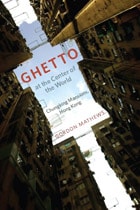
Ghetto at the Center of the World
Chungking Mansions, Hong KongGordon Mathews
University of Chicago Press, 2011
But as Ghetto at the Center of the World shows us, a trip to Chungking Mansions reveals a far less glamorous side of globalization. A world away from the gleaming headquarters of multinational corporations, Chungking Mansions is emblematic of the way globalization actually works for most of the world’s people. Gordon Mathews’s intimate portrayal of the building’s polyethnic residents lays bare their intricate connections to the international circulation of goods, money, and ideas. We come to understand the day-to-day realities of globalization through the stories of entrepreneurs from Africa carting cell phones in their luggage to sell back home and temporary workers from South Asia struggling to earn money to bring to their families. And we see that this so-called ghetto—which inspires fear in many of Hong Kong’s other residents, despite its low crime rate—is not a place of darkness and desperation but a beacon of hope.
Gordon Mathews’s compendium of riveting stories enthralls and instructs in equal measure, making Ghetto at the Center of the World not just a fascinating tour of a singular place but also a peek into the future of life on our shrinking planet.

Jerusalem the Center of the Universe
Its Archaeology and History (1800–100 BCE)Israel Finkelstein
SBL Press, 2024

Jews in the Center
Conservative Synagogues and Their MembersWertheimer, Jack
Rutgers University Press, 2002
Why do well-educated, highly Americanized, and financially secure Jews join a synagogue and participate in its religious life? This study of Conservative Jews examines the largest movement of synagogue-affiliated Jews in the United States, a group that outnumbers the combined membership of Reform and Orthodox congregations and a population that adheres to a centrist version of Judaism. The scholars who contribute to this study ask a series of provocative questions: How do these Jews negotiate the tensions between the traditional values of their religion and modern sensibilities? What meaning do they find in synagogue participation? How crucial are rabbis in the "success" of congregations?
Written by a team of scholars employing the tools of demography, ethnography, sociology, history, and comparative religious studies, Jews in the Center offers the most comprehensive view of any religious movement within American Judaism----and indeed, one of the most detailed studies of any denomination in American religious life.
Jews in the Center seeks to understand how synagogues function as congregations and to what extent they allow for individual self-expression. By focusing on a mainstream population, this book sheds light on religious people who generally receive the least attention----the broad center who neither retreat from society nor blur all boundaries between their religion and modern American culture.
Jews in the Center
Conservative Synagogues and Their MembersWertheimer, Jack
Rutgers University Press, 2000
Why do well-educated, highly Americanized, and financially secure Jews join a synagogue and participate in its religious life? This study of Conservative Jews examines the largest movement of synagogue-affiliated Jews in the United States, a group that outnumbers the combined membership of Reform and Orthodox congregations and a population that adheres to a centrist version of Judaism. The scholars who contribute to this study ask a series of provocative questions: How do these Jews negotiate the tensions between the traditional values of their religion and modern sensibilities? What meaning do they find in synagogue participation? How crucial are rabbis in the "success" of congregations?
Written by a team of scholars employing the tools of demography, ethnography, sociology, history, and comparative religious studies, Jews in the Center offers the most comprehensive view of any religious movement within American Judaism----and indeed, one of the most detailed studies of any denomination in American religious life.
Jews in the Center seeks to understand how synagogues function as congregations and to what extent they allow for individual self-expression. By focusing on a mainstream population, this book sheds light on religious people who generally receive the least attention----the broad center who neither retreat from society nor blur all boundaries between their religion and modern American culture.
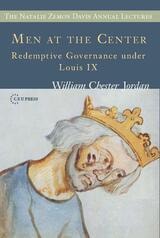
Men at the Center
Redemptive Governance under Louis IXWilliam Chester Jordan
Central European University Press, 2012
Taking Professor Natalie Zemon Davis’ fascinating biographical studies of three Women on the Margins in the seventeenth century as an inspiration, the author of this book offers three portraits of men who were at the very center of governance in thirteenth-century France, men who strove in the shadow of King Louis IX (Saint Louis) to impose a redemptive regime on the realm. Professor Jordan treats them as individuals, but in a sense they are also types: Robert of Sorbon, a churchman; Etienne Boileau, a bourgeois; and Simon de Nesle, an aristocrat. Robert was the founder of the Sorbonne; Boileau was the prévôt or royal administrator of Paris; and Simon was twice co-regent of the kingdom. Thinking about them and their relations with Louis IX opens up a new and altogether sobering vista for exploring the nature of the king’s rule and the impact of his rule on his subjects.

Opposing the Second Corps at Antietam
The Fight for the Confederate Left and Center on America's Bloodiest DayMarion V. Armstrong, Jr.
University of Alabama Press, 2016
A definitive guide to the Confederate army’s primary engagements at the epic Battle of Antietam
With a tally of more than five thousand killed, twenty thousand wounded, and three thousand missing, the Battle of Antietam made September 17, 1862, the deadliest day of combat in American history. In Opposing the Second Corps at Antietam, Antietam scholar Marion V. Armstrong Jr. completes his magisterial study of Antietam begun in Unfurl Those Colors! by examining Robert E. Lee’s leadership at the climactic battle in the Confederate invasion of Union territory.
Eminent Civil War historians consider Antietam the turning point of the war. Hoping to maintain the initiative they had gained at the Second Battle of Bull Run, Confederate leaders looked to a stunning victory on Northern soil to sour Northern sentiment on the war as well as to coax European powers to recognize the fledgling Confederacy. Having examined McClellan’s command and role at Antietam in Unfurl Those Colors!, Armstrong now recounts in riveting detail Lee’s command decisions and their execution in the field, drawing on a superlative collection of first-person accounts by Confederate veterans to narrate the cataclysmic struggle between Lee and McClellan.
Armstrong sets the stage with a lively recap of the political and military events leading up to the early fall of 1862 and foreshadowing the conflagration to come on September 17. Each chapter then traces a critical section of the battle, the fight for the West Woods and the bloody engagement of the Sunken Road. Armstrong augments this collection with an exceptional set of maps, which will be valued by scholars, readers, and visitors to the battlefield. These unique maps delineate troop movements in intervals as brief as fifteen minutes, bringing to life the fluid, mutable lines that characterize the glory and horror of Antietam.
Either together with Unfurl Those Colors! or as a stand-alone account of the Confederate side of the battle, Opposing the Second Corps at Antietam provides the fullest possible understanding of the experience of Confederate soldiers at Antietam.
Out in the Center
Public Controversies and Private StrugglesHarry C. Denny
Utah State University Press, 2018
A diverse group of contributors interweaves personal experience with writing center theory and critical race theory, as well as theories on the politics and performance of identity. In doing so, Out in the Center extends upon the writing center corpus to disrupt and reimagine conventional approaches to writing center theory and practice. Out in the Center proposes that practitioners benefit from engaging in dialogue about identity to better navigate writing center work—work that informs the local and carries forth a social and cultural impact that stretches well beyond academic institutions.
Contributors:
Allia Abdullah-Matta, Nancy Alvarez, Hadi Banat, Tammy S. Conard-Salvo, Michele Eodice, Rochell Isaac, Sami Korgan, Ella Leviyeva, Alexandria Lockett, Talisha Haltiwanger Morrison, Anna Rita Napoleone, Beth A. Towle, Elizabeth Weaver, Tim Zmudka
People, Practice, Power
Digital Humanities outside the CenterAnne B. McGrail
University of Minnesota Press, 2021
An illuminating volume of critical essays charting the diverse territory of digital humanities scholarship
The digital humanities have traditionally been considered to be the domain of only a small number of prominent and well-funded institutions. However, through a diverse range of critical essays, this volume serves to challenge and enlarge existing notions of how digital humanities research is being undertaken while also serving as a kind of alternative guide for how it can thrive within a wide variety of institutional spaces.
Focusing on the complex infrastructure that undergirds the field of digital humanities, People, Practice, Power examines the various economic, social, and political factors that shape such academic endeavors. The multitude of perspectives comprising this collection offers both a much-needed critique of the existing structures for digital scholarship and the means to generate broader representation within the field.
This collection provides a vital contribution to the realm of digital scholarly research and pedagogy in acknowledging the role that small liberal arts colleges, community colleges, historically black colleges and universities, and other underresourced institutions play in its advancement. Gathering together a range of voices both established and emergent, People, Practice, Power offers practitioners a self-reflexive examination of the current conditions under which the digital humanities are evolving, while helping to open up new sustainable pathways for its future.
Contributors: Matthew Applegate, Molloy College; Taylor Arnold, U of Richmond; Eduard Arriaga, U of Indianapolis; Lydia Bello, Seattle U; Kathi Inman Berens, Portland State U; Christina Boyles, Michigan State U; Laura R. Braunstein, Dartmouth College; Abby R. Broughton; Maria Sachiko Cecire, Bard College; Brennan Collins, Georgia State U; Kelsey Corlett-Rivera, U of Maryland; Brittany de Gail, U of Maryland; Madelynn Dickerson, UC Irvine Libraries; Nathan H. Dize, Vanderbilt U; Quinn Dombrowski, Stanford U; Ashley Sanders Garcia, UCLA; Laura Gerlitz; Erin Rose Glass; Kaitlyn Grant; Margaret Hogarth, Claremont Colleges; Maryse Ndilu Kiese, U of Alberta; Pamella R. Lach, San Diego State U; James Malazita, Rensselaer Polytechnic Institute; Susan Merriam, Bard College; Chelsea Miya, U of Alberta; Jamila Moore Pewu, California State U, Fullerton; Urszula Pawlicka-Deger, Aalto U, Finland; Jessica Pressman, San Diego State U; Jana Remy, Chapman U; Roopika Risam, Salem State U; Elizabeth Rodrigues, Grinnell College; Dylan Ruediger, American Historical Association; Rachel Schnepper, Wesleyan U; Anelise Hanson Shrout, Bates College; Margaret Simon, North Carolina State U; Mengchi Sun, U of Alberta; Lauren Tilton, U of Richmond; Michelle R. Warren, Dartmouth College.
Re/Writing the Center
Approaches to Supporting Graduate Students in the Writing CenterSusan Lawrence
Utah State University Press, 2018
The essays in this volume show how to navigate the divide between traditional writing center theory and practices, developed to support undergraduate writers, and the growing demand for writing centers to meet the needs of advanced graduate writers. Contributors address core assumptions of writing center pedagogy, such as the concept of peers and peer tutoring, the emphasis on one-to-one tutorials, the positioning of tutors as generalists rather than specialists, and even the notion of the writing center as the primary location or center of the tutoring process. Re/Writing the Center offers an imaginative perspective on the benefits writing centers can offer to graduate students and on the new possibilities for inquiry and practice graduate students can inspire in the writing center.
Contributors: Laura Brady, Michelle Cox, Thomas Deans, Paula Gillespie, Mary Glavan, Marilyn Gray, James Holsinger, Elena Kallestinova, Tika Lamsal, Patrick S. Lawrence, Elizabeth Lenaghan, Michael A. Pemberton, Sherry Wynn Perdue, Doug Phillips, Juliann Reineke, Adam Robinson, Steve Simpson, Nathalie Singh-Corcoran, Ashly Bender Smith, Sarah Summers, Molly Tetreault, Joan Turner, Bronwyn T. Williams, Joanna Wolfe
Return to the Center
Culture, Public Space, and City Building in a Global EraBy Lawrence A. Herzog
University of Texas Press, 2006
The redesign and revitalization of traditional urban centers is the cutting edge of contemporary urban planning, as evidenced by the intense public and professional attention to the rebuilding of city cores from Berlin to New York City's "Ground Zero." Spanish and Latin American cities have never received the recognition they deserve in the urban revitalization debate, yet they offer a very relevant model for this "return to the center." These cultures have consistently embraced the notion of a city whose identity is grounded in its organic public spaces: plazas, promenades, commercial streets, and parks that invite pedestrian traffic and support a rich civic life. This groundbreaking book explores Spanish, Mexican, and Mexican-American border cities to learn what these urban areas can teach us about effectively using central public spaces to foster civic interaction, neighborhood identity, and a sense of place.
Herzog weaves the book around case studies of Madrid and Barcelona, Spain; Mexico City and Querétaro, Mexico; and the Tijuana-San Diego border metropolis. He examines how each of these urban areas was formed and grew through time, with attention to the design lessons of key public spaces. The book offers original and incisive discussions that challenge current urban thinking about politics and public space, globalization, and the future of privatized communities, from gated suburbs to cyberspace. Herzog argues that well-designed, human-scaled city centers are still vitally necessary for maintaining community and civic life. Applicable to urban renewal projects around the globe, Herzog's book will be important reading for planners, architects, designers, and all citizens interested in creating more livable cities.

Secrets from the Center of the World
Joy Harjo and Stephen E. Strom
University of Arizona Press, 1989
This is Navajo country, a land of mysterious and delicate beauty. "Stephen Strom's photographs lead you to that place," writes Joy Harjo. "The camera eye becomes a space you can move through into the powerful landscapes that he photographs. The horizon may shift and change all around you, but underneath it is the heart with which we move." Harjo's prose poems accompany these images, interpreting each photograph as a story that evokes the spirit of the Earth. Images and words harmonize to evoke the mysteries of what the Navajo call the center of the world.
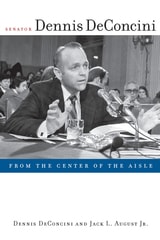
Senator Dennis DeConcini
From the Center of the AisleDennis DeConcini and Jack L. August, Jr.
University of Arizona Press, 2006
A vigilant centrist, who got results by building coalitions on both sides of the aisle, Senator DeConcini’s approach was not bound to strict party alliances but was deeply rooted in the independent political environment of Arizona. During his career, he sponsored legislation limiting the sale of assault weapons, which provoked the National Rifle Association. He confounded Democratic Party regulars by supporting Clarence Thomas during the controversial confirmation hearings and again split with his party in his support for William Rehnquist’s nomination to Chief Justice. In 1980 he voted for Ronald Reagan, but in 1993 he cast the swing vote for President Bill Clinton’s tax bill, which was strongly opposed by Republicans in Arizona.
This political memoir will be of interest to anyone concerned with the inner workings of the U.S. Senate or Arizona politics and offers relevant insights into today’s political climate.
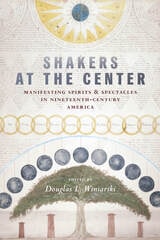
Shakers at the Center
Manifesting Spirits & Spectacles in Nineteenth-Century AmericaEdited by Douglas L. Winiarski
University of Massachusetts Press, 2026
Exploring the theological, social, and cultural dimensions of one of America’s most ambitious prophetic movements
The Shakers’ Era of Manifestations ranks among the most astounding events in American religious history. During the 1840s, members of the United Society of Believers in Christ’s Second Appearing embarked on an audacious project of receiving visions, revelations, and other manifestations from the spirit world and convincing both themselves and the world’s people of their reality. Gifted Shakers known as “instruments” surrendered their bodies to possessing spirits and celestial beings who, in turn, provided the Believers with an unimaginable number of revelatory communications that collapsed time and space, rewrote the Bible, and vastly expanded traditional Protestant beliefs and practices. The fruits of Shaker spiritualism would gain a permanent place in America’s public consciousness.
Hundreds of volumes and thousands of pages of inspired writings, music, and art from the New Era or period of Mother's Work, as the Shakers called it, crowd the shelves of a half dozen major research libraries. The archive is so vast, so extraordinary, so seemingly bizarre that few scholars have dared tackle it in its totality. The authors of this volume, specialists in nineteenth-century American religious studies, have collaborated to produce an extensive analysis of Mother Ann’s Work. They examine a fascinating range of topics: speaking with the dead; the spectacle of Shaker rituals; race, gender, and family life; and the material culture of physical and spiritual things; as well as manuscripts, books, songs, objects, and art produced during the New Era.
Shakers at the Center brings the sprawling elements of the Era of Manifestations together in a single volume. Written for students, scholars, and general readers alike, it will stand for years as the definitive history of the Shakers’ most fascinating and vexing historical period.
Contributors include the volume editor as well as Emily Suzanne Clark, Brett Malcolm Grainger, Sonia Hazard, Dana Logan, Carol Medlicott, Sally M. Promey, Erik R. Seeman, Ryan K. Smith, and David Walker.
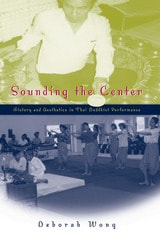
Sounding the Center
History and Aesthetics in Thai Buddhist PerformanceDeborah Wong
University of Chicago Press, 2001
Drawing on her extensive fieldwork, Wong lays out the ritual in detail: the way it is enacted, the foods and objects involved, and the people who perform it, emphasizing the way the performers themselves discuss and construct aspects of the ceremony.
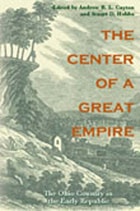
The Center of a Great Empire
The Ohio Country in the Early RepublicAndrew R. L. Cayton
Ohio University Press, 2005
“The people who lived in what became the seventeenth state in the American Union in 1803 were not only at the center of a great empire, they were at the center of the most important historical developments in the revolutionary Atlantic World.”
—From the introduction
Nowhere did the revolutions in politics, commerce, and society in the late eighteenth and early nineteenth centuries occur more quickly or more thoroughly than in the Ohio country. A forested borderland dominated by American Indians in 1780, Ohio was a landscape of farms and towns inhabited by people from all over the world by 1830. The Center of a Great Empire: The Ohio Country in the Early Republic chronicles this dramatic and all-encompassing change.
Andrew R. L. Cayton and Stuart D. Hobbs have assembled an impressive collection of articles by established and rising scholars. They address the conquest of Native Americans, the emergence of a democratic political culture, the origins of capitalism, the formation of public culture, the growth of evangelical Protestantism, the ambiguous status of African Americans, and social life in a place that most regarded as the cutting edge of human history.
For The Center of a Great Empire, distinguished historians of the American nation in its first decades question conventional wisdom. They emphasize contingency rather than inevitability and contention rather than progress. Downplaying the frontier character of Ohio, they offer new interpretations and open new paths of inquiry through investigations of race, education, politics, religion, family, commerce, colonialism, and conquest. As it underscores key themes in the history of the United States, The Center of a Great Empire pursues issues that have fascinated people for two centuries.
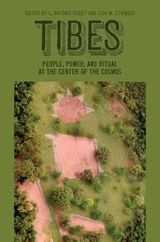
Tibes
People, Power, and Ritual at the Center of the CosmosEdited by L. Antonio Curet and Lisa M. Stringer
University of Alabama Press, 2009
The prehistoric civic-ceremonial center of Tibes is located on the southern coast of Puerto Rico, just north of the modern coastal city of Ponce. Protected on two sides by a river, and on the other two sides by hills, this approximately 10.5-acre site remains as fertile and productive today as when first occupied over 2,000 years ago. Such a rich region would have been a choice location for native peoples because of the diversity in all resources, from land, air, and sea--and also symbolically crucial as a liminal space within the landscape. It may have been regarded as a space charged with numen or cosmic energy where different parts of the cosmos (natural vs. supernatural, or world of the living vs. world of the dead) overlap. Archaeological evidence reveals a long occupation, about 1,000 years, possibly followed by an extensive period of sporadic ceremonial use after the site itself was practically abandoned.
In this volume, nineteen Caribbeanists, across a wide academic spectrum, examine the geophysical, paleoethnobotanical, faunal, lithics, base rock, osteology, bone chemistry and nutrition, social landscape, and ceremonial constructs employed at Tibes. These scholars provide a concise, well-presented, comprehensive analysis of the evidence for local level changes in household economy, internal organization, accessibility to economic, religious, and symbolic resources related to the development and internal operation of socially stratified societies in the Caribbean.
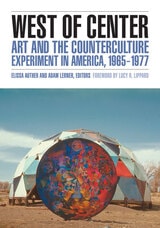
West of Center
Art and the Counterculture Experiment in America, 1965–1977Elissa Auther
University of Minnesota Press, 2012
In the heady and hallucinogenic days of the 1960s and ’70s, a diverse range of artists and creative individuals based in the American West—from the Pacific coast to the Rocky Mountains and the Southwest—broke the barriers between art and lifestyle and embraced the new, hybrid sensibilities of the countercultural movement. Often created through radically collaborative artistic practices, such works as Paolo Soleri’s earth homes, the hand-built architecture of the Drop City and Libre communes, Yolanda López’s political posters, the multisensory movement workshops of Anna and Lawrence Halprin, and the immersive light shows and video-based work by the Ant Farm and Optic Nerve collectives were intended to generate new life patterns that pointed toward social and political emancipation.
In West of Center, Elissa Auther and Adam Lerner bring together a prominent group of scholars to elaborate the historical and artistic significance of these counterculture projects within the broader narrative of postwar American art, which skews heavily toward New York’s avant-garde art scene. This west of center countercultural movement has typically been associated with psychedelic art, but the contributors to this book understand this as only one dimension of the larger, artistically oriented, socially based phenomenon. At the same time, they reveal the disciplinary, geographic, and theoretical biases and assumptions that have led to the dismissal of countercultural practices in the history of art and visual culture, and they detail how this form of cultural and political activity found its place in the West.
A companion to an exhibition originating at the Museum of Contemporary Art Denver, this book illuminates how, in the western United States, the counterculture’s unique integration of art practices, political action, and collaborative life activities serves as a linchpin connecting postwar and contemporary artistic endeavors.
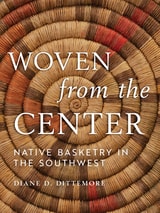
Woven from the Center
Native Basketry in the SouthwestDiane D. Dittemore
University of Arizona Press, 2024
Woven from the Center presents breathtaking basketry from some of the greatest weavers in the Southwest. Each sandal and mat fragment, each bowl and jar, every water bottle and whimsy is infused with layers of aesthetic, cultural, and historical meanings. This book offers stunning photos and descriptions of woven works from Tohono O’odham, Akimel O’odham, Hopi, Western Apache, Yavapai, Navajo, Pai, Paiute, New Mexico Pueblo, Eastern Apache, Seri, Yaqui, Mayo, and Tarahumara communities.
This richly illustrated volume stands on its own as a definitive look at basketry of the Greater Southwest, including northern Mexico. It also serves as a companion to the peerless collection of U.S. Southwest and Northwest Mexican Native American basketry curated at the Arizona State Museum in Tucson, Arizona. Comprehensive in its coverage, this work is based on decades of research on weavers, collectors, and donors. It includes ample illustrations of basket weavers, past and present, bringing to life the people behind these wonderful woven treasures.
Writing Groups in the Writing Center
Negotiating Authority and Expertise in Collaborative LearningSara Wilder
Utah State University Press, 2025
As many higher education institutions strive to create spaces and systems that increase equity, accessibility, and diversity, they recognize the need for improved mentorship across academic levels. This book analyzes the significant benefits as well as the challenges faced by writing groups in providing such support. Wilder presents a nuanced account of how facilitators scaffold group practice, how members use and build genre knowledge across disciplines, and how institutional contexts shape emotional labor requirements.
For educators and tutors, the book provides an in-depth examination of the facilitator role, describing essential logistical, emotional, and intellectual practices, and addresses common conflicts and challenges. Administrators can find valuable material for training tutor-facilitators and frameworks for conceptualizing writing group functions on campus. For researchers, the book extends scholarship on writing groups, writing transfer, and collaborative learning, bridging writing center and broader writing studies research.
In an era of concern about generative AI’s role in writing education, Writing Groups in the Writing Center extends research on group facilitation, collaborative learning, and authority negotiation in writing center communities of practice and emphasizes the human connections that make collaborative writing meaningful and valuable for student writers.