Results by title
11 books match the query 'Challenging'

Challenging the Bard
Dostoevsky and Pushkin, a Study of Literary RelationshipGary Rosenshield
University of Wisconsin Press, 2013

Challenging the Black Atlantic
The New World Novels of Zapata Olivella and GonçalvesJohn T. Maddox IV
Bucknell University Press, 2021
Published by Bucknell University Press. Distributed worldwide by Rutgers University Press.
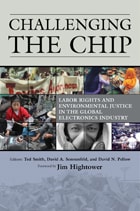
Challenging the Chip
Labor Rights and Environmental Justice in the Global Electronics Industryedited by Ted Smith, David A. Sonnenfeld and David Naguib Pellow, foreword by Jim Hightower
Temple University Press, 2006
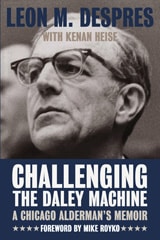
Challenging the Daley Machine
A Chicago Alderman's MemoirLeon M. Despres
Northwestern University Press, 2005
Winner, 2007 The Hyde Park Historical Society Paul Cornell Award
Political war stories from a thorn in the side of Chicago's famous Boss
In 1955, south-sider Leon Despres was elected to the Chicago City Council-the same year that Paddy Bauler famously uttered that "Chicago ain't ready for reform." Ready or not, Chicago got twenty years of reform efforts from Despres, one of the few independents in the council and the most liberal alderman in the city. His demand to cut out the corrupt sale of city driveway permits made him enemies from the very beginning. Over the years his crusades to ban discrimination, preserve Chicago landmark buildings, and gain equality for African-Americans-when Daley-beholden African-American council members refused to help-threw wrench after wrench into the Machine. And, not incidentally, changed the city.
But Challenging the Daley Machine is more than a memoir. It's a historical portrait of the way things were done under the Boss, when changing times and a changing city forced the Machine to confront the problems Despres championed. His battles against the seemingly monolithic Machine are also an inspiration to anyone who is facing long odds, but is convinced he/she is on the side of right.
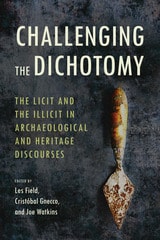
Challenging the Dichotomy
The Licit and the Illicit in Archaeological and Heritage DiscoursesEdited by Les Field, Cristóbal Gnecco, and Joe Watkins
University of Arizona Press, 2016
Utilizing both ethnographic and archaeological examples, contributors ask big questions vital to anyone working in cultural heritage. What are the issues surrounding private versus museum collections? What is considered looting? Is archaeology still a form of colonialization? The contributors discuss this vis-à-vis a global variety of contexts and cultures from the United States, South Africa, Argentina, New Zealand, Honduras, Colombia, Palestine, Greece, Canada, and from the Nasa, Choctaw, and Maori nations.
Challenging the Dichotomy underscores how dichotomies—such as licit/illicit, state/nonstate, public/private, scientific/nonscientific—have been constructed and how they are now being challenged by multiple forces. Throughout the eleven chapters, contributors provide examples of hegemonic relationships of power between nations and institutions. Scholars also reflect on exchanges between Western and non-Western epistemologies and ontologies.
The book’s contributions are significant, timely, and inclusive. Challenging the Dichotomy examines the scale and scope of “illicit” forms of excavation, as well as the demands from minority and indigenous subaltern peoples to decolonize anthropological and archaeological research.
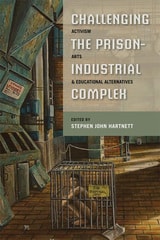
Challenging the Prison-Industrial Complex
Activism, Arts, and Educational AlternativesEdited by Stephen John Hartnett
University of Illinois Press, 2011
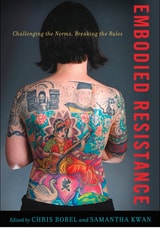
Embodied Resistance
Challenging the Norms, Breaking the RulesChris Bobel
Vanderbilt University Press, 2011
Hard Choices
Challenging the Singapore ConsensusEdited by Sudhir Thomas Vadaketh and Donald Low
National University of Singapore Press, 2014
But the policy and political conundrums that Singapore faces today are complex and defy easy answers. Confronted with a political landscape that is likely to become more contested, how should the government respond? What reforms should it pursue? This collection of essays suggests that a far-reaching and radical rethinking of the country's policies and institutions is necessary, even if it weakens the very consensus that enabled Singapore to succeed in its first fifty years.
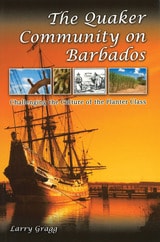
The Quaker Community on Barbados
Challenging the Culture of the Planter ClassLarry Gragg
University of Missouri Press, 2009
Gragg has conducted meticulous research on two continents to re-create the Barbados Quaker community. Drawing on wills, censuses, and levy books along with surviving letters, sermons, and journals, he tells how the Quakers sought to implement their beliefs in peace, simplicity, and equality in a place ruled by a planter class that had built its wealth on the backs of slaves. He reveals that Barbados Quakers were a critical part of a transatlantic network of Friends and explains how they established a “counterculture” on the island—one that challenged the practices of the planter class and the class’s dominance in island government, church, and economy.
In this compelling study, Gragg focuses primarily on the seventeenth century when the Quakers were most numerous and active on Barbados. He tells how Friends sought to convert slaves and improve their working and living conditions. He describes how Quakers refused to fund the Anglican Church, take oaths, participate in the militia, or pay taxes to maintain forts—and how they condemned Anglican clergymen, disrupted their services, and wrote papers critical of the established church. By the 1680s, Quakers were maintaining five meetinghouses and several cemeteries, paying for their own poor relief, and keeping their own records of births, deaths, and marriages. Gragg also tells of the severe challenges and penalties they faced for confronting and rejecting the dominant culture.
With their civil disobedience and stand on slavery, Quakers on Barbados played an important role in the early British Empire but have been largely neglected by scholars. Gragg’s work makes their contribution clear as it opens a new window on the seventeenth- and eighteenth-century Atlantic world.
Wisdom Discourse and Torah in Second Temple Judaism
Challenging the Integration ParadigmJiseong James Kwon
SBL Press, 2025
Did wisdom literature in the Hebrew Bible develop over time from secular to religious, as many early modern scholars believed? Did it develop in reaction to historical events or out of conflict with other traditions, including Torah? In Wisdom Discourse and Torah in Second Temple Judaism, JiSeong James Kwon moves beyond this impasse by applying a discourse-critical method to intertextual readings of Proverbs, Ben Sira, the Wisdom of Solomon, Baruch, the Dead Sea Scrolls, and Deuteronomy. Kwon’s study reveals that wisdom literature maintained an independent identity and theological orientation distinct from the legal traditions of the Torah. Rather than wisdom being subsumed into legal material, Jewish intellectual production remained pluralistic in form, genre, and theological orientation throughout the Persian and Hellenistic periods.
Women and Regulation
Challenging the Status QuoEdited by Sara R. Rinfret and Michelle C. Pautz
Temple University Press, 2026
Are female food safety inspectors treated differently than men? What do women contribute to the creation and implementation of public policy in the United States? The editors of and contributors to Women in Regulation, all experts in public policy and public administration, analyze the role women (and stakeholders) play in bureaucracies in environmental, budgetary, and other sectors of the U.S. federal, state, and local governments, plus relevant examples from around the world.
Women in Regulation examines the impact of regulatory policy delegation, as well as the actors and processes involved in administrative rulemaking, compliance, and implementation. The book considers representative bureaucracy, organizational stereotypes, emotional labor, and advancement barriers to argue why studying women and regulation is of value. Regulatory case studies focus on topics ranging from water and energy to executive leadership. Chapters also include reflective exercises and prompts for classroom engagement that challenge readers to consider implications for regulatory policy in the future.
Amplifying the underheard voices in policy and implementation, Women in Regulation provides a more holistic picture of regulatory practices.
Contributors: Saman Afshan, Ashley English, Katherine Hoener, Nicole Humphrey, Ekaterina Levintova, Li-Yin Liu, Sean McCandless, Bruce D. McDonald III, Denise Scheberle, Natalie L. Smith, Manuel P. Teodoro, and the editors