Results by title
29 books match the query 'Character'
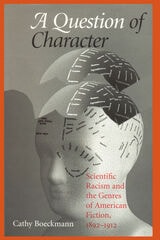
A Question of Character
Scientific Racism and the Genres of American Fiction, 1892-1912Catherine Ann Boeckmann
University of Alabama Press, 2005
Boeckmann links character, literary genre, and science, revealing how major literary works both contributed to and disrupted the construction of race in turn-of-the-century America.
In A Question of Character, Cathy Boeckmann establishes a strong link between racial questions and the development of literary traditions at the end of the 19th century in America. This period saw the rise of "scientific racism," which claimed that the races were distinguished not solely by exterior appearance but also by a set of inherited character traits. As Boeckmann explains, this emphasis on character meant that race was not only a thematic concern in the literature of the period but also a generic or formal one as well.
Boeckmann explores the intersections between race and literary history by tracing the language of character through both scientific and literary writing. Nineteenth-century pseudo-sciences such as phrenology and physiognomy had a vocabulary for discussing racial character that overlapped conceptually with the conventions for portraying race in literature. Through close readings of novels by Thomas Dixon, Mark Twain, William Dean Howells, Charles Chesnutt, and James Weldon Johnson—each of which deals with a black character "passing" as white—Boeckmann shows how this emphasis on character relates to the shift from romantic and sentimental fiction to realism. Because each of these genres had very specific conventions regarding the representation of character, genres often dictated how races could be depicted.
Aristotle's Rhetoric
An Art of CharacterEugene Garver
University of Chicago Press, 1995
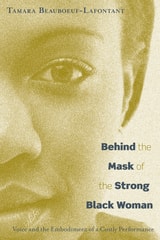
Behind the Mask of the Strong Black Woman
Voice and the Embodiment of a Costly PerformanceTamara Beauboeuf-Lafontant
Temple University Press, 2009
The author, a noted sociologist, interviews 58 Black women about being strong and proud, to illustrate their “performance” of invulnerability. Beauboeuf-Lafontant explains how such behavior leads to serious symptoms for these women, many of whom suffer from eating disorders and depression.
Drawing on Black feminist scholarship, cultural studies, and women’s history, Behind the Mask of the Strong Black Woman traces the historical and social influences of normative Black femininity, looking at how notions of self-image and strength create a distraction from broader forces of discrimination and power.
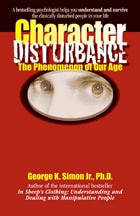
Character Disturbance
the phenomenon of our ageGeorge K. Simon
Parkhurst Brothers, Inc., 2011
Modern permissiveness and the new culture of entitlement allows disturbed people to reach adulthood without proper socialization. In a book meant both for the general public and for professionals, bestselling author and psychologist George Simon explains in plain English:
•How most disturbed characters think.•The habitual behaviors the disturbed use to avoid responsibility and to manipulate, deceive, and exploit others.
•Why victims in relationships with disturbed characters do not get help they need from traditional therapies.
•A straightforward guide to recognizing and understanding all relevant personality types, especially those most likely to undermine relationships.
•A new framework for making sense of the crazy world many find themselves in when there's a disturbed character in their lives.
•Concrete principles that promote responsibility and positive change when engaging disturbed characters.
•Tactics (for both lay persons and therapists) to lessen the chances for victimization and empower those who would otherwise be victims in their relationships with many types of disturbed characters.
Character and the Individual Personality in English Renaissance Drama
Tragedy, History, TragicomedyJohn E. Curran
University of Delaware Press, 2014
Published by University of Delaware Press. Distributed worldwide by Rutgers University Press.
Character, Community, and Politics
Clarke E. Cochran
University of Alabama Press, 1982
The revival of political philosophy has frequently assumed that a theory of human well-being and fulfillment is necessary, preoccupied with questions of epistemology and technical conceptual analysis. In instances where the nature of the human good is considered, the paradigm of autonomous individualism customarily dominates. In Character, Community, and Politics, Cochran moves away from these prevailing ideas to develop a communal theory of political order, helping to redefine a number of fundamental, but often neglected, ideas. Chief among them are commitment, community, responsibility, and character—concepts Cochran develops through discussions of authority, freedom, pluralism, and the common good.
Drawing on a wide variety of fields, such as philosophy, ethics, literature, moral theology, and sociology, the author renews these concepts to outline a theory of human life and political order distinct from sclerotic categories such as conservatism, socialism, radicalism, or Marxism.
Character, Scene, and Story
New Tools from the Dramatic Writer's CompanionWill Dunne
University of Chicago Press, 2017
Featuring forty-two new workshop-tested exercises, this sequel to The Dramatic Writer’s Companion allows writers to dig deeper into their scripts by fleshing out images, exploring characters from an emotional perspective, tapping the power of color and sense memory to trigger ideas, and trying other visceral techniques. The guide also includes a troubleshooting section to help tackle problem scenes. Writers with scripts already in progress will find they can think deeper about their characters and stories. And those who are just beginning to write will find the guidance they need to discover their best starting point. The guide is filled with hundreds of examples, many of which have been developed as both plays and films.
Character, Scene, and Story is fully aligned with the new edition of The Dramatic Writer’s Companion, with cross-references between related exercises so that writers have the option to explore a given topic in more depth. While both guides can stand alone, together they give writers more than one hundred tools to develop more vivid characters and craft stronger scripts.
Character
Three Inquiries in Literary StudiesAmanda Anderson, Rita Felski, and Toril Moi
University of Chicago Press, 2019
Across three chapters, leading scholars Amanda Anderson, Rita Felski, and Toril Moi reimagine and renew literary studies by engaging in a conversation about character. Moi returns to the fundamental theoretical assumptions that convinced literary scholars to stop doing character-criticism, and shows that they cannot hold. Felski turns to the question of identification and draws out its diverse strands, as well as its persistence in academic criticism. Anderson shows that character-criticism illuminates both the moral life of characters, and our understanding of literary form. In offering new perspectives on the question of fictional character, this thought-provoking book makes an important intervention in literary studies.
Competence and Character through Life
Edited by Anne Colby, Jacquelyn Boone James, and Daniel Hart
University of Chicago Press, 1998
In this collection, leading psychologists, sociologists, and criminologists highlight the potential for positive development in different domains. By positing the possibility of multiple pathways of development rather than a single universal sequence, the contributors view the individual as potentially advancing in a wide range of interrelated and overlapping competencies. The nine essays in the book cover the years from youth to middle age, and they examine a range of social, political, and moral components of "competence and character" from teenage pregnancy and life-planning skills to voting records and educational attainment in low income households. Unlike comparable studies, this original and comprehensive volume frames issues, events, and longitudinal data through the lens of possibility rather than the pathology of defeat, stressing a positive approach to our conception of human potential.

Dying in Character
Memoirs on the End of LifeJeffrey Berman
University of Massachusetts Press, 2012
Examining the works cited above, as well as memoirs by Mitch Albom, Roland Barthes, Jean-Dominique Bauby, Art Buchwald, Randy Pausch, David Rieff, Philip Roth, and Morrie Schwartz, Jeffrey Berman's analysis of this growing genre yields some surprising insights. While the authors have much to say about the loneliness and pain of dying, many also convey joy, fulfillment, and gratitude. Harold Brodkey is willing to die as long as his writings survive. Art Buchwald and Randy Pausch both use the word fun to describe their dying experiences. Dying was not fun for Morrie Schwartz and Tony Judt, but they reveal courage, satisfaction, and fearlessness during the final stage of their lives, when they are nearly paralyzed by their illnesses.
It is hard to imagine that these writers could feel so upbeat in their situations, but their memoirs are authentically affirmative. They see death coming, yet they remain stalwart and focused on their writing. Berman concludes that the contemporary end-of-life memoir can thus be understood as a new form of death ritual, "a secular example of the long tradition of ars moriendi, the art of dying."
For the Sake of Argument
Practical Reasoning, Character, and the Ethics of BeliefEugene Garver
University of Chicago Press, 2004
Garver roots deliberation and persuasion in political friendship instead of a neutral, impersonal framework of justice. Through incisive readings of examples in modern legal and political history, from Brown v. Board of Education to the South African Truth and Reconciliation Commission, he demonstrates how acts of deliberation and persuasion foster friendship among individuals, leading to common action amid diversity. In an Aristotelian sense, there is a place for pathos and ethos in rational thought. Passion and character have as pivotal a role in practical reasoning as logic and language.
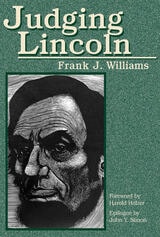
Judging Lincoln
Frank J. Williams. Foreword by Harold Holzer. Epilogue by John Y. Simon
Southern Illinois University Press, 2007

Kant's Conception of Moral Character
The "Critical" Link of Morality, Anthropology, and Reflective JudgmentG. Felicitas Munzel
University of Chicago Press, 1999
The first book to focus on character formation in Kant's moral philosophy, it builds on important recent work on Kant's aesthetics and anthropology, and brings these to bear on moral issues. Munzel traces Kant's multifaceted definition of character through the broad range of his writings, and then explores the structure of character, its actual exercise in the world, and its cultivation.
An outstanding work of original textual analysis and interpretation, Kant's Conception of Moral Character is a major contribution to Kant studies and moral philosophy in general.

Made in America
A Social History of American Culture and CharacterClaude S. Fischer
University of Chicago Press, 2010
Our nation began with the simple phrase, “We the People.” But who were and are “We”? Who were we in 1776, in 1865, or 1968, and is there any continuity in character between the we of those years and the nearly 300 million people living in the radically different America of today?
With Made in America, Claude S. Fischer draws on decades of historical, psychological, and social research to answer that question by tracking the evolution of American character and culture over three centuries. He explodes myths—such as that contemporary Americans are more mobile and less religious than their ancestors, or that they are more focused on money and consumption—and reveals instead how greater security and wealth have only reinforced the independence, egalitarianism, and commitment to community that characterized our people from the earliest years. Skillfully drawing on personal stories of representative Americans, Fischer shows that affluence and social progress have allowed more people to participate fully in cultural and political life, thus broadening the category of “American” —yet at the same time what it means to be an American has retained surprising continuity with much earlier notions of American character.
Firmly in the vein of such classics as The Lonely Crowd and Habits of the Heart—yet challenging many of their conclusions—Made in America takes readers beyond the simplicity of headlines and the actions of elites to show us the lives, aspirations, and emotions of ordinary Americans, from the settling of the colonies to the settling of the suburbs.
Mimetic Lives
Tolstoy, Dostoevsky, and Character in the NovelChloë Kitzinger
Northwestern University Press, 2021
Through new readings of War and Peace, Anna Karenina, The Brothers Karamazov, and other novels, Kitzinger traces a productive tension between mimetic characterization and the author’s ambition to transform the reader. She shows how Tolstoy and Dostoevsky create lifelike characters and why the dream of carrying the illusion of “life” beyond the novel consistently fails. Mimetic Lives challenges the contemporary truism that novels educate us by providing enduring models for the perspectives of others, with whom we can then better empathize. Seen close, the realist novel’s power to create a world of compelling fictional persons underscores its resources as a form for thought and its limits as a direct source of spiritual, social, or political change.
Drawing on scholarship in Russian literary studies as well as the theory of the novel, Kitzinger’s lucid work of criticism will intrigue and challenge scholars working in both fields.
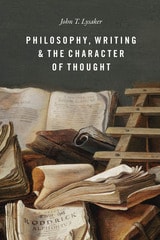
Philosophy, Writing, and the Character of Thought
John T. Lysaker
University of Chicago Press, 2018
Philosophy’s relation to the act of writing is John T. Lysaker’s main concern in Philosophy, Writing, and the Character of Thought. Whether in Plato, Montaigne, Nietzsche, Wittgenstein, or Derrida, philosophy has come in many forms, and those forms—the concrete shape philosophizing takes in writing—matter. Much more than mere adornment, the style in which a given philosopher writes is often of crucial importance to the point he or she is making, part and parcel of the philosophy itself.
Considering how writing influences philosophy, Lysaker explores genres like aphorism, dialogue, and essay, as well as logical-rhetorical operations like the example, irony, and quotation. At the same time, he shows us the effects of these rhetorical devices through his own literary experimentation. In dialogue with such authors as Benjamin, Cavell, Emerson, and Lukács, he aims to revitalize philosophical writing, arguing that philosophy cannot fulfill its intellectual and cultural promise if it keeps to professional articles and academic prose. Instead, philosophy must embrace writing as an essential, creative activity, and deliberately reform how it approaches its subject matter, readership, and the evolving social practices of reading and reflection.
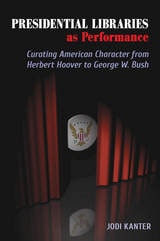
Presidential Libraries as Performance
Curating American Character from Herbert Hoover to George W. BushJodi Kanter
Southern Illinois University Press, 2016
Kanter considers the moments in the presidents’ lives the museums choose to interpret, and not to interpret, and how the libraries approach common subjects in the presidential museum narrative—the presidents’ early years in relation to cultural ideals, the libraries’ representations of presidential failures, personal and political, and the question of presidential legacy. Identifying the limited number of strategies the libraries currently use to represent the diversity of the American experience and American character, Kanter offers concrete suggestions for reinventing and reshaping the practices of museum professionals and visitors within the walls of these institutions.
Presidential museums can tell us important things about the relationships between performance and politics, entertainment and history, and leaders and the people they lead. Kanter demonstrates how the presidential libraries generate normative narratives about individual presidents, historical events, and what it means to be an American.
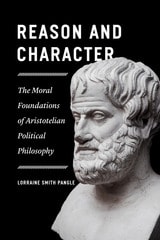
Reason and Character
The Moral Foundations of Aristotelian Political PhilosophyLorraine Smith Pangle
University of Chicago Press, 2020
A close and selective commentary on Aristotle’s Nicomachean Ethics, offering a novel interpretation of Aristotle’s teachings on the relation between reason and moral virtue.
What does it mean to live a good life or a happy life, and what part does reason play in the quest for fulfillment? Lorraine Smith Pangle shows how Aristotle’s arguments for virtue as the core of happiness and for reason as the guide to virtue emerge in response to Socrates’s paradoxical claim that virtue is knowledge and vice is ignorance.
Against Socrates, Aristotle does justice to the effectual truth of moral responsibility—that our characters do indeed depend on our own voluntary actions. But he also incorporates Socratic insights into the close interconnection of passion and judgment and the way passions and bad habits work not to overcome knowledge that remains intact but to corrupt the knowledge one thinks one has. Reason and Character presents fresh interpretations of Aristotle’s teaching on the character of moral judgment and moral choice, on the way reason finds the mean—especially in justice—and on the relation between practical and theoretical wisdom.
Reputation
Studies in the Voluntary Elicitation of Good ConductDaniel B. Klein, Editor
University of Michigan Press, 1997

Technology and the Character of Contemporary Life
A Philosophical InquiryAlbert Borgmann
University of Chicago Press, 1987
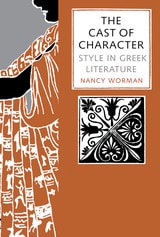
The Cast of Character
Style in Greek LiteratureBy Nancy Worman
University of Texas Press, 2003
Well before Aristotle's Rhetoric elucidated the elements of verbal style that give writing its persuasive power, Greek poets and prose authors understood the importance of style in creating compelling characters to engage an audience. And because their works were composed in predominantly oral settings, their sense of style included not only the characters' manner of speaking, but also their appearance and deportment. From Homeric epic to classical tragedy and oratory, verbal and visual cues work hand-in-hand to create distinctive styles for literary characters.
In this book, Nancy Worman investigates the development and evolution of ideas about style in archaic and classical literature through a study of representations of Odysseus and Helen. She demonstrates that, as liars and imitators, pleasing storytellers, and adept users of costume, these two figures are especially skillful manipulators of style. In tracing the way literary representations of them changed through time—from Homer's positive portrayal of their subtle self-presentations to the sharply polarized portrayals of these same subtleties in classical tragedy and oratory—Worman also uncovers a nascent awareness among the Greek writers that style may be used not only to persuade but also to distract and deceive.
The Character of Truth
Historical Figures in Contemporary FictionNaomi Jacobs
Southern Illinois University Press, 1990
Can the novel survive in an age when tales of historical figures and contemporary personalities dominate the reading lists of the book-buying public?
Naomi Jacobs addresses this question in a study of writers such as William Styron, E. L. Doctorow, and Robert Coover, who challenge the dominance of nonfiction by populating their fictions with real people, living and dead. Jacobs explores the genesis, varieties, and implications of this trend in a prose as lively as that of the writers she critiques.
Using as a case study Robert Coover’s portrait of Richard Nixon in The Public Burning, Jacobs addresses the important legal and ethical questions raised by this trend and applies contemporary libel law to the fictionalization of living people, such as Richard Nixon. She closes her study by speculating on the future of this device and of the novel.
The Economy of Character
Novels, Market Culture, and the Business of Inner MeaningDeidre Shauna Lynch
University of Chicago Press, 1998
Although the story of this shift is usually told in terms of the "rise of the individual," Deidre Shauna Lynch proposes an ingenious alternative interpretation. Elaborating a "pragmatics of character," Lynch shows how readers used transactions with characters to accommodate themselves to newly commercialized social relations. Searching for the inner meanings of characters allowed readers both to plumb their own inwardness and to distinguish themselves from others. In a culture of mass consumption, argues Lynch, possessing a belief in the inexpressible interior life of a character rendered one's property truly private.
Ranging from Defoe and Smollett to Burney and Austen, Lynch's account will interest students of the novel, literary historians, and anyone concerned with the inner workings of consumer culture and the history of emotions.
The Old Formalism
Character and Contemporary American PoetryJonathan Holden
University of Arkansas Press, 1999
The Psychology of Character
Rudolf Allers
Catholic University of America Press, 2022
The Science of Character
Human Objecthood and the Ends of Victorian RealismS. Pearl Brilmyer
University of Chicago Press, 2022
In 1843, the Victorian philosopher John Stuart Mill called for the establishment of a new science, “the science of the formation of character.” Although Mill’s proposal failed as scientific practice, S. Pearl Brilmyer maintains that it found its true home in realist fiction of the period, which employed the literary figure of character to investigate the nature of embodied experience. Bringing to life Mill’s unrealized dream of a science of character, novelists such as George Eliot, Thomas Hardy, and Olive Schreiner turned to narrative to explore how traits and behaviors in organisms emerge and develop, and how aesthetic features—shapes, colors, and gestures—come to take on cultural meaning through certain categories, such as race and sex. Engaged with materialist science and philosophy, these authors transformed character from the liberal notion of the inner truth of an individual into a materially determined figuration produced through shifts in the boundaries between the body’s inside and outside. In their hands, Brilmyer argues, literature became a science, not in the sense that its claims were falsifiable or even systematically articulated, but in its commitment to uncovering, through a fictional staging of realistic events, the laws governing physical and affective life. The Science of Character redraws late Victorian literary history to show how women and feminist novelists pushed realism to its aesthetic and philosophical limits in the crucial span between 1870 and 1920.
The Sumerians
Their History, Culture, and CharacterSamuel Noah Kramer
University of Chicago Press, 1963
The Sumerians, the pragmatic and gifted people who preceded the Semites in the land first known as Sumer and later as Babylonia, created what was probably the first high civilization in the history of man, spanning the fifth to the second millenniums B.C. This book is an unparalleled compendium of what is known about them.
In this classic work, Samuel Noah Kramer communicates his enthusiasm for his subject as he outlines the history of the Sumerian civilization and describes their cities, religion, literature, education, scientific achievements, social structure, and psychology. Finally, he considers the legacy of Sumer to the ancient and modern world.
The Thought and Character of William James
Ralph Barton Perry
Vanderbilt University Press, 1996
This out- of-print classic returns, in a new paperback edition, through the Vanderbilt Library of American Philosophy. Designed to serve as both a systematic account of James's development and a repository of selections from his unpublished writings, the one-volume work (which forms the basis for this new paperback edition) offers a brief and convenient sourcebook of James's thought, set forth in terms that require no previous familiarity with technical problems of philosophy and psychology.
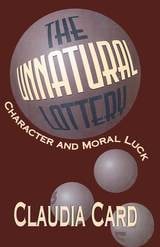
The Unnatural Lottery
Character and Moral LuckClaudia Card
Temple University Press, 1996
The opportunities to become a good person are not the same for everyone. Modern European ethical theory, especially Kantian ethics, assumes the same virtues are accessible to all who are capable of rational choice. Character development, however, is affected by circumstances, such as those of wealth and socially constructed categories of gender, race, and sexual orientation, which introduce factors beyond the control of individuals. Implications of these influences for morality have, since the work of Williams and Nagel in the seventies, raised questions in philosophy about the concept of moral luck. In The Unnatural Lottery, Claudia Card examines how luck enters into moral character and considers how some of those who are oppressed can develop responsibility.
Luck is often best appreciated by those who have known relatively bad luck and have been unable to escape steady comparison of their lot with those of others. The author takes as her paradigms the luck of middle and lower classes of women who face violence and exploitation, of lesbians who face continuing pressure to hide or self-destruct, of culturally Christian whites who have ethnic privilege, and of adult survivors of child abuse. How have such people been affected by luck in who they are and can become, the good lives available to them, the evils they may be liable to embody? Other philosophers have explored the luck of those who begin from privileged positions and then suffer reversals of fortune. Claudia Card focuses on the more common cases of those who begin from socially disadvantaged positions, and she considers some who find their good luck troubling when its source is the unnatural lottery of social injustice.