Results by title
4741 books match the query 'Religion' and 371 start with a
A Biblical Path to the Triune God
Jesus, Paul and the Revelation of the TrinityDenis Farkasfalvy
Catholic University of America Press, 2021
A Bridge Across the Ocean
Luca Castagna
Catholic University of America Press, 2014
A Brief Apology for a Catholic Moment
Jean-Luc Marion
University of Chicago Press, 2021
A Brief Life of Aquinas
The Theologian in His ContextJean-Pierre Torrell
Catholic University of America Press, 2024
A Byzantine Monastic Office, A.D. 1105
Jeffrey C. Anderson
Catholic University of America Press, 2016
A Cappella
Mennonite Voices in PoetryAnn Hostetler
University of Iowa Press, 2003
A Case for All-Girls' Catholic Schools
A Feminist Theological PerspectiveCynthia L. Cameron
Catholic University of America Press, 2026

A Catalog of Biblical Passages in the Dead Sea Scrolls
David L. Washburn
SBL Press, 2003
A Catechism For Business
Andrew V. Abela
Catholic University of America Press, 2014
A Catechism for Business
Tough Ethical Questions & Insights from Catholic Teaching, Third EditionAndrew V. Abela
Catholic University of America Press, 2021
A Catechism for Family Life
Sarah Bartel
Catholic University of America Press, 2018
To address this need, we gathered pertinent questions facing men, women, and pastoral workers in marriage and family life. We then found passages relevant to these questions by researching Church documents on marriage and family from the past one hundred years. These include papal encyclicals, apostolic exhortations, and addresses, Vatican II documents, and the Catechism of the Catholic Church.
Mainstream media coverage of Church events and Church teaching leads many to misunderstand Catholic positions on marriage and family life. While the Catholic Church has developed a rich, detailed, and positive teaching on marriage, family, and sexuality, many Catholics do not have access to this teaching, buried as it is in lengthy Church documents which many find intimidating. Finding the relevant teaching to address specific questions is not always a simple task, either. This book’s main contribution is to present Church teaching relevant to marriage and family in one volume clearly organized by topic and question.
A Catechism for Health Care
Insights from Catholic Teaching on Human Life, Medical Ethics, and Love of NeighborStephen Napier
Catholic University of America Press, 2024
A Catholic Approach to Literacy for Struggling Students
Connecting Philosophy and PracticeMargaret G. Walsh
Catholic University of America Press, 2025
A Catholic Spirituality for Business
Martin Schlag
Catholic University of America Press, 2019
<
The expression “logic of gift” was introduced into official Catholic social teaching by Pope Benedict XVI, who presented it in association with the principle of gratuitousness, which in turn is an expression of fraternity. However, before Caritas in Veritate and ever since Marcel Mauss’s groundbreaking work The Gift, the importance of gift for human relationships and for the cohesion of society had been increasingly recognized. Alain Caillé and Jacques T. Godbout further fleshed out the implication of gift for contemporary society in the context of secular social sciences, striving to overcome utilitarianism. It was the “civil economy” movement, however, that exercised greatest influence on Benedict XVI’s encyclical Caritas in Veritate
This present volume reflects on the general scope of these notions for business and society. This is done by structuring the book in two parts, each dedicated to one of the two concepts. Each part has two general chapters and two that apply the notions to business and to business education. The authors are a mix of well-known emeritus professors and younger talented emerging scholars. We have also been careful to combine European with American authors.
A Catholic Spirituality for Business: The Logic of Gift does not seek to provide a definitive answer to all social challenges, but to make a contribution to a better understanding of Christian spirituality and gift in connection with business organizations. The authors in this book are convinced that markets can be ethical and social, that moral change towards ethical capitalism is possible.

A Century of Church History
The Legacy of Philip SchaffEdited by Henry Warner Bowden. Foreword by Jaroslav Pelikan
Southern Illinois University Press, 1988
In commemoration of the hundredth anniversary of the American Society of Church History, this monumental compilation of historiographical scholarship calls on 10 eminent specialists to review significant achievements that over the past century have shaped current understanding of the multifaceted church.
The book inevitably honors the memory of Philip Schaff, the great 19th century church historian who laid the foundations of the discipline in America and in 1888 founded the ASCH. In examining the major subfields of church history, many of which Schaff pioneered himself in the U.S., the essayists explore such topics as early Christianity, the medieval church, the Reformation, American religious liberty, creeds and liturgies, and ecumenism.
The anthology includes David W. Lotz, "Philip Schaff and the Idea of Church History"; Robert M. Kingdon, "Reformation Studies"; John F. Wilson, "Civil Authority and Religious Freedom in America: Philip Schaff on the United States as a Christian Nation"; and Aidan Kavanagh, "Liturgical and Credal Studies"; Henry W. Bowden, "The First Century: Institutional Development and Ideas about the Profession"; Glenn F. Chesnut, "A Century of Patristic Studies, 1888–1988"; Bernard McGinn, "The Gold of Catholicity": Reflections on a Century of American Study of Medieval Church History"; Jay P. Dolan, "Immigration and American Christianity: A History of Their Histories"; Gerald H. Anderson, "To the Ends of the Earth: American Protestants in Pursuit of Mission"; and John T. Ford, "Ecumenical Studies."
The topics addressed in this book are the major concerns of church history today. The essays provide a critical survey of major developments in the different fields over the past century, discussing the scholars and publications that brought new information to light or changed the general understanding of church history by contributing fresh interpretations. In bringing readers up to date in church history by surveying benchmark contributions in each of the special areas surveyed, the contributors seek to orient historians and stimulate colleagues toward further investigation of a common past.
A common thread running through all of these essays, Bowden notes, "is the recognition that we are heirs to a major change in historical self-understanding. Over the course of a century we have moved from views where history taught lessons of exclusivist rectitude to an appreciation of shared heritage and mutual development." Two appendixes provide extensive historical data about the society itself.
A Century of Jewish Life In Dixie
The Birmingham ExperienceMark H. Elovitz
University of Alabama Press, 2003
Exploring the resilience, identity, and contributions of Southern Jews in the heart of Alabama.
This is the first substantial history of the Jews in any inland town or city of the industrial South. A Century of Jewish Life in Dixie offers a vivid and deeply researched portrait of Birmingham, Alabama’s Jewish community. Mark H. Elovitz traces the community’s evolution from its immigrant roots in the late 19th century through its growth into a vibrant and influential part of Southern society. Drawing on archival records, oral histories, and cultural analysis, Elovitz explores how Southern Jews balanced tradition and assimilation, navigated racial and religious tensions, and contributed to civic and economic life in a region undergoing dramatic transformation. This book provides a rare and nuanced look at Jewish identity in the American South, making it an essential resource for scholars of Jewish studies, Southern history, and American cultural life.
A Children's Haggadah
Rabbi Howard Bogot
Central Conference of American Rabbis, 1996
A Chosen People, a Promised Land
Mormonism and Race in Hawai’iHokulani K. Aikau
University of Minnesota Press, 2012
Christianity figured prominently in the imperial and colonial exploitation and dispossession of indigenous peoples worldwide, yet many indigenous people embrace Christian faith as part of their cultural and ethnic identities. A Chosen People, a Promised Land gets to the heart of this contradiction by exploring how Native Hawaiian members of the Church of Jesus Christ of Latter-Day Saints (more commonly known as Mormons) understand and negotiate their place in this quintessentially American religion.
Mormon missionaries arrived in Hawai‘i in 1850, a mere twenty years after Joseph Smith founded the church. Hokulani K. Aikau traces how Native Hawaiians became integrated into the religious doctrine of the church as a “chosen people”—even at a time when exclusionary racial policies regarding black members of the church were being codified. Aikau shows how Hawaiians and other Polynesian saints came to be considered chosen and how they were able to use their venerated status toward their own spiritual, cultural, and pragmatic ends.
Using the words of Native Hawaiian Latter-Day Saints to illuminate the intersections of race, colonization, and religion, A Chosen People, a Promised Land examines Polynesian Mormon articulations of faith and identity within a larger political context of self-determination.
A Church of Our Own
Disestablishment and Diversity in American ReligionWarner, R. Stephen
Rutgers University Press, 2005
In this definitive collection of essays spanning fifteen years, R. Stephen Warner traces the development of the “new paradigm” interpretation of American religion. Originally formulated in the 1990s in response to prevailing theories of secularization that focused on the waning plausibility of religion in modern societies, the new paradigm reoriented the study of religion to a focus on communities, subcultures, new religious institutions, and the fluidity of modern religious identities. This perspective continues to be one of the most important driving forces in the field and one of the most significant challenges to the idea that religious pluralism inevitably leads to religious decline.
A leading sociologist of religion, Warner shows how the new paradigm stresses the role that religion plays as a vehicle for the bonding and expression of communities within the United States—a society founded on the principle of religious disestablishment and characterized by a diverse and mobile population. Chapters examine evangelicals and Pentecostals, gay and lesbian churches, immigrant religious institutions, Hispanic parishes, and churches for the deaf in terms of this framework. Newly written introductory and concluding essays set these groups within the broad context of the developing field. A thoughtfully organized and timely collection, the volume is a valuable classroom resource as well as essential reading for scholars of contemporary religion.
A Collegial Bishop Revisited
Classis and Presbytery at IssueLeon van den Broeke
Central European University Press, 2026
Contributions to this volume were written by René de Reuver (the Netherlands), Allan J. Janssen (U.S.A.), Leon van den Broeke (the Netherlands), Klaas-Willem de Jong (the Netherlands), Kathleen S. Smith (U.S.A.), Adam Csukás (the Czech Republic), Joseph D. Small (U.S.A.) and John P. Chalmers (Scotland).
A Commentary on Cicero, De Natura Deorum II
Andrew R. Dyck
University of Michigan Press, 2025
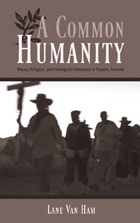
A Common Humanity
Ritual, Religion, and Immigrant Advocacy in Tucson, ArizonaLane Van Ham
University of Arizona Press, 2011
This is the first book to examine immigrant aid groups from the inside. Author Lane Van Ham spent more than three years observing the groups and many hours in discussions and interviews. He is particularly interested in how immigrant advocates both uphold the legitimacy of the United States and maintain a broader view of its social responsibilities. By advocating for immigrants regardless of their documentation status, he suggests, advocates navigate the conflicting pulls of their own nation-state citizenship and broader obligations to their neighbors in a globalizing world. And although the advocacy organizations are not overtly religious, Van Ham finds that they do employ religious symbolism as part of their public rhetoric, arguing that immigrants are entitled to humane treatment based on universal human values.
Beautifully written and immensely engaging, A Common Humanity adds a valuable human dimension to the immigration debate.
A Companion to Margaret More Roper Studies
Life Records, Essential Texts, and Critical EssaysElizabeth McCutcheon
Catholic University of America Press, 2022
Margaret More Roper is the learned daughter of St. Thomas More, the Catholic martyr; their lives are closely linked to each other and to early sixteenth-century changes in politics and religion and the social upheaval and crises of conscience that they brought. Specifically, Roper's major works - her translation of Erasmus's commentary on the Lord's Prayer and the long dialogue letter between More and Roper on conscience - highlight two major preoccupations of the period: Erasmian humanism and More's last years, which led to his death and martyrdom.
Roper was one of the most learned women of her time and a prototype of the woman writer in England, and this edited volume is a tribute to her life, writings, and place among early women authors. It combines comprehensive and convenient joining of biographical, textual, historical, and critical components within a single volume for the modern reader. There is no comparable study in print, and it fills a significant gap in studies of early modern women writers.
A Companion to Martin Buber
Edited by Paul Mendes-Flohr
University of Chicago Press, 2025
In his 1923 essay, I and Thou, the philosopher, theologian, and activist Martin Buber introduced a philosophy of dialogue that achieved a global, interdisciplinary resonance. For Buber, dialogue was more than a conversation; dialogue discloses something essential about our orientation and our lives with one another. This companion assembles twenty-six scholars from a dozen countries to explore Buber’s international reputation and legacy in education, interfaith relations, Judaism, philosophy, politics, and psychology. The result is an essential guide to one of the most influential Jewish thinkers of the twentieth century.
A Concise Coptic-English Lexicon, Second Edition
Richard Smith
SBL Press, 1999
A Contemporary Introduction to Thomistic Metaphysics
Michael Gorman
Catholic University of America Press, 2023
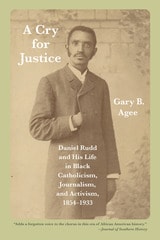
A Cry for Justice
Daniel Rudd and His Life in Black Catholicism, Journalism, and Activism, 1854-1933Gary B. Agee
University of Arkansas Press, 2017
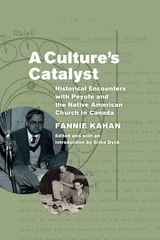
A Culture's Catalyst
Historical Encounters with Peyote and the Native American Church in CanadaFannie Kahan
University of Manitoba Press, 2016
A Defense of Free Will Against Luther
Assertionis Lutheranae Confutatio, Article 36Thomas P. St. John Fisher
Catholic University of America Press, 2024
A Defense of the Catholic Religion
The Necessity, Existence, and Limits of an Infallible ChurchBeda Mayr, OSB
Catholic University of America Press, 2023
A Dossier of Texts Relating to Gerosimos Avlonites
Ted A. Campbell
Bridwell Press, 2025
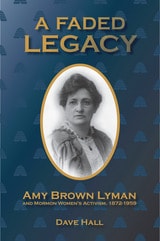
A Faded Legacy
Amy Brown Lyman and Mormon Women's Activism, 1872 - 1959Dave Hall
University of Utah Press, 2015
Placing Lyman’s story within a local and national context, award-winning author Dave Hall examines the roots and trajectory of Mormon women’s activism. Born into a polygamist family, Lyman entered the larger sphere of public life at the time when the practice of polygamy was ending and Mormonism had begun assimilating mainstream trends. The book follows her life as she prepared for a career, married, and sought meaning in a rapidly changing society. It recounts her involvement in the Relief Society, the Mormon women’s charity group that she led for many years and sought to transform into a force for social welfare, and it considers the influence of her connections with national and international women’s organizations. The final period of Lyman’s life, in which she resigned from the Relief Society amidst personal tragedy, offers insight into the reasons Mormon women abandoned their activist heritage for a more conservative role, a stance that is again evolving.
Winner of the Mormon History Association's Best First Book Award.
A Faith Of Our Own
Second-Generation Spirituality in Korean American ChurchesKim, Sharon
Rutgers University Press, 2010
A Faith of Our Own investigates the development and growth of these houses of worship, a recent and rapidly increasing phenomenon in major cities throughout the United States.
Immigration historians have depicted the second-generation as a transitional generation--on the steady march toward the inevitable decline of ethnic identity and allegiance. Sharon Kim suggests an alternative path. By harnessing religion and innovatively creating hybrid religious institutions, second-generation Korean Americans are assertively defining and shaping their own ethnic and religious futures. Rather than assimilating into mainstream American evangelical churches or inheriting the churches of their immigrant parents, second-generation pastors are creating their own hybrid third space--new autonomous churches that are shaped by multiple frames of reference.
Including data gathered over ten years at twenty-two churches, A Faith of Our Own is the most comprehensive study of this topic that addresses generational, identity, political, racial, and empowerment issues.
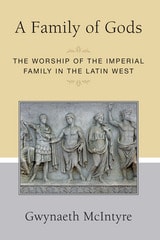
A Family of Gods
The Worship of the Imperial Family in the Latin WestGwynaeth McIntyre
University of Michigan Press, 2016
Roman politics and religion were inherently linked as the Romans attempted to explain the world and their place within it. As Roman territory expanded and power became consolidated into the hands of one man, people throughout the empire sought to define their relationship with the emperor by granting honors to him. This collection of practices has been labeled “emperor worship” or “ruler cult,” but this tells only half the story: imperial family members also became an important part of this construction of power and almost half of the individuals deified in Rome were wives, sisters, children, and other family members of the emperor.
In A Family of Gods, Gwynaeth McIntyre expands current “ruler cult” discussions by including other deified individuals, and by looking at how communities in the period 44 BCE to 337 CE sought to connect themselves with the imperial power structure through establishing priesthoods and cult practices. This work focuses on the priests dedicated to the worship of the imperial family in order to contextualize their role in how imperial power was perceived in the provincial communities and the ways in which communities chose to employ religious practices. Special emphasis is given to the provinces in Gaul, Spain, and North Africa.
This book draws on epigraphic evidence but incorporates literary, numismatic, and archaeological evidence where applicable. It will be of interest to scholars of Roman imperial cult as well as Roman imperialism, and religious and political history.
A Flock Divided
Race, Religion, and Politics in Mexico, 1749–1857Matthew D. O Hara
Duke University Press, 2010
O’Hara focuses on interactions between church authorities and parishioners from the late-colonial era into the early-national period, first in Mexico City and later in the surrounding countryside. Paying particular attention to disputes regarding caste status, the category of “Indian,” and the ownership of property, he demonstrates that religious collectivities from neighborhood parishes to informal devotions served as complex but effective means of political organization for plebeians and peasants. At the same time, longstanding religious practices and ideas made colonial social identities linger into the decades following independence, well after republican leaders formally abolished the caste system that classified individuals according to racial and ethnic criteria. These institutional and cultural legacies would be profound, since they raised fundamental questions about political inclusion and exclusion precisely when Mexico was trying to envision and realize new forms of political community. The modes of belonging and organizing created by colonialism provided openings for popular mobilization, but they were always stalked by their origins as tools of hierarchy and marginalization.
A Foreign Kingdom
Mormons and Polygamy in American Political Culture, 1852-1890Christine Talbot
University of Illinois Press, 2013
A Forgotten Front
Florida during the Civil War EraEdited by Seth A. Weitz and Jonathan C. Sheppard
University of Alabama Press, 2018
In many respects Florida remains the forgotten state of the Confederacy. Journalist Horace Greeley once referred to Florida in the Civil War as the “smallest tadpole in the dirty pool of secession.” Although it was the third state to secede, Florida’s small population and meager industrial resources made the state of little strategic importance. Because it was the site of only one major battle, it has, with a few exceptions, been overlooked within the field of Civil War studies.
During the Civil War, more than fifteen thousand Floridians served the Confederacy, a third of which were lost to combat and disease. The Union also drew the service of another twelve hundred white Floridians and more than a thousand free blacks and escaped slaves. Florida had more than eight thousand miles of coastline to defend, and eventually found itself with Confederates holding the interior and Federals occupying the coasts—a tenuous state of affairs for all. Florida’s substantial Hispanic and Catholic populations shaped wartime history in ways unique from many other states. Florida also served as a valuable supplier of cattle, salt, cotton, and other items to the blockaded South.
A Forgotten Front: Florida during the Civil War Era provides a much-needed overview of the Civil War in Florida. Editors Seth A. Weitz and Jonathan C. Sheppard provide insight into a commonly neglected area of Civil War historiography. The essays in this volume examine the most significant military engagements and the guerrilla warfare necessitated by the occupied coastline. Contributors look at the politics of war, beginning with the decade prior to the outbreak of the war through secession and wartime leadership and examine the period through the lenses of race, slavery, women, religion, ethnicity, and historical memory.
A Fragile Life
Accepting Our VulnerabilityTodd May
University of Chicago Press, 2017
It is perhaps our noblest cause, and certainly one of our oldest: to end suffering. Think of the Buddha, Chuang Tzu, or Marcus Aurelius: stoically composed figures impervious to the torments of the wider world, living their lives in complete serenity—and teaching us how to do the same. After all, isn’t a life free from suffering the ideal? Isn’t it what so many of us seek? Absolutely not, argues Todd May in this provocative but compassionate book. In a moving examination of life and the trials that beset it, he shows that our fragility, our ability to suffer, is actually one of the most important aspects of our humanity.
May starts with a simple but hard truth: suffering is inevitable. At the most basic level, we suffer physically—a sprained ankle or a bad back. But we also suffer insults and indifference. We suffer from overburdened schedules and unforeseen circumstances, from moral dilemmas and emotional heartaches. Even just thinking about our own mortality—the fact that we only live one life—can lead us to tremendous suffering. No wonder philosophies such as Buddhism, Taosim, Stoicism, and even Epicureanism—all of which counsel us to rise above these plights—have had appeal over the centuries. May highlights the tremendous value of these philosophies and the ways they can guide us toward better lives, but he also exposes a major drawback to their tenets: such invulnerability is too emotionally disengaged from the world, leading us to place too great a distance between ourselves and our experience. Rather than seeking absolute immunity, he argues most of us just want to hurt less and learn how to embrace and accept what suffering we do endure in a meaningful way.
A Fragile Life
Accepting Our VulnerabilityTodd May
University of Chicago Press, 2017
This is an auto-narrated audiobook edition of this book.
May starts with a simple but hard truth: suffering is inevitable. At the most basic level, we suffer physically—a sprained ankle or a bad back. But we also suffer insults and indifference. We suffer from overburdened schedules and unforeseen circumstances, from moral dilemmas and emotional heartaches. Even just thinking about our own mortality—the fact that we only live one life—can lead us to tremendous suffering. No wonder philosophies such as Buddhism, Taosim, Stoicism, and even Epicureanism—all of which counsel us to rise above these plights—have had appeal over the centuries. May highlights the tremendous value of these philosophies and the ways they can guide us toward better lives, but he also exposes a major drawback to their tenets: such invulnerability is too emotionally disengaged from the world, leading us to place too great a distance between ourselves and our experience. Rather than seeking absolute immunity, he argues most of us just want to hurt less and learn how to embrace and accept what suffering we do endure in a meaningful way.
Offering a guide on how to positively engage suffering, May ultimately lays out a new way of thinking about how we exist in the world, one that reassures us that our suffering, rather than a failure of physical or psychological resilience, is a powerful and essential part of life itself.
A Gift of Presence
The Theology and Poetry of the Eucharist in Thomas AquinasJan Heiner Tück
Catholic University of America Press, 2018
A God Torn to Pieces
The Nietzsche CaseGiuseppe Fornari
Michigan State University Press, 2013
Giuseppe Fornari’s groundbreaking inquiry shows that Friedrich Nietzsche’s neglected importance as a religious thinker and his “untimeliness” place him at the forefront of modern thought. Capable of exploiting his own failures as a cognitive tool to discover what other philosophers never wanted to see, Nietzsche ultimately drove himself to mental collapse. Fornari analyzes the tragic reports of Nietzsche’s madness and seeks out the cause of this self-destructive destiny, which, he argues, began earlier than his rivalry with the composer and polemicist Richard Wagner, dating back to the premature loss of Nietzsche’s father. Dramatic experience enabled Nietzsche to detect a more general tendency of European culture, leading to his archaeological and prophetic discovery of the death of God, which he understood as a primordial assassination from which all humankind took its origin. Fornari concludes that Nietzsche’s fatal rebellion against a Christian awareness, which he identified as the greatest threat to his plan, led him to become one and the same not only with Dionysus but also with the crucified Christ. His effort, Fornari argues, was a dramatic way to recognize the silent, inner meaning of Christ’s figure, and perhaps to be forgiven.

A God in the House
Poets Talk About FaithEdited by Ilya Kaminsky and Katherine Towler
Tupelo Press, 2012
A Godly Humanism
Clarifying the Hope That Lies WithinFrancis E. George
Catholic University of America Press, 2015
A Government of Laws
Political Theory, Religion, and the American FoundingEllis Sandoz
University of Missouri Press, 2001
In A Government of Laws, which includes a new preface, Ellis Sandoz re-evaluates the traditional understanding of the philosophic and intellectual background of the American founding. Through an exhaustive assessment of Renaissance, medieval, and ancient political philosophy, he shows that the founding fathers were consciously and explicitly seeking to create a political order that would meet the demands of human nature and society. This rigorous and searching analysis of the sources of political and constitutional theory generates an original and provocative approach to American thought and experience.
A Grammar of Epigraphic Hebrew
Sandra Landis Gogel
SBL Press, 1998
A Grammar of Ugaritic
John Screnock
SBL Press, 2022
A Greek-English Lexicon of the New Testament and Other Early Christian Literature
Walter Bauer
University of Chicago Press, 2000
In this edition, Frederick W. Danker's broad knowledge of Greco-Roman literature, as well as papyri and epigraphs, provides a more panoramic view of the world of Jesus and the New Testament. Danker has also introduced a more consistent mode of reference citation, and has provided a composite list of abbreviations to facilitate easy access to this wealth of information.
Perhaps the single most important lexical innovation of Danker's edition is its inclusion of extended definitions for Greek terms. For instance, a key meaning of "episkopos" was defined in the second American edition as overseer; Danker defines it as "one who has the responsibility of safeguarding or seeing to it that something is done in the correct way, guardian." Such extended definitions give a fuller sense of the word in question, which will help avoid both anachronisms and confusion among users of the lexicon who may not be native speakers of English.
Danker's edition of Bauer's Wörterbuch will be an indispensable guide for Biblical and classical scholars, ministers, seminarians, and translators.
A Guide to Formation Advising for Seminarians
Edward J. McCormack
Catholic University of America Press, 2020
A Guide to Formation Advising for Seminary Faculty
Accompaniment, Participation, and EvaluationEdward J. McCormack
Catholic University of America Press, 2020
Beginning with an overview of the formation process, A Guide to Formation Advising for Seminarians/Seminary Faculty explains the role of the formation advisor and the skills required for that ministry. It describes the various ways the formation advisor accompanies a person through the formation process. McCormack also provides concrete suggestions for how to promote in seminarians’ active participation in the process. Formators will also find explanation of the evaluation process with a style sheet and examples of written evaluations. The handbook contains an annotated bibliography on all the major topics a formation advisor comes across.