Results by title
4 books match the query 'Chiefs'

Ancient Panama
Chiefs in Search of PowerBy Mary W. Helms
University of Texas Press, 1979
Ancient Panama adds depth to our understanding of the political and religious elite ruling in Panama at the time of the European conquest. Mary W. Helms's research greatly expands knowledge of the distribution, extent, and structural nature of these pre-Columbian chiefdoms.
In addition, Helms delves more deeply into select aspects of ancient Panamanian political systems, including the relationship between elite competition and chiefly status, the use of sumptuary goods in the expression of elite power, and the role of elites in regional and long-distance exchange networks. In a significant departure from traditional thinking, she proposes that the search for esoteric knowledge was more important than economic trade in developing long-distance contact among chiefdoms.
The primary data for the study are derived from sixteenth-century Spanish records by Oviedo y Valdés, Andagoya, Balboa, and others. The author also turns to ethnographic data from contemporary native people of Panama, Colombia, tropical America, and Polynesia for analogy and comparison. The result is a highly innovative study which illuminates not only pre-Columbian Panamanian elites but also the nature of chiefdoms as a distinctive cultural type.
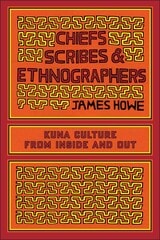
Chiefs, Scribes, and Ethnographers
Kuna Culture from Inside and OutBy James Howe
University of Texas Press, 2009

Nkrumah & the Chiefs
The Politics of Chieftaincy in Ghana, 1951–1960Richard Rathbone
Ohio University Press, 1999
Kwame Nkrumah, who won independence for Ghana in 1957, was the first African statesman to achieve world recognition. Nkrumah and his movement also brought about the end of independent chieftaincy—one of the most fundamental changes in the history of Ghana.
Kwame Nkrumah’s Convention Peoples’ Party was committed not only to the rapid termination of British colonial rule but also to the elimination of chiefly power. This book is an account of Kwame Nkrumah and his government’s long struggle to wrest administrative control of the Ghanaian countryside from the chiefs. Based largely upon previously unstudied documentation in Ghana, this study charts the government’s frustrated attempts to democratize local government and the long and bitter campaigns mounted by many southern chiefs to resist their political marginalization.
Between 1951 and the creation of the First Republic in 1960, Ghanaian governments sought to discard the chiefly principle in local government, then to weaken chieftaincy by attrition and eventually, by altering the legal basis of chieftaincy, to incorporate and control a considerably altered chieftaincy. The book demonstrates that chieftaincy was consciously and systematically reconstructed in the decade of the 1950s with implications which can still be felt in modern Ghana.
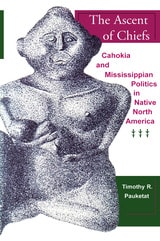
The Ascent of Chiefs
Cahokia and Mississippian Politics in Native North AmericaTimothy R. Pauketat
University of Alabama Press, 1994
Considering Cahokia in terms of class struggle, Pauketat claims that the political consolidation in this region of the Mississippi Valley happened quite suddenly, around A.D. 1000, after which the lords of Cahokia innovated strategies to preserve their power and ultimately emerged as divine chiefs. The new ideas and new data in this volume will invigorate the debate surrounding one of the most important developments in North American prehistory.