Results by title
21 books match the query 'Church and social problems'
Africae Munus
Ten Years LaterAgbaw-ebai
St. Augustine's Press, 2022
Building on the vitality and enthusiasm of the Church in Africa, it is important to lift their faith through scholarly research and academic reflections. We cannot fully appreciate the dedication, commitment and perseverance of the Catholic community throughout the African continent if we do not know the truth of their sufferings and persecution and understand their resilience in the light of faith. This collection, drawn from the halls of academia, provides an important contribution to the understanding and advancement of Catholic Africa, following the insights and enlightenment of Pope Emeritus Benedict. It is my hope that these essays will enrich your understanding and experience of the Catholic faith.
— From the Preface by Seán Patrick Cardinal O’Malley
All Religions Are Good in Tzintzuntzan
Evangelicals in Catholic MexicoBy Peter S. Cahn
University of Texas Press, 2003
Since the 1960s, evangelical Christian denominations have made converts throughout much of Roman Catholic Latin America, causing clashes of faith that sometimes escalate to violence. Yet in one Mexican town, Tzintzuntzan, the appearance of new churches has provoked only harmony. Catholics and evangelicals alike profess that "all religions are good," a sentiment not far removed from "here we are all equal," which was commonly spoken in the community before evangelicals arrived.
In this paradigm-challenging study, Peter Cahn investigates why the coming of evangelical churches to Tzintzuntzan has produced neither the interfaith clashes nor the economic prosperity that evangelical conversion has brought to other communities in Mexico and Latin America. Drawing on extensive ethnographic fieldwork, he demonstrates that the evangelicals' energetic brand of faith has not erupted into violence because converts continue to participate in communal life, while Catholics, in turn, participate in evangelical practices. He also underscores how Tzintzuntzan's integration into global economic networks strongly motivates the preservation of community identity and encourages this mutual borrowing. At the same time, however, Cahn concludes that the suppression of religious difference undermines the revolutionary potential of religion.
Apostles of Change
Latino Radical Politics, Church Occupations, and the Fight to Save the BarrioBy Felipe Hinojosa
University of Texas Press, 2021
2021 Finalist Raul Yzaguirre Best Political/Current Affairs Book, International Latino Book Awards
Winner of the Texas Association of Chicanos in Higher Education Inaugural Book Award
Unraveling the intertwined histories of Latino radicalism and religion in urban America, this book examines how Latino activists transformed churches into staging grounds for protest against urban renewal and displacement.
In the late 1960s, the American city found itself in steep decline. An urban crisis fueled by federal policy wreaked destruction and displacement on poor and working-class families. The urban drama included religious institutions, themselves undergoing fundamental change, that debated whether to stay in the city or move to the suburbs. Against the backdrop of the Black and Brown Power movements, which challenged economic inequality and white supremacy, young Latino radicals began occupying churches and disrupting services to compel church communities to join their protests against urban renewal, poverty, police brutality, and racism.
Apostles of Change tells the story of these occupations and establishes their context within the urban crisis; relates the tensions they created; and articulates the activists' bold, new vision for the church and the world. Through case studies from Chicago, Los Angeles, New York City, and Houston, Felipe Hinojosa reveals how Latino freedom movements frequently crossed boundaries between faith and politics and argues that understanding the history of these radical politics is essential to understanding the dynamic changes in Latino religious groups from the late 1960s to the early 1980s.
At Ease in Zion
Social History of Southern Baptists, 1865-1900Rufus B. Spain
University of Alabama Press, 2003
First published in 1967, Rufus Spain’s thorough investigation into Southern Baptist attitudes set the stage for research on religion in the American South. In At Ease in Zion, Spain questions the titular “ease” with society that Southern Baptists seemed to maintain following the Civil War. His analysis of denominational newspapers, as well as reports from the Southern Baptist Convention and state conventions, paint a compelling picture of the subjects’ complacency with their social existence, even as they criticized personal and recreational ethics.
While the South faced significant social, economic, and political changes after the Civil War, religion remained the primary moral influence. As the Southern Baptist denomination made up a significant majority of the population at that time, its leaders and attitudes had a clear and undeniable impact on social norms. Rufus Spain was one of the first writers to actively demonstrate the relationship between Southern religion and Southern society, and his work displays meticulous attention to the ways in which we are affected by complacency. He asserts that Southern Baptists viewed the American South as a version of God’s ideal society; any issues they wished to address were caused by individuals (such as those who did not conform to societal norms) or external attitudes (such as those in differing religions or regions).
At Ease in Zion is a critical part of the scholarly discussion on religion in society. Spain’s research offers a bold analysis of the American South and its citizens during one of the most tumultuous times in its history while providing a basis for arguments on “social Christianity” and its ever-shifting role in the world.
Bearing Witness against Sin
The Evangelical Birth of the American Social MovementMichael P. Young
University of Chicago Press, 2007
During the 1830s the United States experienced a wave of movements for social change over temperance, the abolition of slavery, anti-vice activism, and a host of other moral reforms. Michael Young argues for the first time in Bearing Witness against Sin that together they represented a distinctive new style of mobilization—one that prefigured contemporary forms of social protest by underscoring the role of national religious structures and cultural schemas.
In this book, Young identifies a new strain of protest that challenged antebellum Americans to take personal responsibility for reforming social problems.In this period activists demanded that social problems like drinking and slaveholding be recognized as national sins unsurpassed in their evil and immorality. This newly awakened consciousness undergirded by a confessional style of protest, seized the American imagination and galvanized thousands of people. Such a phenomenon, Young argues, helps explain the lives of charismatic reformers such as William Lloyd Garrison and the Grimké sisters, among others.
Marshalling lively historical materials, including letters and life histories of reformers, Bearing Witness against Sin is a revelatory account of how religion lay at the heart of social reform.
City of Dignity
Christianity, Liberalism, and the Making of Global Los AngelesSean T. Dempsey
University of Chicago Press, 2023
Contemporary Los Angeles is commonly seen as an American bulwark of progressive secular politics, a place that values immigration, equity, diversity, and human rights. But what accounts for the city’s embrace of such staunchly liberal values, which are more hotly contested in other parts of the country? The answer, Sean Dempsey reveals, lies not with those frequent targets of credit and blame—Democrats in Hollywood—but instead with liberal Protestants and other steadfast religious organizations of the postwar era.
As the Religious Right movement emerged in the 1970s, progressive religious activists quietly began promoting an ethical vision that made waves worldwide but saw the largest impact in its place of origin: metropolitan Los Angeles. At the center of this vision lay the concept of human dignity—entwining the integral importance of political and expressive freedom with the moral sanctity of the human condition—which suffused all of the political values that arose from it, whether tolerance, diversity, or equality of opportunity. The work of these religious organizations birthed such phenomena as the Sanctuary Movement—which provided safe haven for refugees fleeing conflict-torn Central America—and advocacy for the homeless, both of which became increasingly fraught issues amid the rising tides of neoliberalism and conservatism. City of Dignity explores how these interwoven spiritual and theological strands found common ground—and made common impacts—in the humanitarian ecosystem of one of America’s largest and most dynamic metro areas.
Divided Worlds? Challenges in Classics and New Testament Studies
Caroline Johnson Hodge
SBL Press, 2023
This volume brings together scholars from New Testament studies and classics, whose fields of study have much in common but are not often in in conversation. The contributors explore how the ancient works they study can be resources for thinking critically and creatively about issues that matter today. The essays address our obligation to take positive moral stands on divisive issues of both the past and the present, including empire, racial/ethnic and religious difference, economic inequality, gender and sexuality, slavery, and disability. Contributors include Douglas Boin, Denise Kimber Buell, Gay L. Byron, Allen Dwight Callahan, Joy Connolly, Jennifer A. Glancy, Shelley P. Haley, Caroline Johnson Hodge, Katherine Lu Hsu, Timothy Joseph, Tat-siong Benny Liew, Yii-Jan Lin, Dominic Machado, Joseph A. Marchal, Thomas R. Martin, Candida R. Moss, Laura Salah Nasrallah, Jorunn Økland, and Abraham Smith.

It Comes From The People
Community Development and Local TheologyMary Hinsdale
Temple University Press, 1995
Jesus and the Gang
Youth Violence and Christianity in Urban HondurasJon Wolseth
University of Arizona Press, 2011
While only a small fraction of youths in a neighborhood are active members of a gang, most young men must learn the styles, ways of communicating, and local geography of gangs in order to survive. Due to the absence of gang prevention programs sponsored by the government or outside non-governmental organizations, Catholic and Pentecostal churches have developed their own ways to confront gang violence in their communities. Youths who participate in church organizations do so not only to alter and improve their communities but also to gain emotional and institutional support.
Offering firsthand accounts of these youths and how they make use of religious discourse, narrative practices, or the inscription of tattooed images and words on the body to navigate dangerous social settings, Jesus and the Gang is an unflinching look at how these young men turn away from perpetuating the cycle of violence and how Christianity serves a society where belonging is surviving.
This book will appeal to readers with an interest in Latin American studies, urban anthropology, and youth studies. With its focus on the lives of young men and women, it’s also a compelling read for anyone interested in the plight of urban youth trying to escape the gang life.
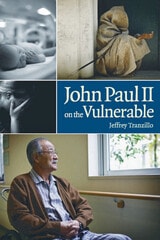
John Paul II on the Vulnerable
Jeffrey Tranzillo
Catholic University of America Press, 2013
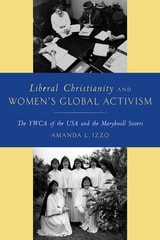
Liberal Christianity and Women's Global Activism
The YWCA of the USA and the Maryknoll SistersAmanda L. Izzo
Rutgers University Press, 2018
Focusing on the histories of two highly influential groups, the Young Women’s Christian Association of the USA, an interdenominational Protestant organization, and the Maryknoll Sisters, a Roman Catholic religious order, Izzo offers new perspectives on the contributions of these women to transnational social movements, women’s history, and religious studies, as she traces the connections between turn-of-the-century Christian women’s reform culture and liberal and left-wing religious social movements of the 1960s and 1970s. Izzo suggests that shared ethical, theological, and institutional underpinnings can transcend denominational divides, and that strategies for social change often associated with secular feminism have ties to spiritually inspired social movements.
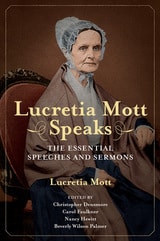
Lucretia Mott Speaks
The Essential Speeches and SermonsLucretia Mott. Edited by Christopher Densmore, Carol Faulkner, Nancy Hewitt, and Beverly Wilson Palmer
University of Illinois Press, 2017
Drawing on widely scattered archives, newspaper accounts, and other sources, Lucretia Mott Speaks unearths the essential speeches and remarks from Mott's remarkable career. The editors have chosen selections representing important themes and events in her public life. Extensive annotations provide vibrant context and show Mott's engagement with allies and opponents. The speeches illuminate her passionate belief that her many causes were all intertwined. The result is an authoritative resource, one that enriches our understanding of Mott's views, rhetorical strategies, and still-powerful influence on American society.
Man and the State
Jacques Maritain
Catholic University of America Press, 1998
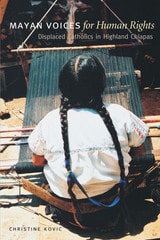
Mayan Voices for Human Rights
Displaced Catholics in Highland ChiapasBy Christine Kovic
University of Texas Press, 2005
In the last decades of the twentieth century, thousands of Mayas were expelled, often violently, from their homes in San Juan Chamula and other highland communities in Chiapas, Mexico, by fellow Mayas allied with the ruling Institutional Revolutionary Party (PRI). State and federal authorities generally turned a blind eye to these human rights abuses, downplaying them as local conflicts over religious conversion and defense of cultural traditions. The expelled have organized themselves to fight not only for religious rights, but also for political and economic justice based on a broad understanding of human rights.
This pioneering ethnography tells the intertwined stories of the new communities formed by the Mayan exiles and their ongoing efforts to define and defend their human rights. Focusing on a community of Mayan Catholics, the book describes the process by which the progressive Diocese of San Cristóbal and Bishop Samuel Ruiz García became powerful allies for indigenous people in the promotion and defense of human rights. Drawing on the words and insights of displaced Mayas she interviewed throughout the 1990s, Christine Kovic reveals how the exiles have created new communities and lifeways based on a shared sense of faith (even between Catholics and Protestants) and their own concept of human rights and dignity. She also uncovers the underlying political and economic factors that drove the expulsions and shows how the Mayas who were expelled for not being "traditional" enough are in fact basing their new communities on traditional values of duty and reciprocity.
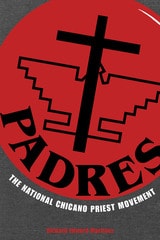
PADRES
The National Chicano Priest MovementBy Richard Edward Martínez
University of Texas Press, 2005
From the 1848 Treaty of Guadalupe Hidalgo to the 1960s, Mexican American Catholics experienced racism and discrimination within the U.S. Catholic church, as white priests and bishops maintained a racial divide in all areas of the church's ministry. To oppose this religious apartheid and challenge the church to minister fairly to all of its faithful, a group of Chicano priests formed PADRES (Padres Asociados para Derechos Religiosos, Educativos y Sociales, or Priests Associated for Religious, Educational, and Social Rights) in 1969. Over the next twenty years of its existence, PADRES became a powerful force for change within the Catholic church and for social justice within American society.
This book offers the first history of the founding, activism, victories, and defeats of PADRES. At the heart of the book are oral history interviews with the founders of PADRES, who describe how their ministries in poor Mexican American parishes, as well as their own experiences of racism and discrimination within and outside the church, galvanized them into starting and sustaining the movement. Richard Martínez traces the ways in which PADRES was inspired by the Chicano movement and other civil rights struggles of the 1960s and also probes its linkages with liberation theology in Latin America. He uses a combination of social movement theory and organizational theory to explain why the group emerged, flourished, and eventually disbanded in 1989.
Religion and Poverty
Pan-African PerspectivesPeter J. Paris, ed.
Duke University Press, 2009
Contributors from Africa and North America explore poverty’s roots and effects, the ways that experiences and understandings of deprivation are shaped by religion, and the capacity and limitations of religion as a means of alleviating poverty. As part of a collaborative project, the contributors visited Ghana, Kenya, and South Africa, as well as Jamaica and the United States. In each location, they met with clergy, scholars, government representatives, and NGO workers, and they examined how religious groups and community organizations address poverty. Their essays complement one another. Some focus on poverty, some on religion, others on their intersection, and still others on social change. A Jamaican scholar of gender studies decries the feminization of poverty, while a Nigerian ethicist and lawyer argues that the protection of human rights must factor into efforts to overcome poverty. A church historian from Togo examines the idea of poverty as a moral virtue and its repercussions in Africa, and a Tanzanian theologian and priest analyzes ujamaa, an African philosophy of community and social change. Taken together, the volume’s essays create a discourse of mutual understanding across linguistic, religious, ethnic, and national boundaries.
Contributors. Elizabeth Amoah, Kossi A. Ayedze, Barbara Bailey, Katie G. Cannon, Noel Erskine, Dwight N. Hopkins, Simeon O. Ilesanmi, Laurenti Magesa, Madipoane Masenya, Takatso A. Mofokeng, Esther M. Mombo, Nyambura J. Njoroge, Jacob Olupona, Peter J. Paris, Anthony B. Pinn, Linda E. Thomas, Lewin L. Williams
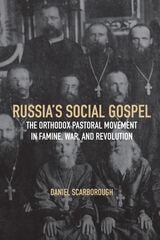
Russia's Social Gospel
The Orthodox Pastoral Movement in Famine, War, and RevolutionDaniel Scarborough
University of Wisconsin Press, 2023
This volume draws upon extensive archival research to examine the effects of the pastoral movement on Russian society and the Orthodox Church. Scarborough argues that the social work of parish clergymen shifted the focus of Orthodox practice in Russia toward cooperative social activism as a devotional activity. He furthers our understanding of Russian Orthodoxy by illuminating the difficult position of parish priests, who were charged with both spiritual and secular responsibilities but were supported by neither church nor state. His nuanced look at the pastorate shows how social and historical traumas shifted perceptions of what being religious meant, in turn affecting how the Orthodox Church organized itself, and contributed to Russia’s modernization.
Slavery and the Catholic Church in the United States
Historical StudiesDavid J. Endres
Catholic University of America Press, 2023
The Feeling of Forgetting
Christianity, Race, and Violence in AmericaJohn Corrigan
University of Chicago Press, 2023
The dual traumas of colonialism and slavery are still felt by Native Americans and African Americans as victims of ongoing violence toward people of color today. In The Feeling of Forgetting, John Corrigan calls attention to the trauma experienced by white Americans as perpetrators of this violence. By tracing memory’s role in American Christianity, Corrigan shows how contemporary white Christian nationalism is motivated by a widespread effort to forget the role race plays in American society. White trauma, Corrigan argues, courses through American culture like an underground river that sometimes bursts forth into brutality, terrorism, and insurrection. Tracing the river to its source is a necessary first step toward healing.
The Neighbor
Three Inquiries in Political TheologySlavoj Žižek, Eric L. Santner, and Kenneth Reinhard
University of Chicago Press, 2005
In The Neighbor, three of the most significant intellectuals working in psychoanalysis and critical theory collaborate to show how this problem of neighbor-love opens questions that are fundamental to ethical inquiry and that suggest a new theological configuration of political theory. Their three extended essays explore today's central historical problem: the persistence of the theological in the political. In "Towards a Political Theology of the Neighbor," Kenneth Reinhard supplements Carl Schmitt's political theology of the enemy and friend with a political theology of the neighbor based in psychoanalysis. In "Miracles Happen," Eric L. Santner extends the book's exploration of neighbor-love through a bracing reassessment of Benjamin and Rosenzweig. And in an impassioned plea for ethical violence, Slavoj Žižek's "Neighbors and Other Monsters" reconsiders the idea of excess to rehabilitate a positive sense of the inhuman and challenge the influence of Levinas on contemporary ethical thought.
A rich and suggestive account of the interplay between love and hate, self and other, personal and political, The Neighbor will prove to be a touchstone across the humanities and a crucial text for understanding the persistence of political theology in secular modernity.
The Neighbor
Three Inquiries in Political Theology, with a new PrefaceSlavoj Žižek, Eric L. Santner, and Kenneth Reinhard
University of Chicago Press, 2013
In The Neighbor, three of the most significant intellectuals working in psychoanalysis and critical theory collaborate to show how this problem of neighbor-love opens questions that are fundamental to ethical inquiry and that suggest a new theological configuration of political theory. Their three extended essays explore today's central historical problem: the persistence of the theological in the political. In “Toward a Political Theology of the Neighbor,” Kenneth Reinhard supplements Carl Schmitt’s political theology of the enemy and friend with a political theology of the neighbor based in psychoanalysis. In “Miracles Happen,” Eric L. Santner extends the book's exploration of neighbor-love through a bracing reassessment of Benjamin and Rosenzweig. And in an impassioned plea for ethical violence, Slavoj Žižek’s “Neighbors and Other Monsters” reconsiders the idea of excess to rehabilitate a positive sense of the inhuman and challenge the influence of Levinas on contemporary ethical thought.
A rich and suggestive account of the interplay between love and hate, self and other, personal and political, The Neighbor has proven to be a touchstone across the humanities and a crucial text for understanding the persistence of political theology in secular modernity. This new edition contains a new preface by the authors.