Results by title
28 books match the query 'Cinematography'
A Culture of Light
Cinema and Technology in 1920s GermanyFrances Guerin
University of Minnesota Press, 2005
Action Bodies
VFX, Identity, and Embodiment in Blockbuster CinemaDrew Ayers
University of Texas Press, 2026
Exploring how digital visual effects have changed the representations of the body and identity in action films.
When Harrison Ford appeared digitally de-aged in Indiana Jones and the Dial of Destiny, audiences witnessed more than a technical feat; they saw how visual effects are reshaping what bodies can be on screen. In Action Bodies, Drew Ayers examines how the contemporary action genre redefines embodiment across human, superhuman, animal, and machine forms. Ayers argues that action films are a crucial site for understanding how popular media both reflect and shape cultural debates about identity, citizenship, disability, and ethics in the era of big data and algorithmic culture.
Through case studies including Top Gun: Maverick, The Woman King, The Fast & the Furious franchise, and Avatar: The Way of Water, Ayers explores how VFX-altered bodies carry ideological weight. While the action genre has long leaned conservative in its politics of identity, its digitally mediated bodies also generate unexpected opportunities: glimpses of more inclusive and flexible modes of embodiment. As artificial intelligence and synthetic imagery continue to transform film production, Action Bodies demonstrates why careful attention to action cinema is essential for understanding how contemporary culture imagines and engineers the future of the body.
Between Film and Screen
Modernism's Photo SynthesisGarrett Stewart
University of Chicago Press, 2000
In this ambitious, sophisticated study, Garrett Stewart discusses the photogram not only as the undertext of screen images but also in its unexpected links to the early modernist writings of James, Conrad, Forster, Joyce, and others. Engaging the work of such media theorists as Eisenstein, Benjamin, Kracauer, Bazin, Baudry, Cavell, Deleuze, and Jameson, this study pursues the suppressed photogram as it ripples the narrative surface of several dozen films from Lang and Chaplin through Bergman, Coppola, and beyond. To locate the exact repercussions of such effects, Stewart includes over three hundred frame enlargements drawn from genres as different as science fiction, film noir, and recent Victorian costume drama.
Bigger Than Life
The Close-Up and Scale in the CinemaMary Ann Doane
Duke University Press, 2021
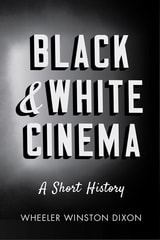
Black and White Cinema
A Short HistoryWheeler Winston Dixon
Rutgers University Press, 2015
Black and White Cinema is the first study to consider the use of black-and-white as an art form in its own right, providing a comprehensive and global overview of the era when it flourished, from the 1900s to the 1960s. Acclaimed film scholar Wheeler Winston Dixon introduces us to the masters of this art, discussing the signature styles and technical innovations of award-winning cinematographers like James Wong Howe, Gregg Toland, Freddie Francis, and Sven Nykvist. Giving us a unique glimpse behind the scenes, Dixon also reveals the creative teams—from lighting technicians to matte painters—whose work profoundly shaped the look of black-and-white cinema.
More than just a study of film history, this book is a rallying cry, meant to inspire a love for the artistry of black-and-white film, so that we might work to preserve this important part of our cinematic heritage. Lavishly illustrated with more than forty on-the-set stills, Black and White Cinema provides a vivid and illuminating look at a creatively vital era.
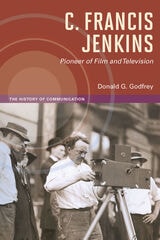
C. Francis Jenkins, Pioneer of Film and Television
Donald G. Godfrey
University of Illinois Press, 2014
This is the first biography of the important but long-forgotten American inventor Charles Francis Jenkins (1867-1934). Historian Donald G. Godfrey documents the life of Jenkins from his childhood in Indiana and early life in the West to his work as a prolific inventor whose productivity was cut short by an early death. Jenkins was an inventor who made a difference.
As one of America's greatest independent inventors, Jenkins's passion was to meet the needs of his day and the future. In 1895 he produced the first film projector able to show a motion picture on a large screen, coincidentally igniting the first film boycott among his Quaker viewers when the film he screened showed a woman's ankle. Jenkins produced the first American television pictures in 1923, and developed the only fully operating broadcast television station in Washington, D.C. transmitting to ham operators from coast to coast as well as programming for his local audience.
Godfrey's biography raises the profile of C. Francis Jenkins from his former place in the footnotes to his rightful position as a true pioneer of today's film and television. Along the way, it provides a window into the earliest days of both motion pictures and television as well as the now-vanished world of the independent inventor.
Cinema's Bodily Illusions
Flying, Floating, and HallucinatingScott C. Richmond
University of Minnesota Press, 2016
Do contemporary big-budget blockbuster films like Gravity move something in us that is fundamentally the same as what avant-garde and experimental films have done for more than a century? In a powerful challenge to mainstream film theory, Cinema’s Bodily Illusions demonstrates that this is the case.
Scott C. Richmond bridges genres and periods by focusing, most palpably, on cinema’s power to evoke illusions: feeling like you’re flying through space, experiencing 3D without glasses, or even hallucinating. He argues that cinema is, first and foremost, a technology to modulate perception. He presents a theory of cinema as a proprioceptive technology: cinema becomes art by modulating viewers’ embodied sense of space. It works primarily not at the level of the intellect but at the level of the body. Richmond develops his theory through examples of direct perceptual illusion in cinema: hallucinatory flicker phenomena in Tony Conrad’s The Flicker, eerie depth effects in Marcel Duchamp’s Anémic Cinéma, the illusion of bodily movement through onscreen space in Stanley Kubrick’s 2001, Godfrey Reggio’s Koyaanisqatsi, and Alfonso Cuarón’s Gravity. In doing so he combines insights from Maurice Merleau-Ponty’s phenomenology of perception and James J. Gibson’s ecological approach to perception. The result is his distinctive ecological phenomenology, which allows us to refocus on the cinema’s perceptual, rather than representational, power.
Arguing against modernist habits of mind in film theory and aesthetics, and the attendant proclamations of cinema’s death or irrelevance, Richmond demonstrates that cinema’s proprioceptive aesthetics make it an urgent site of contemporary inquiry.
Cinemachines
An Essay on Media and MethodGarrett Stewart
University of Chicago Press, 2020
Engaging in fresh ways with revelatory special effects in the history of cinematic storytelling—from Buster Keaton’s breaching of the film screen in Sherlock Jr. to the pixel disintegration of a remotely projected hologram in Blade Runner 2049—Stewart’s book puts unprecedented emphasis on technique in moving image narrative. Complicating and revising the discourse on historical screen processes, Cinemachines will be crucial reading for anyone interested in the evolution of the movies from a celluloid to a digital medium.
Cinematography
Keating, Patrick
Rutgers University Press, 2014
The essays in this volume introduce us to the visual conventions of the Hollywood style, explaining how these first arose and how they have subsequently been challenged by alternative aesthetics. In order to frame this fascinating history, the contributors employ a series of questions about technology (how did new technology shape cinematography?), authorship (can a cinematographer develop styles and themes over the course of a career?), and classicism (how should cinematographers use new technology in light of past practice?). Taking us from the hand-cranked cameras of the silent era to the digital devices used today, the collection of original essays explores how the art of cinematography has been influenced not only by technological advances, but also by trends in the movie industry, from the rise of big-budget blockbusters to the spread of indie films.
The book also reveals the people behind the camera, profiling numerous acclaimed cinematographers from James Wong Howe to Roger Deakins. Lavishly illustrated with over 50 indelible images from landmark films, Cinematography offers a provocative behind-the-scenes look at the profession and a stirring celebration of the art form. Anyone who reads this history will come away with a fresh eye for what appears on the screen because of what happens behind it.
Digital Visual Effects in Cinema
The Seduction of RealityPrince, Stephen
Rutgers University Press, 2012
Avatar. Inception. Jurassic Park. Lord of the Rings. Ratatouille. Not only are these some of the highest-grossing films of all time, they are also prime examples of how digital visual effects have transformed Hollywood filmmaking. Some critics, however, fear that this digital revolution marks a radical break with cinematic tradition, heralding the death of serious realistic movies in favor of computer-generated pure spectacle.
Digital Visual Effects in Cinema counters this alarmist reading, by showing how digital effects–driven films should be understood as a continuation of the narrative and stylistic traditions that have defined American cinema for decades. Stephen Prince argues for an understanding of digital technologies as an expanded toolbox, available to enhance both realist films and cinematic fantasies. He offers a detailed exploration of each of these tools, from lighting technologies to image capture to stereoscopic 3D. Integrating aesthetic, historical, and theoretical analyses of digital visual effects, Digital Visual Effects in Cinema is an essential guide for understanding movie-making today.
Disappearing Tricks
Silent Film, Houdini, and the New Magic of the Twentieth CenturyMatthew Solomon
University of Illinois Press, 2010
Disappearing Tricks revisits the golden age of theatrical magic and silent film to reveal how professional magicians shaped the early history of cinema. Where others have called upon magic as merely an evocative metaphor for the wonders of cinema, Matthew Solomon focuses on the work of the professional illusionists who actually made magic with moving pictures between 1895 and 1929.
The first to reveal fully how powerfully magic impacted the development of cinema, the book combines film and theater history to uncover new evidence of the exchanges between magic and filmmaking in the United States and France during the silent period. Chapters detailing the stage and screen work of Harry Houdini and Georges Méliès show how each transformed theatrical magic to create innovative cinematic effects and thrilling new exploits for twentieth-century mass audiences. The book also considers the previously overlooked roles of anti-spiritualism and presentational performance in silent film.
Highlighting early cinema's relationship to the performing body, visual deception, storytelling, and the occult, Solomon treats cinema and stage magic as overlapping practices that together revise our understanding of the origins of motion pictures and cinematic spectacle.
Editing and Special/Visual Effects
Keil, Charlie
Rutgers University Press, 2016
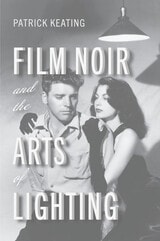
Film Noir and the Arts of Lighting
Patrick Keating
Rutgers University Press, 2024
From Light to Byte
Toward an Ethics of Digital CinemaMarkos Hadjioannou
University of Minnesota Press, 2012
Cinema has been undergoing a profound technological shift: celluloid film is being replaced by digital media in the production, distribution, and reception of moving images. Concerned with the debate surrounding digital cinema’s ontology and the interrelationship between cinema cultures, From Light to Byte investigates the very idea of change as it is expressed in the current technological transition. Markos Hadjioannou asks what is different in the way digital movies depict the world and engage with the individual and how we might best address the issue of technological shift within media archaeologies.
Hadjioannou turns to the technical basis of the image as his first point of departure, considering the creative and perceptual activities of moviemakers and viewers. Grounded in film history, film theory, and philosophy, he explores how the digital configures its engagement with reality and the individual while simultaneously replaying and destabilizing celluloid’s own structures. He observes that, where film’s photographic foundation encourages an existential association between individual and reality, digital representations are graphic renditions of mathematical codes whose causal relations are more difficult to trace.
Throughout this work Hadjioannou examines how the two technologies set themselves up with reference to reality, physicality, spatiality, and temporality, and he concludes that the question concerning digital cinema is ultimately one of ethical implications—a question, that is, of the individual’s ability to respond to the image of the world.
Hidden in Plain Sight
An Archaeology of Magic and the CinemaWilliamson, Colin
Rutgers University Press, 2015
To answer these questions, Colin Williamson situates film within a long tradition of magical practices that combine art and science, involve deception and discovery, and evoke two forms of wonder—both awe at the illusion displayed and curiosity about how it was performed. He thus considers how, even as they mystify audiences, cinematic illusions also inspire them to learn more about the technologies and techniques behind moving images. Tracing the overlaps between the worlds of magic and filmmaking, Hidden in Plain Sight examines how professional illusionists and their tricks have been represented onscreen, while also considering stage magicians who have stepped behind the camera, from Georges Méliès to Ricky Jay.
Williamson offers an insightful, wide-ranging investigation of how the cinema has functioned as a “device of wonder” for more than a century, while also exploring how several key filmmakers, from Orson Welles to Christopher Nolan and Martin Scorsese, employ the rhetoric of magic. Examining pre-cinematic visual culture, animation, nonfiction film, and the digital trickery of today’s CGI spectacles, Hidden in Plain Sight provides an eye-opening look at the powerful ways that magic has shaped our modes of perception and our experiences of the cinema.
Making Believe
Screen Performance and Special Effects in Popular CinemaBode, Lisa
Rutgers University Press, 2017
Making Believe incorporates North American film reviews and editorials, actor and crew interviews, trade and fan magazine commentary, actor training manuals, and film production publicity materials to discuss the shifts in screen acting practice and philosophy around transfiguring makeup, doubles, motion capture, and acting to absent places or characters. Along the way it considers how performers and visual and special effects crew work together, and struggle with the industry, critics, and each other to define the aesthetic value of their work, in an industrial system of technological reproduction. Bode opens our eyes to the performing illusions we love and the tensions we experience in wanting to believe in spite of our knowledge that it is all make believe in the end.
Media Heterotopias
Digital Effects and Material Labor in Global Film ProductionJean Hye Chung
Duke University Press, 2018
Off-Screen Cinema
Isidore Isou and the Lettrist Avant-GardeKaira M. Cabañas
University of Chicago Press, 2015
Off-Screen Cinema is the first monograph in English of the Lettrists. Offering a full portrait of the avant-garde scene of 1950s Paris, it focuses on the film works of key Lettrist figures like Gil J Wolman, Maurice Lemaître, François Dufrêne, and especially the movement's founder, Isidore Isou, a Romanian immigrant whose “discrepant editing” deliberately uncoupled image and sound. Through Cabañas's history, we see not only the full scope of the Lettrist project, but also its clear influence on Situationism, the French New Wave, the New Realists, as well as American filmmakers such as Stan Brakhage.

Photography, Cinema, Memory
The Crystal Image of TimeDamian Sutton
University of Minnesota Press, 2009
A philosophical investigation into the differing sensations of time in cinema and photography
Cinema and photography are both intimately associated with time—cinema with time in passing, the photograph with the lost moment. In Photography, Cinema, Memory, Damian Sutton explores time in both media to present a radical new understanding of the photographic image as always coming into being.
Drawing on Gilles Deleuze’s concept of the crystal image to move beyond the tropes of immobility, stasis, and death, Sutton’s analysis reveals the open-endedness of time expressed in the photograph, either as a potential for an abundant future or as a depth of meandering remembrance. He presents an innovative taxonomy of time in the photograph, considering particular representations of time in the work of Nan Goldin, Eugène Atget, Andy Warhol, and others. He contrasts this taxonomy with representations of time in cinema since 1895, offering fresh readings of the films of the Lumière brothers and Mitchell & Kenyon, as well as more recent works, including Eternal Sunshine of the Spotless Mind, Amélie, and A Matter of Life and Death. Throughout this work, Sutton connects and grounds cinema and photography as starting points to comprehend how we come to terms, ultimately, with time itself as pure, immanent change.
Postcinematic Vision
The Coevolution of Moving-Image Media and the SpectatorRoger F. Cook
University of Minnesota Press, 2020
A study of how film has continually intervened in our sense of perception, with far-ranging insights into the current state of lived experience
How has cinema transformed our senses, and how does it continue to do so? Positing film as a stage in the long coevolution of human consciousness and visual technology, Postcinematic Vision offer a fresh perspective on the history of film while providing startling new insights into the so-called divide between cinematic and digital media.
Starting with the argument that film viewing has long altered neural circuitry in our brains, Roger F. Cook proceeds to reevaluate film’s origins, as well as its merger with digital imaging in the 1990s. His animating argument is that film has continually altered the relation between media and human perception, challenging the visual nature of modern culture in favor of a more unified, pan-sensual way of perceiving. Through this approach, he makes original contributions to our understanding of how mediation is altering lived experience.
Along the way, Cook provides important reevaluations of well-known figures such as Franz Kafka, closely reading cinematic passages in the great author’s work; he reassesses the conventional wisdom that Marshall McLuhan was a technological determinist; and he lodges an original new reading of The Matrix. Full of provocative and far-reaching ideas, Postcinematic Vision is a powerful work that helps us see old concepts anew while providing new ideas for future investigation.
Robert Paul and the Origins of British Cinema
Ian Christie
University of Chicago Press, 2019
From improving upon Edison’s Kinetoscope to cocreating the first movie camera in Britain to building England’s first film studio and launching the country’s motion-picture industry, Paul played a key part in the history of cinema worldwide. It’s not only Paul’s story, however, that historian Ian Christie tells here. Robert Paul and the Origins of British Cinema also details the race among inventors to develop lucrative technologies and the jumbled culture of patent-snatching, showmanship, and music halls that prevailed in the last decade of the nineteenth century. Both an in-depth biography and a magnificent look at early cinema and fin-de-siècle Britain, Robert Paul and the Origins of British Cinema is a first-rate cultural history of a fascinating era of global invention, and the revelation of one of its undervalued contributors.
Spectacular Digital Effects
CGI and Contemporary CinemaKristen Whissel
Duke University Press, 2014
Still
American Silent Motion Picture PhotographyDavid S. Shields
University of Chicago Press, 2013
The Aesthetics of Shadow
Lighting and Japanese CinemaDaisuke Miyao
Duke University Press, 2013
The Empire of Effects
Industrial Light and Magic and the Rendering of RealismJulie A. Turnock
University of Texas Press, 2022
2024 Finalist, Marshall McLuhan Outstanding Book Award, Media Ecology Association
How one company created the dominant aesthetic of digital realism.
Just about every major film now comes to us with an assist from digital effects. The results are obvious in superhero fantasies, yet dramas like Roma also rely on computer-generated imagery to enhance the verisimilitude of scenes. But the realism of digital effects is not actually true to life. It is a realism invented by Hollywood—by one company specifically: Industrial Light & Magic.
The Empire of Effects shows how the effects company known for the puppets and space battles of the original Star Wars went on to develop the dominant aesthetic of digital realism. Julie A. Turnock finds that ILM borrowed its technique from the New Hollywood of the 1970s, incorporating lens flares, wobbly camerawork, haphazard framing, and other cinematography that called attention to the person behind the camera. In the context of digital imagery, however, these aesthetic strategies had the opposite effect, heightening the sense of realism by calling on tropes suggesting the authenticity to which viewers were accustomed. ILM’s style, on display in the most successful films of the 1980s and beyond, was so convincing that other studios were forced to follow suit, and today, ILM is a victim of its own success, having fostered a cinematic monoculture in which it is but one player among many.
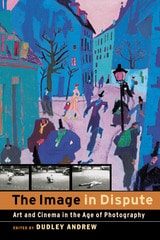
The Image in Dispute
Art and Cinema in the Age of PhotographyEdited by Dudley Andrew
University of Texas Press, 1997
Photography, cinema, and video have irrevocably changed the ways in which we view and interpret images. Indeed, the mechanical reproduction of images was a central preoccupation of twentieth-century philosopher Walter Benjamin, who recognized that film would become a vehicle not only for the entertainment of the masses but also for consumerism and even communism and fascism.
In this volume, experts in film studies and art history take up the debate, begun by Benjamin, about the power and scope of the image in a secular age. Part I aims to bring Benjamin's concerns to life in essays that evoke specific aspects and moments of the visual culture he would have known. Part II focuses on precise instances of friction within the traditional arts brought on by this century's changes in the value and mission of images. Part III goes straight to the image technologies themselves—photography, cinema, and video—to isolate distinctive features of the visual cultures they help constitute.
As we advance into the postmodern era, in which images play an ever more central role in conveying perceptions and information, this anthology provides a crucial context for understanding the apparently irreversible shift from words to images that characterized the modernist period. It will be important reading for everyone in cultural studies, film and media studies, and art history.
The Live-Action Animated Film
Kyle Meikle
Rutgers University Press, 2026
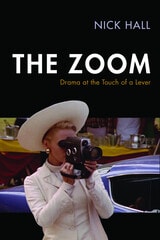
The Zoom
Drama at the Touch of a LeverHall, Nick
Rutgers University Press, 2018