Results by title
16 books match the query 'Circulation'
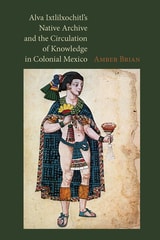
Alva Ixtlilxochitl's Native Archive and the Circulation of Knowledge in Colonial Mexico
Amber Brian
Vanderbilt University Press, 2016
Born between 1568 and 1580, Alva Ixtlilxochitl was a direct descendant of Ixtlilxochitl I and Ixtlilxochitl II, who had been rulers of Texcoco, one of the major city-states in pre-Conquest Mesoamerica. After a distinguished education and introduction into the life of the empire of New Spain in Mexico, Ixtlilxochitl was employed by the viceroy to write histories of the indigenous peoples in Mexico. Engaging with this history and delving deep into the resultant archives of this life's work, Amber Brian addresses the question of how knowledge and history came to be crafted in this era.
Brian takes the reader through not only the history of the archives itself, but explores how its inheritors played as crucial a role in shaping this indigenous history as the author. The archive helped inspire an emerging nationalism at a crucial juncture in Latin American history, as Creoles and indigenous peoples appropriated the history to give rise to a belief in Mexican exceptionalism. This belief, ultimately, shaped the modern state and impacted the course of history in the Americas. Without the work of Ixtlilxochitl, that history would look very different today.
Circulation
Edited by François Brunet
Terra Foundation for American Art, 2017
The third volume in the Terra Foundation Essays series, Circulation brings together an international and interdisciplinary team of scholars, including Thierry Gervais, Tom Gunning, J. M. Mancini, Frank Mehring, and Hélène Valance, who map the multiple planes where artistic meaning has been produced by the circulation of art from the eighteenth century to the present. The book looks at both broad historical trends and the successes and failures of particular works of art from a wide variety of artists and styles. Together, the contributions significantly expand the conceptual and methodological terrain of scholarship on American art.
Circulation and Sleep
Experimental Investigations Accompanied by an AtlasJohn F. Shepard
University of Michigan Press, 1914
Circulation, Writing, and Rhetoric
Laurie Gries
Utah State University Press, 2018
While it has long been understood that the circulation of discourse, bodies, artifacts, and ideas plays an important constitutive force in our cultures and communities, circulation, as a concept and a phenomenon, has been underexamined in studies of rhetoric and writing. In an effort to give circulation its rhetorical due, Circulation, Writing, and Rhetoric introduces a wide range of studies that foreground circulation in both theory and practice. Contributors to the volume specifically explore the connections between circulation and public rhetorics, urban studies, feminist rhetorics, digital communication, new materialism, and digital research.
Circulation is a cultural-rhetorical process that impacts various ecologies, communities, and subjectivities in an ever-increasing globally networked environment. As made evident in this collection, circulation occurs in all forms of discursive production, from academic arguments to neoliberal policies to graffiti to tweets and bitcoins. Even in the case of tombstones, borrowed text achieves only partial stability before it is recirculated and transformed again. This communicative process is even more evident in the digital realm, the underlying infrastructures of which we have yet to fully understand.
As public spaces become more and more saturated with circulating texts and images and as networked relations come to the center of rhetorical focus, Circulation, Writing, and Rhetoric will be a vital interdisciplinary resource for approaching the contemporary dynamics of rhetoric and writing.
Contributors: Aaron Beveridge, Casey Boyle, Jim Brown, Naomi Clark, Dànielle Nicole DeVoss, Rebecca Dingo, Sidney I. Dobrin, Jay Dolmage, Dustin Edwards, Jessica Enoch, Tarez Samra Graban, Byron Hawk, Gerald Jackson, Gesa E. Kirsch, Heather Lang, Sean Morey, Jenny Rice, Thomas Rickert, Jim Ridolfo, Nathaniel A. Rivers, Jacqueline Jones Royster, Donnie Johnson Sackey, Michele Simmons, Dale M. Smith, Patricia Sullivan, John Tinnell, Kathleen Blake Yancey
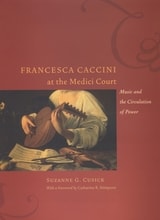
Francesca Caccini at the Medici Court
Music and the Circulation of PowerSuzanne G. Cusick
University of Chicago Press, 2009
Suzanne G. Cusick argues that Caccini’s career depended on the usefulness of her talents to the political agenda of Grand Duchess Christine de Lorraine, Tuscany’s de facto regent from 1606 to 1636. Drawing on Classical and feminist theory, Cusick shows how the music Caccini made for the Medici court sustained the culture that enabled Christine’s power, thereby also supporting the sexual and political aims of its women.
In bringing Caccini’s surprising story so vividly to life, Cusick ultimately illuminates how music making functioned in early modern Italy as a significant medium for the circulation of power.
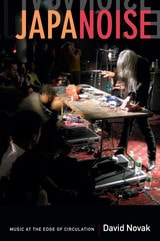
Japanoise
Music at the Edge of CirculationDavid Novak
Duke University Press, 2013
For its scattered listeners, Noise always seems to be new and to come from somewhere else: in North America, it was called "Japanoise." But does Noise really belong to Japan? Is it even music at all? And why has Noise become such a compelling metaphor for the complexities of globalization and participatory media at the turn of the millennium?
In Japanoise, David Novak draws on more than a decade of research in Japan and the United States to trace the "cultural feedback" that generates and sustains Noise. He provides a rich ethnographic account of live performances, the circulation of recordings, and the lives and creative practices of musicians and listeners. He explores the technologies of Noise and the productive distortions of its networks. Capturing the textures of feedback—its sonic and cultural layers and vibrations—Novak describes musical circulation through sound and listening, recording and performance, international exchange, and the social interpretations of media.
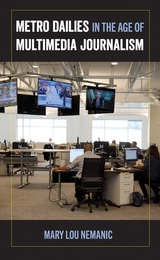
Metro Dailies in the Age of Multimedia Journalism
Mary Lou Nemanic
Temple University Press, 2020
The death of the daily newspaper in the internet age has been predicted for decades. While print newspapers are struggling from drops in advertising and circulation, their survival has been based on original reporting. Instead of a death knell, metro dailies are experiencing an identity crisis—a clash between traditional print journalism’s formality and detail and digital journalism’s informality and brevity.
In Metro Dailies in the Age of Multimedia Journalism, Mary Lou Nemanic provides in-depth case studies of five mid-size city newspapers to show how these publications are adapting to the transition from print-only to multiplatform content delivery—and how newsroom practices are evolving to address this change. She considers the successes when owners allow journalists to manage their newspapers—to ensure production of quality journalism under the protection of newspaper guilds—as well as how layoffs and resource cutbacks have jeopardized quality standards.
Arguing for an integrated approach in which print and online reporting are considered complementary and visual journalism is emphasized across platforms, Nemanic suggests that there is a future for the endangered daily metro newspaper.
Mobile Museums
Collections in CirculationEdited by Felix Driver, Mark Nesbitt, and Caroline Cornish
University College London, 2021
How did the process of the circulation re-examine, inform, and unsettle common assumptions about the way museum collections have evolved over time and space? Mobile Museums presents an argument for the importance of circulation in the study of museum collections, both past and present. It brings together a diverse array of international scholars and curators from a variety of disciplines to consider the mobility of collections, especially in the context of Indigenous community engagement. By foregrounding the question of circulation, the book represents a paradigm shift in the understanding of the history and future uses of museum collections. Taking on a global perspective and addressing a variety of types of collection, including the botanical, ethnographic, economic, and archaeological, the book helps us to understand why the mobility of museum collections was a fundamental aspect of their history—and why it continues to matter today.
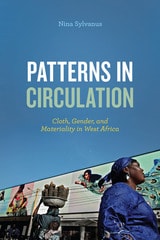
Patterns in Circulation
Cloth, Gender, and Materiality in West AfricaNina Sylvanus
University of Chicago Press, 2016
Sylvanus brings wax cloth’s unique and complex history to light: born as a nineteenth-century Dutch colonial effort to copy Javanese batik cloth for Southeast Asian markets, it was reborn as a status marker that has dominated the visual economy of West African markets. Although most wax cloth is produced in China today, it continues to be central to the expression of West African women’s identity and power. As Sylvanus shows, wax cloth expresses more than this global motion of goods, capital, aesthetics, and labor—it is a form of archive where intimate and national memories are stored, always ready to be reanimated by human touch. By uncovering this crucial aspect of West African material culture, she enriches our understanding of global trade, the mutual negotiations that drive it, and the how these create different forms of agency and subjectivity.
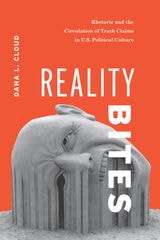
Reality Bites
Rhetoric and the Circulation of Truth Claims in U.S. Political CultureDana L. Cloud
The Ohio State University Press, 2018
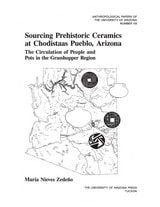
Sourcing Prehistoric Ceramics at Chodistaas Pueblo, Arizona
The Circulation of People and Pots in the Grasshopper RegionMaría Nieves Zedeño
University of Arizona Press, 1994
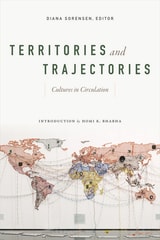
Territories and Trajectories
Cultures in CirculationDiana Sorensen, editor
Duke University Press, 2018
Contributors. Homi Bhabha, Jacqueline Bhabha, Lindsay Bremner, Finbarr Barry Flood, Rosario Hubert, Alina Payne, Kay Kaufman Shelemay, Shu-mei Shih, Diana Sorensen, Karen Thornber, Xiaofei Tian
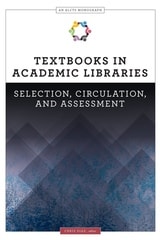
Textbooks in Academic Libraries
Selection, Circulation, and AssessmentChris Diaz
American Library Association, 2017
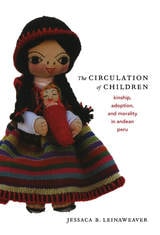
The Circulation of Children
Kinship, Adoption, and Morality in Andean PeruJessaca B. Leinaweaver
Duke University Press, 2008
Leinaweaver provides insight into the emotional and material factors that bring together and separate indigenous Andean families in the highland city of Ayacucho. She describes how child circulation is intimately linked to survival in the city, which has had to withstand colonialism, economic isolation, and the devastating civil war unleashed by the Shining Path. Leinaweaver examines the practice from the perspective of parents who send their children to live in other households, the adults who receive them, and the children themselves. She relates child circulation to international laws and norms regarding children’s rights, adoptions, and orphans, and to Peru’s history of racial conflict and violence. Given that history, Leinaweaver maintains that it is not surprising that child circulation, a practice associated with Peru’s impoverished indigenous community, is alternately ignored, tolerated, or condemned by the state.
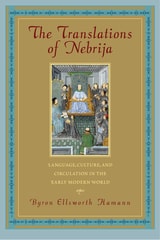
The Translations of Nebrija
Language, Culture, and Circulation in the Early Modern WorldByron Ellsworth Hamann
University of Massachusetts Press, 2015
Tracing the global influence of Nebrija's dictionary, Byron Ellsworth Hamann, in this interdisciplinary, deeply researched book, connects pagan Rome, Muslim Spain, Aztec Tenochtitlan, Elizabethan England, the Spanish Philippines, and beyond, revealing new connections in world history. The Translations of Nebrija re-creates the travels of people, books, and ideas throughout the early modern world and reveals the adaptability of Nebrija's text, tracing the ways heirs and pirate printers altered the dictionary in the decades after its first publication. It reveals how entries in various editions were expanded to accommodate new concepts, such as for indigenous languages in the Americas—a process with profound implications for understanding pre-Hispanic art, architecture, and writing. It shows how words written in the margins of surviving dictionaries from the Americas shed light on the writing and researching of dictionaries across the early modern world.
Exploring words and the dictionaries that made sense of them, this book charts new global connections and challenges many assumptions about the early modern world.
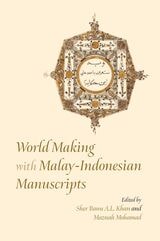
World Making with Malay-Indonesian Manuscripts
Circulation, Contestation and ConnectionEdited by Maznah Mohamad and Sher Banu Khan
National University of Singapore Press, 2026
What new framings emerge when we revisit the vibrant world of Malay-Indonesian manuscripts, looking beyond the boundaries imposed by colonial and nationalist scholarship? This volume revitalizes manuscript studies by using texts in entirely fresh ways, situating them as dynamic instruments of knowledge and cultural transformation. Through contextual readings, it uncovers multiple historical and cultural narratives within and between manuscripts, challenging established understandings of power, identity, and authorship. Chapters explore themes ranging from the origins of kingdoms and intellectual traditions to the reinvention of contemporary lives through politicized readings of older texts.
By foregrounding the diversity and versatility of Malay-Indonesian textual traditions, this book recenters manuscripts as vital agents in shaping Southeast Asian histories, decenters fixed notions of a singular “Malay” worldview, and reveals the fluidity of cultural memory across time and place.