Results by title
32 books match the query 'Climate'
Aerosol Effects on Climate
S. Gerard Jennings
University of Arizona Press, 1993
Between Urban and Wild
Reflections from ColoradoAndrea M. Jones
University of Iowa Press, 2013
Although not intended as a manual for landowners, Between Urban and Wild nonetheless offers useful and engaging perspectives on the realities of settling and living in a partially wild environment. Throughout her ongoing journey of being home, Jones’s close observations of the land and its native inhabitants are paired with the suggestion that even small landholders can act to protect the health of their properties. Her brief meditations capture and honor the subtleties of the natural world while illuminating the importance of working to safeguard it.
Probing the contradictions of a lifestyle that burdens the health of the land that she loves, Jones’s writing is permeated by her gentle, earnest conviction that living at the urban-wild interface requires us to set aside self-interest, consider compromise, and adjust our expectations and habits—to accommodate our surroundings rather than force them to accommodate us.
British Weather and the Climate of Enlightenment
Jan Golinski
University of Chicago Press, 2007
Enlightenment inquiries into the weather sought to impose order on a force that had the power to alter human life and social conditions. British Weather and the Climate of Enlightenment reveals how a new sense of the national climate emerged in the eighteenth century from the systematic recording of the weather, and how it was deployed in discussions of the health and welfare of the population. Enlightened intellectuals hailed climate’s role in the development of civilization but acknowledged that human existence depended on natural forces that would never submit to rational control.
Reading the Enlightenment through the ideas, beliefs, and practices concerning the weather, Jan Golinski aims to reshape our understanding of the movement and its legacy for modern environmental thinking. With its combination of cultural history and the history of science, British Weather and the Climate of Enlightenment counters the claim that Enlightenment progress set humans against nature, instead revealing that intellectuals of the age drew characteristically modern conclusions about the inextricability of nature and culture.
Changing Arctic Landscape
Ken Tape
University of Alaska Press, 2010
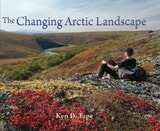
The resulting volume is a stunning reminder of inexorable change; divided into sections on vegetation, permafrost, and glaciers, the images show the startling effects of climate change. In addition, each section presents a short biography of a pioneering scientist who was instrumental in both obtaining the antique photographs and advancing the study of arctic ecosystems, as well as interviews with scientists who have spent decades working in Alaska for the United States Geological Survey. The Changing Arctic Landscape is a profile of transformation—complex and not yet fully understood.
Civil War Weather in Virginia
Robert K. Krick
University of Alabama Press, 2007
Climate and Culture Change in North America AD 900–1600
By William C. Foster
University of Texas Press, 2012
Climate change is today’s news, but it isn’t a new phenomenon. Centuries-long cycles of heating and cooling are well documented for Europe and the North Atlantic. These variations in climate, including the Medieval Warm Period (MWP), AD 900 to 1300, and the early centuries of the Little Ice Age (LIA), AD 1300 to 1600, had a substantial impact on the cultural history of Europe. In this pathfinding volume, William C. Foster marshals extensive evidence that the heating and cooling of the MWP and LIA also occurred in North America and significantly affected the cultural history of Native peoples of the American Southwest, Southern Plains, and Southeast.
Correlating climate change data with studies of archaeological sites across the Southwest, Southern Plains, and Southeast, Foster presents the first comprehensive overview of how Native American societies responded to climate variations over seven centuries. He describes how, as in Europe, the MWP ushered in a cultural renaissance, during which population levels surged and Native peoples substantially intensified agriculture, constructed monumental architecture, and produced sophisticated works of art. Foster follows the rise of three dominant cultural centers—Chaco Canyon in New Mexico, Cahokia on the middle Mississippi River, and Casas Grandes in northwestern Chihuahua, Mexico—that reached population levels comparable to those of London and Paris. Then he shows how the LIA reversed the gains of the MWP as population levels and agricultural production sharply declined; Chaco Canyon, Cahokia, and Casas Grandes collapsed; and dozens of smaller villages also collapsed or became fortresses.
Climate and the Making of Worlds
Toward a Geohistorical PoeticsTobias Menely
University of Chicago Press, 2021
In this book, Tobias Menely develops a materialist ecocriticism, tracking the imprint of the planetary across a long literary history of poetic rewritings and critical readings which continually engage with the climate as a condition of human world making. Menely’s central archive is English poetry written between John Milton’s Paradise Lost (1667) and Charlotte Smith’s “Beachy Head” (1807)—a momentous century and a half during which Britain, emerging from a crisis intensified by the Little Ice Age, established the largest empire in world history and instigated the Industrial Revolution. Incorporating new sciences into ancient literary genres, these ambitious poems aspired to encompass what the eighteenth-century author James Thomson called the “system . . . entire.” Thus they offer a unique record of geohistory, Britain’s epochal transition from an agrarian society, buffeted by climate shocks, to a modern coal-powered nation. Climate and the Making of Worlds is a bracing and sophisticated contribution to ecocriticism, the energy humanities, and the prehistory of the Anthropocene.
Climate in Motion
Science, Empire, and the Problem of ScaleDeborah R. Coen
University of Chicago Press, 2018
Climate in the Age of Empire
Weather Observers in Colonial CanadaVictoria C. Slonosky
American Meteorological Society, 2018
Climate of Alaska
Martha Shulski and Gerd Wendler
University of Alaska Press, 2007
Replete with striking photos, maps, and charts, The Climate of Alaska presents a detailed picture of what to expect in this state of climate extremes. From the 40-below temperatures of the Interior to the twenty-four hours of daylight in a northern summer, Alaska’s climate presents challenges to its inhabitants on a daily basis. Readers will find accessible descriptions of temperature, humidity, precipitation, and climate change that will enrich a visit to the state and provide insight on the living conditions of this fascinating place.
Climate, Capitalism and Communities
An Anthropology of Environmental OverheatingAstrid B. Stensrud
Pluto Press, 2019

Climate, God and Uncertainty
A Transcendental Naturalistic Approach Beyond Bruno LatourArthur C. Petersen
University College London, 2023
Climate, God and Uncertainty brings together the philosophical approaches of pragmatism and (neo-) Kantianism in transcendental naturalism. The new approach is based on combining an expansive concept of “nature” with an emphasis on the separate ontological status of transcendental values. This book moves beyond Bruno Latour’s thought to understand what climate change means for philosophical anthropology and wider culture.
Referring mainly to works by Latour, William James, and Heinrich Rickert, this book develops a cultural philosophical approach called “transcendental naturalism.” This approach reinterprets the interface between science and politics in the context of climate change, highlighting, for instance, issues such as the religious disenchantment of nature, the scientific disbelief in a plurality of value-laden perspectives, and the disregard for non-modern worldviews in politics. In developing its argument, the book makes a methodological intervention on the sort of naturalism that guides both Latour’s work and a large part of the academic field called “science and religion.”
Colonial Cataclysms
Climate, Landscape, and Memory in Mexico’s Little Ice AgeBradley Skopyk
University of Arizona Press, 2020
The contiguous river basins that flowed in Tlaxcala and San Juan Teotihuacan formed part of the agricultural heart of central Mexico. As the colonial project rose to a crescendo in the sixteenth and seventeenth centuries, the Indigenous farmers of central Mexico faced long-term problems standard historical treatments had attributed to drought and soil degradation set off by Old World agriculture. Instead, Bradley Skopyk argues that a global climate event called the Little Ice Age brought cold temperatures and elevated rainfall to the watersheds of Tlaxcala and Teotihuacan. With the climatic shift came cataclysmic changes: great floods, human adaptations to these deluges, and then silted wetlands and massive soil erosion.
This book chases water and soil across the colonial Mexican landscape, through the fields and towns of New Spain’s Native subjects, and in and out of some of the strongest climate anomalies of the last thousand or more years. The pursuit identifies and explains the making of two unique ecological crises, the product of the interplay between climatic and anthropogenic processes. It charts how Native farmers responded to the challenges posed by these ecological rifts with creative use of plants and animals from the Old and New Worlds, environmental engineering, and conflict within and beyond the courts. With a new reading of the colonial climate and by paying close attention to land, water, and agrarian ecologies forged by farmers, Skopyk argues that colonial cataclysms—forged during a critical conjuncture of truly unprecedented proportions, a crucible of human and natural forces—unhinged the customary ways in which humans organized, thought about, and used the Mexican environment.
This book inserts climate, earth, water, and ecology as significant forces shaping colonial affairs and challenges us to rethink both the environmental consequences of Spanish imperialism and the role of Indigenous peoples in shaping them.
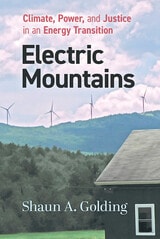
Electric Mountains
Climate, Power, and Justice in an Energy TransitionShaun A. Golding
Rutgers University Press, 2021
Committed environmentalists in one of North America’s most progressive regions desperately wanted energy policies that address the climate crisis. For many of them, wind turbines on Northern New England’s iconic ridgelines symbolize the energy transition that they have long hoped to see. For others, however, ridgeline wind takes on a very different meaning. When weighing its costs and benefits locally and globally, some wind opponents now see the graceful structures as symbols of corrupted energy politics.
This book derives from several years of research to make sense of how wind turbines have so starkly split a community of environmentalists, as well as several communities. In doing so, it casts a critical light on the roadmap for energy transition that Northern New England’s ridgeline wind projects demarcate. It outlines how ridgeline wind conforms to antiquated social structures propping up corporate energy interests, to the detriment of the swift de-carbonizing and equitable transformation that climate predictions warrant. It suggests, therefore, that the energy transition of which most of us are a part, is probably not the transition we would have designed ourselves, if we had been asked.
Finding Mars
Ned Rozell
University of Alaska Press, 2011
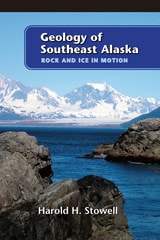
Geology of Southeast Alaska
Rock and Ice in MotionHarold Stowell
University of Alaska Press, 2006
Written by a geologist with over twenty-five years of experience in the north, Geology of Southeast Alaska will entertain and inform with abundant photographs and detailed drawings. Whether you want to understand the forces that shaped the state of Alaska, or you want to learn the basics of glacial movement, this compact, authoritative book is for you.
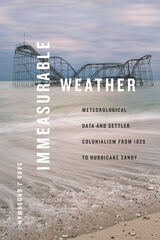
Immeasurable Weather
Meteorological Data and Settler Colonialism from 1820 to Hurricane SandySara J. Grossman
Duke University Press, 2023
Indigenous Perspective to Climate and Environment
Darren Parry
University of Utah Press, 2024
Leaning Into The Wind
A Memoir Of Midwest WeatherSusan Allen Toth
University of Minnesota Press, 2006

New England Weather, New England Climate
Gregory A. Zielinski
University of New Hampshire Press, 2005
Combining a scholarly appreciation of weather systems and events with an ability to transmit their passion to a general audience, Gregory A. Zielinski and Barry D. Keim have written a one-of-a-kind guide to New England weather and climate. Not only are weather patterns in New England more changeable and more extreme than almost anywhere in the country, New England is the ultimate destination of nearly all storm tracks nationwide. Recently, newsworthy items such as global warming, El Niño, and La Niña have significantly impacted our local weather, in both the short and long term. Luckily, the science of meteorology and climatology and their tools of observation and analysis have made great strides in the past few years.
The authors offer an in-depth explanation of the latest theoretical insights into New England's weather along with a flurry of stories and lore about the vagaries of our clime. The book is divided into the seasons as we actually experience them—ski season, mud season, beach and lake season, and foliage season. It includes photos and illustrations: some all too familiar, many hard to believe. Zielinski and Keim succeed in providing an illuminating and entertaining analysis and commentary while whole-heartedly embracing our region's atmospheric peculiarities. This book won't do anything about New England's weather or climate but it will help you understand each of them.
Population, Contact, and Climate in the New Mexican Pueblos
Ezra B. W. Zubrow
University of Arizona Press, 1974
Reading the Skies
A Cultural History of English Weather, 1650-1820Vladimir Jankovic
University of Chicago Press, 2001
Jankovic interweaves classical traditions, folk/popular beliefs and practices, and the increasingly quantitative approaches of urban university men to understanding the wonders of the skies. He places special emphasis on the role that detailed meteorological observations played in natural history and chorography, or local geography; in religious and political debates; and in agriculture. Drawing on a number of archival sources, including correspondence and weather diaries, as well as contemporary pamphlets, tracts, and other printed sources reporting prodigious phenomena in the skies, this book will interest historians of science, Britain, and the environment.
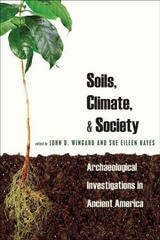
Soils, Climate and Society
Archaeological Investigations in Ancient AmericaJohn D. Wingard
University Press of Colorado, 2013
The volume traces the origins of agriculture, the transition to agrarian societies, the sociocultural implications of agriculture, agriculture's effects on population, and the theory of carrying capacity, considering the relation of agriculture to the profound social changes that it wrought in the New World. Soil science plays a significant, though varied, role in each case study, and is the common component of each analysis. Soil chemistry is also of particular importance to several of the studies, as it determines the amount of food that can be produced in a particular soil and the effects of occupation or cultivation on that soil, thus having consequences for future cultivators.
Soils, Climate and Society demonstrates that renewed investigation of agricultural production and demography can answer questions about the past, as well as stimulate further research. It will be of interest to scholars of archaeology, historical ecology and geography, and agricultural history.
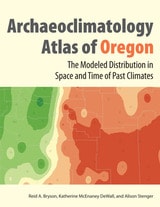
The Archaeoclimatology Atlas of Oregon
The Modeled Distribution in Space and Time of Past ClimatesReid A Bryson
University of Utah Press, 2009
The Macrophysical Climate Model (MCM) used for the atlas presents an innovative means of modeling past climate that has been rigorously tested and verified against field evidence worldwide. Broad-scale reconstructions of specific times in the past provide detailed site-specific graphs of precipitation, temperature, evaporation, and snowfall for more than 75 locations in Oregon.
Applications of the model and its implications for human populations in Oregon are explored for each region of the state, demonstrating the variability of human-climate interactions.
Supplemental Spatial Maps
The Climate of History in a Planetary Age
Dipesh Chakrabarty
University of Chicago Press, 2021
Chakrabarty argues that we must see ourselves from two perspectives at once: the planetary and the global. This distinction is central to Chakrabarty’s work—the globe is a human-centric construction, while a planetary perspective intentionally decenters the human. Featuring wide-ranging excursions into historical and philosophical literatures, The Climate of History in a Planetary Age boldly considers how to frame the human condition in troubled times. As we open ourselves to the implications of the Anthropocene, few writers are as likely as Chakrabarty to shape our understanding of the best way forward.
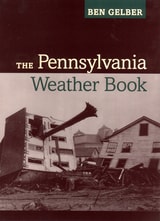
The Pennsylvania Weather Book
Gelber, Ben
Rutgers University Press, 2002
The weather has always been a favorite topic of conversation. Undoubtedly, someone must have said to Noah, “I thought they said it was supposed to let up on Tuesday.” Over a century ago, American essayist Charles Dudley Warner wrote in the HartfordCourant, “Everybody talks about the weather but nobody does anything about it.” And now with the advent of the 24-hour Weather Channel and high-tech radar and satellite imagery, we have more information about the weather at our disposal than ever before. But what about weather in the past? Is the climate changing? Are the summers hotter now than ever before? Were winters colder when our grandparents were children?
In The Pennsylvania Weather Book, meteorologist Ben Gelber provides the first comprehensive survey of 250 years of recorded weather in this state. He reports on noteworthy weather happenings by category (snowstorms, rainstorms, cold and heat waves, thunderstorms, and tropical storms) and places them in historical context. Throughout the book, Gelber clearly defines meteorological terms and explains what creates weather events. The book features appendices and tables containing useful references for average temperatures, precipitation, snowfall, and climate data. It also provides a brief history of the weather watchers who contributed to the state’s meteorological records since the late eighteenth century. This volume will serve as a valuable resource for weather professionals, amateurs, and local enthusiasts alike.
Thinking Like a Climate
Governing a City in Times of Environmental ChangeHannah Knox
Duke University Press, 2020
Tropical Freedom
Climate, Settler Colonialism, and Black Exclusion in the Age of EmancipationIkuko Asaka
Duke University Press, 2017
Uncertain Climes
Debating Climate Change in Gilded Age AmericaJoseph Giacomelli
University of Chicago Press, 2023
Even people who still refuse to accept the reality of human-induced climate change would have to agree that the topic has become inescapable in the United States in recent decades. But as Joseph Giacomelli shows in Uncertain Climes, this is actually nothing new: as far back as Gilded Age America, climate uncertainty has infused major debates on economic growth and national development.
In this ambitious examination of late-nineteenth-century understandings of climate, Giacomelli draws on the work of scientists, foresters, surveyors, and settlers to demonstrate how central the subject was to the emergence of American modernity. Amid constant concerns about volatile weather patterns and the use of natural resources, nineteenth-century Americans developed a multilayered discourse on climate and what it might mean for the nation’s future. Although climate science was still in its nascent stages during the Gilded Age, fears and hopes about climate change animated the overarching political struggles of the time, including expansion into the American West. Giacomelli makes clear that uncertainty was the common theme linking concerns about human-induced climate change with cultural worries about the sustainability of capitalist expansionism in an era remarkably similar to the United States’ unsettled present.
Water and Climate in the Western United States
W Lewis
University Press of Colorado, 2003
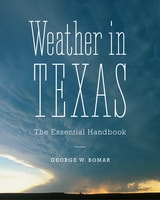
Weather in Texas
The Essential HandbookBy George W. Bomar
University of Texas Press, 2017
Only in Texas could a snowstorm pelt the Panhandle at the very moment abrasive dust is scouring the Permian Basin while searing heat is wilting the Winter Garden region in the south. The state’s large size and central location within North America subject it to a great variety of weather occurrences. Texas state meteorologist George W. Bomar has been observing Texas weather for nearly half a century, and in Weather in Texas, he provides the essential guide to all of the state’s weather phenomena.
Writing in lively layman’s language, Bomar fully explains both how the weather works and how Texans can prepare for and stay safe during extreme weather events. He describes the forces that shape Texas weather from season to season, including the influence of tropical cyclones, frontal boundaries, El Niño, and the polar jet stream. Bomar puts specific weather events in historical context, using a ranking system to illustrate how recent droughts, snowstorms, hurricanes, flash floods, and tornadoes compare with those of previous generations. He also includes comprehensive tabulations of weather data for every area of Texas, quantifying what constitutes “normal” weather, as well as the extreme limits of variables such as low and high temperatures, rain days, snow accumulations, and earliest and latest freezes. With everything from the latest science on climate change and weather modification to dramatic stories about landmark weather events, Weather in Texas is a must-have reference for all Texans..
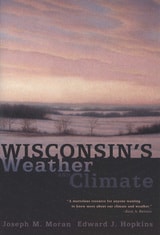
Wisconsin's Weather and Climate
Joseph M. Moran
University of Wisconsin Press, 2003
Wisconsin's Weather and Climate is written for weather buffs, teachers, students, outdoor enthusiasts, and those working in fields, lakes, and forests for whom the weather is a daily force to be reckoned with. It examines the physical features of Wisconsin that shape the state’s climate—topography, mid-latitude location, and proximity to Lakes Superior and Michigan—and meteorological phenomena that affect climate, such as atmospheric circulation and air mass frequency. Authors Joseph M. Moran and Edward J. Hopkins trace the evolution of methods of weather observation and forecasting that are so important for agriculture and Great Lakes commerce, and they explain how Wisconsin scientists use weather balloons, radar, and satellites to improve forecasting and track climate changes. They take readers through the seasonal changes in weather in Wisconsin and give an overview of what past climate changes might tell us about the future.
Appendices provide climatic data for Wisconsin, including extremes of temperature, snowfall, and precipitation at selected stations in the state. The authors also list sources for further information.
Vignettes throughout the book provide fascinating weather lore:
o Why there are cacti in Wisconsin
o The famous Green Bay Packers–Dallas Cowboys "Ice Bowl" game of 1967
o The Army Signal Corps’ ban on the word tornado
o Advances in snow-making technology
o The decline of the Great Lakes ice industry