Results by title
16 books match the query 'Clinical Psychology'

Alterity
Jean-Michel Oughourlian
Michigan State University Press, 2023
Assessing Police and Other Public Safety Personnel with the MMPI-3
A Practical GuideDavid M. Corey
University of Minnesota Press, 2024
A hands-on guide for using the MMPI-3 when assessing suitability and fitness for duty of public safety personnel
Factors unique to police and public safety candidate selection require adjustments to standard guidelines when interpreting MMPI-3 scores. David M. Corey and Yossef S. Ben-Porath’s latest work broadly focuses on use of the MMPI-3 in both prehire suitability evaluations and posthire fitness-for-duty evaluations of individuals in public safety occupations.
This practical guide was written for clinicians who conduct evaluations of incumbent public safety personnel as well as candidates for law enforcement, correctional, firefighter/medic, or emergency dispatcher positions. The chapters are devoted to foundational and practical knowledge required for conducting these evaluations, including a concise primer on the MMPI-3, common procedural and legal requirements, and contextual factors affecting evaluations. The book also provides case illustrations that demonstrate use of integrative models in preemployment and fitness-for-duty evaluations and includes expanded coverage of the updated MMPI-3 Police Candidate Interpretive Report as well as the newly released Correctional Candidate Interpretive Report, Dispatcher Candidate Interpretive Report, and Firefighter Candidate Interpretive Report.
Beyond Words
Story of Sensitivity Training and the Encounter MovementKurt W. Back
Russell Sage Foundation, 1972
Character Disturbance
the phenomenon of our ageGeorge K. Simon
Parkhurst Brothers, Inc., 2011
Modern permissiveness and the new culture of entitlement allows disturbed people to reach adulthood without proper socialization. In a book meant both for the general public and for professionals, bestselling author and psychologist George Simon explains in plain English:
•How most disturbed characters think.•The habitual behaviors the disturbed use to avoid responsibility and to manipulate, deceive, and exploit others.
•Why victims in relationships with disturbed characters do not get help they need from traditional therapies.
•A straightforward guide to recognizing and understanding all relevant personality types, especially those most likely to undermine relationships.
•A new framework for making sense of the crazy world many find themselves in when there's a disturbed character in their lives.
•Concrete principles that promote responsibility and positive change when engaging disturbed characters.
•Tactics (for both lay persons and therapists) to lessen the chances for victimization and empower those who would otherwise be victims in their relationships with many types of disturbed characters.
Creating Mental Illness
Allan V. Horwitz
University of Chicago Press, 2001
"Thought-provoking and important. . .Drawing on and consolidating the ideas of a range of authors, Horwitz challenges the existing use of the term mental illness and the psychiatric ideas and practices on which this usage is based. . . . Horwitz enters this controversial territory with confidence, conviction, and clarity."—Joan Busfield, American Journal of Sociology
"Horwitz properly identifies the financial incentives that urge therapists and drug companies to proliferate psychiatric diagnostic categories. He correctly identifies the stranglehold that psychiatric diagnosis has on research funding in mental health. Above all, he provides a sorely needed counterpoint to the most strident advocates of disease-model psychiatry."—Mark Sullivan, Journal of the American Medical Association
"Horwitz makes at least two major contributions to our understanding of mental disorders. First, he eloquently draws on evidence from the biological and social sciences to create a balanced, integrative approach to the study of mental disorders. Second, in accomplishing the first contribution, he provides a fascinating history of the study and treatment of mental disorders. . . from early asylum work to the rise of modern biological psychiatry."—Debra Umberson, Quarterly Review of Biology
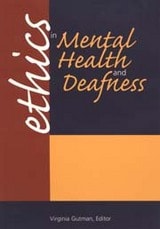
Ethics in Mental Health and Deafness
Virginia Gutman
Gallaudet University Press, 2002
This volume explores ethical issues specific to working with deaf clients, particularly matters of confidentiality, managing multiple relationships, and the clinician’s competency to provide services, particularly in communicating with and understanding deaf people. Led by editor Virginia Gutman, a unique assembly of respected mental health professionals share their experiences and knowledge in working with deaf clients.
Irene Leigh commences Ethics in Mental Health and Deafness with her varied experiences as a deaf mental health practitioner, and Gutman follows with insights on ethics in the “small world” of the Deaf community. William McCrone discusses the law and ethics, and Patrick Brice considers ethical issues regarding deaf children, adolescents, and their families. In contrast, Janet Pray addresses concerns about deaf and hard of hearing older clients.
Minority deaf populations pose additional ethical aspects, which are detailed by Carolyn Corbett. Kathleen Peoples explores the challenges of training professionals in mental health services specifically for deaf clients. Closely related to these topics is the influence of interpreters with deaf clients in mental health settings, which Lynnette Taylor thoroughly treats. Ethics and Mental Health in Deafness also features a chapter on genetic counseling and testing for deafness by Kathleen Arnos. The final section, written by Robert Pollard, examines ethical conduct in research with deaf people, a fitting conclusion to a volume that will become required reading for all professionals and students in this discipline.
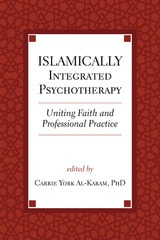
Islamically Integrated Psychotherapy
Uniting Faith and Professional PracticeCarrie York Al-Karam
Templeton Press, 2018
Integrating the Islamic faith with modern psychotherapy is at the forefront of the spiritually integrated psychotherapy movement. To bring this work to wider attention and to promote its continuation, Dr. Carrie York Al-Karam has brought together the present volume of nine essays, each of which is written by a Muslim clinician who practices Islamically integrated psychotherapy (IIP)—a modern approach that unites the teachings, principles, and interventions of the faith with Western therapeutic approaches.
As delineated in the Introduction, IIP has emerged from a variety of domains including the psychology of religion and spirituality, multicultural psychology and counseling, transpersonal psychology, Muslim Mental Health, and Islamic Psychology. The individual chapters then describe a variety of ways IIP is practiced by Muslim clinicians in their service provision with Muslim clients.
The contributors discuss a wide range of topics, such as how Islam can be viewed as a system for psychological wellbeing, or a “science of the soul”; what marital counseling can look like from an Islamically-integrated perspective; Prophet Mohammed as a psycho-spiritual exemplar in a new approach called The HEART Method; the use of Quranic stories in family therapy; as well as using Islamic teachings when working with Muslim children and adolescents.
A description of the various approaches is supplemented with discussions of their theoretical underpinnings as well as research-based recommendations for advancing clinical application. What emerges is a vital resource for Muslim and non-Muslim clinicians alike as well as the lay Muslim reader wanting to know more about how the Islamic faith and psychotherapy are engaging with each other in a modern clinical context.

Mantle of Mercy
Islamic Chaplaincy in North AmericaMuhammad A. Ali
Templeton Press, 2022
Working in a variety of settings—including hospitals, prisons, universities, and the armed forces—Muslim chaplains encounter unique challenges on a daily basis, requiring them to call upon the resources of their Islamic faith with wisdom and tenderness. The contributors to this volume explore these circumstances vividly and honestly. Their personal stories are instructive of how Islamic principles can be employed with spiritual insight to bring strength and comfort to the sick and suffering.

Psychotherapy As Religion
The Civil Divine In AmericaWilliam M. Epstein
University of Nevada Press, 2006
A provocative look at America on the couch.In Psychotherapy as Religion, William Epstein sets out to debunk claims that psychotherapy provides successful clinical treatment for a wide range of personal and social problems. He argues that the practice is not a science at all but rather the civil religion of America, reflecting the principles of radical self-invention and self-reliance deeply embedded in the psyche of the nation. Epstein begins by analyzing a number of clinical studies conducted over the past two decades that purport to establish the effectiveness of psychotherapeutic treatments. He finds that each study violates in some way the standard criteria of scientific credibility and that the field has completely failed to establish objective procedures and measurements to assess clinical outcomes. Epstein exposes psychotherapy’s deep roots in the religious and intellectual movements of the early nineteenth century by demonstrating striking parallels between various types of therapy and such popular practices as Christian Science and spiritualism. Psychotherapy has taken root in our culture because it so effectively reflects our national faith in individual responsibility for social and personal problems. It thrives as the foundation of American social welfare policy, blaming deviance and misery on deficiencies of character rather than on the imperfections of society and ignoring the influence of unequal and deficient social conditions while requiring miscreants to undergo the moral reeducation that psychotherapy represents. This is a provocative, brilliantly argued look at America on the couch. Psychotherapy as Religion is essential reading for anyone interested in the history and current state of mental health.
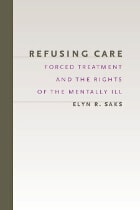
Refusing Care
Forced Treatment and the Rights of the Mentally IllElyn R. Saks
University of Chicago Press, 2002
Focusing on overinterventionist approaches, Refusing Care explores when, if ever, the mentally ill should be treated against their will. Basing her analysis on case and empirical studies, Elyn R. Saks explores dilemmas raised by forced treatment in three contexts—civil commitment (forced hospitalization for noncriminals), medication, and seclusion and restraints. Saks argues that the best way to solve each of these dilemmas is, paradoxically, to be both more protective of individual autonomy and more paternalistic than current law calls for. For instance, while Saks advocates relaxing the standards for first commitment after a psychotic episode, she also would prohibit extreme mechanical restraints (such as tying someone spread-eagled to a bed). Finally, because of the often extreme prejudice against the mentally ill in American society, Saks proposes standards that, as much as possible, should apply equally to non-mentally ill and mentally ill people alike.
Mental health professionals, lawyers, disability rights activists, and anyone who wants to learn more about the way the mentally ill are treated—and ought to be treated—in the United States should read Refusing Care.

The Analysis of the Self
A Systematic Approach to the Psychoanalytic Treatment of Narcissistic Personality DisordersHeinz Kohut
University of Chicago Press, 2009
“Kohut has done for narcissism what the novelist Charles Dickens did for poverty in the nineteenth century. Everyone always knew that both existed and were a problem. . . . The undoubted originality is to have put it together in a form which carries appeal to action.”—International Journal of Psychoanalysis
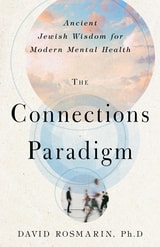
The Connections Paradigm
Ancient Jewish Wisdom for Modern Mental HealthDavid H. Rosmarin
Templeton Press, 2021
The idea behind the paradigm is that at any given moment, human beings are either “connected” or “disconnected” across three key relationships. To be “connected” means to be in a loving, harmonious, and fulfilling relationship; to be “disconnected” means, of course, the opposite. The three relationships are those between our souls and our bodies, ourselves and others, and ourselves and God.
These relationships are hierarchal; each depends on the one that precedes it. This means that we can only connect with God to the extent that we associate with others, and we cannot connect with others if we don’t connect with ourselves. The author, Dr. David H. Rosmarin, devotes a section to each relationship and describes techniques and practices to become a more connected individual. He also brings in compelling stories from his clinical practice to show the process in action.
Whether you’re a clinician working with clients, or a person seeking the healing balm of wisdom; whether you’re a member of the Jewish faith, or a person open to new spiritual perspectives, you will find this book sensible, practical, and timely because, for all of us, connection leads to mental health.
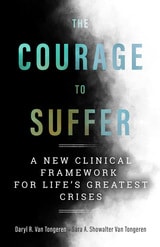
The Courage to Suffer
A New Clinical Framework for Life's Greatest CrisesDaryl R. Van Tongeren
Templeton Press, 2020
Suffering is an inescapable part of life. Some suffering is so profound, so violating, or so dogged that it fundamentally changes people in indelible ways. Many existing therapeutic approaches, from a medical model, treat suffering as mental illness and seek a curative solution. However, such approaches often fail to examine the deep questions that suffering elicits (e.g., existential themes of death, isolation, freedom, identity, and meaninglessness) and the far-reaching ways in which suffering affects the lived experience of each individual.
In The Courage to Suffer, Daryl and Sara Van Tongeren introduce a new therapeutic framework that helps people flourish in the midst of suffering by cultivating meaning.
Drawing from scientific research, clinical examples, existential and positive psychology, and their own personal stories of loss and sorrow, Daryl and Sara’s integrative model blends the rich depth of existential clinical approaches with the growth focus of strengths-based approaches.Through cutting edge-research and clinical case examples, they detail five “phases of suffering” and how to work with a client's existential concerns at each phase to develop meaning. They also discuss how current research suggests to build a flourishing life, especially for those who have endured, and are enduring, suffering.
Daryl and Sara show how those afflicted with suffering, while acknowledging the reality of their pain, can still choose to live with hope.

The Recovery of Unconscious Memories
Hypermnesia and ReminiscenceMatthew Hugh Erdelyi
University of Chicago Press, 1996
Sketching out the scientific foundations for a unified theory of repression that integrates the findings of the laboratory and the clinic, this comprehensive and authoritative synthesis of a century of memory research will be crucial reading for psychologists and clinicians, as well as forensic and legal professionals interested in the recovery of "inaccessible" memories.
"By debunking hypnosis, [Erdelyi] has allowed the debate on memory to move forward. . . . Erdelyi's work on hypermnesia is very important to our understanding of the mechanisms of memory and the brain."—Janet D. Feigenbaum, Times Literary Supplement
The Restoration of the Self
Heinz Kohut
University of Chicago Press, 2009
In his foundational work The Restoration of the Self, noted psychoanalyst Heinz Kohut boldly challenges what he called “the limits of classical analytic theory” and the Freudian orthodoxy. Here Kohut proposes a “psychology of the self” as a theory in its own right—one that can stand beside the teachings of Freud and Jung.
Using clinical data, Kohut explores issues such as the role of narcissism in personality, when a patient can be considered cured, and the oversimplifications and social biases that unduly influenced Freudian thought. This volume puts forth some of Kohut’s most influential ideas on achieving emotional health through a balanced, creative, and joyful sense of self.
"Kohut speaks clearly from his identity as a psychoanalyst-healer, showing that he is more of a psychoanalyst than most, and yet calling for major theoretical revisions including a redefinition of the essence of psychoanalysis.”—American Journal of Psychotherapy
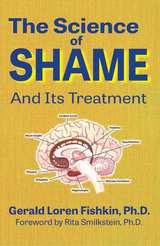
The Science of Shame and Its Treatment
Gerald Loren Fishkin, Ph.D.
Parkhurst Brothers, Inc., 2016
Through his empirical analysis and understanding of toxic shame, Dr. Fishkin has identified multiple effective clinical approaches for its treatment and addressing shame-based behaviors. He clearly outlines why contemporary treatment approaches, including cognitive behavioral therapy, do not treat core shame wounds and most often cause individuals to terminate the therapeutic process prematurely.
This book is a must-read for clinicians, addiction specialists, teachers, students of human behavior, counselors, social workers, patients in treatment.