Results by title
18 books match the query 'Clouds'
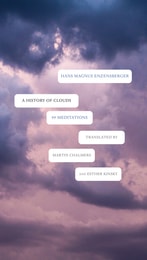
A History of Clouds
99 MeditationsHans Magnus Enzensberger
Seagull Books, 2010
In these 99 meditations, poet and novelist Hans Magnus Enzensberger celebrates the tenacity of the normal and routine in everyday life, where the survival of the objects we use without thinking—a pair of scissors, perhaps—is both a small, human victory and a quiet reminder of our own ephemeral nature. He sets his quotidian reflections against a broad historical and political backdrop: the cold war and its accompanying atomic threat; the German student revolt; would-be socialism in Cuba, China, and Africa; and World War II as experienced by the youthful poet.
Enzensberger’s poems are conversational, skeptical, and serene; they culminate in the extended set of observations that gives the collection its title. Clouds, alien and yet symbols of human life, are for Enzensberger at once a central metaphor of the Western poetic tradition and “the most fleeting of all masterpieces.” “Cloud archaeology,” writes Enzensberger, is “a science for angels.”
Praise for the German edition
“After reading this wonderful volume of poetry one would like to call Enzensberger simply the lyric voice of transience.”— Sueddeutsche Zeitung
“With this book Enzensberger reveals himself both as a spokesman of persistence and as a decelerator.”—Neue Zuercher Zeitung
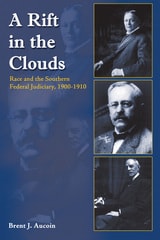
A Rift in the Clouds
Race and the Southern Federal Judiciary, 1900-1910Brent J. Aucoin
University of Arkansas Press, 2007
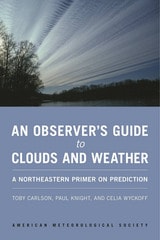
An Observer's Guide to Clouds and Weather
A Northeastern Primer on PredictionToby Carlson, Paul Knight, and Celia Wyckoff
American Meteorological Society, 2014
This informative and accessible guide walks readers through the basics of making weather predictions through understanding cloud types and sky formations. It explains, in nontechnical terms, the science behind the weather, connecting fundamental meteorological concepts with the processes that shape weather patterns. Readers will learn how to develop their powers of observation and hone their ability to make quick forecasts without complicated tools. Whether you're an amateur weather enthusiast or a beginning meteorology student, An Observer’s Guide to Clouds and Weather will help anyone who prefers looking up to looking it up.
Aristophanes' Clouds
A CommentaryS. Douglas Olson
University of Michigan Press, 2021
This is the first substantial commentary on Clouds since Dover’s 1968 edition. Intended for intermediate Greek students at undergraduate and graduate levels, the commentary pays careful attention to the basic characteristics of ancient Greek syntax, as well as to how Greek words are formed and can be analyzed. It offers robust staging notes, information about daily life in late 5th-century Athens, and constant reference to the rhetorical and dramatic strategies of the text. Full support is offered for those interested in the metrical structure of the songs, but in a way that allows instructors to leave such issues aside, should they choose to do so. The first and second appendices offer a basic means of entry into the rich but complex world of the comic fragments. An English-language bibliography is provided. The edition will interest professional classicists of all sorts seeking an accessible introduction to one of Aristophanes’ greatest plays, to philosophers concerned with Socrates and the sophistic movement, and to theater professionals who wish to stage the play.
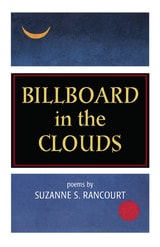
Billboard in the Clouds
Suzanne S. Rancourt
Northwestern University Press, 2004
In this remarkable debut book of poems, winner of the Native Writers First Book Award, Suzanne S. Rancourt, presents her experience as a mixed-raced person seeking understanding through relationship with the natural world and dominant culture. Her family portraits are reminiscent of E. A. Robinson; her sensuous nature poems are imbued with love of earth as a "blessing."
Dance
my legs are explosions
expressions
of lustful wind
i converse through cracks in the walls
slipping in my true intention like a snow drift
on the inside
side of a door i pound
your chest
has become my wailing wall
i crave your tongue dusted
with words and implications
i have something you need
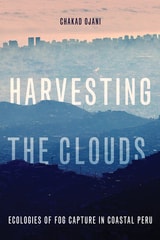
Harvesting the Clouds
Ecologies of Fog Capture in Coastal PeruChakad Ojani
University of Arizona Press, 2027
Vision limited, sounds muffled. Tiny water droplets reflect light back to its source and make it difficult to locate the origin of sounds: this is fog. In Chakad Ojani’s ethnography, this atmospheric phenomenon plays a pivotal role.
Drawing on long-term ethnographic research on engagements with fog in Lima and coastal Peru, Harvesting the Clouds examines how local NGO workers and fog oasis conservationists sought to utilize coastal fog as a water source. NGO workers installed fog catchers in informal or recently formalized neighborhoods where state infrastructure was absent, while conservationists harnessed ground-touching clouds in order to prevent informal urbanization. As they set out to capture ground-touching clouds to pursue their distinct goals, these collectives became entrapped by activities, demands, and expectations that they had not foreseen. The book frames these relationships as ecologies of capture: emergent webs of relationships held together by conflicting aims and expectations, the possibilities and limitations of fog capture, and the material qualities of fog itself.
Harvesting the Clouds argues that capture is always only partially successful, but by virtue of this partiality, it becomes productive of social relations—an understanding that the author extends to anthropological inquiry itself as an exercise in the productive impossibility of ethnographic entrapment.
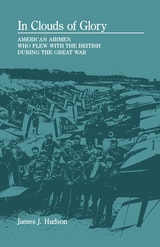
In Clouds of Glory
American Airmen Who Flew with the British during the Great WarJames J. Hudson
University of Arkansas Press, 1999
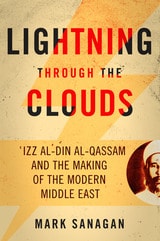
Lightning through the Clouds
?Izz al-Din al-Qassam and the Making of the Modern Middle EastBy Mark Sanagan
University of Texas Press, 2020
Lightning through the Clouds is the first English-language life-and-times biography of ‘Izz al-Din al-Qassam, a preeminent figure who helped to reshape the political and religious landscape of the region. A Syrian-born, Egyptian-educated cleric, he went from the battlefields of World War I to join the anticolonialist fight against the French in Syria. Sentenced to be executed by the French military, he managed to escape to Palestine, where he became an increasingly popular presence, moved by the plight of the poor and disenfranchised. Outraged by British rule and the encroachment of Zionism, he formed a secret society to resist the colonization of Palestine first by the British and then by Jewish immigrants from Europe, once again taking up arms and advocating for a moral, political, and military jihad as the only solution. His death at the hands of Palestine Police in 1935 drew thousands to his funeral and sparked the 1936–1939 Arab Revolt.
His influence continues to be felt in the region; for example, the military wing of the Palestinian Hamas organization is named the ‘Izz al-Din al-Qassam Brigades. Al-Qassam is either revered or reviled, depending on the observers’ perspective, but he is without doubt a fascinating and historically significant individual whose influence on the past, and our present, makes this examination of his life both important and timely.
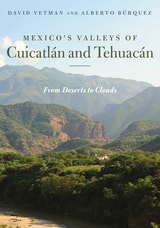
Mexico’s Valleys of Cuicatlán and Tehuacán
From Deserts to CloudsDavid Yetman and Alberto Búrquez
University of Arizona Press, 2023
Through firsthand experience and engaging prose, the authors provide a synthesis of the geology, ecology, history, and cultures of the valleys, showing their importance and influence as Mesoamerican arteries for environmental and cultural interchange through Mexico. It also reveals the extraordinary plant life that draws from habitats ranging from deserts to tropical forests.
The authors, both experts in their respective fields, begin with a general description of the geography of the valleys, followed by an introduction to climate and hydrology, a look at the valleys’ often bewildering geology. The book delves into cultural and linguistic backgrounds of the valleys and discusses archaeological sites that that encapsulate the valleys’ fascinating history prior to the arrival of Europeans. The book concludes by describing the flora that makes the region so singular.
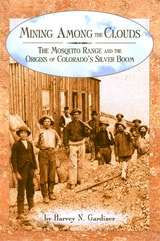
Mining among the Clouds
The Mosquito Range and the Origins of Colorado's Silver BoomHarvey N. Gardiner
University Press of Colorado, 2002
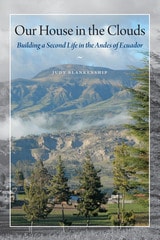
Our House in the Clouds
Building a Second Life in the Andes of EcuadorBy Judy Blankenship
University of Texas Press, 2013
While many baby boomers are downsizing to a simpler retirement lifestyle, photographer and writer Judy Blankenship and her husband Michael Jenkins took a more challenging leap in deciding to build a house on the side of a mountain in southern Ecuador. They now live half the year in Cañar, an indigenous community they came to know in the early nineties when Blankenship taught photography there. They are the only extranjeros (outsiders) in this homely, chilly town at 10,100 feet, where every afternoon a spectacular mass of clouds rolls up from the river valley below and envelopes the town.
In this absorbing memoir, Blankenship tells the interwoven stories of building their house in the clouds and strengthening their ties to the community. Although she and Michael had spent considerable time in Cañar before deciding to move there, they still had much to learn about local customs as they navigated the process of building a house with traditional materials using a local architect and craftspeople. Likewise, fulfilling their obligations as neighbors in a community based on reciprocity presented its own challenges and rewards. Blankenship writes vividly of the rituals of births, baptisms, marriages, festival days, and deaths that counterpoint her and Michael’s solitary pursuits of reading, writing, listening to opera, playing chess, and cooking. Their story will appeal to anyone contemplating a second life, as well as those seeking a deeper understanding of daily life in the developing world.

Piercing the Clouds
Lectio Divina and the Preparation for MinistryKevin Zilverberg
Saint Paul Seminary Press, 2021
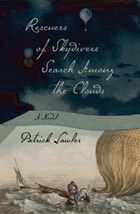
Rescuers of Skydivers Search Among the Clouds
A NovelPatrick Lawler
University of Alabama Press, 2012
When you step inside Patrick Lawler’s Rescuers of Skydivers Search Among the Clouds, you will find yourself hovering in the clouds, among a family and a town, and in the world of one of fiction’s most inventive writers.
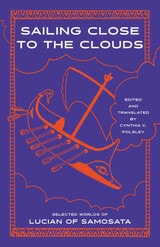
Sailing Close to the Clouds
Selected Worlds of Lucian of SamosataLucian of Samosata
University of Chicago Press, 0
Approachable translations and discussions of Lucian that reveal his world-building, world-bending, and multiversal thinking.
Lucian of Samosata was ahead of his time. A rhetorician and writer active in the second century CE, he was one of the earliest known worldbuilders and science-fiction enthusiasts. Popular and prolific in antiquity—more than eighty texts attributed to him have come down to us today, including satires, dialogues, and part of a fictional work called True History—Lucian crafted astonishing tales that unfold on the surface of the moon or other planets, high above in Earth’s atmosphere, or through the eyes of underworld inhabitants or other entities who view mortal humans as otherworldly beings.
Ideal for readers interested in science fiction, fantasy, and mythology, this accessible collection offers a guided journey through Lucian’s many worlds. Bringing together fresh vernacular translations of eight works with substantial discussion, this selection showcases Lucian as a proto-multiversal thinker, presenting multiform narratives that herald developments in modern genres ranging from literature and film to gaming and fan fiction. Translator and editor Cynthia Polsley introduces each with a short excerpt from another piece of classical literature, showing how other ancient authors—including Homer, Ovid, and Vergil—influenced Lucian’s literary landscapes or were inspired by him in turn.
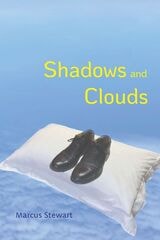
Shadows and Clouds
Marcus Stewart
Omnidawn, 2023
Through the stories in Shadows and Clouds, Marcus Stewart invites us to consider how things are not always as they appear or as we remember them, instead locating reality in the imagination and the dream world. While animals understand the world without words, humans create our experiences as stories, translating past and future into tales told in the present. Stewart's stories take the notion of storytelling and expand to a consideration of how truth, misremembering, logic, lying, and uncertainty play together to affect our experience of reality. In an alternate reading of time, Stewart poses the suggestion that you may already have a future memory of reading this book, and reading the stories backward may bring us back to the present.
Shadows and Clouds is the winner of the 2021 Omnidawn Fabulist Fiction Chapbook / Novelette Contest, chosen by Theodora Ziolkowski.
The Clouds in Memphis
Stories and NovellasC. J. Hribal
University of Massachusetts Press, 2000
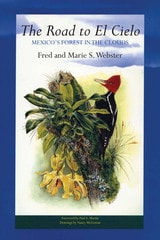
The Road to El Cielo
Mexico's Forest in the CloudsBy Fred and Marie S. Webster
University of Texas Press, 2002
Hidden high in the Sierra de Guatemala mountain range of northeastern Mexico in the state of Tamaulipas is the northernmost tropical cloud forest of the Western Hemisphere. Within its humid oak-sweetgum woodlands, tropical and temperate species of plants and animals mingle in rare diversity, creating a mecca for birders and other naturalists.
Fred and Marie Webster first visited Rancho del Cielo, cloud forest home of Canadian immigrant Frank Harrison, in 1964, drawn by the opportunity to see such exotic birds as tinamous, trogons, motmots, and woodcreepers only 500 miles from their Austin, Texas, home. In this book, they recount their many adventures as researchers and tour leaders from their base at Rancho del Cielo, interweaving their reminiscences with a history of the region and of the struggle by friends from both sides of the border to have some 360,000 acres of the mountain declared an area protected from exploitation—El Cielo Biosphere Reserve. Their firsthand reporting, enlivened with vivid tales of the people, land, and birds of El Cielo, adds an engagingly personal chapter to the story of conservation in Mexico.
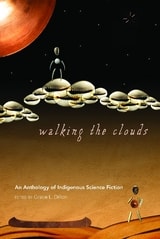
Walking the Clouds
An Anthology of Indigenous Science FictionEdited by Grace L. Dillon
University of Arizona Press, 2012
In this first-ever anthology of Indigenous science fiction Grace Dillon collects some of the finest examples of the craft with contributions by Native American, First Nations, Aboriginal Australian, and New Zealand Maori authors. The collection includes seminal authors such as Gerald Vizenor, historically important contributions often categorized as "magical realism" by authors like Leslie Marmon Silko and Sherman Alexie, and authors more recognizable to science fiction fans like William Sanders and Stephen Graham Jones. Dillon's engaging introduction situates the pieces in the larger context of science fiction and its conventions.
Organized by sub-genre, the book starts with Native slipstream, stories infused with time travel, alternate realities and alternative history like Vizenor's "Custer on the Slipstream." Next up are stories about contact with other beings featuring, among others, an excerpt from Gerry William's The Black Ship. Dillon includes stories that highlight Indigenous science like a piece from Archie Weller's Land of the Golden Clouds, asserting that one of the roles of Native science fiction is to disentangle that science from notions of "primitive" knowledge and myth. The fourth section calls out stories of apocalypse like William Sanders' "When This World Is All on Fire" and a piece from Zainab Amadahy's The Moons of Palmares. The anthology closes with examples of biskaabiiyang, or "returning to ourselves," bringing together stories like Eden Robinson's "Terminal Avenue" and a piece from Robert Sullivan's Star Waka.
An essential book for readers and students of both Native literature and science fiction, Walking the Clouds is an invaluable collection. It brings together not only great examples of Native science fiction from an internationally-known cast of authors, but Dillon's insightful scholarship sheds new light on the traditions of imagining an Indigenous future.