Results by title
9 books match the query 'Coalitions'

A Place at the Table
Kathleen de la Peña McCook
American Library Association, 2000
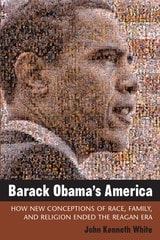
Barack Obama's America
How New Conceptions of Race, Family, and Religion Ended the Reagan EraJohn Kenneth White
University of Michigan Press, 2009
"White's Barack Obama's America eloquently captures both the important nuances of the current political scene and its long-term consequences."
---Richard Wirthlin, former pollster for Ronald Reagan
"This delightfully written and accessible book is the best available account of the changes in culture, society, and politics that have given us Barack Obama's America."
---Stan Greenberg, pollster for Bill Clinton and Chairman and CEO of Greenberg Quinlan Rosner Research
"From one of the nation's foremost experts on how values shape our politics, a clear and compelling account of the dramatic shifts in social attitudes that are transforming American political culture. White's masterful blend of narrative and data illuminates the arc of electoral history from Reagan to Obama, making a powerful case for why we are entering a new progressive political era."
---Matthew R. Kerbel, Professor of Political Science, Villanova University, and author of Netroots
"John Kenneth White is bold. He asks the big questions . . . Who are we? What do we claim to believe? How do we actually live? What are our politics? John Kenneth White writes compellingly about religion and the role it played in making Barack Obama president. White's keen insight into America's many faiths clarifies why Barack Obama succeeded against all odds. It is a fascinating description of religion and politics in twenty-first-century America---a must-read."
---Kathleen Kennedy Townsend, former Lieutenant Governor of Maryland and author of Failing America's Faithful
"In Barack Obama's America, John Kenneth White has written the political equivalent of Baedeker or Michelin, the definitive guide to and through the new, uncharted political landscape of our world. White captures and explains what America means---and what it means to be an American---in the twenty-first century."
---Mark Shields, nationally syndicated columnist and political commentator for PBS NewsHour
"John White has always caught important trends in American politics that others missed. With his shrewd analysis of why Barack Obama won, he's done it again."
---E. J. Dionne, Jr., Senior Fellow, Brookings Institution, and University Professor in the Foundations of Democracy and Culture at Georgetown University
The election of Barack Obama to the presidency marks a conclusive end to the Reagan era, writes John Kenneth White in Barack Obama's America. Reagan symbolized a 1950s and 1960s America, largely white and suburban, with married couples and kids at home, who attended church more often than not.
Obama's election marks a new era, the author writes. Whites will be a minority by 2042. Marriage is at an all-time low. Cohabitation has increased from a half-million couples in 1960 to more than 5 million in 2000 to even more this year. Gay marriages and civil unions are redefining what it means to be a family. And organized religions are suffering, even as Americans continue to think of themselves as a religious people. Obama's inauguration was a defining moment in the political destiny of this country, based largely on demographic shifts, as described in Barack Obama's America.
John Kenneth White is Professor of Politics at the Catholic University of America in Washington, D.C.
Cover image: "Out of many, we are one: Dare to Hope: Faces from 2008 Obama Rallies" by Anne C. Savage, view and buy full image at http://revolutionaryviews.com/obama_poster.html.
Civil Rights in Bakersfield
Segregation and Multiracial Activism in the Central ValleyOliver A. Rosales
University of Texas Press, 2024
2024 Outstanding Book Award, National Association for Ethnic Studies
2025 Honorable Mention, Norris & Carol Hundley Award, Pacific Coast Branch of the American Historical Association
2025 The Ambassador Julian Nava Best Ethnic Studies Book, International Latino Book Awards
A multiracial history of civil rights coalitions beyond the farm worker movement in twentieth-century Bakersfield, California.
In Civil Rights in Bakersfield, Oliver Rosales uncovers the role of the multiracial west in shaping the course of US civil rights history. Focusing on Bakersfield, one of the few sizable cities within California’s Central Valley for much of the twentieth century in a region most commonly known as a bastion of political conservatism, oil, and industrial agriculture, Rosales documents how multiracial coalitions emerged to challenge histories of racial segregation and discrimination. He recounts how the region was home to both the historic farm worker movement, led by César Chávez, Dolores Huerta, and Larry Itliong, and also a robust multiracial civil rights movement beyond the fields. This multiracial push for civil rights reform included struggles for fair housing, school integration, public health, media representation, and greater political representation for Black and Brown communities. In expanding on this history of multiracial activism, Rosales further explores the challenges activists faced in community organizing and how the legacies of coalition building contribute to ongoing activist efforts in the Central Valley of today.
Class and the Color Line
Interracial Class Coalition in the Knights of Labor and the Populist MovementJoseph Gerteis
Duke University Press, 2007
While scholars have long debated whether the Knights and the Populists were genuine in their efforts to cross the color line, Joseph Gerteis shifts attention from that question to those of how, where, and when the movements’ organizers drew racial boundaries. Arguing that the movements were simultaneously racially inclusive and exclusive, Gerteis explores the connections between race and the movements’ economic and political interests in their cultural claims and in the dynamics of local organizing.
Interpreting data from the central journals of the Knights of Labor and the two major Populist organizations, the Farmers’ Alliance and the People’s Party, Gerteis explains how the movements made sense of the tangled connections between race, class, and republican citizenship. He considers how these collective narratives motivated action in specific contexts: in Richmond and Atlanta in the case of the Knights of Labor, and in Virginia and Georgia in that of the Populists. Gerteis demonstrates that the movements’ collective narratives galvanized interracial organizing to varying degrees in different settings. At the same time, he illuminates the ways that interracial organizing was enabled or constrained by local material, political, and social conditions.
Justice at Work
The Rise of Economic and Racial Justice Coalitions in CitiesMarc Doussard
University of Minnesota Press, 2022
A pathbreaking look at how progressive policy change for economic justice has swept U.S. cities
In the 2010s cities and counties across the United States witnessed long-overdue change as they engaged more than ever before with questions of social, economic, and racial justice. After decades of urban economic restructuring that intensified class divides and institutional and systemic racism, dozens of local governments countered the conventional wisdom that cities couldn’t address inequality—enacting progressive labor market policies, from $15 minimum wages to paid sick leave.
Justice at Work examines the mutually reinforcing roles of economic and racial justice organizing and policy entrepreneurship in building power and support for policy changes. Bridging urban social movement and urban politics studies, it demonstrates how economic and racial justice coalitions are collectively the critical institution underpinning progressive change. It also shows that urban policy change is driven by “urban policy entrepreneurs” who use public space and the intangible resources of the city to open “agenda windows” for progressive policy proposals incubated through national networks.
Through case studies of organizing and policy change efforts in cities including Chicago, Seattle, and New Orleans around minimum wages, targeted hiring, paid time off, fair scheduling, and anti-austerity, Marc Doussard and Greg Schrock show that the contemporary wave of successful progressive organizing efforts is likely to endure. Yet they caution that success is dependent on skillful organizing that builds and sustains power at the grassroots—and skillful policy work inside City Hall. By promoting justice at—and increasingly beyond—work, these movements hold the potential to unlock a new model for inclusive economic development in cities.
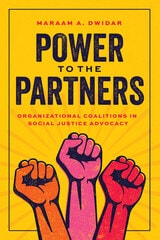
Power to the Partners
Organizational Coalitions in Social Justice AdvocacyMaraam A. Dwidar
University of Chicago Press, 2025
A vital examination of how social and economic justice organizations overcome resource disadvantages and build political power.
Why do some coalitions triumph while others fall short? In Power to the Partners, Maraam A. Dwidar documents the vital role of social and economic justice organizations in American politics and explores the process by which they strategically build partnerships to advance more effective and equitable advocacy. Using original data tracking the collaboration patterns of more than twenty thousand nationally active advocacy organizations, Dwidar evaluates the micro- and macro-level conditions surrounding these groups’ successful efforts to collectively shape public policy.
Power to the Partners reveals that while organizational advocates for social and economic justice are at a disadvantage in the American lobbying landscape—financially, tactically, and politically—coalition work can help ameliorate these disparities. By building and sustaining coalitions with structures and memberships that facilitate clarity, learning, and diverse perspectives, these advocates can successfully—and uniquely—make their mark on American public policy. Dwidar’s work offers critical insights for scholars and practitioners alike, from groundbreaking academic findings to evidence-based lessons for political organizers.
Re-Forming the State
The Politics of Privatization in Latin America and EuropeHector E. Schamis
University of Michigan Press, 2002
The experience of privatization shows that the public and the private are neither contradictory nor mutually exclusive spheres, and that power relations between them are not necessarily zero-sum. To stress the point, the author borrows from the literature on state formation, which has extensively examined the historical processes of key private groups. The evidence presented shows why and how, by restructuring coalitional and institutional arenas, the state uses marketization to generate political order and to distribute political power. Thus, the author specifies the conditions under which political change is conceived in terms of and channeled through economic policy; in other words, how the state is "re-formed" through privatization. Re-forming the State thus highlights how privatization is simultaneously a movement from public to private, but also a movement from non-state to state, as the reduction of state assets leads to institutional changes that increase state capacities for defining and enforcing property rights, extracting revenue, and centralizing administrative and political resources.
Hector E. Schamis is Assistant Professor of Government, Cornell University.

Strategic Alliances
Coalition Building and Social MovementsNella Van Dyke
University of Minnesota Press, 2010
Contributors: Paul Almeida, Texas A&M U; Elizabeth Borland, College of New Jersey; Daniel B. Cornfield, Vanderbilt U; Catherine Corrigall-Brown, U of British Columbia; Mario Diani, U of Trento; Katja M. Guenther, UC Riverside; Larry Isaac, Vanderbilt U; Isobel Lindsay, Biggar, Scotland; David S. Meyer, UC Irvine; Brian Obach, SUNY New Paltz; Dina G. Okamoto, UC Davis; Christine Petit, UC Riverside; Derrick Purdue, U of the West of England; Ellen Reese, UC Riverside; Benita Roth, SUNY Binghamton; Suzanne Staggenborg, U of Pittsburgh; Dawn Wiest, U of Memphis.
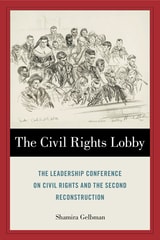
The Civil Rights Lobby
The Leadership Conference on Civil Rights and the Second ReconstructionShamira Gelbman
Temple University Press, 2021
As the lobbying arm of the civil rights movement, the Leadership Conference on Civil Rights (LCCR)—which has operated since the early 1950s—was instrumental in the historic legislative breakthroughs of the Second Reconstruction. The Civil Rights Lobby skillfully recounts the LCCR’s professional and grassroots lobbying that contributed to these signature civil rights policy achievements in the 1950s and ’60s.
Shamira Gelbman explains how the diversity of this interest group coalition both hindered and enabled lobbyists to generate broad-based support for reforms that often seemed risky to legislators. They coordinated their efforts by identifying common ground among member organizations, developing coalitional positions on substantive and strategic questions, and exhorting organizations to mobilize professional and grassroots lobbying resources accordingly. The result was to “speak with one booming voice” to ultimately help secure the passage of the Civil Rights Act of 1964.
The Civil Rights Lobby concludes by reprising key lessons from the LCCR’s organizational development and participation in civil rights policymaking. Gelbman suggests new directions for research on interest group coalitions and explores how the Leadership Conference’s experience sheds light on the politics of the Second Reconstruction.