Results by title
13 books match the query 'Coffee industry'
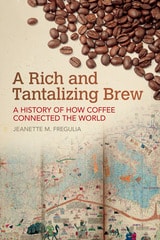
A Rich and Tantalizing Brew
A History of How Coffee Connected the WorldJeanette M. Fregulia
University of Arkansas Press, 2019
The history of coffee is much more than the tale of one luxury good—it is a lens through which to consider various strands of world history, from food and foodways to religion and economics and sociocultural dynamics.
A Rich and Tantalizing Brew traces the history of coffee from its cultivation and brewing first as a private pleasure in the highlands of Ethiopia and Yemen through its emergence as a sought-after public commodity served in coffeehouses first in the Muslim world, and then traveling across the Mediterranean to Italy, to other parts of Europe, and finally to India and the Americas. At each of these stops the brew gathered ardent aficionados and vocal critics, all the while reshaping patterns of socialization.
Taking its conversational tone from the chats often held over a steaming cup, A Rich and Tantalizing Brew offers a critical and entertaining look at how this bitter beverage, with a little help from the tastes that traveled with it—chocolate, tea, and sugar—has connected people to each other both within and outside of their typical circles, inspiring a new context for sharing news, conducting business affairs, and even plotting revolution.

Coffee and Community
Maya Farmers and Fair-Trade MarketsSarah Lyon
University Press of Colorado, 2010
Focusing on La Voz Que Clama en el Desierto-a cooperative in San Juan la Laguna, Guatemala-and its relationships with coffee roasters, importers, and certifiers in the United States, Coffee and Community argues that while fair trade does benefit small coffee-farming communities, it is more flawed than advocates and scholars have acknowledged. However, through detailed ethnographic fieldwork with the farmers and by following the product, fair trade can be understood and modified to be more equitable.
This book will be of interest to students and academics in anthropology, ethnology, Latin American studies, and labor studies, as well as economists, social scientists, policy makers, fair-trade advocates, and anyone interested in globalization and the realities of fair trade. Winner of the Society for Economic Anthropology Book Award

Coffee and Conflict in Colombia, 1886-1910
Charles W. Bergquist
Duke University Press, 1978
Fair Trade Rebels
Coffee Production and Struggles for Autonomy in ChiapasLindsay Naylor
University of Minnesota Press, 2019
Reassessing interpretations of development with a new approach to fair trade
Is fair trade really fair? Who is it for, and who gets to decide? Fair Trade Rebels addresses such questions in a new way by shifting the focus from the abstract concept of fair trade—and whether it is “working”—to the perspectives of small farmers. It examines the everyday experiences of resistance and agricultural practice among the campesinos/as of Chiapas, Mexico, who struggle for dignified livelihoods in self-declared autonomous communities in the highlands, confronting inequalities locally in what is really a global corporate agricultural chain.
Based on extensive fieldwork, Fair Trade Rebels draws on stories from Chiapas that have emerged from the farmers’ interaction with both the fair-trade–certified marketplace and state violence. Here Lindsay Naylor discusses the racialized and historical backdrop of coffee production and rebel autonomy in the highlands, underscores the divergence of movements for fairer trade and the so-called alternative certified market, traces the network of such movements from the highlands and into the United States, and evaluates existing food sovereignty and diverse economic exchanges.
Putting decolonial thinking in conversation with diverse economies theory, Fair Trade Rebels evaluates fair trade not by the measure of its success or failure but through a unique, place-based approach that expands our understanding of the relationship between fair trade, autonomy, and economic development.
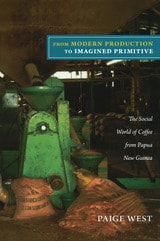
From Modern Production to Imagined Primitive
The Social World of Coffee from Papua New GuineaPaige West
Duke University Press, 2012

Maya Saints and Souls in a Changing World
By John M. Watanabe
University of Texas Press, 1992
The Maya of Santiago Chimaltenango have experienced increasingly rapid, even violent, integration into Guatemalan society in the last fifty years, yet they still distinguish themselves ethnically from Spanish-speaking Guatemalans and other Maya. Why this sense of ethnic identity persists—and also changes—over time is the focus of Maya Saints and Souls in a Changing World, a beautifully written ethnography of a Mam-speaking Maya town in the western highlands of Guatemala.
John Watanabe uniquely explores how Chimaltecos themselves define their local distinctiveness. This approach uncovers significant continuities in lifeways and world view that might otherwise remain imperceptible to an outsider.
Another important feature of the study is that it updates Charles Wagley's pioneering research in the community during the 1930s. Watanabe identifies both the external, historical factors that have prompted change in the community since Wagley's time and the people's responses to these changes.

Organic Coffee
Sustainable Development by Mayan FarmersMaria Elena Martinez-Torres
Ohio University Press, 2006
Maria Elena Martinez-Torres explains how Mayan farmers have built upon their ethnic networks to make a crucial change in their approach to agriculture. Taking us inside Chiapas, Mexico's poorest state and scene of the 1994 Zapatista uprising, she examines the anatomy of the ongoing organic coffee boom and the fair-trade movement. The organic coffee boom arose as very poor farmers formed cooperatives, revalued their ethnic identity, and improved their land through organic farming. The result has been significant economic benefits for their families and ecological benefits for the future sustainability of agriculture in the region.
Organic Coffee refutes the myth that organic farming is less productive than chemical-based agriculture and gives us reasons to be hopeful for indigenous peoples and peasant farmers

Peasants Against the State
The Politics of Market Control in Bugisu, Uganda, 1900-1983Stephen G. Bunker
University of Chicago Press, 1991
Focusing on peasant struggles for market control over coffee exports in Bugisu from colonial times through the reign and overthrow of Idi Amin, Bunker shows that these freeholding peasants acted collectively and used the state's dependence on coffee export revenues to effectively influence and veto government programs inimical to their interests.
Bunker's work vividly portrays the small victories and great trials of ordinary people struggling to control their own economic destiny while resisting the power of the world economy.
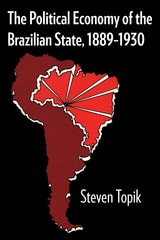
The Political Economy of the Brazilian State, 1889–1930
By Steven Topik
University of Texas Press, 1987
In this first overview of the Brazilian republican state based on extensive primary source material, Steven Topik demonstrates that well before the disruption of the export economy in 1929, the Brazilian state was one of the most interventionist in Latin America. This study counters the previous general belief that before 1930 Brazil was dominated by an export oligarchy comprised of European and North American capitalists and that only later did the state become prominent in the country’s economic development.
Topik examines the state’s performance during the First Republic (1889–1930) in four sectors—finance, the coffee trade, railroads, and industry. By looking at the controversies in these areas, he explains how domestic interclass and international struggles shaped policy and notes the degree to which the state acted relatively independently of civil society.
Topik’s primary concern is the actions of state officials and whether their decisions reflected the demands of the ruling class. He shows that conflicting interests of fractions of the ruling class and foreign investors gradually led to far greater state participation than any of the participants originally desired, and that the structure of the economy and of society—not the intentions of the actors—best explains the state’s economic presence.
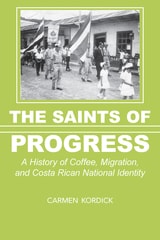
The Saints of Progress
A History of Coffee, Migration, and Costa Rican National IdentityCarmen Kordick
University of Alabama Press, 2019
The Saints of Progress: A History of Coffee, Migration, and Costa Rican National Identity chronicles the development of the Tarrazú Valley, a historically remote—although internationally celebrated—coffee-growing region. Carmen Kordick’s work traces the development of this region from the early nineteenth century to the first decades of the twenty-first century to consider the nation-building process from the margins, while also questioning traditional scholarly works that have reproduced, rather than deconstructed, Costa Rica’s exceptionalist national mythology, which hail Costa Rica as Central America’s “white,” democratic, nonviolent, and egalitarian republic.
In this compelling political, economic, and lived history, Kordick suggests that Costa Rica’s exceptionalist and egalitarian mythology emerged during the Cold War, as revolution, civil war, military dictatorship, and state violence plagued much of Central America. From the vantage point of Costa Rica’s premier coffee-producing region, she examines local, national, and transnational processes. This deeply textured narrative details the inauguration of coffee capitalism, which heightened existing class divisions; a successful armed revolt against the national government, which forged the current political regime; and the onset of massive out-migration to the United States.
Kordick’s research incorporates more than one hundred oral histories and thousands of archival sources gathered in both Costa Rica and the United States to produce a human history of Costa Rica’s past. Her work on the recent past profiles the experiences of migrants in the United States, mostly in New Jersey, where many undocumented Costa Ricans find low-paid work in the restaurant and landscaping sectors. The result is a fine-grained examination of Tarrazú’s development from the 1820s to the present that reshapes traditional understandings of Costa Rica and its national past.
The Second Conquest of Latin America
Coffee, Henequen, and Oil during the Export Boom, 1850-1930Edited by Steven C. Topik and Allen Wells
University of Texas Press, 1997
Between 1850 and 1930, Latin America's integration into the world economy through the export of raw materials transformed the region. This encounter was nearly as dramatic as the conquistadors' epic confrontation with Native American civilizations centuries before. An emphasis on foreign markets and capital replaced protectionism and self-sufficiency as the hemisphere's guiding principles. In many ways, the means employed during this period to tie Latin America more closely to western Europe and North America resemble strategies currently in vogue. Much can be learned from analyzing the first time that Latin Americans embraced export-led growth.
This book focuses on the impact of three key export commodities: coffee, henequen, and petroleum. The authors concentrate on these rather than on national economies because they illustrate more concretely the interaction between the environment, natural and human resources, and the world economy. By analyzing how different products spun complex webs of relationships with their respective markets, the essays in this book illuminate the tensions and contradictions found in the often conflictive relationship between the local and the global, between agency and the not-so-invisible hand. Ultimately, the contributors argue that the results of the "second conquest" were not one-sided as Latin Americans and foreigners together forged a new economic order—one riddled with contradictions that Latin America is still attempting to resolve today.
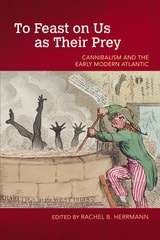
To Feast on Us as Their Prey
Cannibalism and the Early Modern AtlanticRachel B. Herrmann
University of Arkansas Press, 2019
Winner, 2020 Association for the Study of Food and Society Book Award, Edited Volume
Long before the founding of the Jamestown, Virginia, colony and its Starving Time of 1609–1610—one of the most famous cannibalism narratives in North American colonial history—cannibalism played an important role in shaping the human relationship to food, hunger, and moral outrage. Why did colonial invaders go out of their way to accuse women of cannibalism? What challenges did Spaniards face in trying to explain Eucharist rites to Native peoples? What roles did preconceived notions about non-Europeans play in inflating accounts of cannibalism in Christopher Columbus’s reports as they moved through Italian merchant circles?
Asking questions such as these and exploring what it meant to accuse someone of eating people as well as how cannibalism rumors facilitated slavery and the rise of empires, To Feast on Us as Their Prey posits that it is impossible to separate histories of cannibalism from the role food and hunger have played in the colonization efforts that shaped our modern world.
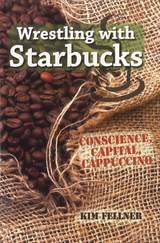
Wrestling with Starbucks
Conscience, Capital, CappuccinoFellner, Kim
Rutgers University Press, 2008
Armed with an open mind and a sense of humor, Fellner takes readers on an expedition into the muscle and soul of the coffee company. She finds a corporation filled with contradictions: between employee-friendly processes and anti-union practices; between an internationalist vision and a longing for global dominance; between community individuality and cultural hegemony. On a daily basis Starbucks walks a fine line. It must be profitable enough to please Wall Street and principled enough to please social justice advocates. Although observers might argue that the company has done well at achieving a balance, Starbucks's leaders run the risk of satisfying neither constituency and must constantly justify themselves to both.
Through the voices of Central American coffee farmers, officers at corporate headquarters, independent café owners, unionists, baristas, traders, global justice activists, and consumers, Fellner explores the forces that affect Starbucks's worth and worthiness. Along the way, she subjects her own unabashedly progressive perspective to scrutiny and emerges with a compelling and unexpected look at Starbucks, the global economy, our economic convictions, and the values behind our morning cup of joe.