Results by title
15 books match the query 'Cognition and culture'
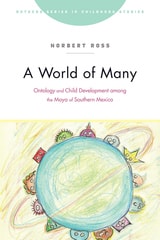
A World of Many
Ontology and Child Development among the Maya of Southern MexicoNorbert Ross
Rutgers University Press, 2023

Autoaffection
Unconscious Thought in the Age of TechnologyPatricia Ticineto Clough
University of Minnesota Press, 2000
Explores the connection between new theories, new technologies, and new ways of thinking.
In this book, Patricia Ticineto Clough reenergizes critical theory by viewing poststructuralist thought through the lens of "teletechnology," using television as a recurring case study to illuminate the changing relationships between subjectivity, technology, and mass media.
Autoaffection links diverse forms of cultural criticism-feminist theory, queer theory, film theory, postcolonial theory, Marxist cultural studies and literary criticism, the cultural studies of science and the criticism of ethnographic writing—to the transformation and expansion of teletechnology in the late twentieth century. These theoretical approaches, Clough suggests, have become the vehicles of unconscious thought in our time.In individual chapters, Clough juxtaposes the likes of Derridean deconstruction, Deleuzian philosophy, and Lacanian psychoanalysis. She works through the writings of Fredric Jameson, Donna Haraway, Judith Butler, Bruno Latour, Nancy Fraser, Elizabeth Grosz—to name only a few—placing all in dialogue with a teletechnological framework. Clough shows how these cultural criticisms have raised questions about the foundation of thought, allowing us to reenvision the relationship of nature and technology, the human and the machine, the virtual and the real, the living and the inert.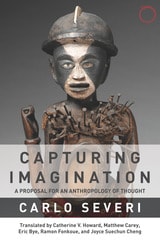
Capturing Imagination
A Proposal for an Anthropology of ThoughtCarlo Severi
HAU, 2018
How might we describe the kind of thought that gives life to the artifact, making it memorable as well as effective, in daily life, play, or ritual action? Following The Chimera Principle, in this collection of essays Carlo Severi explores the kind of shared imagination where inanimate artifacts, from non-Western masks and ritual statuettes to paintings and sculptures in our own tradition, can be perceived as living beings. This nuanced inquiry into the works of memory and shared imagination is a proposal for a new anthropology of thought.
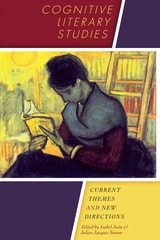
Cognitive Literary Studies
Current Themes and New DirectionsEdited by Isabel Jaén and Julien Jacques Simon
University of Texas Press, 2012
In the first decade of the twenty-first century, our understanding of the cognition of literature was transformed by scientific discoveries, such as the mirror neuron system and its role in empathy. Addressing questions such as why we care so deeply about fictional characters, what brain activities are sparked when we read literature, and how literary works and scholarship can inform the cognitive sciences, this book surveys the exciting recent developments in the field of cognitive literary studies and includes contributions from leading scholars in both the humanities and the sciences.
Beginning with an overview of the evolution of literary studies, the editors trace the recent shift from poststructuralism and its relativism to a growing interdisciplinary interest in the empirical realm of neuroscience. In illuminating essays that examine the cognitive processes at work when we experience fictional worlds, with findings on the brain’s creativity sites, this collection also explores the impact of literature on self and society, ending with a discussion on the present and future of the psychology of fiction. Contributors include Literature and the Brain author Norman N. Holland, on the neuroscience of metafiction reflected in Don Quixote; clinical psychologist Aaron Mishara on the neurology of self in the hypnagogic (between waking and sleeping) state and its manifestations in Kafka’s stories; and literary scholar Brad Sullivan’s exploration of Romantic poetry as a didactic tool, applying David Hartley’s eighteenth-century theories of sensory experience.
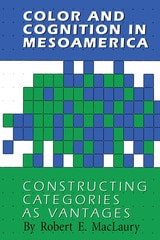
Color and Cognition in Mesoamerica
Constructing Categories as VantagesBy Robert E. MacLaury
University of Texas Press, 1996
More than 100 indigenous languages are spoken in Mexico and Central America. Each language partitions the color spectrum according to a pattern that is unique in some way. But every local system of color categories also shares characteristics with the systems of other Mesoamerican languages and of languages elsewhere in the world.
This book presents the results of the Mesoamerican Color Survey, which Robert E. MacLaury conducted in 1978-1981. Drawn from interviews with 900 speakers of some 116 Mesoamerican languages, the book provides a sweeping overview of the organization and semantics of color categorization in modern Mesoamerica.
Extensive analysis and MacLaury's use of vantage theory reveal complex and often surprising interrelationships among the ways languages categorize colors. His findings offer valuable cross-cultural data for all students of Mesoamerica. They will also be of interest to all linguists and cognitive scientists working on theories of categorization more generally.
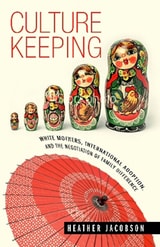
Culture Keeping
White Mothers, International Adoption, and the Negotiation of Family DifferenceHeather Jacobson
Vanderbilt University Press, 2008
Heather Jacobson examines these adoptions by focusing on a relatively new social phenomenon, the practice by international adoptive parents, mothers in particular, of incorporating aspects of their children's cultures of origin into their families' lives. "Culture keeping" is now standard in the adoption world, though few adoptive parents, the majority of whom are white and native-born, have experience with the ethnic practices of their children's homelands prior to adopting.
Jacobson follows white adoptive mothers as they navigate culture keeping: from their motivations, to the pressures and constraints they face, to the content of their actual practices concerning names, food, toys, travel, cultural events, and communities of belonging. Through her interviews, she explores how women think about their children, their families, and themselves as mothers as they labor to construct or resist ethnic identities for their children, who may be perceived as birth children (because they are white) or who may be perceived as adopted (because of racial difference).
The choices these women make about culture, Jacobson argues, offer a window into dominant ideas of race and the "American Family," and into how social differences are conceived and negotiated in the United States.
Cultures of Transnational Adoption
Toby Alice Volkman, ed.
Duke University Press, 2005
The cultural experiences considered in this volume raise important questions about race and nation; about kinship, biology, and belonging; and about the politics of the sending and receiving nations. Several essayists explore the images and narratives related to transnational adoption. Others examine the recent preoccupation with “roots” and “birth cultures.” They describe a trip during which a group of Chilean adoptees and their Swedish parents traveled “home” to Chile, the “culture camps” attended by thousands of young-adult Korean adoptees whom South Korea is now eager to reclaim as “overseas Koreans,” and adopted children from China and their North American parents grappling with the question of what “Chinese” or “Chinese American” identity might mean. Essays on Korean birth mothers, Chinese parents who adopt children within China, and the circulation of children in Brazilian families reveal the complexities surrounding adoption within the so-called sending countries. Together, the contributors trace the new geographies of kinship and belonging created by transnational adoption.
Contributors. Lisa Cartwright, Claudia Fonseca, Elizabeth Alice Honig, Kay Johnson, Laurel Kendall, Eleana Kim, Toby Alice Volkman, Barbara Yngvesson
Dark Matter of the Mind
The Culturally Articulated UnconsciousDaniel L. Everett
University of Chicago Press, 2016
Everett sketches a blank-slate picture of human cognition that focuses not on what is in the mind but, rather, what the mind is in—namely, culture. He draws on years of field research among the Amazonian people of the Pirahã in order to carefully scrutinize various theories of cognitive instinct, including Noam Chomsky’s foundational concept of universal grammar, Freud’s notions of unconscious forces, Adolf Bastian’s psychic unity of mankind, and works on massive modularity by evolutionary psychologists such as Leda Cosmides, John Tooby, Jerry Fodor, and Steven Pinker. Illuminating unique characteristics of the Pirahã language, he demonstrates just how differently various cultures can make us think and how vital culture is to our cognitive flexibility. Outlining the ways culture and individual psychology operate symbiotically, he posits a Buddhist-like conception of the cultural self as a set of experiences united by various apperceptions, episodic memories, ranked values, knowledge structures, and social roles—and not, in any shape or form, biological instinct.
The result is fascinating portrait of the “dark matter of the mind,” one that shows that our greatest evolutionary adaptation is adaptability itself.
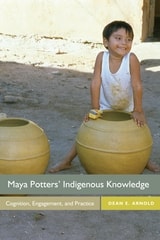
Maya Potters' Indigenous Knowledge
Cognition, Engagement, and PracticeDean E. Arnold
University Press of Colorado, 2017
Based on fieldwork and reflection over a period of almost fifty years, Maya Potters’ Indigenous Knowledge utilizes engagement theory to describe the indigenous knowledge of traditional Maya potters in Ticul, Yucatán, Mexico. In this heavily illustrated narrative account, Dean E. Arnold examines craftspeople’s knowledge and skills, their engagement with their natural and social environments, the raw materials they use for their craft, and their process for making pottery.
Following Lambros Malafouris, Tim Ingold, and Colin Renfrew, Arnold argues that potters’ indigenous knowledge is not just in their minds but extends to their engagement with the environment, raw materials, and the pottery-making process itself and is recursively affected by visual and tactile feedback. Pottery is not just an expression of a mental template but also involves the interaction of cognitive categories, embodied muscular patterns, and the engagement of those categories and skills with the production process. Indigenous knowledge is thus a product of the interaction of mind and material, of mental categories and action, and of cognition and sensory engagement—the interaction of both human and material agency.
Engagement theory has become an important theoretical approach and “indigenous knowledge” (as cultural heritage) is the focus of much current research in anthropology, archaeology, and cultural resource management. While Dean Arnold’s previous work has been significant in ceramic ethnoarchaeology, Maya Potters' Indigenous Knowledge goes further, providing new evidence and opening up different concepts and approaches to understanding practical processes. It will be of interest to a wide variety of researchers in Maya studies, material culture, material sciences, ceramic ecology, and ethnoarchaeology.
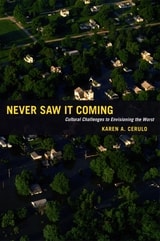
Never Saw It Coming
Cultural Challenges to Envisioning the WorstKaren A. Cerulo
University of Chicago Press, 2006
People—especially Americans—are by and large optimists. They're much better at imagining best-case scenarios (I could win the lottery!) than worst-case scenarios (A hurricane could destroy my neighborhood!). This is true not just of their approach to imagining the future, but of their memories as well: people are better able to describe the best moments of their lives than they are the worst.
Though there are psychological reasons for this phenomenon, Karen A.Cerulo, in Never Saw It Coming, considers instead the role of society in fostering this attitude. What kinds of communities develop this pattern of thought, which do not, and what does that say about human ability to evaluate possible outcomes of decisions and events?
Cerulo takes readers to diverse realms of experience, including intimate family relationships, key transitions in our lives, the places we work and play, and the boardrooms of organizations and bureaucracies. Using interviews, surveys, artistic and fictional accounts, media reports, historical data, and official records, she illuminates one of the most common, yet least studied, of human traits—a blatant disregard for worst-case scenarios. Never Saw It Coming, therefore, will be crucial to anyone who wants to understand human attempts to picture or plan the future.
“In Never Saw It Coming, Karen Cerulo argues that in American society there is a ‘positive symmetry,’ a tendency to focus on and exaggerate the best, the winner, the most optimistic outcome and outlook. Thus, the conceptions of the worst are underdeveloped and elided. Naturally, as she masterfully outlines, there are dramatic consequences to this characterological inability to imagine and prepare for the worst, as the failure to heed memos leading up to both the 9/11 and NASA Challenger disasters, for instance, so painfully reminded us.”--Robin Wagner-Pacifici, Swarthmore College
“Katrina, 9/11, and the War in Iraq—all demonstrate the costliness of failing to anticipate worst-case scenarios. Never Saw It Coming explains why it is so hard to do so: adaptive behavior hard-wired into human cognition is complemented and reinforced by cultural practices, which are in turn institutionalized in the rules and structures of formal organizations. But Karen Cerulo doesn’t just diagnose the problem; she uses case studies of settings in which people effectively anticipate and deal with potential disaster to describe structural solutions to the chronic dilemmas she describes so well. Never Saw It Coming is a powerful contribution to the emerging fields of cognitive and moral sociology.”--Paul DiMaggio, Princeton University
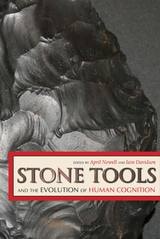
Stone Tools and the Evolution of Human Cognition
April Nowell
University Press of Colorado, 2010
Dating as far back as 2.5-2.7 million years ago, stone tools were used in cutting up animals, woodworking, and preparing vegetable matter. Today, lithic remains give archaeologists insight into the forethought, planning, and enhanced working memory of our early ancestors. Contributors focus on multiple ways in which archaeologists can investigate the relationship between tools and the evolving human mind-including joint attention, pattern recognition, memory usage, and the emergence of language.
Offering a wide range of approaches and diversity of place and time, the chapters address issues such as skill, social learning, technique, language, and cognition based on lithic technology. Stone Tools and the Evolution of Human Cognition will be of interest to Paleolithic archaeologists and paleoanthropologists interested in stone tool technology and cognitive evolution.
The Affective Turn
Theorizing the SocialPatricia Ticineto Clough, ed.
Duke University Press, 2007
In the mid-1990s, scholars turned their attention toward the ways that ongoing political, economic, and cultural transformations were changing the realm of the social, specifically that aspect of it described by the notion of affect: pre-individual bodily forces, linked to autonomic responses, which augment or diminish a body’s capacity to act or engage with others. This “affective turn” and the new configurations of bodies, technology, and matter that it reveals, is the subject of this collection of essays. Scholars based in sociology, cultural studies, science studies, and women’s studies illuminate the movement in thought from a psychoanalytically informed criticism of subject identity, representation, and trauma to an engagement with information and affect; from a privileging of the organic body to an exploration of nonorganic life; and from the presumption of equilibrium-seeking closed systems to an engagement with the complexity of open systems under far-from-equilibrium conditions. Taken together, these essays suggest that attending to the affective turn is necessary to theorizing the social.
Contributors. Jamie “Skye” Bianco, Grace M. Cho, Patricia Ticineto Clough, Melissa Ditmore, Ariel Ducey, Deborah Gambs, Karen Wendy Gilbert, Greg Goldberg, Jean Halley, Hosu Kim, David Staples, Craig Willse , Elizabeth Wissinger , Jonathan R. Wynn
The Cultural Dialectics of Knowledge and Desire
Charles W. Nuckolls
University of Wisconsin Press, 1996
Why is culture a problem that can never be solved? Charles W. Nuckolls poses this question to his readers, and offers a genuinely synthetic approach to culture that is both cognitive and psychoanalytic. He develops a theory of cultural dialectics based on the concept of paradox, in which he shows how ambivalence and conflicts, and the desire to resolve them, are at the heart of all cultural knowledge systems.
Nuckolls combines and synthesizes the ideas of Max Weber and Sigmund Freud—major influences in the cognitive and psychoanalytic paradigms—and develops the concept basic to both: the dialectic. He recovers the legacy of Gregory Bateson, who provided the foundation for a theory of paradox in culture. With his integrated theory, Nuckolls explains the conflicts of knowledge and desire in a South Asian knowledge system, in particular the religious mythology and divinatory system of the Jalaris, a Telugu-speaking fishing caste on the southeastern coast of India.
This provocative book allows us to rethink the relationship between the currently competing discourses in psychological and cultural anthropology, and at the same time offers a general synthetic theory of cultural dynamics.
The Educated Mind
How Cognitive Tools Shape Our UnderstandingKieran Egan
University of Chicago Press, 1997
"A carefully argued and readable book. . . . Egan proposes a radical change of approach for the whole process of education. . . . There is much in this book to interest and excite those who discuss, research or deliver education."—Ann Fullick, New Scientist
"A compelling vision for today's uncertain educational system."—Library Journal
"Almost anyone involved at any level or in any part of the education system will find this a fascinating book to read."—Dr. Richard Fox, British Journal of Educational Psychology
"A fascinating and provocative study of cultural and linguistic history, and of how various kinds of understanding that can be distinguished in that history are recapitulated in the developing minds of children."—Jonty Driver, New York Times Book Review
Understanding Nationalism
On Narrative, Cognitive Science, and IdentityPatrick Colm Hogan
The Ohio State University Press, 2009