Results by title
30 books match the query 'Collaboration'
Acknowledging Writing Partners
Laura Micciche
University Press of Colorado, 2017
Across Property Lines
Textual Ownership in Writing GroupsCandace Spigelman
Southern Illinois University Press, 2000
Candace Spigelman investigates the dynamics of ownership in small group writing workshops, basing her findings on case studies involving two groups: a five-member creative writing group meeting monthly at a local Philadelphia coffee bar and a four-member college-level writing group meeting in their composition classroom. She explores the relationship between particular notions of intellectual property within each group as well as the effectiveness of writing groups that embrace these notions. Addressing the negotiations between the public and private domains of writing within these groups, she discovers that for both the committed writers and the novices, “values associated with textual ownership play a crucial role in writing group performance.”
Spigelman discusses textual ownership, intellectual property, and writing group processes and then reviews theories relating to authorship and knowledge making. After introducing the participants in each group, discussing their texts, and describing their workshop sessions, she examines the writers’ avowed and implied beliefs about exchanging ideas and protecting individual property rights.
Spigelman stresses the necessary tension between individual and social aspects of writing practices: She argues for the need to foster more collaborative activity among student writers by replicating the processes of writers working in nonacademic settings but also contends that all writers must be allowed to imagine their individual agency and authority as they compose.
Analogical Thinking
Post-Enlightenment Understanding in Language, Collaboration, and InterpretationRonald Schleifer
University of Michigan Press, 2001
The book traces this mode of thinking in linguistics, collaborative intellectual work in the arts and sciences, and interpretations of literary and sacred texts, concluding with a reading of the concept of Enlightenment in a comparison of Descartes and Foucault. The book examines the poststructuralism of Derrida; the collaborations of information theory and modern science as opposed to the individualism of Adam Smith and others, and analogical interpretations of Yeats, Dinesen, the Bible, Dreiser, and Mailer. Its overall aim is to present an interdisciplinary examination of a particular kind of understanding that responds to the experiences of our time.
Ronald Schleifer is Professor of English, University of Oklahoma. His books include Rhetoric and Death: The Language of Modernism and Postmodern Discourse Theory, Criticism and Culture; and Culture and Cognition: The Boundaries of Literary and Scientific Inquiry.
Band People
Life and Work in Popular MusicFranz Nicolay
University of Texas Press, 2024
A close look at the lives of working musicians who aren’t the center of their stage.
Secret (and not-so-secret) weapons, side-of-the-stagers, rhythm and horn sections, backup singers, accompanists—these and other “band people” are the anonymous but irreplaceable character actors of popular music. Through interviews and incisive cultural critique, writer and musician Franz Nicolay provides a portrait of the musical middle class. Artists talk frankly about their careers and attitudes toward their craft, work environment, and group dynamics, and shed light on how support musicians make sense of the weird combination of friend group, gang, small business consortium, long-term creative collaboration, and chosen family that constitutes a band. Is it more important to be a good hang or a virtuoso player? Do bands work best as democracies or autocracies? How do musicians with children balance their personal and professional lives? How much money is too little? And how does it feel to play on hundreds of records, with none released under your name? In exploring these and other questions, Band People gives voice to those who collaborate to create and dissects what it means to be a laborer in the culture industry.
Beyond Conversation
Collaboration and the Production of WritingWilliam Duffy
Utah State University Press, 2020
While interrogating the institutional politics that circulate around debates about collaboration, this book offers a concise history of collaborative writing theory while proposing a new set of commonplaces for understanding the labor of coauthorship. Specifically, Beyond Conversation outlines an interactionist theory that explains collaboration as the rhetorical capacity that manifests in the discursive engagements coauthors enter into with the objects of their writing.
Drawing on new materialist philosophies, post-qualitative inquiry, and interactionist rhetorical theory, Beyond Conversation challenges writing and literacy educators to recognize the pedagogical benefits of collaborative writing in the work they do both as writers and as teachers of writing. The book will reinvigorate how teachers, scholars, and administrators advocate for the importance of collaborative writing in their work.
Career Moves
Olson, Creeley, Zukofsky, Berrigan, AndLibbie Rifkin
University of Wisconsin Press, 2000
How much did "making it new" have to do with "making it"? For the four "outsider poets" considered in this book—Charles Olson, Robert Creeley, Louis Zukofsky, and Ted Berrigan—the connection was everything. At once a social history of literary ambition in America in the fifties and sixties and a uniquely collective form of literary biography, Career Moves offers an intimate account of the postwar poetry underground.
Making the controversial claim that anti-Establishment poets were at least as "careerist" as their mainstream peers, Libbie Rifkin shows how the nature of these poets’ ambition actually defined postwar avant-garde identity. In doing so, she clarifies the complicated link between the crafting of a literary career and the defining of a literary canon.

Centers for Learning
Writing Centers and Libraries in CollaborationJames K. Elmborg
Assoc of College & Research Libraries, 2011
Coauthoring with Undergraduates in Writing Studies
Revising Identities and InstitutionsLaurie Grobman
Utah State University Press, 2025
In this book, faculty and undergraduates describe and theorize about their coauthoring experiences within a variety of institutional contexts including land-grant universities, Historically Black Colleges and Universities, Hispanic-Serving Institutions, religiously affiliated research universities, and regional campuses of statewide higher education systems. They explore the relationships between undergraduates and faculty that lead to coauthoring opportunities in a range of courses—first-year writing classes, general educational requirements in various disciplines, and upper-level offerings for English majors—as well as in other institutional spaces such as writing centers, community engagement initiatives, and assessment offices. The collection offers faculty and undergraduates models, ideas, and strategies for how to coauthor together while also preparing them for the challenges—pragmatic, intellectual, and ethical—that they may encounter.
Coauthoring with Undergraduates in Writing Studies showcases why and how coauthorship between faculty and undergraduates is a vital site for scholarly engagement, professional development, and socially just education. It boldly enacts rhetoric and composition’s commitment to collaborative scholarship and is significant for graduate students and faculty in rhetoric and writing studies, especially in community-engaged writing, undergraduate education, collaborative writing, and mentorship, as well as those interested in WAC, WID, and the scholarship of teaching and learning.
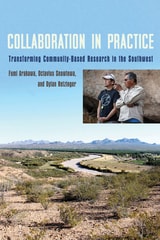
Collaboration in Practice
Transforming Community-Based Research in the SouthwestFumi Arakawa, Octavius Seowtewa, and Dylan Retzinger
University of Arizona Press, 2026
The book situates this collaboration within the broader historical and political context of archaeology and museology. It critically explores how museums and academic institutions can shift from extractive practices to ones that prioritize Indigenous sovereignty, knowledge systems, and cultural continuity. Through personal narratives, historical context, and methodological insights, the authors highlight the challenges and transformative potential of working collaboratively. They show how true collaboration requires humility, mutual respect, and a commitment to shared authority in both research and representation.
Ultimately, this work charts a path forward for community-based research that centers Indigenous voices and values. It advocates for an archaeology that is not only more inclusive but also more meaningful to the communities whose histories are being studied. A vital resource for scholars, students, and practitioners, this work seeks to engage in ethical, reciprocal, and culturally grounded research in the Southwest and beyond.
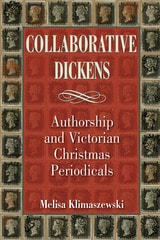
Collaborative Dickens
Authorship and Victorian Christmas PeriodicalsMelisa Klimaszewski
Ohio University Press, 2019
From 1850 to 1867, Charles Dickens produced special issues (called “numbers”) of his journals Household Words and All the Year Round, which were released shortly before Christmas each year. In Collaborative Dickens, Melisa Klimaszewski undertakes the first comprehensive study of these Christmas numbers. She argues for a revised understanding of Dickens as an editor who, rather than ceaselessly bullying his contributors, sometimes accommodated contrary views and depended upon multivocal narratives for his own success.
Klimaszewski uncovers connections among and between the stories in each Christmas collection. She thus reveals ongoing conversations between the works of Dickens and his collaborators on topics important to the Victorians, including race, empire, supernatural hauntings, marriage, disability, and criminality. Stories from Wilkie Collins, Elizabeth Gaskell, and understudied women writers such as Amelia B. Edwards and Adelaide Anne Procter interact provocatively with Dickens’s writing. By restoring links between stories from as many as nine different writers in a given year, Klimaszewski demonstrates that a respect for the Christmas numbers’ plural authorship and intertextuality results in a new view of the complexities of collaboration in the Victorian periodical press and a new appreciation for some of the most popular texts Dickens published.
Cultural Heritage and the Campus Community
Academic Libraries and Museums in CollaborationAlexia Hudson-Ward
Assoc of College & Research Libraries, 2022
Cultural Heritage and the Campus Community collects examples of successful academic library-museum collaborations and serves as critical knowledge for the cultural heritage sector. Authors from libraries and museums across the United States demonstrate how to develop and execute partnerships and bring forth new dimensions of transdisciplinary objects-based pedagogy, research, and learning centered on inclusive educational practices. Chapters explore visual thinking strategies and the Framework for Information Literacy in Higher Education in the undergraduate classroom; restoring Indigenous heritage through tribal partnerships; using object-based teaching to motivate student research; and much more.
The collaborative approaches highlighted here demonstrate the power of possibility when two collections-centric entities unite to enrich our collective understanding of materiality, instructional approaches, and the importance of provenance. Cultural Heritage and the Campus Community also illustrates why interrogating past practices and value assignments within academic library and museum collections is essential to advancing culturally relevant approaches to knowledge sharing in physical and digital spaces.
Decolonizing Native Histories
Collaboration, Knowledge, and Language in the AmericasFlorencia E. Mallon, ed.
Duke University Press, 2012
These wide-ranging case studies consider how language, the law, and the archive have historically served as instruments of colonialism and how they can be creatively transformed in constructing autonomy. The collection highlights points of commonality and solidarity across geographical, cultural, and linguistic boundaries and also reflects deep distinctions between North and South. Decolonizing Native Histories looks at Native histories and narratives in an internationally comparative context, with the hope that international collaboration and understanding of local histories will foster new possibilities for indigenous mobilization and an increasingly decolonized future.

Design Integrations
Research and CollaborationEdited by Sharon Poggenpohl and Keiichi Sato
Intellect Books, 2009
Design Integrations calls for an innovative rethinking of design education, one that recognizes the changing modes of design and the shifting forms of user experience. The contributors urge new methods of approach that focus on interdisciplinary collaboration between the academic and business worlds. These essays, among the first to focus on the future of design, often in-depth explorations of inter-institutional projects, cross-cultural learning experiences, and a multinational healthcare project. Design Integrations will be of interest to design teachers and practitioners alike.
First Person Squared
A Study of Co-Authoring in the AcademyKami Day & Michele Eodice
Utah State University Press, 2001
In (First Person)2, Day and Eodice offer one of the few book-length studies of co-authoring in academic fields since Lunsford and Ede published theirs over a decade ago. The central research here involves in-depth interviews with ten successful academic collaborators from a range of disciplines and settings. The interviews explore the narratives of these informants' experience—what brought them to collaborate, what cognitive and logistical processes were involved as they worked together, what is the status of collaborated work in their field, and so on—and situate these informants within the broader discussion of collaboration theory and research as it has been articulated over the last ten years.
As the study develops, Day and Eodice become most interested in the affective domain of co-authorship, and they find the most promising explorations of that domain in the work of feminist theorists in composition.
Intimate Empire
Collaboration and Colonial Modernity in Korea and JapanNayoung Aimee Kwon
Duke University Press, 2015

Launching Large-Scale Library Initiatives
Innovation and CollaborationValerie Horton
American Library Association, 2021
The necessity for library leaders to demonstrate that libraries are innovative, collaborative, and can provide eye-catching, transformational services and programs to their communities cannot be understated. But libraries do not suffer from a lack of big ideas. What library workers really need is a roadmap for making those impactful ideas become reality. Based in part on her extensive experience coordinating large-scale initiatives, this guide from ASCLA Leadership and Professional Achievement Award-winning consultant Horton will walk you through formulating and shaping your ideas into sellable, actionable projects. You’ll learn
- techniques drawn from project management experts and researchers from many fields;
- why Big Hairy Audacious Goals (BHAG) are worth your time and effort;
- guidance on upscaling your idea into a project or service that can be launched at a statewide, community wide, or library consortium level;
- several case studies of large-scale library projects, with analysis of why they were successful;
- how to successfully combine foundational principles of innovation with practical methods for collaboration;
- methods for extending your reach beyond your usual sphere to partner with other libraries and organizations;
- how to sharpen your skills of persuasion;
- no-nonsense advice on leading teams of disparate individuals; and
- evaluative tips for affirming the project is on the right track and then correcting course as needed.
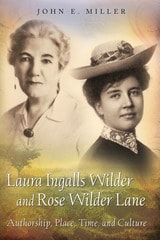
Laura Ingalls Wilder and Rose Wilder Lane
Authorship, Place, Time, and CultureJohn E. Miller
University of Missouri Press, 2008
Interpreting these writers in their larger historical and cultural contexts, Miller reconsiders their formidable artistic, political, and literary contributions to American cultural life in the 1930s. He looks at what was happening in 1932—from depression conditions and politics to chain stores and celebrity culture—to shed light on Wilder’s life, and he shows how actual “little houses” established ideas of home that resonated emotionally for both writers.
In considering each woman’s ties to history, Miller compares Wilder with Frederick Jackson Turner as a frontier mythmaker and examines Lane’s unpublished history of Missouri in the context of a contemporaneous project, Thomas Hart Benton’s famous Jefferson City mural. He also looks at Wilder’s Missouri Ruralist columns to assess her pre–Little House values and writing skills, and he readdresses her literary treatment of Native Americans. A final chapter shows how Wilder’s and Lane’s conservative political views found expression in their work, separating Lane’s more libertarian bent from Wilder’s focus on writing moralist children’s fiction.
These nine thoughtful essays expand the critical discussion on Wilder and Lane beyond the Little House. Miller portrays them as impassioned and dedicated writers who were deeply involved in the historical changes and political challenges of their times—and contends that questions over the books’ authorship do not do justice to either woman’s creative investment in the series. Miller demystifies the aura of nostalgia that often prevents modern readers from seeing Wilder as a real-life woman, and he depicts Lane as a kindred artistic spirit, helping readers better understand mother and daughter as both women and authors.
Literary Couplings
Writing Couples, Collaborators, and the Construction of AuthorshipEdited by Marjorie Stone and Judith Thompson
University of Wisconsin Press, 2007
This innovative collection challenges the traditional focus on solitary genius by examining the rich diversity of literary couplings and collaborations from the early modern to the postmodern period. Literary Couplings explores some of the best-known literary partnerships—from the Sidneys to Boswell and Johnson to Sylvia Plath and Ted Hughes—and also includes lesser-known collaborators such as Daphne Marlatt and Betsy Warland. The essays place famous authors such as Samuel Coleridge, Oscar Wilde, and William Butler Yeats in new contexts; reassess overlooked members of writing partnerships; and throw new light on texts that have been marginalized due to their collaborative nature. By integrating historical studies with authorship theory, Literary Couplings goes beyond static notions of the writing "couple" to explore literary couplings created by readers, critics, historians, and publishers as well as by writers themselves, thus expanding our understanding of authorship.
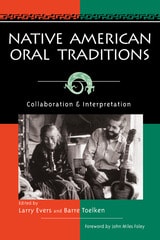
Native American Oral Traditions
Collaboration and InterpretationLarry Evers
Utah State University Press, 2001
This collection provides a benchmark that helps secure the position of collaboration between Native American and non-Native American scholars in the forefront of study of Native oral traditions. Seven sets of intercultural authors present Native American oral texts with commentary, exploring dimensions of perspective, discovery, and meaning that emerge through collaborative translation and interpretation. The texts studied all come from the American West but include a rich variety of material, since their tribal sources range from the Yupik in the Arctic to the Yaqui in the Sonoran Desert.
This presentation of jointly authored work is timely: it addresses increasing interest in, calls for, and movement toward reflexivity in the relationships between scholars and the Native communities they study, and it responds to the renewed commitment in those communities to asserting more control over representations of their traditions. Although Native and academic communities have long tried to work together in the study of culture and literature, the relationship has been awkward and imbalanced toward the academics. In many cases, the contributions of Native assistants, informants, translators, and field workers to the work of professional ethnographers has been inadequately credited, ignored, or only recently uncovered. Native Americans usually have not participated in planning and writing such projects. Native American Oral Traditions provides models for overcoming such obstacles to interpreting and understanding Native oral literature in relation to the communities and cultures from which it comes.
Singular Texts/Plural Authors
Perspectives on Collaborative WritingLisa Ede and Andrea Lunsford
Southern Illinois University Press, 1992
Lisa Ede and Andrea Lunsford challenge the assumption that writing is a solitary act. That challenge is grounded in their own personal experience as long-term collaborators and in their extensive research, including a three-stage study of collaborative writing supported by the Fund for the Improvement of Post-Secondary Education.
The authors urge a fundamental change in our institutions to accommodate collaboration by radically resituating power in the classroom and by instituting rewards for collaborative work that equal rewards for single-authored work. They conclude with the injunction: "Today and in the twenty-first century, our data suggest, writers must be able to work together. They must, in short, be able to collaborate."

Spaniards and Nazi Germany
Collaboration in the New OrderWayne H. Bowen
University of Missouri Press, 2000
Using recently declassified documents from Spain and the United States, personal interviews, and unpublished and published Spanish, German, British, and U.S. records, Spaniards and Nazi Germany makes a significant contribution to the understanding of Hispano-German relations during the 1930s and 1940s. This study shows that Naziphiles within the Spanish Falange, Spain's fascist party, made a concerted effort to bring their nation into World War II, and that only the indecisiveness of dictator Francisco Franco and diplomatic mistakes by the Nazis prevented them from succeeding.
Bowen demonstrates that while Spain was neutral in World War II, its policies clearly favored the Axis, at least in the early stages of the war. Franco, who had emerged victorious from the Spanish Civil War in 1939 largely because of support from Adolf Hitler and Benito Mussolini, even carefully considered entering World War II on the side of Nazi Germany.
By the late 1930s, members of the Falange saw World War II as a revolutionary opportunity, a chance to lead Spain into a new age as a partner with Nazi Germany and Fascist Italy at the head of a New Europe of social justice and authoritarian regimes. By the end of 1939, a significant minority of pro- Nazi Spaniards were unhappy that Spain had not entered the war and remade itself to fit better into Hitler's New Order. Bowen argues that support for Nazi Germany in Spain and among Spanish communities throughout Europe was both wide and deep, and that this enthusiasm for the Third Reich and the New Order it promised to bring lasted until the end of the war. Despite statements of neutrality by the Spanish government, the Franco regime was well aware of this collaboration by Spanish citizens as late as 1944-1945 and did little to stop it. Had Hitler been more interested in bringing Spain into his empire, or exploiting the pro-Nazi sentiments of these thousands of Spaniards, he might have replaced Franco with someone more willing to support his interests even as late as 1943.
Spaniards and Nazi Germany presents many possibilities for what might have been a far different outcome of World War II in Europe. It shows that even without the full support of the Spanish or German governments, pro-Nazi Spaniards, even if they did not quite bring Spain into the war, added to the strength of the Third Reich by serving in its armies, working in its factories, and promoting its ideas to other nations.
Spotted Ponies
The Collected ZinesMag Gabbert, Chen Chen, Tarfia Faizullah, Leila Chatti, and Carly Joy Miller with artwork by Taylor Dolan
Bridwell Press, 2025
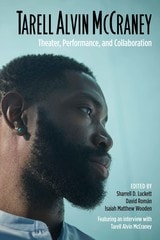
Tarell Alvin McCraney
Theater, Performance, and CollaborationEdited by Sharrell D. Luckett, David Román, and Isaiah Matthew Wooden
Northwestern University Press, 2020
Contributors consider McCraney’s innovations as a playwright, adapter, director, performer, teacher, and collaborator, bringing fresh and diverse perspectives to their observations and analyses. In so doing, they expand and enrich the conversations on his much-celebrated and deeply resonant body of work, which includes the plays Choir Boy, Head of Passes, Ms. Blakk for President, The Breach, Wig Out!, and the critically acclaimed trilogy The Brother/Sister Plays: In the Red and Brown Water, The Brothers Size, and Marcus; Or the Secret of Sweet, as well as the Oscar Award–winning film Moonlight, which was based on his play In Moonlight Black Boys Look Blue.
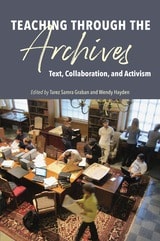
Teaching through the Archives
Text, Collaboration, and ActivismEdited by Tarez Samra Graban and Wendy Hayden
Southern Illinois University Press, 2022
Disruptive pedagogies for archival research
In a cultural moment when institutional repositories carry valuable secrets to the present and past, this collection argues for the critical, intellectual, and social value of archival instruction. Graban and Hayden and 37 other contributors examine how undergraduate and graduate courses in rhetoric, history, community literacy, and professional writing can successfully engage students in archival research in its many forms, and successfully model mutually beneficial relationships between archivists, instructors, and community organizations.
Combining new and established voices from related fields, each of the book’s three sections includes a range of form-disrupting pedagogies. Section I focuses on how approaching the archive primarily as text fosters habits of mind essential for creating and using archives, for critiquing or inventing knowledge-making practices, and for being good stewards of private and public collections. Section II argues for conducting archival projects as collaboration through experiential learning and for developing a preservationist consciousness through disciplined research. Section III details praxis for revealing, critiquing, and intervening in historic racial omissions and gaps in the archives in which we all work.
Ultimately, contributors explore archives as sites of activism while also raising important questions that persist in rhetoric and composition scholarship, such as how to decolonize research methodologies, how to conduct teaching and research that promote social justice, and how to shift archival consciousness toward more engaged notions of democracy. This collection highlights innovative classroom and curricular course models for teaching with and through the archives in rhetoric and composition and beyond.
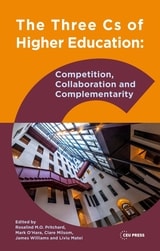
The Three Cs of Higher Education
Competition, Collaboration and ComplementarityMark O'Hara
Central European University Press, 2019

The Wealth of Reality
An Ecology of CompositionMargaret A. Syverson
Southern Illinois University Press, 1999
Margaret A. Syverson discusses the ways in which a theory of composing situations as ecological systems might productively be applied in composition studies. She demonstrates not only how new research in cognitive science and complex systems can inform composition studies but also how composing situations can provide fruitful ground for research in cognitive science.
Syverson first introduces theories of complex systems currently studied in diverse disciplines. She describes complex systems as adaptive, self-organizing, and dynamic; neither utterly chaotic nor entirely ordered, these systems exist on the boundary between order and chaos. Ecological systems are "metasystems" composed of interrelated complex systems. Writers, readers, and texts, together with their environments, constitute one kind of ecological system.
Four attributes of complex systems provide a theoretical framework for this study: distribution, embodiment, emergence, and enaction. Three case studies provide evidence for the application of these concepts: an analysis of a passage from an autobiographical poem by Charles Reznikoff, a study of first-year college students writing collaboratively, and a conflict in a computer forum of social scientists during the Gulf War. The diversity of these cases tests the robustness of theories of distributed cognition and complex systems and suggests possibilities for wider application.
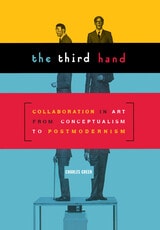
Third Hand
Collaboration in Art from Conceptualism to PostmodernismCharles Green
University of Minnesota Press, 2001
A major reevaluation of collaboration’s role in art since 1968.
The lone artist is a worn cliché of art history but one that still defines how we think about the production of art. Since the 1960s, however, a number of artists have challenged this image by embarking on long-term collaborations that dramatically altered the terms of artistic identity. In The Third Hand, Charles Green offers a sustained critical examination of collaboration in international contemporary art, tracing its origins from the evolution of conceptual art in the 1960s into such stylistic labels as Earth Art, Systems Art, Body Art, and Performance Art. During this critical period, artists around the world began testing the limits of what art could be, how it might be produced, and who the artist is. Collaboration emerged as a prime way to reframe these questions.
Green looks at three distinct types of collaboration: the highly bureaucratic identities created by Joseph Kosuth, Ian Burn, Mel Ramsden, and other members of Art & Language in the late 1960s; the close-knit relationships based on marriage or lifetime partnership as practiced by the Boyle Family, Anne and Patrick Poirier, Helen Mayer Harrison and Newton Harrison; and couples-like Christo and Jeanne-Claude, Gilbert & George, or Marina Abramovi´c and Ulay-who developed third identities, effacing the individual artists almost entirely. These collaborations, Green contends, resulted in new and, at times, extreme authorial models that continue to inform current thinking about artistic identity and to illuminate the origins of postmodern art, suggesting, in the process, a new genealogy for art in the twenty-first century.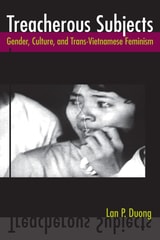
Treacherous Subjects
Gender, Culture, and Trans-Vietnamese FeminismLan P Duong
Temple University Press, 2012
Treacherous Subjects is a provocative and thoughtful examination of Vietnamese films and literature viewed through a feminist lens. Lan Duong investigates the postwar cultural productions of writers and filmmakers, including Tony Bui, Trinh T. Minh-ha, and Tran Anh Hung.
Taking her cue from the double meaning of "collaborator," Duong shows how history has shaped the loyalties and shifting alliances of the Vietnamese, many of whom are caught between opposing/constricting forces of nationalism, patriarchy, and communism. Working at home and in France and the United States, the artists profiled in Treacherous Subjects have grappled with the political and historic meanings of collaboration. These themes, which probe into controversial issues of family and betrayal, figure heavily in fictions such as the films The Scent of Green Papaya and Surname Viet Given Name Nam.
As writers and filmmakers collaborate, Duong suggests that they lay the groundwork for both transnational feminist politics and queer critiques of patriarchy.
Wikipedia and the Politics of Openness
Nathaniel Tkacz
University of Chicago Press, 2014
But what does openness mean, and what would a political theory of openness look like? With Wikipedia and the Politics of Openness, Nathaniel Tkacz uses Wikipedia, the most prominent product of open organization, to analyze the theory and politics of openness in practice—and to break its spell. Through discussions of edit wars, article deletion policies, user access levels, and more, Tkacz enables us to see how the key concepts of openness—including collaboration, ad-hocracy, and the splitting of contested projects through “forking”—play out in reality.
The resulting book is the richest critical analysis of openness to date, one that roots media theory in messy reality and thereby helps us move beyond the vaporware promises of digital utopians and take the first steps toward truly understanding what openness does, and does not, have to offer.
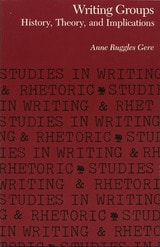
Writing Groups
History, Theory, and ImplicationsAnne Ruggles Gere
Southern Illinois University Press, 1987
Drawing upon previously unpublished archival materials as well as historical accounts, Gere traces the history of writing groups in America, from their origins over a century ago to their recent reappearance in the works of Macrorie, Elbow, Murray, and others.
From this historical perspective Gere examines the theoretical foundations of writing groups, challenging the traditional concept of writing as an individual performance. She offers instead a broader view of authorship that includes both individual and social dimensions, with implications not only for the teaching of composition but also for theories of rhetoric and literacy.