Results by title
3 books match the query 'Collected Papers'
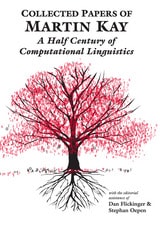
Collected Papers of Martin Kay
A Half Century of Computational LinguisticsMartin Kay, with the editorial assistance of Dan Flickinger and Stephan Oepen
CSLI, 2010
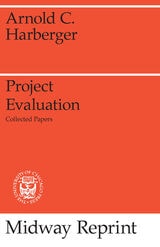
Project Evaluation
Collected PapersArnold C. Harberger
University of Chicago Press, 1976
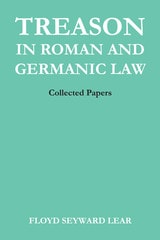
Treason in Roman and Germanic Law
Collected PapersBy Floyd Seyward Lear
University of Texas Press, 1965
"Treason" is a word with many connotations, a word applied to a host of varied offenses throughout the history of humanity. These essays by Floyd Seyward Lear analyze the development of the political theory of treason from its beginning in Roman Law to its transformation in the Germanic custom of the early Middle Ages.
The author has presented treason as a political idea, possessing historical continuity, though varying from age to age as it follows the evolution of political authority itself. These studies trace the shifting emphasis in crimes against the state from acts directed against a central absolutist authority to acts involving the personal relationship of a pledged troth and individual fealty. This is a shift from the concept of majesty in Roman law to the concept of fidelity in Germanic law with the corollary shift from allegiance as an act of deference to allegiance as a token of mutual fidelity.
These ideas are examined chronologically across an interval extending from archaic Roman law to incipiently feudal forms, from which modern theories of treason, allegiance, and sovereignty derive. Contemporary concepts in these political areas can hardly be understood apart from their historical origins. Broadly considered, this work is intended as a contribution to intellectual history.
Further, this collection represents the synthesis of material widely scattered in the primary sources and relevant secondary works. The two concluding bibliographical essays are intended as a general survey of the literature relevant to these studies in Roman and Germanic public law. Descriptive and interpretive works which deal with treason and its allied aspects of political and legal theory are not numerous in the English language.