Results by title
9 books match the query 'Collecting'
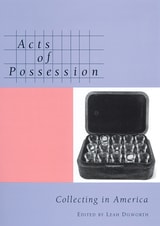
Acts of Possession
Collecting in AmericaDilworth, Leah
Rutgers University Press, 2003
Drawing upon the body of theoretical work on collecting and focusing on individual as opposed to museum collections, the contributors investigate how, what, and why Americans have collected and explore the inherent meanings behind systems of organization and display. Essays consider the meanings of Thomas Jefferson's Indian Hall at Monticello; the pedagogical theories behind nineteenth-century children's curiosity cabinets; collections of Native American artifacts; and the ability of the owners of doll houses to construct meaning within the context of traditional ideals of domesticity.
The authors also consider some darker aspects of collecting-hoarding, fetishism, and compulsive behavior-scrutinizing collections of racist memorabilia and fascist propaganda. The final essay posits the serial killer as a collector, an investigation into the dangerous objectification of humans themselves.
By bringing fresh, interdisciplinary critical perspectives to bear on these questions, Dilworth and her coauthors weave a fascinating cultural history of collecting in America.
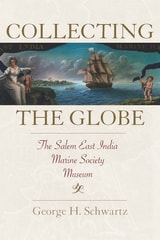
Collecting the Globe
The Salem East India Marine Society MuseumGeorge H. Schwartz
University of Massachusetts Press, 2020
Collecting the Globe presents the first in-depth exploration of the East India Marine Society Museum, the precursor to the internationally acclaimed Peabody Essex Museum. Offering fresh perspectives on museums in the United States before the Civil War and how they helped shape an American identity, George H. Schwartz explores the practices of collecting, exhibiting, and interpreting a diversity of international objects and art in the early United States.
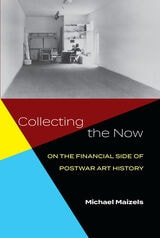
Collecting the Now
On the Financial Side of Postwar Art HistoryMichael Maizels
University of Michigan Press, 2022
Collecting the Now offers a new, in-depth look at the economic forces and institutional actors that have shaped the outlines of postwar art history, with a particular focus on American art, 1960–1990. Working through four case studies, Michael Maizels illuminates how a set of dealers and patrons conditioned the iconic developments of this period: the profusions of pop art, the quixotic impossibility of land art, the dissemination of new media, and the speculation-fueled neo-expressionist painting of the 1980s.
This book addresses a question of pivotal importance to a swath of art history that has already received substantial scholarly investigation. We now have a clear, nuanced understanding of why certain evolutions took place: why pop artists exploded the delimited parameters of aesthetic modernism, why land artists further strove against the object form itself, and why artists returned to (neo-)traditional painting in the 1980s. But remarkably elided by extant scholarship has been the question of how. How did conditions coalesce around pop so that its artists entered into museum collections, and scholarly analyses, at pace unprecedented in the prior history of art? How, when seeking to transcend the delimited gallery object, were land artists able to create monumental (and by extension, monumentally expensive), interventions in the extreme wilds of the Western deserts? And how did the esoteric objects of media art come eventually to scholarly attention in the sustained absence of academic interest or a private market? The answers to these questions lie in an exploration of the financial conditions and funding mechanisms through which these works were created, advertised, distributed, and preserved.
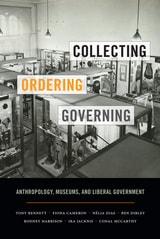
Collecting, Ordering, Governing
Anthropology, Museums, and Liberal GovernmentTony Bennett, Fiona Cameron, Nelia Dias, Ben Dibley, Harrison Rodney, Ira Jacknis, and Conal McCarthy
Duke University Press, 2017
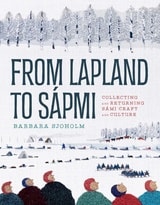
From Lapland to Sápmi
Collecting and Returning Sámi Craft and CultureBarbara Sjoholm
University of Minnesota Press, 2023
A cultural history of Sápmi and the Nordic countries as told through objects and artifacts
Material objects—things made, used, and treasured—tell the story of a people and place. So it is for the Indigenous Sámi living in Norway, Sweden, Finland, and Russia, whose story unfolds across borders and centuries, in museums and private collections. The objects created by the Sámi for daily and ceremonial use were purchased and taken by Scandinavians and foreign travelers in Lapland from the seventeenth century to the present, and the collections described in From Lapland to Sápmi map a complex history that is gradually shifting to a renaissance of Sámi culture and craft, along with the return of many historical objects to Sápmi, the Sámi homeland.
The Sámi objects first collected in Lapland by non-Indigenous people were drums and other sacred artifacts, but later came to include handmade knives, decorated spoons, clothing, and other domestic items owned by Sámi reindeer herders and fishers, as well as artisanal crafts created for sale. Barbara Sjoholm describes how these objects made their way via clergy, merchants, and early scientists into curiosity cabinets and eventually to museums in Copenhagen, Stockholm, Oslo, and abroad. Musicians, writers, and tourists also collected Sámi culture for research and enjoyment. Displays of Sámi material culture in Scandinavia and England, Germany, and other countries in museums, exhibition halls, and even zoos often became part of racist and colonial discourse as examples of primitive culture, and soon figured in the debates of ethnographers and curators over representations of national folk traditions and “exotic” peoples. Sjoholm follows these objects and collections from the Age of Enlightenment through the twentieth century, when artisanship took on new forms in commerce and museology and the Sámi began to organize politically and culturally. Today, several collections of Sámi objects are in the process of repatriation, while a new generation of artists, activists, and artisans finds inspiration in traditional heritage and languages.
Deftly written and amply illustrated, with contextual notes on language and Nordic history, From Lapland to Sápmi brings to light the history of collecting, displaying, and returning Sámi material culture, as well as the story of Sámi creativity and individual and collective agency.
The Museum in the Cultural Sciences
Collecting, Displaying, and Interpreting Material Culture in the Twentieth CenturyEdited by Peter N. Miller
Bard Graduate Center, 2021
The Museum in the Cultural Sciences offers the first full English translations of these articles, which remain influential in conversations about the implications of art, historical, and ethnographic museums. They show how sophisticated the discussion of museums and museum display was in the early twentieth century and how much could be gained from revisiting these reflections today. Accompanied by short commentaries from museum professionals, these articles offer an intervention into and intensification of the current debate about the function and purpose of museums.

The Politics of Collecting
Race and the Aestheticization of PropertyEunsong Kim
Duke University Press, 2024
The Wisconsin Historical Society
Collecting, Preserving, and Sharing Stories Since 1846John Zimm
Wisconsin Historical Society Press, 2014

Wonderful Things from 400 Years of Collecting
The Bodleian Library 1602-2002Edited by the Bodleian Library
Bodleian Library Publishing, 2002