Results by title
20 books match the query 'Collection and preservation'
All the King’s Horses
Essays on the Impact of Looting and the Illicit Antiquities Trade on Our Knowledge of the PastPaula K. Lazrus
University Press of Colorado, 2012
Banning Queer Blood
Rhetorics of Citizenship, Contagion, and ResistanceJeffrey A. Bennett
University of Alabama Press, 2009
In Banning Queer Blood, Jeffrey Bennett frames blood donation as a performance of civic identity closely linked to the meaning of citizenship. However, with the advent of HIV came the notion of blood donation as a potentially dangerous process. Bennett argues that the Food and Drug Administration, by employing images that specifically depict gay men as contagious, has categorized gay men as a menace to the nation. The FDA's ban on blood donation by gay men served to propagate the social misconceptions about gay men that continue to circulate within both the straight and LGBT/Queer communities.
Bennett explores the role of scientific research cited by these banned-blood policies and its disquieting relationship to government agencies, including the FDA. Bennett draws parallels between the FDA's position on homosexuality and the historical precedents of discrimination by government agencies against racial minorities. The author concludes by describing the resistance posed by queer donors, who either lie in order to donate blood or protest discrimination at donation sites, and by calling for these prejudiced policies to be abolished.
Blood Work
Life and Laboratories in PenangJanet Carsten
Duke University Press, 2019
Collecting Antiquity in Modern China
Artifacts and Their AfterlivesGuangchen Chen
University of Chicago Press, 2026
In this book, Guangchen Chen argues that discerning collectors used antiquities to upend dominant discourses on history and cultural memory in twentieth-century China. Examining four categories of ancient artifacts—“carving” (oracle bones), “rubbing” (imprints of inscriptions and books), “brushing” (calligraphy), and “weaving” (textiles and costumes)—Chen explains how their modern (re)emergences changed our understanding of the relationship between tradition and modernity, textuality and materiality, and the very meaning of “Chineseness.”
Chen considers intellectuals such as Wang Yirong, Liu E, Luo Zhenyu, Wang Guowei, and Chen Mengjia, who played a pivotal role in the oracle bones’ modern reception. He also looks to major literary figures including Lu Xun, whose engagements with textual remnants of the past inspired his critique of Chinese culture; Guo Moruo, whose work on the calligraphic masterpiece Lantingxu contributed to the cultural-political climate that sparked the Cultural Revolution; Shi Zhecun, whose interest in inscriptions on ancient stelae helped him to hold fast to intellectual integrity in the face of political pressure; and Shen Congwen, whose obsession with ancient textiles saved him from committing suicide after his writing fell out of favor. These antiquarians used their collections as a strategy to synchronize historical time and to challenge two dominant yet contrasting ideologies in modern China: a regressive idealization of antiquity and an unquestioning trust in linear progress. During this turbulent period, long-lost artifacts came to function as omens, warnings, and revelations from another time, generating new meanings that were uniquely relevant to the present.
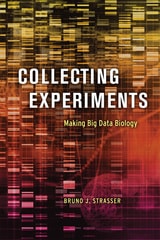
Collecting Experiments
Making Big Data BiologyBruno J. Strasser
University of Chicago Press, 2019
Every scientist working today draws on databases to produce scientific knowledge. Databases have become more common than microscopes, voltmeters, and test tubes, and the increasing amount of data has led to major changes in research practices and profound reflections on the proper professional roles of data producers, collectors, curators, and analysts.
Collecting Experiments traces the development and use of data collections, especially in the experimental life sciences, from the early twentieth century to the present. It shows that the current revolution is best understood as the coming together of two older ways of knowing—collecting and experimenting, the museum and the laboratory. Ultimately, Bruno J. Strasser argues that by serving as knowledge repositories, as well as indispensable tools for producing new knowledge, these databases function as digital museums for the twenty-first century.
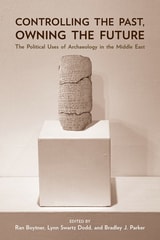
Controlling the Past, Owning the Future
The Political Uses of Archaeology in the Middle EastEdited by Ran Boytner, Lynn Swartz Dodd, and Bradley J. Parker
University of Arizona Press, 2010
The diverse contributions to this volume share a common framework in which the political use of the past is viewed as a process of social discourse. According to this model, political appropriations are seen as acts of social communication designed to accrue benefits to particular groups. Thus the contributors pay special attention to competing social visions and the filters these impose on archaeological data. But they are also attentive to the potential consequences of their own work. Indeed, as the editors remind us, “people’s lives may be affected, sometimes dramatically, because of the material remains that surround them.”
Rounding out this important volume are critiques by two top scholars who summarize and synthesize the preceding chapters.
Cultural Memory and Biodiversity
Virginia D. Nazarea
University of Arizona Press, 1998
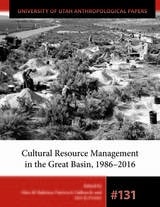
Cultural Resource Management in the Great Basin 1986–2016
Alice M. Baldrica, Patricia A. DeBunch, and Don D. Fowler
University of Utah Press, 2019
Cultural Resource Management (CRM) refers to the discovery, evaluation, and preservation of culturally significant sites, focusing on but not limited to archaeological and historical sites of significance. CRM stems from the National Historic Preservation Act, passed in 1966. In 1986, archaeologists reviewed the practice of CRM in the Great Basin. They concluded that it was mainly a system of finding, flagging, and avoiding—a means of keeping sites and artifacts safe. Success was measured by counting the number of sites recorded and acres surveyed.
This volume provides an updated review some thirty years later. The product of a 2016 symposium, its measures are the increase in knowledge obtained through CRM projects and the inclusion of tribes, the general public, industry, and others in the discovery and interpretation of Great Basin prehistory and history. Revealing both successes and shortcomings, it considers how CRM can face the challenges of the future. Chapters offer a variety of perspectives, covering highway archaeology, inclusion of Native American tribes, and the legacy of the NHPA, among other topics.
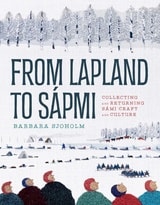
From Lapland to Sápmi
Collecting and Returning Sámi Craft and CultureBarbara Sjoholm
University of Minnesota Press, 2023
A cultural history of Sápmi and the Nordic countries as told through objects and artifacts
Material objects—things made, used, and treasured—tell the story of a people and place. So it is for the Indigenous Sámi living in Norway, Sweden, Finland, and Russia, whose story unfolds across borders and centuries, in museums and private collections. The objects created by the Sámi for daily and ceremonial use were purchased and taken by Scandinavians and foreign travelers in Lapland from the seventeenth century to the present, and the collections described in From Lapland to Sápmi map a complex history that is gradually shifting to a renaissance of Sámi culture and craft, along with the return of many historical objects to Sápmi, the Sámi homeland.
The Sámi objects first collected in Lapland by non-Indigenous people were drums and other sacred artifacts, but later came to include handmade knives, decorated spoons, clothing, and other domestic items owned by Sámi reindeer herders and fishers, as well as artisanal crafts created for sale. Barbara Sjoholm describes how these objects made their way via clergy, merchants, and early scientists into curiosity cabinets and eventually to museums in Copenhagen, Stockholm, Oslo, and abroad. Musicians, writers, and tourists also collected Sámi culture for research and enjoyment. Displays of Sámi material culture in Scandinavia and England, Germany, and other countries in museums, exhibition halls, and even zoos often became part of racist and colonial discourse as examples of primitive culture, and soon figured in the debates of ethnographers and curators over representations of national folk traditions and “exotic” peoples. Sjoholm follows these objects and collections from the Age of Enlightenment through the twentieth century, when artisanship took on new forms in commerce and museology and the Sámi began to organize politically and culturally. Today, several collections of Sámi objects are in the process of repatriation, while a new generation of artists, activists, and artisans finds inspiration in traditional heritage and languages.
Deftly written and amply illustrated, with contextual notes on language and Nordic history, From Lapland to Sápmi brings to light the history of collecting, displaying, and returning Sámi material culture, as well as the story of Sámi creativity and individual and collective agency.
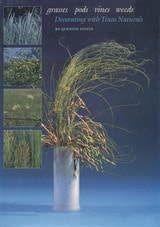
Grasses, Pods, Vines, Weeds
Decorating with Texas NaturalsQuentin Steitz
University of Texas Press, 1987
Purple three-awn.
Tree of heaven.
Alamo vine.
Narrowleaf cattail.
These exotic and fanciful names conjure up visions of lush foliage, colorful grasses, and dense plant life. They are, in fact, names of native and naturalized Texas plants—grasses, pods, vines, and weeds. Lovely and all-too-often overlooked in nature, they become ornamental delights when used imaginatively and decoratively.
Grasses, Pods, Vines, Weeds introduces 44 of Texas' most common and important naturals. Quentin Steitz shows how to recognize them and discover their aesthetic wealth. By taking the reader through all of the steps involved in utilizing naturals—from harvest to design—her book becomes an important tool for floral and landscape designers, decorators, horticulturalists, home gardeners, botanists: all those people who enjoy hands-on experience with Texas' vast array of native and naturalized plants.
The book presents clear and concise descriptions of many Texas naturals, accompanied by approximately 150 full-color photographs showing each in one or more stages of growth and also in a design. The reader can see the plant as it looks not only in the wild but also in an arrangement. The author offers techniques on how the species can be prepared for display, discussing drying and arranging. And a chapter on cultivation and conservation suggests to outdoor enthusiasts species they can grow for decorative natural materials as well as conserve and appreciate in the wild.
Grasses, Pods, Vines,Weeds is enhanced by flora selected, collected, prepared, and dried by the author. These hand-culled materials have been used in designs contributed by some nineteen notable floral designers as well as the author. The text and designs combine to reveal the fresh, creative applications of Texas' decorative naturals and to increase our pleasure in the wonders of natural Texas.
Heirloom Seeds and Their Keepers
Marginality and Memory in the Conservation of Biological DiversityVirginia D. Nazarea
University of Arizona Press, 2005
As scientists grapple with the erosion of genetic diversity of crops and their wild relatives, old-timey farmers and gardeners continue to save, propagate, and pass on folk varieties and heirloom seeds. Virginia Nazarea focuses on the role of these seedsavers in the perpetuation of diversity. She thoughtfully examines the framework of scientific conservation and argues for the merits of everyday conservation—one that is beyond programmatic design. Whether considering small-scale rice and sweet potato farmers in the Philippines or participants in the Southern Seed Legacy and Introduced Germplasm from Vietnam in the American South, she explores roads not necessarily less traveled but certainly less recognized in the conservation of biodiversity.
Through characters and stories that offer a wealth of insights about human nature and society, Heirloom Seeds and Their Keepers helps readers more fully understand why biodiversity persists when there are so many pressures for it not to. The key, Nazarea explains, is in the sovereign spaces seedsavers inhabit and create, where memories counter a culture of forgetting and abandonment engendered by modernity. A book about theory as much as practice, it profiles these individuals, who march to their own beat in a world where diversity is increasingly devalued as the predictability of mass production becomes the norm.
Heirloom Seeds and Their Keepers offers a much-needed, scientifically researched perspective on the contribution of seedsaving that illustrates its critical significance to the preservation of both cultural knowledge and crop diversity around the world. It opens new conversations between anthropology and biology, and between researchers and practitioners, as it honors conservation as a way of life.
Indigenous Collections
Transformations in Stewardship and Conservation PracticesEllen Pearlstein
J. Paul Getty Trust, The, 0
A critical survey of the values, challenges, implications, history, and future of conserving Indigenous collections globally.
Once the exclusive realm of non-Indigenous curators and conservators, the care of Indigenous works in museums is now largely carried out either in collaboration with or by community members—a significant change from the colonial origins of museum collections and conservation practice.
This volume brings together over 100 readings—by Indigenous and non-Indigenous authors from around the world—that trace the development of the conservation of Indigenous collections. The writers provide a wide range of expertise, from archaeology and ethnography to law, and include community leaders, anthropologists, and art historians, as well as conservators and curators.
The book begins with an examination of the changes in terminology that reflect trust and respect, Indigenous care practices that predate the emergence of museums, and the impact of policy and legislation on Indigenous art and artifacts. Other readings explore the challenges associated with managing large, complex collections and the changes that resulted from addressing them: the development of specialized technical approaches, the incorporation of intangible heritage in conservation agendas, and a broadening view of what conservation means and how to practice it. Indigenous Collections concludes by looking at new approaches to museums—managed by or jointly with the people most closely connected to the holdings—and to the future, through innovations in conservation education.
Informal Empire
Mexico And Central America In Victorian CultureRobert D. Aguirre
University of Minnesota Press, 2004
Behind the ancient artifacts exhibited in our museums lies a secret past—of travel, desire, the quest for knowledge, and even theft. Such is the case with the objects of Mesoamerican culture so avidly collected, cataloged, and displayed by the British in the nineteenth century. Informal Empire recaptures the history of those artifacts from Mexico and Central America that stirred Victorian interest—a history that reveals how such objects and the cultures they embodied were incorporated into British museum collections, panoramas, freak shows, adventure novels, and records of imperial administrators.
Robert D. Aguirre draws on a wealth of previously untapped historical information to show how the British colonial experience in Africa and the Near East gave rise to an “informal imperialism” in Mexico and Central America. Aguirre’s work helps us to understand what motivated the British to beg, borrow, buy, and steal from peripheral cultures they did not govern. With its original insights, Informal Empire points to a new way of thinking about British imperialism and, more generally, about the styles and forms of imperialism itself.
Monumental Ambivalence
The Politics of HeritageBy Lisa C. Breglia
University of Texas Press, 2006
From ancient Maya cities in Mexico and Central America to the Taj Mahal in India, cultural heritage sites around the world are being drawn into the wave of privatization that has already swept through such economic sectors as telecommunications, transportation, and utilities. As nation-states decide they can no longer afford to maintain cultural properties—or find it economically advantageous not to do so in the globalizing economy—private actors are stepping in to excavate, conserve, interpret, and represent archaeological and historical sites. But what are the ramifications when a multinational corporation, or even an indigenous village, owns a piece of national patrimony which holds cultural and perhaps sacred meaning for all the country's people, as well as for visitors from the rest of the world?
In this ambitious book, Lisa Breglia investigates "heritage" as an arena in which a variety of private and public actors compete for the right to benefit, economically and otherwise, from controlling cultural patrimony. She presents ethnographic case studies of two archaeological sites in the Yucatán Peninsula—Chichén Itzá and Chunchucmil and their surrounding modern communities—to demonstrate how indigenous landholders, foreign archaeologists, and the Mexican state use heritage properties to position themselves as legitimate "heirs" and beneficiaries of Mexican national patrimony. Breglia's research masterfully describes the "monumental ambivalence" that results when local residents, excavation laborers, site managers, and state agencies all enact their claims to cultural patrimony. Her findings make it clear that informal and partial privatizations—which go on quietly and continually—are as real a threat to a nation's heritage as the prospect of fast-food restaurants and shopping centers in the ruins of a sacred site.
Nature's Mirror
How Taxidermists Shaped America’s Natural History Museums and Saved Endangered SpeciesMary Anne Andrei
University of Chicago Press, 2020
Witnessing firsthand the decimation caused by hide hunters, commercial feather collectors, whalers, big game hunters, and poachers, these museum taxidermists recognized the existential threat to critically endangered species and the urgent need to protect them. The compelling exhibits they created—as well as the scientific field work, popular writing, and lobbying they undertook—established a vital leadership role in the early conservation movement for American museums that persists to this day.
Through their individual research expeditions and collective efforts to arouse demand for environmental protections, this remarkable cohort—including William T. Hornaday, Carl E. Akeley, and several lesser-known colleagues—created our popular understanding of the animal world and its fragile habitats. For generations of museum visitors, they turned the glass of an exhibition case into a window on nature—and a mirror in which to reflect on our responsibility for its conservation.
Now Is the Time to Collect
Daniel Giraud Elliot, Carl Akeley, and the Field Museum African Expedition of 1896Paul D. Brinkman
University of Alabama Press, 2024
The rediscovery of a curator’s lost journal illuminates the astonishing African journey that formed the basis of the Chicago Field Museum’s famed collections
“Now” Is the Time to Collect tells the fascinating story of the Chicago Field Museum of Natural History’s zoological expedition to Africa in 1896, the source of many of the museum’s foundational collections and an astounding episode in nineteenth-century science. After the well-publicized extinction of the dodo and Carolina parakeet and the collapse of the American bison population, late nineteenth-century naturalists expected many more vulnerable species to die out with spread of Western-style industrialization. This triggered a race to collect rare species of animals expected soon to be lost forever.
Established in 1893, Chicago’s ambitious Field Museum aimed to become a global center of study. Zoologist Daniel Giraud Elliot persuaded museum patrons to fund an immediate expedition to British Somaliland (contemporary Somalia). There, his team hunted and killed hundreds of animals for the growing collection. On the trip was groundbreaking taxonomist Carl Akeley. Back in Chicago, Akeley created captivating lifelike dioramas of rare animal groups that enhanced the museum’s fame and remain popular to this day.
Enriched with illuminated passages from Elliot’s journal, only recently rediscovered, “Now” Is the Time to Collect is the first book of its kind by an American museum and a case study in what author Paul D. Brinkman calls “salvage zoology”—the practice of aggressively collecting rare animal specimens for preservation just prior to the birth of the modern conservation movement. It is a riveting account of the expedition, the travelers’ experiences in Somalia during its colonial period, and the astonishing origins of one of Chicago’s classic museum experiences.

The Culture of Property
The Crisis of Liberalism in Modern BritainJordanna Bailkin
University of Chicago Press, 2004
Drawing on court transcripts, gallery archives, exhibition reviews, private correspondence—and a striking series of cartoons and photographs—The Culture of Property traverses the history of gender, material culture, urban life, colonialism, Irish and Scottish nationalism, and British citizenship. This fascinating book challenges recent scholarship in museum studies in light of ongoing culture wars. It should be required reading for cultural policy makers, museum professionals, and anyone interested in the history of art and Britain.

The Public Trust and the First Americans
Ruthann Knudson
Oregon State University Press, 1995
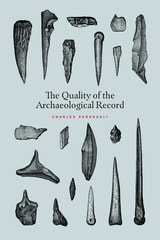
The Quality of the Archaeological Record
Charles Perreault
University of Chicago Press, 2019
In The Quality of the Archaeological Record, Charles Perreault shows that archaeology not only faces a parallel problem, but may also find a model in the rise of paleobiology for a shift in the science and theory of the field. To get there, he proposes a more macroscale approach to making sense of the archaeological record, an approach that reveals patterns and processes not visible within the span of a human lifetime, but rather across an observation window thousands of years long and thousands of kilometers wide. Just as with the fossil record, the archaeological record has the scope necessary to detect macroscale cultural phenomena because it can provide samples that are large enough to cancel out the noise generated by micro-scale events. By recalibrating their research to the quality of the archaeological record and developing a true macroarchaeology program, Perreault argues, archaeologists can finally unleash the full contributive value of their discipline.
Veins of Devotion
Blood Donation and Religious Experience in North IndiaCopeman, Jacob
Rutgers University Press, 2008
Veins of Devotion details recent collaborations between guru-led devotional movements and public health campaigns to encourage voluntary blood donation in northern India. Focusing primarily on Delhi, Jacob Copeman carefully situates the practice within the context of religious gift-giving, sacrifice, caste, kinship, and nationalism. The book analyzes the operations of several high-profile religious orders that organize large-scale public blood-giving events and argues that blood donation has become a site not only of frenetic competition between different devotional movements, but also of intense spiritual creativity.
Despite tensions between blood banks and these religious groups, their collaboration is a remarkable success storyùthe nation's blood supply is replenished while blood donors discover new devotional possibilities.
Download open access ebook here.