Results by title
146 books match the query 'Collections, Catalogs, Exhibitions' and 11 start with a
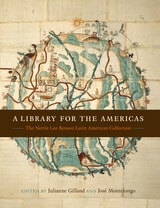
A Library for the Americas
The Nettie Lee Benson Latin American CollectionEdited by Julianne Gilland and José Montelongo
University of Texas Press, 2018
Founded in 1921, the Nettie Lee Benson Latin American Collection at the University of Texas at Austin has become one of the world’s great libraries for the study of Latin America, as well as the largest university library collection of Latin American materials in the United States. Encompassing all areas of the Western Hemisphere that were ever part of the Spanish or Portuguese empires, the Benson Collection documents Latin American history and culture from the first European contacts to the current activities of Latinas/os in the United States. Scholars, students, and members of the public from around the world regularly use the multifaceted, multimedia resources of the Benson.
Showcasing the incredible depth, diversity, and history of the Benson Collection, A Library for the Americas presents rare books and manuscripts, maps, photographs, music, oral histories, art and objects dating from the early 1500s to the present. Images of and captions for these materials are paired with a series of essays and reflections by distinguished scholars of Latin American and Latina/o studies, who describe the role that the Benson Collection has played in the research and intellectual contributions that have defined their careers. As a whole, the book celebrates the remarkable place for learning that is the Benson Collection, while not shying away from larger questions about what it means to have a monumental library and archive devoted to Latin America in the United States.

A Light in the Dark
Joseph Wright of DerbyJulia Siemon
J. Paul Getty Trust, The, 0
A timely reexamination of Joseph Wright’s captivating “candlelight” paintings, featuring the recently rediscovered Two Boys with a Bladder.
The dramatic “candlelight” paintings of Joseph Wright of Derby (1734–1797) cast a spell, enthralling viewers with striking scenes that portray human curiosity, the quiet intensity of domestic life, and the excitement of scientific discovery. With a variety of brushstrokes—dabbed here, whiskered there, and dragged elsewhere—Wright pushed boundaries with the transformative power of light. In 2020, the Getty Museum acquired the newly rediscovered Two Boys with a Bladder (1767), a luminous study of innovation, intimacy, and artistic brilliance that challenged established assumptions about Wright and sparked renewed interest in his experiments with light.
A Light in the Dark presents new research to uncover the origins of Two Boys and expand our understanding of Wright's early candlelights, tracing the invention and initial development of his distinctive style. Whereas recent scholarship has maintained an outward approach that ties the artist’s oeuvre to places that he visited, this volume returns the focus to Wright himself—his biography, technique, and hometown of Derby—in a much-needed reexamination. Complete with fresh historical and technical evidence, this is a fascinating look into the inspirations, aspirations, and experiments behind some of the most remarkable paintings in the history of British art.
This volume is published to accompany an exhibition on view at the J. Paul Getty Museum at the Getty Center from November 24, 2026, to March 14, 2027.
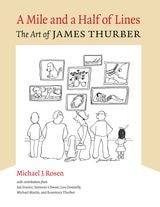
A Mile and a Half of Lines
The Art of James ThurberMichael J. Rosen, with contributions from Ian Frazier, Seymour Chwast, Liza Donnelly, Michael Maslin, and Rosemary Thurber
The Ohio State University Press, 2019
Including some 260 drawings, this collection is the first comprehensive focus on his work as an artist, a cartoonist, and an illustrator. With commentary from a host of preeminent cartoonists and writers, including Ian Frazier, Seymour Chwast, and Michael Maslin, A Mile and a Half of Lines celebrates the significance of Thurber’s spontaneous, unstudied, and novel drawing style that not only altered the nature of American cartooning but also expanded the very possibilities of an illustrated line. Coinciding with the first major retrospective of Thurber’s art presented by the Columbus Museum of Art in 2019, A Mile and a Half of Lines showcases both classic Thurber as well as visual material never before seen in print.
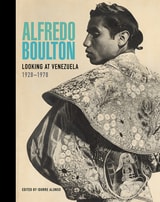
Alfredo Boulton
Looking at Venezuela, 1928–1978Idurre Alonso
J. Paul Getty Trust, The, 0
Alfredo Boulton (1908–1995) is considered one of the most important champions of modern art in Venezuela and a key intellectual of twentieth-century modernism. He was a pioneer of modern photography, an art critic, a researcher and historian of Venezuelan art, a friend to many of the great artists and architects of the twentieth century, and an expert on the imagery of the heroes of his country’s independence.
Yet, Boulton is shockingly underrecognized outside of his native land. The few exhibitions related to his work have focused exclusively on his photographic production; never has there been a project that looks at the full range of Boulton’s efforts, foregrounding his influence on the shaping of Venezuelan art. This volume addresses these lacunae by analyzing Boulton’s groundbreaking photographic practice, his central role in the construction of a modern national artistic canon, and his influence in formalizing and developing art history and criticism in Venezuela. Based on the extensive materials held in Boulton’s archive at the Getty Research Institute, Alfredo Boulton brings together essays by leading scholars in the field to offer a commanding, original perspective on his contributions to the formation of a distinctive modernity at home and beyond.
This volume is published to accompany an exhibition on view at the Getty Research Institute at the Getty Center from August 29, 2023, to January 21, 2024.
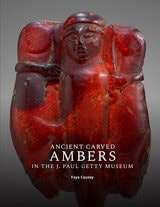
Ancient Carved Ambers in the J. Paul Getty Museum
Faya Causey
J. Paul Getty Trust, The, 0
The catalogue is preceded by a general introduction to ancient amber (which was also published in 2012 as a stand-alone print volume titled Amber and the Ancient World). Through exquisite visual examples and vivid classical texts, this book examines the myths and legends woven around amber—its employment in magic and medicine, its transport and carving, and its incorporation into jewelry, amulets, and other objects of prestige. This publication highlights a group of remarkable amber carvings at the J. Paul Getty Museum.
This catalogue was first published in 2012 at museumcatalogues.getty.edu/amber/. The present online edition of this open-access publication was migrated in 2019 to www.getty.edu/publications/ambers/; it features zoomable, high-resolution photography; free PDF, EPUB, and Kindle/MOBI downloads of the book; and JPG downloads of the catalogue images.
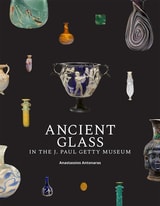
Ancient Glass in the J. Paul Getty Museum
Anastassios Antonaras
J. Paul Getty Trust, The, 2024
The J. Paul Getty Museum’s collection of ancient glass—astonishingly delicate, richly hued, and fancifully shaped—is among the most celebrated in the United States. Ranging from the Bronze Age to the medieval period (1500 BCE–1000 CE), the 584 objects included in this publication originated from a wide geographical area, including the Middle East, the Mediterranean, and central Europe.
This catalogue, written by acclaimed scholar Anastassios Antonaras, begins with a fascinating essay on the history of glassmaking—a highly technical art form that is still practiced similarly today—and continues with detailed and informative entries on the works. Each entry is accompanied by vivid photography. The book also includes a history of the collection, glossary of glassmaking terms, technical study, and full bibliography.
The free online edition of this open-access publication is available at getty.edu/publications/ancient-glass/ and includes 360-degree views and zoomable high-resolution photography. Also available are free PDF and EPUB downloads of the book, and JPG downloads of the main catalogue images.
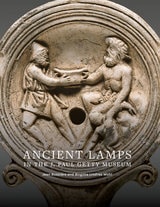
Ancient Lamps in the J. Paul Getty Museum
Jean Bussière
J. Paul Getty Trust, The, 2017
Reflecting the Getty's commitment to open content, Ancient Lamps in the J. Paul Getty Museum is available online at http://www.getty.edu/publications/ancientlamps and may be downloaded free of charge in multiple formats, including PDF, MOBI/Kindle, and EPUB, and features zoomable images and multiple views of every lamp, an interactive map drawn from the Ancient World Mapping Center, and bibliographic references.
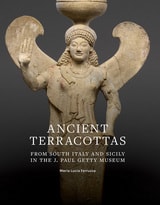
Ancient Terracottas from South Italy and Sicily in the J. Paul Getty Museum
Maria Lucia Ferruzza
J. Paul Getty Trust, The, 2016
Reflecting the Getty's commitment to open content, Ancient Terracottas from South Italy and Sicily in the J. Paul Getty Museum is available online at www.getty.edu/publications/terracottas and may be downloaded for free.
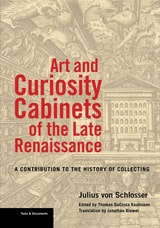
Art and Curiosity Cabinets of the Late Renaissance
A Contribution to the History of CollectingJulius von Schlosser
J. Paul Getty Trust, The, 2021
For the first time, the pioneering book that launched the study of art and curiosity cabinets is available in English.
Julius von Schlosser’s Die Kunst- und Wunderkammern der Spätrenaissance (Art and Curiosity Cabinets of the Late Renaissance) is a seminal work in the history of art and collecting. Originally published in German in 1908, it was the first study to interpret sixteenth- and seventeenth-century cabinets of wonder as precursors to the modern museum, situating them within a history of collecting going back to Greco-Roman antiquity. In its comparative approach and broad geographical scope, Schlosser’s book introduced an interdisciplinary and global perspective to the study of art and material culture, laying the foundation for museum studies and the history of collections. Schlosser was an Austrian professor, curator, museum director, and leading figure of the Vienna School of art history whose work has not achieved the prominence of his contemporaries until now.
This eloquent and informed translation is preceded by Thomas DaCosta Kaufmann’s substantial introduction. Tracing Schlosser’s biography and intellectual formation in Vienna at the turn of the twentieth century, it contextualizes his work among that of his contemporaries, offering a wealth of insights along the way.
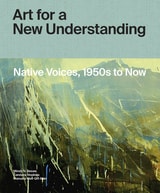
Art for a New Understanding
Native Voices, 1950s to NowMindy N. Besaw
University of Arkansas Press, 2018
This fully illustrated volume includes essays by art historians and historians and reflections by the artists included in the collection. Also included are key contemporary writings—from the 1950s onward—by artists, scholars, and critics, investigating the themes of transculturalism and pan-Indian identity, traditional practices conducted in radically new ways, displacement, forced migration, shadow histories, the role of personal mythologies as a means to reimagine the future, and much more.
As both a survey of the development of Indigenous art from the 1950s to the present and a consideration of Native artists within contemporary art more broadly, Art for a New Understanding expands the definition of American art and sets the tone for future considerations of the subject. It is an essential publication for any institution or individual with an interest in contemporary Native American art, and an invaluable resource in ongoing scholarly considerations of the American contemporary art landscape at large.
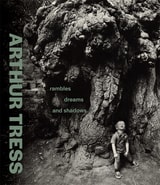
Arthur Tress
Rambles, Dreams, and ShadowsJames A. Ganz
J. Paul Getty Trust, The, 2023
Arthur Tress (b. 1940) is a singular figure in the landscape of postwar American photography. His seminal series, The Dream Collector, depicts Tress’s interests in dreams, nightmares, fantasies, and the unconscious and established him as one of the foremost proponents of magical realism at a time when few others were doing staged photography.
This volume presents the first critical look at Tress’s early career, contextualizing the highly imaginative, fantastic work he became known for while also examining his other interrelated series: Appalachia: People and Places; Open Space in the Inner City; Shadow; and Theater of the Mind. James A. Ganz, Mazie M. Harris, and Paul Martineau plumb Tress’s work and archives, studying ephemera, personal correspondence, unpublished notes, diaries, contact sheets, and more to uncover how he went from earning his living as a social documentarian in Appalachia to producing surreal work of “imaginative fiction.” This abundantly illustrated volume imparts a fuller understanding of Tress’s career and the New York photographic scene of the 1960s and 1970s.
This volume is published to accompany an exhibition on view at the J. Paul Getty Museum at the Getty Center from October 31, 2023, to February 18, 2024.