Results by title
14 books match the query 'Collections & Anthologies'

Crossroads of Imagination
Czech Fantastic Literature 1831–1945Edited by Carleton Bulkin
Karolinum Press, 2026
The first anthology of early Czech fantastic writing in translation.
Crossroads of Imagination is a rare English-language study of modern science fiction’s precursors beyond the U.S. and Britain. Many translated for the first time, these thirty texts reflect a rich Euro-Atlantic tradition from the Romantic age to World War II. Authors include Jakub Arbes, Karel Čapek, Jiří Karásek ze Lvovic, Ladislav Klíma, Jiří Mordechai Langer, Jan Neruda, Emilie Procházková, Jan Weiss, and Julius Zeyer. The anthology highlights women’s, Jewish, and queer voices.
Prefaces to each selection uncover how new ideas and technologies shaped the European fantastic—positivism, mistrust of elites, pacifism, spiritism, and xenophobia, alongside expansions in communications, transportation, electrification, and technical education. Comparative essays and annotations look beyond “major” literatures and emphasize those of East-Central Europe. Archival images enliven this collection. General and genre readers alike will discover new stories and authors, as well as a fantastic tradition shared across Europe and North America before the advent of modern science fiction.
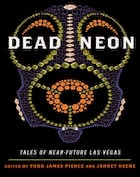
Dead Neon
Tales of Near-Future Las VegasTodd Pierce
University of Nevada Press, 2010
Las Vegas is considered a modern icon of excess. It offers every imaginable extreme of greed, pleasure, and despair, all supported by technology that enhances fantasy and allows residents and visitors alike to forget reality and responsibility. The authors of the fourteen stories in Dead Neon imagine Sin City in the near future, when excess has led to social, environmental, or economic collapse. Their stories range from futuristic casinos to the seared post-apocalyptic desert, from the struggle to survive in a repressive theocracy to the madness of living in a world where most life forms and all moral codes have vanished. Dead Neon explores the possible future of America by examining the near future of Las Vegas. The authors, all either Vegas-based or intimately familiar with the city, capture its unique rhythms and flavor and probe its potential for evoking the fullest range of the human spirit in settings of magic, horror, and despair.
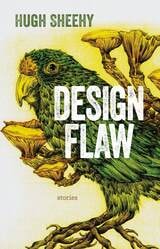
Design Flaw
StoriesHugh Sheehy
Acre Books, 2022
These are tales of seekers, often damaged, who find themselves caught up in skewed realities, facing lurking threats, violent deaths, strange entities, and alienating technologies. Confronted with unsettling, escalating, circumstances, the disparate cast of characters are driven toward self-revelation and perverse moments of poignancy.
A troubled high schooler traps a peer in an underground storage space. A traumatized felon returns home to rob the man who molested him as a child. A videogame help-line operator suspects a regular caller, obsessed with a disturbing role-playing game, of real-life misdeeds. In the title story, an unhappy couple adopts a “designer animal,” a genetic hybrid created to be the perfect pet. But the “grot” makes trouble in the neighborhood, becoming emblematic of a deeper problem. “Something is wrong with the world,” the narrator’s husband explains. “A design flaw. It’s so thoroughly corrupted, I’m not sure how to fix it.”
Inventive and unpredictable, these thirteen stories are wholly immersive, showing Sheehy at his captivating best.
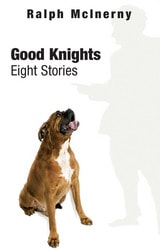
Good Knights
Ralph McInerny
St. Augustine's Press, 2010
These stories represent an intermediate stage in the evolution of the Knight brothers in Ralph McInerny’s fiction. In The Noonday Devil, Phil, in his capacity as private detective, was fairly close to the action, but by no means the major character. Roger, his blimp-sized brother, entered obliquely into the story but ended by starring in the finale.
Readers liked them, in particular Roger. So McInerny brought them back in Easeful Death, where they are far more central and Roger occupies much space, physically and narratively. And so it might have remained. When McInerny was asked to do a Notre Dame series of mysteries, he decided to bring Roger to South Bend as the Huneker Professor of Catholic Studies, accompanied by the semi-retired Phil, who has the full menu of Notre Dame sports to keep him occupied. Prior to starting the series, McInerny wanted to reacquaint himself with the Knights and hit upon the idea of doing a series of Knight brothers stories in Crisis, a magazine he founded with Michael Novak. Before moving them to South Bend, he wanted to see them in action, working out of New York, always driving in the specially designed van, never flying, to the cities were their client lived.
Good Knights is the result of putting these eight Knights brothers’ stories together. Call them finger exercises in character. The response to them in the magazine was gratifying, and with them behind him, McInerny launched the Notre Dame series, with On This Rockne in 1996, thirteen years and thirteen novels ago. But the origins of that successful series is seen here.
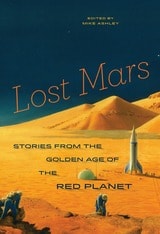
Lost Mars
Stories from the Golden Age of the Red PlanetEdited by Mike Ashley
University of Chicago Press, 2018
An antique-shop owner gets a glimpse of the Red Planet through an intriguing artifact. A Martian’s wife contemplates the possibility of life on Earth. A resident of Venus describes his travels across the two alien planets. From an arid desert to an advanced society far superior to that of Earth, portrayals of Mars have differed radically in their attempts to uncover the truth about our neighboring planet.
Since the 1880s, after an astronomer first described “channels” on the surface of Mars, writers have been fascinated with the planet, endlessly speculating on what life on Mars might look like and what might happen should we make contact with the planet's inhabitants. This wonderful collection offers ten wildly imaginative short stories from the golden age of science fiction by such classic sci-fi writers as H.G. Wells, Ray Bradbury, and J. G. Ballard, as well as hard-to-find stories by unjustly forgotten writers from the genre.
Assembled and introduced by acclaimed anthologist Mike Ashley, these stories vividly evoke a time when notions of life on other planets—from vegetation and water to space invaders and utopian societies—were new and startling. As we continue to imagine landing people on Mars, these stories are well worth revisiting as gripping and vivid dispatches from futurists past.
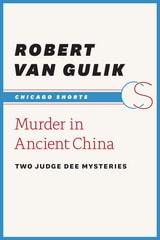
Murder in Ancient China
Two Judge Dee MysteriesRobert van Gulik
University of Chicago Press, 2013

My Daughter's Eyes and Other Stories
StoriesAnnecy Báez
Northwestern University Press, 2007
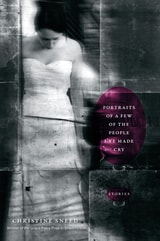
Portraits of a Few of the People I’ve Made Cry
StoriesChristine Sneed
University of Massachusetts Press, 2010
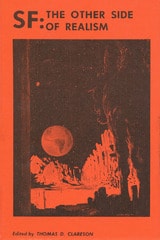
SF
The Other Side of RealismThomas D. Clareson
University of Wisconsin Press, 1971
A collection of twenty-five essays from eight countries, illustrating the many approaches to science fiction.
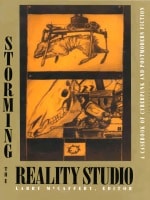
Storming the Reality Studio
A Casebook of Cyberpunk & Postmodern Science FictionLarry McCaffery, ed.
Duke University Press, 1992
By bringing together original fiction by well-known contemporary writers (William Burroughs, Thomas Pynchon, Don DeLillo, Kathy Acker, J. G. Ballard, Samuel R. Delany), critical commentary by some of the major theorists of postmodern art and culture (Jacques Derrida, Fredric Jameson, Timothy Leary, Jean-François Lyotard), and work by major practitioners of cyberpunk (William Gibson, Rudy Rucker, John Shirley, Pat Cadigan, Bruce Sterling), Storming the Reality Studio reveals a fascinating ongoing dialog in contemporary culture.
What emerges most strikingly from the colloquy is a shared preoccupation with the force of technology in shaping modern life. It is precisely this concern, according to McCaffery, that has put science fiction, typically the province of technological art, at the forefront of creative explorations of our unique age.
A rich opporunity for reading across genres, this anthology offers a new perspective on the evolution of postmodern culture and ultimately shows how deeply technological developments have influenced our vision and our art.
Selected Fiction contributors: Kathy Acker, J. G. Ballard, William S. Burroughs, Pat Cadigan, Samuel R. Delany, Don DeLillo, William Gibson, Harold Jaffe, Richard Kadrey, Marc Laidlaw, Mark Leyner, Joseph McElroy, Misha, Ted Mooney, Thomas Pynchon, Rudy Rucker, Lucius Shepard, Lewis Shiner, John Shirley, Bruce Sterling, William Vollman
Selected Non-Fiction contributors: Jean Baudrillard, Jacques Derrida, Joan Gordon, Veronica Hollinger, Fredric Jameson, Arthur Kroker and David Cook, Timothy Leary, Jean-François Lyotard, Larry McCaffery, Brian McHale, Dave Porush, Bruce Sterling, Darko Suvin, Takayuki Tatsumi
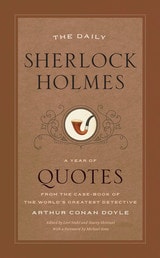
The Daily Sherlock Holmes
A Year of Quotes from the Case-Book of the World’s Greatest DetectiveArthur Conan Doyle
University of Chicago Press, 2019
“Dr. Watson, Mr. Sherlock Holmes,” said Stamford, introducing us.
“How are you?” he said cordially, gripping my hand with a strength for which I should hardly have given him credit. “You have been in Afghanistan, I perceive.”
“How on earth did you know that?” I asked in astonishment.
“Never mind,” said he, chuckling to himself.
At that first sight of Watson, Sherlock Holmes made brilliant deductions. But even he couldn’t know that their meeting was inaugurating a friendship that would make himself and the good Doctor cultural icons, as popular as ever more than a century after their 1887 debut. Through four novels and fifty-six stories, Arthur Conan Doyle led the pair through dramatic adventures that continue to thrill readers today, offering an unmatched combination of skillful plotting, period detail, humor, and distinctive characters. For a Holmes fan, there are few pleasures comparable to returning to his richly imagined world—the gaslit streets of Victorian London, the companionable clutter of 221B Baker Street, the reliable fuddlement (and nerves of steel) of Watson, the perverse genius of Holmes himself.
It’s all there in The Daily Sherlock Holmes, the perfect bedside companion for fans of the world’s only consulting detective. Within these pages readers will find a quotation for every day of the year, drawn from across the Conan Doyle canon. Beloved characters and familiar lines recall favorite stories and scenes, while other passages remind us that Conan Doyle had a way with description and a ready wit. Moriarty and Mycroft, Lestrade and Mrs. Hudson; the Hound, the Red-Headed League, the Speckled Band, and the dread Reichenbach Falls—it’s all here, anchored, of course, in that unforgettable duo of Holmes and Watson. No book published this year will bring a Holmes fan more pleasure. Come, readers. The game is afoot.
The Path and the Gate
Mormon Short FictionAndrew Hall
Signature Books, 2023

The Science Fiction of Mark Clifton
Edited by Barry N. Malzberg and Martin H. Greenberg.
Southern Illinois University Press, 1980
This collection of the best short stories of Mark Clifton makes these fine tales readily available for the first time in two decades.
Winner with Frank Riley of the 1955 Hugo Award for They’d Rather Be Right,Clifton has for a variety of reasons unrelated to the quality of his writing all but disappeared from the awareness of today’s science fiction audience. Never a prolific writer he had published only about twenty-five short stories before his death in 1963.But with those stories and his three novels he irrevocably altered the course of contemporary science fiction.
Almost single-handedly he introduced the full range of psychological insights to the commonly occurring themes of the genre—alien invasion, expanding technology, revolution against political theocracy, and space exploration and colonization—to ever more truthfully portray how humanity would react to a future that could be either mindless or intellectually stunning.
With his first published story, “What Have I Done?” Clifton initiated the theme of a starkly realistic world in which, at its best, humanity is inalterably vile—a theme that became an inextricable part of all his subsequent works. In his later works Clifton occasionally clothed his bitter indictment in the garb of comedy.
The stories collected here include “What Have I Done?” “Star, Bright,” “Crazy Joey,” “What Thin Partitions,” “Sense from Thought Divide,” “How Allied,” “Remembrance and Reflection,” “Hide! Hide! Witch!” “Clerical Error,” “What Now, Little Man?” and “Hang Head, Vandal!”
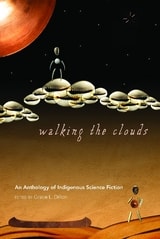
Walking the Clouds
An Anthology of Indigenous Science FictionEdited by Grace L. Dillon
University of Arizona Press, 2012
In this first-ever anthology of Indigenous science fiction Grace Dillon collects some of the finest examples of the craft with contributions by Native American, First Nations, Aboriginal Australian, and New Zealand Maori authors. The collection includes seminal authors such as Gerald Vizenor, historically important contributions often categorized as "magical realism" by authors like Leslie Marmon Silko and Sherman Alexie, and authors more recognizable to science fiction fans like William Sanders and Stephen Graham Jones. Dillon's engaging introduction situates the pieces in the larger context of science fiction and its conventions.
Organized by sub-genre, the book starts with Native slipstream, stories infused with time travel, alternate realities and alternative history like Vizenor's "Custer on the Slipstream." Next up are stories about contact with other beings featuring, among others, an excerpt from Gerry William's The Black Ship. Dillon includes stories that highlight Indigenous science like a piece from Archie Weller's Land of the Golden Clouds, asserting that one of the roles of Native science fiction is to disentangle that science from notions of "primitive" knowledge and myth. The fourth section calls out stories of apocalypse like William Sanders' "When This World Is All on Fire" and a piece from Zainab Amadahy's The Moons of Palmares. The anthology closes with examples of biskaabiiyang, or "returning to ourselves," bringing together stories like Eden Robinson's "Terminal Avenue" and a piece from Robert Sullivan's Star Waka.
An essential book for readers and students of both Native literature and science fiction, Walking the Clouds is an invaluable collection. It brings together not only great examples of Native science fiction from an internationally-known cast of authors, but Dillon's insightful scholarship sheds new light on the traditions of imagining an Indigenous future.