Results by title
18 books match the query 'Collective Action'
A Unified Theory of Collective Action and Social Change
Luis Fernando Medina
University of Michigan Press, 2007
The notion that groups form and act in ways that respond to objective, external costs and benefits has long been the key to accounting for social change processes driven by collective action. Yet this same notion seems to fall apart when we try to explain how collectivities emerge out of the choices of individuals. This book overcomes that dilemma by offering an analysis of collective action that, while rooted in individual decision making, also brings out the way in which objective costs and benefits can impede or foster social coordination. The resulting approach enables us to address the causes and consequences of collective action with the help of the tools of modern economic theory. To illustrate this, the book applies the tools it develops to the study of specific collective action problems such as clientelism, focusing on its connections with economic development and political redistribution; and wage bargaining, showing its economic determinants and its relevance for the political economy of the welfare state.
"Medina's study is a great step forward in the analytics of collective action. He shows the inadequacies of currently standard models and shows that straightforward revisions reconcile rational-choice and structural viewpoints. It will influence all future work."
—Kenneth Arrow, Stanford University
"Olson, Schelling, and now Medina. A Unified Theory deepens our understanding of collective action and contributes to the foundations of our field. A major work."
—Robert H. Bates, Harvard University
"Medina thinks that the main problem of social action is not whether or not to cooperate but how to do it. To this end he has produced an imaginative approach to analyzing strategic coordination problems that produces plausible predictions in a range of circumstances."
—John Ferejohn, Stanford University
Luis Fernando Medina is Associate Professor in the Department of Politics at the University of Virginia.
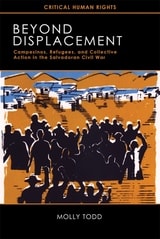
Beyond Displacement
Campesinos, Refugees, and Collective Action in the Salvadoran Civil WarMolly Todd
University of Wisconsin Press, 2010
During the civil war that wracked El Salvador from the mid-1970s to the early 1990s, the Salvadoran military tried to stamp out dissidence and insurgency through an aggressive campaign of crop-burning, kidnapping, rape, killing, torture, and gruesome bodily mutilations. Even as human rights violations drew world attention, repression and war displaced more than a quarter of El Salvador’s population, both inside the country and beyond its borders. Beyond Displacement examines how the peasant campesinos of war-torn northern El Salvador responded to violence by taking to the hills. Molly Todd demonstrates that their flight was not hasty and chaotic, but was a deliberate strategy that grew out of a longer history of collective organization, mobilization, and self-defense.
Coethnicity
Diversity and the Dilemmas of Collective ActionJames Habyarimana
Russell Sage Foundation, 2009
Collective Action and the Civil Rights Movement
Dennis Chong
University of Chicago Press, 1991

Collective Action
A Bad Subjects AnthologyEdited by Megan Shaw Prelinger and Joel Schalit
Pluto Press, 2004
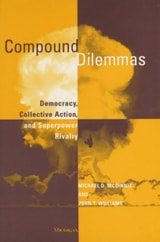
Compound Dilemmas
Democracy, Collective Action, and Superpower RivalryMichael Dean McGinnis and John T. Williams
University of Michigan Press, 2001
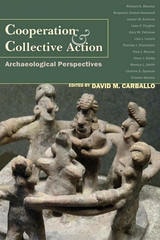
Cooperation and Collective Action
Archaeological PerspectivesDavid M. Carballo
University Press of Colorado, 2013
Disentangling the motivations and institutions that foster group cooperation among competitive individuals remains one of the few great conundrums within evolutionary theory. The breadth and material focus of archaeology provide a much needed complement to existing research on cooperation and collective action, which thus far has relied largely on game-theoretic modeling, surveys of college students from affluent countries, brief ethnographic experiments, and limited historic cases. In Cooperation and Collective Action, diverse case studies address the evolution of the emergence of norms, institutions, and symbols of complex societies through the last 10,000 years. This book is an important contribution to the literature on cooperation in human societies that will appeal to archaeologists and other scholars interested in cooperation research.

Creating Worlds Otherwise
Art, Collective Action, and (Post)ExtractivismPaula Serafini
Vanderbilt University Press, 2022
Extractivism has increasingly become the ground on which activists and scholars in Latin America frame the dynamics of ecological devastation, accumulation of wealth, and erosion of rights. These maladies are the direct consequences of long-standing extraction-oriented economies, and more recently from the expansion of the extractive frontier and the implementation of new technologies in the extraction of fossil fuels, mining, and agriculture. But the fields of sociology, political ecology, anthropology, and geography have largely ignored the role of art and cultural practices in studies of extractivism and post-extractivism.
The field of art theory, on the other hand, has offered a number of texts that put forward insightful analyses of artwork addressing extraction, environmental devastation, and the climate crisis. However, an art theory perspective that does not engage firsthand and in depth with collective action remains limited and fails to provide an account of the role, processes, and politics of art in anti- and post-extractivist movements.
Creating Worlds Otherwise examines the narratives that subaltern groups generate around extractivism, and how they develop, communicate, and mobilize these narratives through art and cultural practices. It reports on a six-year project on creative resistance to extractivism in Argentina and builds on long-term engagement working on environmental justice projects and campaigns in Argentina and the UK.
It is an innovative contribution to the fields of Latin American studies, political ecology, cultural studies, and art theory, and addresses pressing questions regarding what post-extractivist worlds might look like as well as how such visions are put into practice.
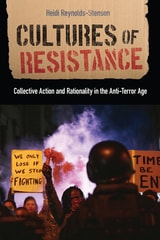
Cultures of Resistance
Collective Action and Rationality in the Anti-Terror AgeHeidi Reynolds-Stenson
Rutgers University Press, 2022
Cultures of Resistance provides new insight on a long-standing question: whether government efforts to repress social movements produce a chilling effect on dissent, or backfire and spur greater mobilization. In recent decades, the U.S. government’s repressive capacity has expanded dramatically, as the legal, technological, and bureaucratic tools wielded by agents of the state have become increasingly powerful. Today, more than ever, it is critical to understand how repression impacts the freedom to dissent and collectively express political grievances. Through analysis of activists’ rich and often deeply moving experiences of repression and resistance, the book uncovers key group processes that shape how individuals understand, experience, and weigh these risks of participating in collective action. Qualitative and quantitative analyses demonstrate that, following experiences of state repression, the achievement or breakdown of these group processes, not the type or severity of repression experienced, best explain why some individuals persist while others disengage. In doing so, the book bridges prevailing theoretical divides in social movement research by illuminating how individual rationality is collectively constructed, mediated, and obscured by protest group culture.
DOING THE RIGHT THING
Collective Action and Procedural Choice in the New Legislative ProcessLawrence Becker
The Ohio State University Press, 2005
Doing the Right Thing examines the use of extraordinary legislative procedures in four cases in the U.S. Congress to accomplish policy objectives that many political scientists would argue are impossible to achieve. It not only shows that Congress is capable of imposing parochial costs in favor of general benefits but it argues that Congress is able to do so in a variety of policy areas through the use of very different kinds of procedural mechanisms that are underappreciated.
The book opens by developing a theory of procedural choice to explain why Congress chooses to delegate in differing degrees in dealing with similar kinds of policy problems. The theory is then applied to four narrative case studies—military base closures, the Yucca Mountain Project, NAFTA, and the Tax Reform Act of 1986—that both show the variety of factors that impact procedural choice and highlight how our national legislature was able to “do the right thing.”
The book concludes by pointing to the variety of ways in which Congress will be confronted with similar policy problems in the coming years and offering some lessons from these cases about what kinds of procedures and policy outcomes we might expect. In short, Congress is remarkably adept at “doing the right thing,” even under difficult circumstances, but only when legislators are willing to manipulate procedures in all the necessary ways.
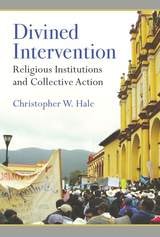
Divined Intervention
Religious Institutions and Collective ActionChristopher W. Hale
University of Michigan Press, 2020
Divined Intervention provides an innovative institutionalist account for why religion enables political activism in some settings, but not others. Christopher W. Hale argues that decentralized religious institutions facilitate grassroots collective action, and he uses a multimethod approach to test this explanation against several theoretical alternatives. Utilizing nationally representative Mexican survey data, the book’s statistical analyses demonstrate that decentralization by the Catholic Church is positively associated with greater individual political activism across the country. Using case studies centered in the Mexican states of Chiapas, Yucatán, and Morelos, the author shows that religious decentralization encourages reciprocal cooperative interactions at a local level. This then increases the ability of religion to provide goods and services to its local adherents. These processes then prompt the growth of organizational capacities at the grassroots, enabling secular political activism.
Because this theoretical framework is grounded in human behavior, it shows how local institutions politically organize at the grassroots level. Divined Intervention also offers an improved understanding of religion’s relationship with political activism, a topic of ever-increasing significance as religion fuels political engagement across the globe. The book further synthesizes seemingly disparate approaches to the study of collective action into a cohesive framework. Finally, there is some debate as to the impact of ethnic diversity on the provision of public goods, and this study helps us understand how local institutional configurations can enable collective action across ethnic boundaries.
Empowering Exporters
Reciprocity, Delegation, and Collective Action in American Trade PolicyMichael J. Gilligan
University of Michigan Press, 1997
How Humans Cooperate
Confronting the Challenges of Collective ActionRichard E. Blanton
University Press of Colorado, 2016
In How Humans Cooperate, Richard E. Blanton and Lane F. Fargher take a new approach to investigating human cooperation, developed from the vantage point of an "anthropological imagination." Drawing on the discipline’s broad and holistic understanding of humans in biological, social, and cultural dimensions and across a wide range of temporal and cultural variation, the authors unite psychological and institutional approaches by demonstrating the interplay of institution building and cognitive abilities of the human brain.
Blanton and Fargher develop an approach that is strongly empirical, historically deep, and more synthetic than other research designs, using findings from fields as diverse as neurobiology, primatology, ethnography, history, art history, and archaeology. While much current research on collective action pertains to local-scale cooperation, How Humans Cooperate puts existing theories to the test at larger scales in markets, states, and cities throughout the Old and New Worlds.
This innovative book extends collective action theory beyond Western history and into a broadly cross-cultural dimension, places cooperation in the context of large and complex human societies, and demonstrates the interplay of collective action and aspects of human cognitive ability. By extending the scope and content of collective action theory, the authors find a fruitful new path to understanding human cooperation.
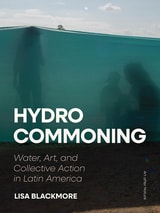
Hydrocommoning
Water, Art, and Collective Action in Latin AmericaLisa Blackmore
University of Minnesota Press, 2027
Reimagining watersheds as living hydrocommons through which artists and communities create more just and sustainable futures
Hydrocommoning explores how artists, activists, and curators coalesce around water in embodied efforts to contest entrenched and enduring forms of harm and degradation. Against the reduction of rivers, streams, and wetlands to mere resources to be managed, Hydrocommoning centers water as a living web of relations through which artists and communities forge creative means of reconnection by moving, weaving, pumping, eating, and listening.
By charting these aesthetic practices, Hydrocommoning shows how artists and organizers across Latin America oppose extractivism, unequal urbanization, ecological degradation, and the erasure of Indigenous water cultures. To cultivate widespread social attunement to vulnerable waters and raise the call for their defense and care, collectives in Brazil, Colombia, Guatemala, and Peru engage in communal meals, sound art, infrastructural interventions, and other practices that Lisa Blackmore theorizes as “hydrocommoning.”
Grounded in five years of experiential fieldwork, archival research, and curatorial projects in Latin America, Blackmore proposes a methodology to work with water as an analytical framework for collective action. Bridging the gap between theory, curating, and community-based practices, Hydrocommoning offers a promising vision of grassroots organizing that actively confronts some of today’s most urgent ecological threats.
Retail e-book files for this title are screen-reader friendly with images accompanied by short alt text and/or extended descriptions.
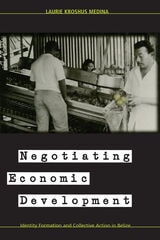
Negotiating Economic Development
Identity Formation and Collective Action in BelizeLaurie Kroshus Medina
University of Arizona Press, 2004
Processes of Collective Action
Edited by Lorenzo Bosi and Stefan Malthaner
Temple University Press, 2027
Whether collective action takes the form of protest campaigns, social movements, political violence or strikes, there is a dynamic nature to the shared goal of effecting change. But whereas most studies look at when collective action begins, the editors and contributors to Processes of Collective Action take a processual approach, looking at how collective action emerges, proceeds, what is achieved, and how different collective actors react to what unfolds.
Bringing together leading scholars of contentious politics, this volume seeks to explore and advance process analysis across different forms of political conflicts, types of actors, and varieties of collective action. Featuring theoretical concepts, methodological tools, and global cutting-edge research, Processes of Collective Action offers a series of case studies and conceptual essays that reflect on crucial issues in and current transformations of collective action.
Contributors: Irina Aguiari, Kenneth T. Andrews, Javier Auyero, Mark R. Beissinger, Kathleen Blee, Donatella della Porta, Mario Diani, Jennifer Earl, Olivier Fillieule, Sarah Gaby, Thomas Hoebel, Chaeyoon Lim, James M. Jasper, Doug McAdam, Anna Milewski, Pamela Oliver, elena pavan, Anastasia Shesterinina, Katherine Sobering, Mary Ellen Stitt, Sidney Tarrow, Katrin Uba, Mattias Wahlström
Reading as Collective Action
Text as TacticsNicholas Hengen Fox
University of Iowa Press, 2017
Reading as Collective Action shifts our focus outward, to another of literature’s powers: the power to reshape our world in very public, very active ways. In this book, you will encounter readers who criticized the Bush administration’s war on terror by republishing poems by writers ranging from Shakespeare to Amiri Baraka everywhere from lampposts to the New York Times. You will read about people in Michigan and Tennessee, who leveraged a community reading program on John Steinbeck’s The Grapes of Wrath to organize support for those in need during the Great Recession and to engage with their neighbors about immigration. You will meet a pair of students who took to public transit to talk with strangers about working-class literature and a trio who created a literary website that reclaimed the working-class history of the Pacific Northwest.
This book challenges dominant academic modes of reading. For adherents of the “civic turn,” it suggests how we can create more politically effective forms of service learning and community engagement grounded in a commitment to tactical, grassroots actions. Whether you’re a social worker or a student, a zine-maker, a librarian, a professor, or just a passionate reader with a desire to better your community, this book shows that when we read texts as tactics, “that book changed my life” can become “that book changed our lives.”

Repertoires and Cycles of Collective Action
Mark Traugott, editor
Duke University Press, 1995
The significance of repertoires—recurrent forms or tactics of social protest— is explored in an essay on eighteenth- and nineteenth-century Britain by the originator of the concept, Charles Tilly. Sidney Tarrow, whose work has most directly linked the concept of repertoires with that of cycles—the recurrent peaks and troughs in the historical incidence of collective action—contributes an essay that focuses on twentieth-century Italy. Other essays investigate the rhythms and logic of social change in contexts as diverse as sixteenth- through nineteenth-century Japan, nineteeth-century Europe, and twentieth-century America. Through inquiries into the consequences of violent repression for social mobilization, the struggle to control the linguistic terms of social conflict, the unacknowledged antecedents of contemporary movements, and the importance of "movement families," this volume demonstrates the usefulness of these two concepts and defines the relationship between them.
Collected from past issues of Social Science History, with a new introduction and two new essays, Repertoires and Cycles of Collective Action will reward an interdisciplinary audience of readers with the extraordinary vitality that emerges from this rich blend of historical perspectives.
Contributors. Charles Brockett, Craig Calhoun, Doug McAdam, Marc Steinberg, Sidney Tarrow, Charles Tilly, Mark Traugott, James White