Results by title
148 books match the query 'Colonization' and 13 start with a

A Biscuit for Your Shoe
Beatrice Upshaw
University of North Texas Press, 2020
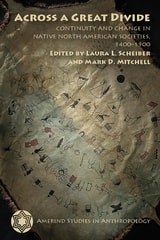
Across a Great Divide
Continuity and Change in Native North American Societies, 1400–1900Edited by Laura L. Scheiber and Mark D. Mitchell
University of Arizona Press, 2010
The contributors address a series of interlocking themes. Several consider the role of indigenous agency in the processes of colonial interaction, paying particular attention to gender and status. Others examine the ways long-standing native political economies affected, and were in turn affected by, colonial interaction. A third group explores colonial-period ethnogenesis, emphasizing the emergence of new native social identities and relations after 1500. The book also highlights tensions between the detailed study of local cases and the search for global processes, a recurrent theme in postcolonial research.
If archaeologists are to bridge the artificial divide separating history from prehistory, they must overturn a whole range of colonial ideas about American Indians and their history. This book shows that empirical archaeological research can help replace long-standing models of indigenous culture change rooted in colonialist narratives with more nuanced, multilinear models of change—and play a major role in decolonizing knowledge about native peoples.
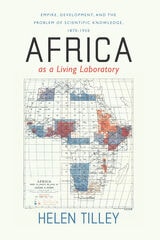
Africa as a Living Laboratory
Empire, Development, and the Problem of Scientific Knowledge, 1870-1950Helen Tilley
University of Chicago Press, 2011
Tropical Africa was one of the last regions of the world to experience formal European colonialism, a process that coincided with the advent of a range of new scientific specialties and research methods. Africa as a Living Laboratory is a far-reaching study of the thorny relationship between imperialism and the role of scientific expertise—environmental, medical, racial, and anthropological—in the colonization of British Africa.
A key source for Helen Tilley’s analysis is the African Research Survey, a project undertaken in the 1930s to explore how modern science was being applied to African problems. This project both embraced and recommended an interdisciplinary approach to research on Africa that, Tilley argues, underscored the heterogeneity of African environments and the interrelations among the problems being studied. While the aim of British colonialists was unquestionably to transform and modernize Africa, their efforts, Tilley contends, were often unexpectedly subverted by scientific concerns with the local and vernacular. Meticulously researched and gracefully argued, Africa as a Living Laboratory transforms our understanding of imperial history, colonial development, and the role science played in both.
Afterlives of Discovery
Speculative Geographies in the Settler Colonial Imaginaryheidi andrea restrepo rhodes
Duke University Press, 2025
Against Extraction
Indigenous Modernism in the Twin CitiesMatt Hooley
Duke University Press, 2024
Alluvium and Empire
The Archaeology of Colonial Resettlement and Indigenous Persistence on Peru’s North CoastParker VanValkenburgh
University of Arizona Press, 2021
The volume draws on nearly ten years of field and archival research to craft a nuanced account of the Reducción General and its aftermath. Written at the intersections of history and archaeology, Alluvium and Empire at once bears witness to the violence of Spanish colonization and highlights Indigenous resilience in the aftermath of resettlement. In the process, VanValkenburgh critiques previous approaches to the study of empire and models a genealogical approach that attends to the open-ended—and often unpredictable—ways in which empires take shape.
Aloha Betrayed
Native Hawaiian Resistance to American ColonialismNoenoe K. Silva
Duke University Press, 2004

American Fantastic
Myths of Violence and RedemptionDerek J. Thiess
University of Wisconsin Press, 2025
Thiess’s interdisciplinary study examines America’s past and present imperial projects, from the Hawaiian Islands to the Eastern Seaboard, as they proliferate in popular story forms. By interrogating American myths, legends, and fantastic narratives across an impressive array of genres, including folk narratives, science fiction, movies, and more, Thiess exposes how the “myth of redemptive violence” manifests in contemporary constructions of America’s fantastic imaginaries.
American Imperial Pastoral
The Architecture of US Colonialism in the PhilippinesRebecca Tinio McKenna
University of Chicago Press, 2017
In American Imperial Pastoral, Rebecca Tinio McKenna examines the design, construction, and use of Baguio, making visible the physical shape, labor, and sustaining practices of the US’s new empire—especially the dispossessions that underwrote market expansion. In the process, she demonstrates how colonialists conducted market-making through state-building and vice-versa. Where much has been made of the racial dynamics of US colonialism in the region, McKenna emphasizes capitalist practices and design ideals—giving us a fresh and nuanced understanding of the American occupation of the Philippines.

American Pentimento
The Invention of Indians and the Pursuit of RichesPatricia Seed
University of Minnesota Press, 2001
Arabs of the Jewish Faith
The Civilizing Mission in Colonial AlgeriaSchreier, Joshua
Rutgers University Press, 2010
At the Hearth of the Crossed Races
A French-Indian Community in Nineteenth-Century Oregon, 1812-1859Melinda Marie Jetté
Oregon State University Press, 2015
Jetté’s study focuses on the “hearth” of this contact: French Prairie, so named for the French-Indian families who resettled the homeland of the Ahantchuyuk Kalapuyans. Although these families sought a middle course in their relations with their various neighbors, their presence ultimately contributed to the Anglo-American colonization of the region. By establishing farming and husbandry operations in the valley, the French-Indian settlers enhanced the Willamette Valley’s appeal as a destination of choice for the Anglo-Americans who later emigrated to the Pacific Northwest via the Oregon Trail.
Upon these emigrants’ arrival, the social space for the people of the “crossed races” diminished considerably, as the Anglo-Americans instituted a system of settler colonialism based on racial exclusion. Like their Native kin, the French-Indian families pursued various strategies to navigate the changing times and Jetté’s study of French Prairie takes on the relationships among all three: the French-Indian families, the indigenous peoples, and the Anglo-American settlers.
With At the Hearth of the Crossed Races, Jetté delivers a social history that deepens our understanding of the Oregon Country in the nineteenth century. This history of French Prairie provides a window into the multi-racial history of the Pacific Northwest and offers an alternative vision of early Oregon in the lives of the biracial French-Indian families whose community challenged notions of white supremacy, racial separation, and social exclusion.
Atlas's Bones
The African Foundations of EuropeD. Vance Smith
University of Chicago Press, 2025
Virgil. Chaucer. Petrarch. These names resonate with many as cornerstones of European culture. Yet, in Atlas’s Bones, D. Vance Smith reveals that much of what is claimed as European culture up to the Middle Ages—its great themes in literature, its sources in political thought, its religious beliefs—originated in the writings of African thinkers like Augustine, Fulgentius, and Martianus Capella, or Europeans who thought extensively about Africa. In fact, a third of Virgil’s Aeneid takes place in Africa. Francis Petrarch believed his most important achievement was his epic Africa; while Geoffrey Chaucer wrote repeatedly about the figures of Scipio Africanus, actually two different men who defeated and destroyed Carthage.
Smith tells the story of how Europe created a false “medieval” version of Africa to acquire resources and power during the era of imperialism and colonialism. The first half of the book, “Reading Africa,” traces Egypt’s, Libya’s, and Carthage’s influence on classical and medieval thinking about Africa, highlighting often ignored literary and legendary traditions, for example, that Alexander the Great named himself the son of an African god. The second part, “Writing Africa,” focuses on how the different cultures of the two great African cities—Carthage and Alexandria—shaped modern literary criticism and political theology and examines the cross-influences of modern anthropology, medieval studies, and colonial law.
Atlas’s Bones firmly re-establishes the significance of Africa in European intellectual history. It will be essential reading for anyone seeking to understand how much of Africa informs our artistic and cultural world.