Results by title

2 books match the query 'Columbia University'
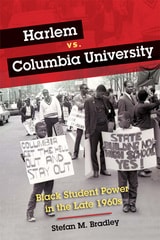
cover of Harlem vs. Columbia University: Black Student Power in the Late 1960s

Harlem vs. Columbia University

Black Student Power in the Late 1960s

Stefan M. Bradley

University of Illinois Press, 2012
In 1968–69, Columbia University became the site for a collision of American social movements. Black Power, student power, antiwar, New Left, and Civil Rights movements all clashed with local and state politics when an alliance of black students and residents of Harlem and Morningside Heights openly protested the school's ill-conceived plan to build a large, private gymnasium in the small green park that separates the elite university from Harlem. Railing against the university's expansion policy, protesters occupied administration buildings and met violent opposition from both fellow students and the police. In this dynamic book, Stefan M. Bradley describes the impact of Black Power ideology on the Students' Afro-American Society (SAS) at Columbia. While white students--led by Mark Rudd and Students for a Democratic Society (SDS)--sought to radicalize the student body and restructure the university, black students focused on stopping the construction of the gym in Morningside Park. Through separate, militant action, black students and the black community stood up to the power of an Ivy League institution and stopped it from trampling over its relatively poor and powerless neighbors. Comparing the events at Columbia with similar events at Harvard, Cornell, Yale, and the University of Pennsylvania, Bradley locates this dramatic story within the context of the Black Power movement and the heightened youth activism of the 1960s. Harnessing the Civil Rights movement's spirit of civil disobedience and the Black Power movement's rhetoric and methodology, African American students were able to establish an identity for themselves on campus while representing the surrounding black community of Harlem. In doing so, Columbia's black students influenced their white peers on campus, re-energized the community's protest efforts, and eventually forced the university to share its power.
[more]
cover of Workplace Justice: Organizing Multi-Identity Movements

Workplace Justice

Organizing Multi-Identity Movements

Sharon Kurtz

University of Minnesota Press, 2002

An unheralded union battle offers new insight into identity politics.

In 1991, Columbia University’s one thousand clerical workers launched a successful campaign for justice in their workplace. This diverse union-two-thirds black and Latina, three-fourths women-was committed to creating an inclusive movement organization and to fighting for all kinds of justice. How could they address the many race and gender injustices members faced, avoid schism, and maintain the unity needed to win? Sharon Kurtz, an experienced union activist and former clerical worker herself, was welcomed into the union and pursued these questions. Using this case study and secondary studies of sister clerical unions at Yale and Harvard, she examines the challenges and potential of identity politics in labor movements.

With the Columbia strike as a point of departure, Kurtz argues that identity politics are valuable for mobilizing groups, but often exclude members and their experiences of oppression. However, Kurtz believes that identity politics should not be abandoned as a component in building movements, but should be reframed-as multi-identity politics. In the end she shows an approach to organizing with great potential impact not only for labor unions but for any social movement.
[more]