Results by title

6 books match the query 'Commercial art'

cover of Artists, Advertising, and the Borders of Art

Artists, Advertising, and the Borders of Art

Michele H. Bogart

University of Chicago Press, 1995

Norman Rockwell and Andy Warhol, J. C. Leyendecker and Georgia O'Keeffe, the Metropolitan Museum of Art and Pepsi-Cola, the avant garde and the Famous Artists Schools, Inc.: these are some of the unexpected pairings encountered in Artists, Advertising, and the Borders of Art. In the first interdisciplinary study of the imagery and practices of commercial artists, Michele H. Bogart explores, in unprecedented detail, the world of commercial art—its illustrators, publishers, art directors, photographers, and painters. She maps out the long, permeable border between art and commerce and expands our picture of artistic culture in the twentieth century.

From the turn of the century through the 1950s, the explosive growth of popular magazines and national advertising offered artists new sources of income and new opportunities for reaching huge audiences. Bogart shows how, at the same time, this change in the marketplace also forced a rethinking of the purpose of the artistic enterprise itself. She examines how illustrators such as Howard Pyle, Charles Dana Gibson, and Norman Rockwell claimed their identities as artists within a market-oriented framework. She looks at billboard production and the growing schism between "art" posters and billboard advertisements; at the new roles of the art director; at the emergence of photography as the dominant advertising medium; and at the success of painters in producing "fine art" for advertising during the 1930s and 1940s.

[more]
cover of Gods in the Bazaar: The Economies of Indian Calendar Art

Gods in the Bazaar

The Economies of Indian Calendar Art

Kajri Jain

Duke University Press, 2007

Gods in the Bazaar is a fascinating account of the printed images known in India as “calendar art” or “bazaar art,” the color-saturated, mass-produced pictures often used on calendars and in advertisements, featuring deities and other religious themes as well as nationalist leaders, alluring women, movie stars, chubby babies, and landscapes. Calendar art appears in all manner of contexts in India: in chic elite living rooms, middle-class kitchens, urban slums, village huts; hung on walls, stuck on scooters and computers, propped up on machines, affixed to dashboards, tucked into wallets and lockets. In this beautifully illustrated book, Kajri Jain examines the power that calendar art wields in Indian mass culture, arguing that its meanings derive as much from the production and circulation of the images as from their visual features.

Jain draws on interviews with artists, printers, publishers, and consumers as well as analyses of the prints themselves to trace the economies—of art, commerce, religion, and desire—within which calendar images and ideas about them are formulated. For Jain, an analysis of the bazaar, or vernacular commercial arena, is crucial to understanding not only the calendar art that circulates within the bazaar but also India’s postcolonial modernity and the ways that its mass culture has developed in close connection with a religiously inflected nationalism. The bazaar is characterized by the coexistence of seemingly incompatible elements: bourgeois-liberal and neoliberal modernism on the one hand, and vernacular discourses and practices on the other. Jain argues that from the colonial era to the present, capitalist expansion has depended on the maintenance of these multiple coexisting realms: the sacred, the commercial, and the artistic; the official and the vernacular.

[more]
cover of Gods in the Time of Democracy

Gods in the Time of Democracy

Kajri Jain

Duke University Press, 2021
In 2018 India's prime minister, Narendra Modi, inaugurated the world's tallest statue: a 597-foot figure of nationalist leader Sardar Patel. Twice the height of the Statue of Liberty, it is but one of many massive statues built following India's economic reforms of the 1990s. In Gods in the Time of Democracy Kajri Jain examines how monumental icons emerged as a religious and political form in contemporary India, mobilizing the concept of emergence toward a radical treatment of art historical objects as dynamic assemblages. Drawing on a decade of fieldwork at giant statue sites in India and its diaspora and interviews with sculptors, patrons, and visitors, Jain masterfully describes how public icons materialize the intersections between new image technologies, neospiritual religious movements, Hindu nationalist politics, globalization, and Dalit-Bahujan verifications of equality and presence. Centering the ex-colony in rethinking key concepts of the image, Jain demonstrates how these new aesthetic forms entail a simultaneously religious and political retooling of the “infrastructures of the sensible.”
[more]
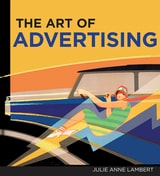
cover of The Art of Advertising, The

The Art of Advertising, The

Julie Anne Lambert

Bodleian Library Publishing, 2020

Advertisers in the nineteenth and early twentieth century pushed the boundaries of printing, manipulated language, inspired a new form of art and exploited many formats, including calendars, bookmarks and games. This collection of essays examines the extent to which these standalone advertisements – which have survived by chance and are now divorced from their original purpose – provide information not just on the sometimes bizarre products being sold, but also on class, gender, Britishness, war, fashion and shopping. Starting with the genesis of an advertisement through the creation of text, image, print and format, the authors go on to examine the changing profile of the consumer, notably the rise of the middle classes, and the way in which manufacturers and retailers identified and targeted their markets. Finally, they look at advertisements as documents that both reveal and conceal details about society, politics and local history. Copiously illustrated from the world-renowned John Johnson Collection of Printed Ephemera and featuring work by influential illustrators John Hassall and Dudley Hardy, this attractive book invites us to consider both the intended and unintended messages of the advertisements of the past.
[more]
cover of The Art of the Blues: A Visual Treasury of Black Music's Golden Age

The Art of the Blues

A Visual Treasury of Black Music's Golden Age

Bill Dahl

University of Chicago Press, 2016

This stunning book charts the rich history of the blues, through the dazzling array of posters, album covers, and advertisements that have shaped its identity over the past hundred years. The blues have been one of the most ubiquitous but diverse elements of American popular music at large, and the visual art associated with this unique sound has been just as varied and dynamic. There is no better guide to this fascinating graphical world than Bill Dahl—a longtime music journalist and historian who has written liner notes for countless reissues of classic blues, soul, R&B, and rock albums. With his deep knowledge and incisive commentary—complementing more than three hundred and fifty lavishly reproduced images—the history of the blues comes musically and visually to life.
           
What will astonish readers who thumb through these pages is the amazing range of ways that the blues have been represented—whether via album covers, posters, flyers, 78 rpm labels, advertising, or other promotional materials. We see the blues as it was first visually captured in the highly colorful sheet music covers of the early twentieth century. We see striking and hard-to-find label designs from labels big (Columbia) and small (Rhumboogie). We see William Alexander’s humorous artwork on postwar Miltone Records; the cherished ephemera of concert and movie posters; and Chess Records’ iconic early albums designed by Don Bronstein, which would set a new standard for modern album cover design.
           
What these images collectively portray is the evolution of a distinctively American art form. And they do so in the richest way imaginable. The result is a sumptuous book, a visual treasury as alive in spirit as the music it so vibrantly captures.

[more]
cover of The Fine Art of Persuasion: Corporate Advertising Design, Nation, and Empire in Modern Japan

The Fine Art of Persuasion

Corporate Advertising Design, Nation, and Empire in Modern Japan

Gennifer Weisenfeld

Duke University Press, 2025

Commercial art is more than just mass-produced publicity; it constructs social and political ideologies that impact the public’s everyday life. In The Fine Art of Persuasion, Gennifer Weisenfeld examines the evolution of Japanese advertising graphic design from the early 1900s through the 1964 Tokyo Olympics, a pivotal design event that rebranded Japan on the world stage. Through richly illustrated case studies, Weisenfeld tells the story of how modern corporations and consumer capitalism transformed Japan’s visual culture and artistic production across the pre- and postwar periods, revealing how commercial art helped constitute the ideological formations of nation- and empire-building. Weisenfeld also demonstrates, how under the militarist regime of imperial Japan, national politics were effectively commodified and marketed through the same mechanisms of mass culture that were used to promote consumer goods. Using a multilayered analysis of the rhetorical intentions of design projects and the context of their production, implementation, and consumption, Weisenfeld offers an interdisciplinary framework that illuminates the importance of Japanese advertising design within twentieth-century global visual culture.
[more]