Results by title
21 books match the query 'Comparative Perspective'
Beyond the City Limits
Urban Policy and Economics Restructuring in Comparative Perspectiveedited by John R. Logan and Todd Swanstrom
Temple University Press, 1991
This book challenges the notion that there is a single, global process of economic restructuring to which cities must submit. The studies in this volume compare urban development in the United States, Western Europe, and Japan, demonstrating that there is significant variety in urban economic restructuring. The contributors emphasize that the economic forces transforming cities from industrial concentrations to postindustrial service centers do not exist apart from politics: all nation-states are heavily involved in the restructuring process.
Contributors: Pierre Clavel, Susan Fainstein, Richard Child Hill, Nancy Kleniewski, Harvey L. Molotch, Michael Parkinson, Edmond Preteceille, Saskia Sassen, H. V. Savitch, John Walton, and the editors.
In the series Conflicts in Urban and Regional Development, edited by John R. Logan and Todd Swanstrom.

Bridges to Knowledge
Foreign Students in Comparative PerspectiveElinor G. Barber, Philip G. Altbach, and Robert G. Myers
University of Chicago Press, 1984

Chimpanzees in Context
A Comparative Perspective on Chimpanzee Behavior, Cognition, Conservation, and WelfareEdited by Lydia M. Hopper and Stephen R. Ross
University of Chicago Press, 2020
After a foreword by Jane Goodall, the book features sections that examine chimpanzee life histories and developmental milestones, behavior, methods of study, animal communication, cooperation, communication, and tool use. The book ends with chapters that consider how we can apply contemporary knowledge of chimpanzees to enhance their care and conservation. Collectively, these chapters remind us of the importance of considering the social, ecological, and cognitive context of chimpanzee behavior, and how these contexts shape our comprehension of chimpanzees. Only by leveraging these powerful perspectives do we stand a chance at improving how we understand, care for, and protect this species.
Crime and Justice, Volume 36
Crime, Punishment, and Politics in Comparative PerspectiveEdited by Michael Tonry
University of Chicago Press Journals, 2008

Crime and Justice, Volume 41
Prosecutors and Politics: A Comparative PerspectiveEdited by Michael Tonry
University of Chicago Press Journals, 2012
Prosecutors are powerful figures in any criminal justice system. They decide what crimes to prosecute, whom to pursue, what charges to file, whether to plea bargain, how aggressively to seek a conviction, and what sentence to demand. In the United States, citizens can challenge decisions by police, judges, and corrections officials, but courts keep their hands off the prosecutor. Curiously, in the United States and elsewhere, very little research is available that examines this powerful public role. And there is almost no work that critically compares how prosecutors function in different legal systems, from state to state or across countries. Prosecutors and Politics begins to fill that void.
Police, courts, and prisons are much the same in all developed countries, but prosecutors differ radically. The consequences of these differences are enormous: the United States suffers from low levels of public confidence in the criminal justice system and high levels of incarceration; in much of Western Europe, people report high confidence and support moderate crime control policies; in much of Eastern Europe, people’s perceptions of the law are marked by cynicism and despair. Prosecutors and Politics unpacks these national differences and provides insight into this key area of social control.
Since 1979 the Crime and Justice series has presented a review of the latest international research, providing expertise to enhance the work of sociologists, psychologists, criminal lawyers, justice scholars, and political scientists. The series explores a full range of issues concerning crime, its causes, and its cure.
Curbing Bailouts
Bank Crises and Democratic Accountability in Comparative PerspectiveGuillermo Rosas
University of Michigan Press, 2009
"Rosas's compelling theory and wide-ranging empirical evidence yield a persuasive but surprising conclusion in light of the financial meltdown of 2008–9. In the event of banking crises, not only do elected governments treat taxpayers better and force bankers and their creditors to pay more for their mistakes, but bankers in democracies are more prudent as a consequence . . . essential reading for all interested in the political economy of crisis and in the future of banking regulation."
---Philip Keefer, Lead Economist, Development Research Group, The World Bank
"Rosas convincingly demonstrates how democratic accountability affects the incidence and resolution of banking crises. Combining formal models, case studies, and cutting-edge quantitative methods, Rosas's book represents a model for political economy research."
---William Bernhard, Professor, Department of Political Science, University of Illinois
"When the financial crises of the 1990s hit Asia, Russia, and Latin America, the U.S. scolded them about the moral hazard problems of bailing out the banks. Now, the shoe is on the other foot, with the U.S. struggling to manage an imploding financial sector. Rosas's study of bank bailouts could not be more timely, providing us with both a framework for thinking about the issue and some sobering history of how things go both right and badly wrong. Democratic accountability proves the crucial factor in making sure bailouts are fair, a point that is as relevant for U.S. policy as for an understanding of the emerging markets."
---Stephan Haggard, Krause Professor, Graduate School of International Relations and Pacific Studies, University of California, San Diego
Banking crises threaten the stability and growth of economies around the world. In response, politicians restore banks to solvency by redistributing losses from bank shareholders and depositors to taxpayers, and the burden the citizenry must bear varies from case to case. Whereas some governments stay close to the prescriptions espoused by Sir Walter Bagehot in the nineteenth century that limit the costs shouldered by taxpayers, others engage in generous bank bailouts at great cost to society. What factors determine a government's response?
In this comparative analysis of late-twentieth-century banking crises, Guillermo Rosas identifies political regime type as the determining factor. During a crisis, powerful financial players demand protection of their assets. Rosas maintains that in authoritarian regimes, government officials have little to shield them from such demands and little incentive for rebuffing them, while in democratic regimes, elected officials must weigh these demands against the interests of the voters---that is, the taxpayers. As a result, compared with authoritarian regimes, democratic regimes show a lower propensity toward dramatic, costly bailouts.
Guillermo Rosas is Assistant Professor in the Department of Political Science and Fellow at the Center in Political Economy at Washington University in St. Louis.
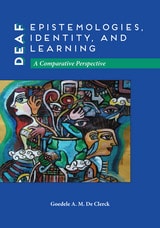
Deaf Epistemologies, Identity, and Learning
A Comparative PerspectiveGoedele A. M. De Clerck
Gallaudet University Press, 2016
Deaf Epistemologies, Identity, and Learning argues for an inclusive approach to the intrinsic human diversity in society, education, and scholarship, and shows how emotions of hope, frustration, and humiliation contribute to the construction of identity and community. De Clerck also considers global to local dynamics in deaf identity, deaf culture, deaf education, and deaf empowerment. She presents empirical research through case studies of the emancipation processes for deaf people in Flanders (a region of Belgium), the United States (specifically, at Gallaudet University in Washington, DC), and the West African nation of Cameroon. These three settings illuminate different phases of emancipation in different contexts, and the research findings are integrated into a broader literature review and subjected to theoretical reflection.
De Clerck’s anthropology of deaf flourishing draws from her critical application of the empowerment paradigm in settings of daily life, research, leadership, and community work, as she explores identity and well-being through an interdisciplinary lens. This work is centered around practices of signed storytelling and posits learning as the primary access and pathway to culture, identity, values, and change. Change driven by the learning process is considered an awakening—and through this awakening, the deaf community can gain hope, empowerment, and full citizenship. In this way, deaf people are allowed to shape their histories, and the result is the elevation of all aspects of deaf lives around the world.
Democracy, Inequality, and Representation in Comparative Perspective
Pablo Beramendi
Russell Sage Foundation, 2008
Democratization by Institutions
Argentina's Transition Years in Comparative PerspectiveLeslie E. Anderson
University of Michigan Press, 2016
In this pioneering study of democratization in Argentina, Leslie Anderson challenges Robert Putnam’s thesis that democracy requires high levels of social capital. She demonstrates in Democratization by Institutions that formal institutions (e.g., the executive, the legislature, the courts) can serve not only as operational parts within democracy but as the driving force toward democracy.
As Anderson astutely observes, the American founders debated the merits of the institutions they were creating. Examining how, and how well, Argentina’s American-style institutional structure functions, she considers the advantages and risks of the separation of powers, checks and balances, legislative policymaking, and strong presidential power. During the democratic transition, the Argentinian state has used institutions to address immediate policy challenges in ways responsive to citizens and thereby to provide a supportive environment in which social capital can develop.
By highlighting the role that institutions can play in leading a nation out of authoritarianism, even when social capital is low, Anderson begins a new conversation about the possibilities of democratization. Democratization by Institutions has much to say not only to Latin Americanists and scholars of democratization but also to those interested in the U.S. constitutional structure and its application in other parts of the world.
Ethnic Federalism
The Ethiopian Experience in Comparative PerspectiveDavid Turton
Ohio University Press, 2006
Since 1991, Ethiopia has gone further than any other country in using ethnicity as the fundamental organizing principle of a federal system of government. And yet this pioneering experiment in “ethnic federalism” has been largely ignored in the growing literature on democratization and ethnicity in Africa and on the accommodation of ethnic diversity in democratic states. Ethnic Federalism brings a much-needed comparative dimension to the discussion of this experiment in Ethiopia.
Ethnic Federalism closely examines aspects of the Ethiopean case and asks why the use of territorial decentralism to accommodate ethnic differences has been generally unpopular in Africa, while it is growing in popularity in the West.
The book includes case studies of Nigerian and Indian federalism and suggests how Ethiopia might learn from both the failures and successes of these older federations. In the light of these broader issues and cases, it identifies the main challenges facing Ethiopia in the next few years, as it struggles to bring political practice into line with constitutional theory and thereby achieve a genuinely federal division of powers.
Figurations of Modernity
Global and Local Representations in Comparative PerspectiveEdited by Vincent Houben and Mona Schrempf
Campus Verlag, 2008
Governing the Twin Cities Region
The Metropolitan Council in Comparative PerspectiveJohn Harrigan
University of Minnesota Press, 1978
Models of Management
Work, Authority, and Organization in a Comparative PerspectiveMauro F. Guillén
University of Chicago Press, 1994
Guillén's study of two liberal-democratic societies (the United States and Great Britain) and two corporatist societies (Germany and Spain) reveals significant differences in the way managerial elites and firms have adopted the three models. His data show that ideas themselves—independent of material interests and technology—can cause organizational change. Throughout the book, contrasts between modernist-technocratic and liberal-humanist mentalities, as well as between Protestant and Catholic religious backgrounds, emerge as decisive factors in determining managerial ideology and practice.
In addition to analyzing management methods in organizations, Guillén explores larger issues: the interaction among managerial, government, and labor elites; the impact of the state and the professions on managerial behavior; and the role that managers play in modern societies.
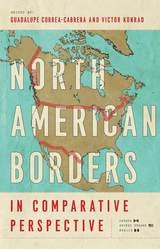
North American Borders in Comparative Perspective
Edited by Guadalupe Correa-Cabrera and Victor Konrad; Foreword by Alan Artibise
University of Arizona Press, 2020
The northern and southern borders and borderlands of the United States should have much in common; instead they offer mirror articulations of the complex relationships and engagements between the United States, Mexico, and Canada. In North American Borders in Comparative Perspectiveleading experts provide a contemporary analysis of how globalization and security imperatives have redefined the shared border regions of these three nations.
This volume offers a comparative perspective on North American borders and reveals the distinctive nature first of the overportrayed Mexico-U.S. border and then of the largely overlooked Canada-U.S. border. The perspectives on either border are rarely compared. Essays in this volume bring North American borders into comparative focus; the contributors advance the understanding of borders in a variety of theoretical and empirical contexts pertaining to North America with an intense sharing of knowledge, ideas, and perspectives.
Adding to the regional analysis of North American borders and borderlands, this book cuts across disciplinary and topical areas to provide a balanced, comparative view of borders. Scholars, policy makers, and practitioners convey perspectives on current research and understanding of the United States’ borders with its immediate neighbors. Developing current border theories, the authors address timely and practical border issues that are significant to our understanding and management of North American borderlands.
The future of borders demands a deep understanding of borderlands and borders. This volume is a major step in that direction.
Contributors
Bruce Agnew
Donald K. Alper
Alan D. Bersin
Christopher Brown
Emmanuel Brunet-Jailly
Irasema Coronado
Guadalupe Correa-Cabrera
Michelle Keck
Victor Konrad
Francisco Lara-Valencia
Tony Payan
Kathleen Staudt
Rick Van Schoik
Christopher Wilson

Old Thiess, a Livonian Werewolf
A Classic Case in Comparative PerspectiveCarlo Ginzburg and Bruce Lincoln
University of Chicago Press, 2020
In this book, eminent scholars Carlo Ginzburg and Bruce Lincoln offer a uniquely comparative look at the trial and startling testimony of Old Thiess. They present the first English translation of the trial transcript, in which the man’s own voice can be heard, before turning to subsequent analyses of the event, which range from efforts to connect Old Thiess to shamanistic practices to the argument that he was reacting against cruel stereotypes of the “Livonian werewolf” a Germanic elite used to justify their rule over the Baltic peasantry. As Ginzburg and Lincoln debate their own and others’ perspectives, they also reflect on broader issues of historical theory, method, and politics. Part source text of the trial, part discussion of historians’ thoughts on the case, and part dialogue over the merits and perils of their different methodological approaches, Old Thiess, a Livonian Werewolf opens up fresh insight into a remarkable historical occurrence and, through it, the very discipline of history itself.
Privatizing the Economy
Telecommunications Policy in Comparative PerspectiveRaymond M. Duch
University of Michigan Press, 1991
REFORMING PARLIAMENTARY COMMITTEES
ISRAEL IN COMPARATIVE PERSPECTIVEREUVEN Y. HAZAN
The Ohio State University Press, 2001
The Deregulatory Moment?
A Comparative Perspective on Changing Campaign Finance LawsRobert G. Boatright, editor
University of Michigan Press, 2015
The Rights Revolution
Lawyers, Activists, and Supreme Courts in Comparative PerspectiveCharles R. Epp
University of Chicago Press, 1998
The Rights Revolution is the first comprehensive and comparative analysis of the growth of civil rights, examining the high courts of the United States, Britain, Canada, and India within their specific constitutional and cultural contexts. It brilliantly revises our understanding of the relationship between courts and social change.

Too Many Children Left Behind
The U.S. Achievement Gap in Comparative PerspectiveBRUCE BRADBURY is associate professor at the Social Policy Research Centre at the University of New South Wales, Australia. MILES CORAK is professor of economics at the Graduate School of Public and International Affairs at the University of Ottawa. JANE WALDFOGFEL is professor of social work and public affairs at the Columbia University School of Social Work and visiting professor at the Centre for Analysis of Social Exclusion at the London School of Economics and Political Science. ELIZABETH WASHBROOK is lecturer in Quantitative Methods for Education at the Graduate School of Education and a member of the Centre for Multilevel Modelling at the University of Bristol, United Kingdom.
Russell Sage Foundation, 2015
The belief that with hard work and determination, all children have the opportunity to succeed in life is a cherished part of the American Dream. Yet, increased inequality in America has made that dream more difficult for many to obtain. In Too Many Children Left Behind, an international team of social scientists assesses how social mobility varies in the United States compared with Australia, Canada, and the United Kingdom. Bruce Bradbury, Miles Corak, Jane Waldfogel, and Elizabeth Washbrook show that the academic achievement gap between disadvantaged American children and their more advantaged peers is far greater than in other wealthy countries, with serious consequences for their future life outcomes. With education the key to expanding opportunities for those born into low socioeconomic status families, Too Many Children Left Behind helps us better understand educational disparities and how to reduce them.
Analyzing data on 8,000 school children in the United States, the authors demonstrate that disadvantages that begin early in life have long lasting effects on academic performance. The social inequalities that children experience before they start school contribute to a large gap in test scores between low- and high-SES students later in life. Many children from low-SES backgrounds lack critical resources, including books, high-quality child care, and other goods and services that foster the stimulating environment necessary for cognitive development. The authors find that not only is a child’s academic success deeply tied to his or her family background, but that this class-based achievement gap does not narrow as the child proceeds through school.
The authors compare test score gaps from the United States with those from three other countries and find smaller achievement gaps and greater social mobility in all three, particularly in Canada. The wider availability of public resources for disadvantaged children in those countries facilitates the early child development that is fundamental for academic success. All three countries provide stronger social services than the United States, including universal health insurance, universal preschool, paid parental leave, and other supports. The authors conclude that the United States could narrow its achievement gap by adopting public policies that expand support for children in the form of tax credits, parenting programs, and pre-K.
With economic inequalities limiting the futures of millions of children, Too Many Children Left Behind is a timely study that uses global evidence to show how the United States can do more to level the playing field.
Visualising Facebook
A Comparative PerspectiveDaniel Miller and Jolynna Sinanan
University College London, 2017