Results by title
4 books match the query 'Complete Tales'
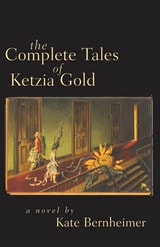
The Complete Tales of Ketzia Gold
Kate Bernheimer
University of Alabama Press, 2001
The Complete Tales of Ketzia Gold is a lavishly poetic novel that draws upon the motifs of traditional German, Russian and Yiddish folklore and fairy stories to recount the visionary obsessions of a passionate young woman.
The Complete Tales of Ketzia Gold is a lavishly poetic novel that draws upon the motifs of traditional German, Russian and Yiddish folklore and fairy stories to recount the visionary obsessions of a passionate young woman. The narrative moves freely through time and space, uniting Ketzia Gold's early childhood with her sexual awakenings, creating a dreamscape of haunting vividness. Marked by a logical illogic and disarmingly sane madness, this haunting and innovative fable creates an emotional landscape that's as impossible to escape as it is for young Ketzia to inhabit. Kate Bernheimer interweaves hypnotic imagery and everyday life, moving back and forth through time, piecing together the fragments of memory and imagination with an obsessive lyricism that recalls the poetic fictions of Carol Maso. Bernheimer's story is a rich tapestry, patterned with childhood longings and the luxuriant complexity of womanhood.
The Complete Tales of Ketzia Gold is a lavishly poetic novel that draws upon the motifs of traditional German, Russian and Yiddish folklore and fairy stories to recount the visionary obsessions of a passionate young woman. The narrative moves freely through time and space, uniting Ketzia Gold's early childhood with her sexual awakenings, creating a dreamscape of haunting vividness. Marked by a logical illogic and disarmingly sane madness, this haunting and innovative fable creates an emotional landscape that's as impossible to escape as it is for young Ketzia to inhabit. Kate Bernheimer interweaves hypnotic imagery and everyday life, moving back and forth through time, piecing together the fragments of memory and imagination with an obsessive lyricism that recalls the poetic fictions of Carol Maso. Bernheimer's story is a rich tapestry, patterned with childhood longings and the luxuriant complexity of womanhood.
[more]
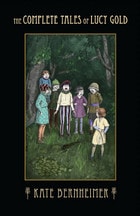
The Complete Tales of Lucy Gold
Kate Bernheimer
University of Alabama Press, 2011
As a child, Lucy dreams of talking fairies and lives contentedly in the wooded suburbs of Boston; she grows up to be a successful animator of fairy-tale films. Or does she? She claims at moments to be a witch in the woods.
Like her sisters, who appeared in Bernheimer’s first two novels (The Complete Tales of Ketzia Gold and The Complete Tales of Merry Gold), Lucy has a secret, but she is unable to fasten onto anything but brightness. Novelist Donna Tartt writes, “Lucy’s particular brand of optimism, blind to its own shadow, is very American—she is innocence holding itself apart so fastidiously that it becomes its opposite.”
This novel is a perfect end to the Gold family series, and the perfect introduction, for new readers, to Bernheimer’s enchanting body of work.
[more]
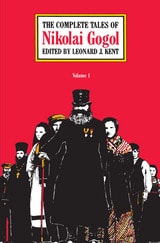
The Complete Tales of Nikolai Gogol, Volume 1
Nikolai Gogol
University of Chicago Press, 1985
The complete tales of one of the most creative, incisive, and entertaining of the Russian masters
Nikolai Gogol was an artist who, like Rabelais, Cervantes, Swift, and Sterne, "knew how to walk upside down in our valley of sorrows so as to make it to a merry place." The list of writers who credit his absurd, bitingly satirical, wildly funny work as an influence includes Dostoevsky, Kafka, Mikhail Bulgakov, Nabokov, Flannery O'Connor, and many more.
This two-volume edition at last brings all of Gogol's fiction (except his novel Dead Souls) together in paperback. Volume 1 includes Evenings on a Farm near Dikanka, the early Ukrainian folktales that first brought Gogol fame, as well as "Nevsky Prospekt" and "Diary of a Madman."
[more]
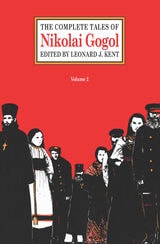
The Complete Tales of Nikolai Gogol, Volume 2
Nikolai Gogol
University of Chicago Press, 1983
The complete tales of one of the most creative, incisive, and entertaining of the Russian masters
Nikolai Gogol was an artist who, like Rabelais, Cervantes, Swift, and Sterne, "knew how to walk upside down in our valley of sorrows so as to make it to a merry place." The list of writers who credit his absurd, bitingly satirical, wildly funny work as an influence includes Dostoevsky, Kafka, Mikhail Bulgakov, Nabokov, Flannery O'Connor, and many more.
This two-volume edition at last brings all of Gogol's fiction (except his novel Dead Souls) together in paperback. Volume 2 of The Complete Tales includes Gogol's Mirgorod stories—among them that masterpiece of grotesque comedy, "The Tale of How Ivan Ivanovich Quarreled with Ivan Nikiforovich," the wonderfully satiric "Old World Landowners," and the Cossak epic "Taras Bulba." Here also is "The Nose," Gogol's final effort in the realm of the fantastic, as well as "The Coach," "The Portrait" (in its final version), and the most influential of his Petersburg stories, "The Overcoat."
[more]