Results by title
159 books match the query 'Birds' and 17 start with a
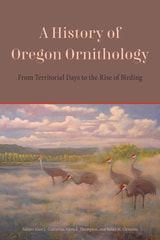
A History of Oregon Ornithology
From Territorial Days to the Rise of BirdingAlan L. Contreras
Oregon State University Press, 2022
Editors Alan Contreras, Vjera Thompson, and Nolan Clements have assembled chapters exploring the differences and interplay between the amateur and professional study of birds, along with discussions of early birding societies, notable observers, and ornithological studies. It includes significant chapters on Charles Bendire, William L. Finley, Ira Gabrielson, Stanley Jewett, and David B. Marshall. It also notes the sometimes-overlooked contributions of women to our expanding knowledge of western birds. Special attention is paid to the development of seabird observation, the impact of the Internet, and the rise of digital resources for bird observers.
Intended for readers interested in the history of Oregon, the history of scientific explorations in the west, and the origins of modern birding and field ornithology, A History of Oregon Ornithology offers a detailed and entertaining tour of how birds were first observed and studied by explorers in what is now Oregon.
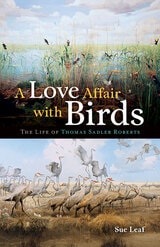
A Love Affair with Birds
The Life of Thomas Sadler RobertsSue Leaf
University of Minnesota Press, 2021
The father of Minnesota ornithology, whose life story opens a window on a lost world of nature and conservation in the state’s early days
Imagine a Minneapolis so small that, on calm days, the roar of St. Anthony Falls could be heard in town, a time when passenger pigeons roosted in neighborhood oak trees. Now picture a dapper professor conducting his ornithology class (the university’s first) by streetcar to Lake Harriet for a morning of bird-watching. The students were mostly young women—in sunhats, sailor tops, and long skirts, with binoculars strung around their necks. The professor was Thomas Sadler Roberts (1858–1946), a doctor for three decades, a bird lover virtually from birth, the father of Minnesota ornithology, and the man who, perhaps more than any other, promoted the study of the state’s natural history. A Love Affair with Birds is the first full biography of this key figure in Minnesota’s past.
Roberts came to Minnesota as a boy and began keeping detailed accounts of Minneapolis’s birds. These journals, which became the basis for his landmark work The Birds of Minnesota, also inform this book, affording a view of the state’s rich avian life in its early days—and of a young man whose passion for birds and practice of medicine in a young Minneapolis eventually dovetailed in his launching of the beloved Bell Museum of Natural History.
Bird enthusiast, doctor, author, curator, educator, conservationist: every chapter in Roberts’s life is also a chapter in the state’s history, and in his story acclaimed author Sue Leaf—an avid bird enthusiast and nature lover herself—captures a true Minnesota character and his time.
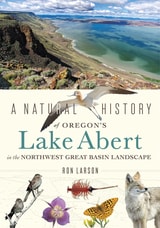
A Natural History of Oregon's Lake Abert in the Northwest Great Basin Landscape
Ron Larson
University of Nevada Press, 2023
A beautifully detailed exploration of flora and fauna.
Author Ron Larson offers a natural history of a Great Basin landscape that focuses on the northern region including Lake Abert and Abert Rim, and the adjacent area in southcentral Oregon. Although the jewel of this landscape is a lake, the real story is the many plants and animals—from the very primitive, reddish, bacteria-like archaea that thrive only in its high-salinity waters to the Golden Eagles and ravens that soar above the desert. The untold species in and around the lake are part of an ecosystem shaped by ageless processes from massive lava flows, repeated drought, and blinding snowstorms. It is an environment rich with biotic and physical interconnections going back millions of years.
The Great Basin, and in particular the Lake Abert region, is special and needs our attention to ensure it remains that way. We must recognize the importance of water for Great Basin ecosystems and the need to manage it better, and we must acknowledge how rich the Great Basin is in natural history. Salt lakes, wherever they occur, are valuable and provide critically important habitat for migratory water birds, which are unfortunately under threat from upstream water diversions and climate change. Larson’s book will help people understand that the Great Basin is unique and that wise stewardship is necessary to keep it unspoiled. The book is an essential reference source, drawing together a wide range of materials that will appeal to general readers and researchers alike.

A Naturalist amid Tropical Splendor
Alexander F. Skutch
University of Iowa Press, 1987
In this reflective account of life in the tropics, Alexander Skutch offers readers both his observations and his interpretations of what he has experienced. In the many chapters about birds and their behavior, he describes a dove that defends its nest with rare courage, castlebuilders who create elaborate nests of interlaced twigs, oropendolas that cluster long woven pouches in high treetops, and an exceptionally graceful hummingbird who fails to pay for its nectar by pollinating the flowers that yield it. Skutch also describes curious plants and their flowers, including a birthwort that holds its pollinating flies captive and fern fronds that twine high up trunks in the rain forest.
With penetrating clarity, Skutch considers the significance of all this restless activity: he examines the origins of beauty and our ability to appreciate it, the foundations of tropical splendor, the factors that help us feel close to nature or alienated from it, and the possibility of consciousness and emotion in animals. He also addresses the quandary of the biologist contemplating painful experiments on animals rather than learning by direct observation, and he asserts that our capacity to care for the world around us is the truest criterion of our evolutionary advancement.
Skutch brings a thoughtful, unequaled voice to the description of the world he has grown to know and understand, a world considered forbidding by most northerners and still largely unexplored.
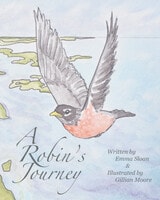
A Robin's Journey
Emma Sloan
Michigan Publishing Services, 2023
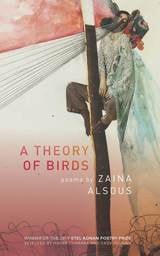
A Theory of Birds
PoemsZaina Alsous
University of Arkansas Press, 2019
Winner of the 2019 Etel Adnan Poetry Prize
Inside the dodo bird is a forest, Inside the forest
a peach analog, Inside the peach analog a woman, Inside
the woman a lake of funerals
This layering of bird, woman, place, technology, and ceremony, which begins this first full-length collection by Zaina Alsous, mirrors the layering of insights that marks the collection as a whole. The poems in A Theory of Birds draw on inherited memory, historical record, critical theory, alternative geographies, and sharp observation. In them, birds—particularly extinct species—become metaphor for the violences perpetrated on othered bodies under the colonial gaze.
Putting ecological preservation in conversation with Arab racial formation, state vernacular with the chatter of birds, Alsous explores how categorization can be a tool for detachment, domination, and erasure. Stretching their wings toward de-erasure, these poems—their subjects and their logics—refuse to stay put within a single category. This is poetry in support of a decolonized mind.
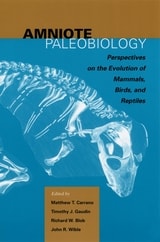
Amniote Paleobiology
Perspectives on the Evolution of Mammals, Birds, and ReptilesEdited by Matthew T. Carrano, Timothy J. Gaudin, Richard W. Blob, and John R. Wi
University of Chicago Press, 2006
A collaborative effort of twenty-four researchers, Amniote Paleobiology presents thirteen new and important scientific perspectives on the evolution and biology of this familiar group. It includes new discoveries of dinosaurs and primitive relatives of mammals; studies of mammalian chewing and locomotion; and examinations of the evolutionary process in plesiosaurs, mammals, and dinosaurs. Emphasizing the rich variety of analytical techniques available to vertebrate paleontologists—from traditional description to multivariate morphometrics and complex three-dimensional kinematics—Amniote Paleobiology seeks to understand how species are related to each other and what these relationships reveal about changes in anatomy and function over time. A timely synthesis of modern contributions to the field of evolutionary studies, Amniote Paleobiology furthers our understanding of this diverse group.
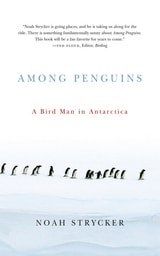
Among Penguins
A Bird Man in AntarcticaNoah Strycker
Oregon State University Press, 2011
The year he graduated from college, 22-year-old Noah Strycker was dropped by helicopter in a remote Antarctic field camp with two bird scientists and a three months’ supply of frozen food. His subjects: more than a quarter million penguins.
Compact, industrious, and approachable, the Adélie Penguins who call Antarctica home visit their breeding grounds each Antarctic summer to nest and rear their young before returning to sea. Because of long-term studies, scientists may know more about how these penguins will adjust to climate change than about any other creature in the world.
Bird scientists like Noah are less well known. Like the intrepid early explorers of Antarctica, modern scientists drawn to the frozen continent face an utterly inhospitable landscape, one that inspires, isolates, and punishes.
With wit, curiosity, and a deep knowledge of his subject, Strycker recounts the reality of life at the end of the Earth—thousand-year-old penguin mummies, hurricane-force blizzards, and day-to-day existence in below freezing temperatures—and delves deep into a world of science, obsession, and birds.
Among Penguins weaves a captivating tale of penguins and their researchers on the coldest, driest, highest, and windiest continent on Earth. Birders, lovers of the Antarctic, and fans of first-person adventure narratives will be fascinated by Strycker’s book.
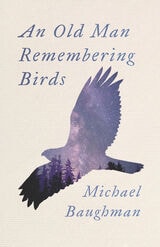
An Old Man Remembering Birds
Michael Baughman
Oregon State University Press, 2021
Birders are dedicated and passionate, and, like anglers, they all have their stories. But Baughman tells more than simple accounts of birds spotted in the field. He reflects on human-animal relations, why humans seek closeness with nature, how a dedicated birder can also be a dedicated hunter. He explores how environmental change has altered the rhythms of bird life: the ospreys that resurged after DDT was banned, the waxwings and juncos that appear rarely now as climate change takes a toll on bird populations. Baughman also describes encounters with wildfires and smoke and discusses how they shape the landscape and wildlife of contemporary Oregon.
In his eighty-plus years around birds, Michael Baughman has learned one immutable lesson: as long as you remain alive and human, the closer you get to birds, and the more time you spend among them, the more you love them.
Annotated Bibliography of Oregon Bird Literature Published Before 1935, An
George A. Jobanek
Oregon State University Press, 1997
Annotated Checklist of the Birds of Arizona
Gale Monson and Allan R. Phillips
University of Arizona Press, 1981
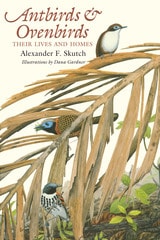
Antbirds and Ovenbirds
Their Lives and HomesBy Alexander F. Skutch
University of Texas Press, 1996
Western Books Exhibition, Rounce and Coffin Club
Antbirds and ovenbirds, two of the five largest families of birds found only in the Western Hemisphere, have been among Alexander Skutch's favorites for more than six decades. In this book, he draws on years of observations to describe the life cycle of these fascinating birds, which inhabit Latin America from tropical Mexico to Tierra del Fuego.
Skutch covers all aspects of the birds' lives, including the various species in each family, food and foraging, daily life, voice, displays and courtship, nests and incubation, and parental care. He also recounts anecdotes from his own experiences, creating vivid pictures of antbirds foraging for the insects Skutch stirs up on walks through the rainforest and of ovenbirds repairing the observation holes that he opens in their elaborate nests.
As some of tropical America's least studied birds, antbirds and ovenbirds surely merit the extensive treatment given them here by one of our most distinguished senior ornithologists. Over fifty line drawings by noted bird artist Dana Gardner make this book a delight for both armchair and field naturalists.
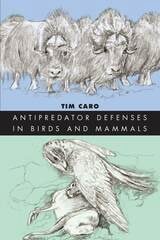
Antipredator Defenses in Birds and Mammals
Tim Caro
University of Chicago Press, 2005
In Antipredator Defenses in Birds and Mammals, Tim Caro ambitiously synthesizes predator defenses in birds and mammals and integrates all functional and evolutionary perspectives on antipredator defenses that have developed over the last century. Structured chronologically along a hypothetical sequence of predation—Caro evokes a gazelle fawn desperate to survive a cheetah attack to illustrate the continuum of the evolution of antipredator defenses—Antipredator Defenses in Birds and Mammals considers the defenses that prey use to avoid detection by predators; the benefits of living in groups; morphological and behavioral defenses in individuals and groups; and, finally, flight and adaptations of last resort.
Antipredator Defenses in Birds and Mammals will be of interest to both specialists and general readers interested in ecological issues.
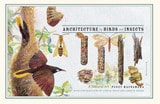
Architecture by Birds and Insects
A Natural ArtPaintings by Peggy Macnamara
University of Chicago Press, 2008
A visual celebration of these natural feats of engineering and ingenuity, Architecture by Birds and Insects allows readers a peek inside a wide range of nests, offering a rare opportunity to get a sense of the materials and methods used to build them. Here, we see the kinds of places where nests are built—for instance, the house wren has been known to occupy cow skulls, flower pots, tin cans, and the pockets of hanging laundry, while the uglynest caterpillar prefers rose bushes and cherry trees. Inspired by the vast nest collection at the Field Museum, which features specimens gathered throughout North and South America, Peggy Macnamara’s paintings are enhanced by text written by museum curators. This narrative provides a foundation in natural history for each painting, as well as fascinating anecdotes about the nests and their builders.
Like so many natural treasures, nests are easy to ignore. But Macnamara’s gorgeous paintings will undoubtedly change that. Architecture by Birds and Insects at last gives the tiniest engineers their rightful moment in the spotlight, and in so doing increases awareness and encourages the protection of birds, insects, and their habitats. Readers will never look at a Frank Gehry design, or a treetop nest, the same way again.
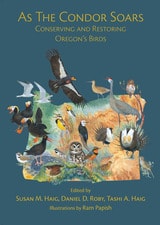
As the Condor Soars
Conserving and Restoring Oregon's BirdsSusan M. Haig
Oregon State University Press, 2022
The essays collected in As the Condor Soars focus on the role that ornithologists have played in research, management, and conservation debates across the state over the past century. Contributors to this volume discuss new developments in the study of birds, from sophisticated tracking devices to the evolving connections between ornithologists and artists. Readers also learn about the important role of citizen scientists in saving our treasured birds. These essays provide hope for species recovery, despite environmental threats, when scientists and the public work together. They also offer to other regions examples of adaptive management learned through these efforts.
This full-color book is beautifully illustrated by noted Oregon Coast artist Ram Papish and includes over eighty stunning photographs donated by some of the state’s finest nature photographers. Fifty capsule biographies of noted Oregon avian scientists round out the inspirational stories about the monumental efforts that have taken shape in recent decades. Accessibly written for scientists and laypeople alike, As the Condor Soars is a gift to everyone who cares about the conservation and restoration of Oregon’s birds.
Atlas of Wintering North American Birds
An Analysis of Christmas Bird Count DataTerry Root
University of Chicago Press, 1989
Terry Root has used the data from the 1963-72 counts to provide the first large-scale biogeographical account of birds wintering in North America. Using sophisticated computer techniques, Root has translated the data into both traditional contour maps and innovative new maps that stimulate three dimensions. The maps show at a glance that, for example, the Baltimore Oriole winters primarily along the eastern seaboard, with the densest populations in Florida between Tallahassee and Gainesville and in North Carolina from Rocky Mount to the Croatan National Forest.
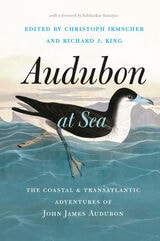
Audubon at Sea
The Coastal and Transatlantic Adventures of John James AudubonEdited by Christoph Irmscher and Richard J. King
University of Chicago Press, 2022
The American naturalist John James Audubon (1785–1851) is widely remembered for his iconic paintings of American birdlife. But as this anthology makes clear, Audubon was also a brilliant writer—and his keen gaze took in far more than creatures of the sky. Culled from his published and unpublished writings, Audubon at Sea explores Audubon’s diverse observations of the ocean, the coast, and their human and animal inhabitants. With Audubon expert Christoph Irmscher and scholar of the sea Richard J. King as our guides, we set sail from the humid expanses of the American South to the shores of England and the chilly landscapes of the Canadian North. We learn not only about the diversity of sea life Audubon documented—birds, sharks, fish, and whales—but also about life aboard ship, travel in early America, Audubon’s work habits, and the origins of beloved paintings. As we face an unfathomable loss of seabirds today, Audubon’s warnings about the fragility of birdlife in his time are prescient and newly relevant.
Charting the course of Audubon’s life and work, from his birth in Haiti to his death in New York City, Irmscher and King’s sweeping introduction and carefully drawn commentary confront the challenges Audubon’s legacy poses for us today, including his participation in American slavery and the thousands of birds he killed for his art. Rounded out by hundreds of historical and ornithological notes and beautiful illustrations, and with a foreword by distinguished photographer and conservationist Subhankar Banerjee, Audubon at Sea is the most comprehensively annotated collection of Audubon’s work ever published.