81 books match the query 'Composers' and 6 start with a
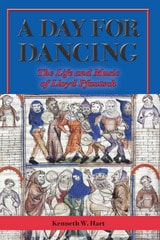
cover of A Day for Dancing: The Life and Music of Lloyd Pfautsch

A Day for Dancing

The Life and Music of Lloyd Pfautsch

Kenneth W. Hart

University of North Texas Press, 2014

[more]
cover of Aaron Copland: The Life and Work of an Uncommon Man

Aaron Copland

The Life and Work of an Uncommon Man

Howard Pollack

University of Illinois Press, 1999

One of America's most beloved and accomplished composers, Aaron Copland played a crucial role in American music's coming of age. Indeed, Copland masterworks like Appalachian Spring and A Lincoln Portrait only begin to tell the epic story of a career spent composing a wealth of music for opera, ballet, chorus, orchestra, chamber ensemble, band, radio, and film.

Howard Pollack's expansive biography examines Copland's long list of accomplishments while also telling the story of the composer's musical development, political sympathies, personal life, relationships as an openly gay man, and tireless encouragement of younger composers. A winner of the Pulitzer Prize and an Academy Award, Copland played a vital role in the Yaddo Festival and as a beloved teacher at Tanglewood, Harvard, and the New School for Social Research. He turned to conducting later in life and via tours promoted American classical music overseas while taking it to appreciative audiences across the United States.

[more]
cover of Aaron Jay Kernis

Aaron Jay Kernis

Leta E. Miller

University of Illinois Press, 2014

The first full-length biography of the Pulitzer Prize-winning composer

Winner of both the Pulitzer Prize and the Grawemeyer Award, Aaron Jay Kernis achieved recognition as one of the leading composers of his generation while still in his thirties. Since then his eloquent yet accessible style, emphasis on melody, and willingness to engage popular as well as classical forms has brought him widespread acclaim and admiring audiences.

Leta Miller's biography offers the first survey of the composer's life and work. Immersed in music by middle school, and later training under Theodore Antoniou, John Adams, Jacob Druckman, and others, Kernis rejected the idea of distancing his work from worldly concerns and composed on political themes. His Second Symphony, from 1991, engaged with the first Gulf War; 1993's Still Moment with Hymn was a reaction to the Bosnian Genocide; and the next year's Colored Field and 1995's Lament and Prayer dealt with the Holocaust. Yet Kernis also used sources as disparate as futurist agitprop and children's games to display humor in his work. Miller's analysis addresses not only Kernis's wide range of subjects but also the eclecticism that has baffled critics, analyzing his dedication to synthesis and the themes consistent in his work. Informed and engaging, Aaron Jay Kernis gives a rare mid-career portrait of a major American cultural figure.
[more]
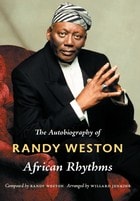
cover of African Rhythms: The Autobiography of Randy Weston

African Rhythms

The Autobiography of Randy Weston

Randy Weston

Duke University Press, 2010

The pianist, composer, and bandleader Randy Weston is one of the world’s most influential jazz musicians and a remarkable storyteller whose career has spanned five continents and more than six decades. Packed with fascinating anecdotes, African Rhythms is Weston’s life story, as told by him to the music journalist Willard Jenkins. It encompasses Weston’s childhood in Brooklyn’s Bedford-Stuyvesant neighborhood—where his parents and other members of their generation imbued him with pride in his African heritage—and his introduction to jazz and early years as a musician in the artistic ferment of mid-twentieth-century New York. His music has taken him around the world: he has performed in eighteen African countries, in Buddhist temples and Shinto shrines, in the Canterbury Cathedral, and at the grand opening of the Bibliotheca Alexandrina: The New Library of Alexandria.

Africa is at the core of Weston’s music and spirituality. He has traversed the continent on a continuous quest to learn about its musical traditions, produced its first major jazz festival, and lived for years in Morocco, where he opened a popular jazz club, the African Rhythms Club, in Tangier. Weston’s narrative is replete with tales of the people he has met and befriended, and with whom he has worked. He describes his unique partnerships with Langston Hughes, the musician and arranger Melba Liston, and the jazz scholar Marshall Stearns, as well as his friendships and collaborations with Duke Ellington, Dizzy Gillespie, Coleman Hawkins, Thelonious Monk, Billy Strayhorn, Max Roach, Charlie Parker, Miles Davis, the novelist Paul Bowles, the Cuban percussionist Candido Camero, the Ghanaian jazz artist Kofi Ghanaba, the Gnawa musicians of Morocco, and many others. With African Rhythms, an international jazz virtuoso continues to create cultural history.

[more]
cover of Alec Wilder

Alec Wilder

Philip Lambert

University of Illinois Press, 2013

 
The music of Alec Wilder (1907-1980) blends several American musical traditions, such as jazz and the American popular song, with classical European forms and techniques. Stylish and accessible, Wilder's musical oeuvre ranged from sonatas, suites, concertos, operas, ballets, and art songs to woodwind quintets, brass quintets, jazz suites, and hundreds of popular songs. In this biography and critical investigation of Wilder's music, Philip Lambert chronicles Wilder's early work as a part-time student at the Eastman School of Music, his ascent through the ranks of the commercial recording industry in New York City in the 1930s and 1940s, his turn toward concert music from the 1950s onward, and his devotion late in his life to the study of American popular songs of the first half of the twentieth century. The book discusses some of his best-known music, such as the revolutionary octets and songs such as "I'll Be Around," "While We're Young," and "Blackberry Winter," and explains the unique blend of cultivated and vernacular traditions in his singular musical language.

[more]
cover of An Artist's Journey: Lettres d'un bachelier es musique, 1835-1841

An Artist's Journey

Lettres d'un bachelier es musique, 1835-1841

Franz Liszt

University of Chicago Press, 1989

In these eloquent and intensely personal writings, Franz Liszt sketches the cities, people, and scenes of his travels in the 1830s and explores ideas about art and its ideal place in the world. During six years of wandering through Switzerland, France, Italy, Austria, and Germany (four of them together with Countess Marie d'Agoult), the composer saw the greatest art and most fabulous landscapes of Europe and crossed paths with celebrated singers and artists, renowned intellectuals, infamous socialites, and both reigning and deposed aristocracy. The article/essays that emerged from this period are both public and private: though written for the Paris press, they are the closest that Liszt came to autobiography. Some of these writings are travel articles; some are essentially reports of a music correspondent; still others are personal and confessional; and some are really essays on the nature of art. All offer precious insight into the musical, social, and intellectual life in the major European capitals seen through the eyes of one of the most well-read and influential musical personalities of the period.
[more]