Results by title
3 books match the query 'Conflict Resolution'

Civil Wars, Civil Peace
An Introduction to Conflict ResolutionKumar Rupesinghe and Sanam Naraghi Anderlini
Pluto Press, 1998
[more]
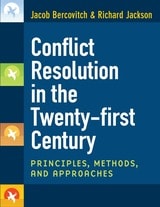
Conflict Resolution in the Twenty-first Century
Principles, Methods, and ApproachesJacob Bercovitch and Richard Jackson
University of Michigan Press, 2009
In the past, arbitration, direct bargaining, the use of intermediaries, and deference to international institutions were relatively successful tools for managing interstate conflict. In the face of terrorism, intrastate wars, and the multitude of other threats in the post–Cold War era, however, the conflict resolution tool kit must include preventive diplomacy, humanitarian intervention, regional task-sharing, and truth commissions. Here, Jacob Bercovitch and Richard Jackson, two internationally recognized experts, systematically examine each one of these conflict resolution tools and describe how it works and in what conflict situations it is most likely to be effective.
Conflict Resolution in the Twenty-first Centuryis not only an essential introduction for students and scholars, it is a must-have guide for the men and women entrusted with creating stability and security in our changing world.
[more]
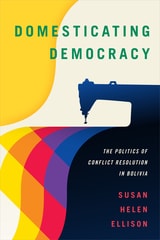
Domesticating Democracy
The Politics of Conflict Resolution in BoliviaSusan Helen Ellison
Duke University Press, 2018
In Domesticating Democracy Susan Helen Ellison examines foreign-funded alternate dispute resolution (ADR) organizations that provide legal aid and conflict resolution to vulnerable citizens in El Alto, Bolivia. Advocates argue that these programs help residents cope with their interpersonal disputes and economic troubles while avoiding an overburdened legal system and cumbersome state bureaucracies. Ellison shows that ADR programs do more than that—they aim to change the ways Bolivians interact with the state and with global capitalism, making them into self-reliant citizens. ADR programs frequently encourage Bolivians to renounce confrontational expressions of discontent, turning away from courtrooms, physical violence, and street protest and coming to the negotiation table. Nevertheless, residents of El Alto find creative ways to take advantage of these micro-level resources while still seeking justice and a democratic system capable of redressing the structural violence and vulnerability that ADR fails to treat.
[more]