Results by title
14 books match the query 'Rebirth'
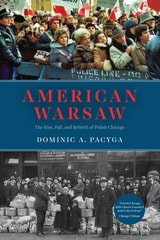
American Warsaw
The Rise, Fall, and Rebirth of Polish ChicagoDominic A. Pacyga
University of Chicago Press, 2019
Every May, a sea of 250,000 people decked out in red and white head to Chicago’s Loop to celebrate the Polish Constitution Day Parade. In the city, you can tune in to not one but four different Polish-language radio stations or jam out to the Polkaholics. You can have lunch at pierogi food trucks or pick up pączkis at the grocery store. And if you’re lucky, you get to take off work for Casimir Pulaski Day. For more than a century, Chicago has been home to one of the largest Polish populations outside of Poland, and the group has had an enormous influence on the city’s culture and politics. Yet, until now, there has not been a comprehensive history of the Chicago Polonia.
With American Warsaw, award-winning historian and Polish American Dominic A. Pacyga chronicles more than a century of immigration, and later emigration back to Poland, showing how the community has continually redefined what it means to be Polish in Chicago. He takes us from the Civil War era until today, focusing on how three major waves of immigrants, refugees, and fortune seekers shaped and then redefined the Polonia. Pacyga also traces the movement of Polish immigrants from the peasantry to the middle class and from urban working-class districts dominated by major industries to suburbia. He documents Polish Chicago’s alignments and divisions: with other Chicago ethnic groups; with the Catholic Church; with unions, politicians, and city hall; and even among its own members. And he explores the ever-shifting sense of Polskość, or “Polishness.”
Today Chicago is slowly being eclipsed by other Polish immigrant centers, but it remains a vibrant—and sometimes contentious—heart of the Polish American experience. American Warsaw is a sweeping story that expertly depicts a people who are deeply connected to their historical home and, at the same time, fiercely proud of their adopted city. As Pacyga writes, “While we were Americans, we also considered ourselves to be Poles. In that strange Chicago ethnic way, there was no real difference between the two.”
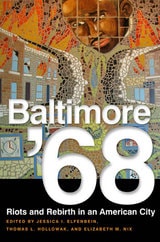
Baltimore '68
Riots and Rebirth in an American CityEdited by Jessica I. Elfenbein, Thomas L. Hollowak and Elizabeth M. Nix
Temple University Press, 2011
In 1968, Baltimore was home to a variety of ethnic, religious, and racial communities that, like those in other American cities, were confronting a quickly declining industrial base. In April of that year, disturbances broke the urban landscape along lines of race and class.
This book offers chapters on events leading up to the turmoil, the riots, and the aftermath as well as four rigorously edited and annotated oral histories of members of the Baltimore community. The combination of new scholarship and first-person accounts provides a comprehensive case study of this period of civil unrest four decades later.
This engaging, broad-based public history lays bare the diverse experiences of 1968 and their effects, emphasizing the role of specific human actions. By reflecting on the stories and analysis presented in this anthology, readers may feel empowered to pursue informed, responsible civic action of their own.
Baltimore '68 is the book component of a larger public history project, "Baltimore '68 Riots: Riots and Rebirth." The project's companion website (http://archives.ubalt.edu/bsr/index.html ) offers many more oral histories plus photos, art, and links to archival sources. The book and the website together make up an invaluable teaching resource on cities, social unrest, and racial politics in the 1960s. The project was the corecipient of the 2009 Outstanding Public History Project Award from the National Council on Public History.
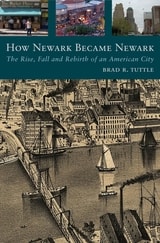
How Newark Became Newark
The Rise, Fall, and Rebirth of an American CityBrad R. Tuttle
Rutgers University Press, 2009
How Newark Became Newark is a fresh, unflinching popular history that spans the city's epic transformation from a tiny Puritan village into a manufacturing powerhouse, on to its desperate struggles in the twentieth century and beyond. After World War II, unrest mounted as the minority community was increasingly marginalized, leading to the wrenching civic disturbances of the 1960s. Though much of the city was crippled for years, How Newark Became Newark is also a story of survival and hope. Today, a real estate revival and growing population are signs that Newark is once again in ascendance.
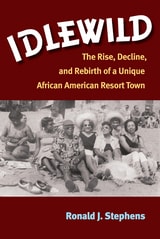
Idlewild
The Rise, Decline, and Rebirth of a Unique African American Resort TownRonald J. Stephens
University of Michigan Press, 2013
In 1912, white land developers founded Idlewild, an African American resort community in western Michigan. Over the following decades, the town became one of the country’s foremost vacation destinations for the black middle class, during its peak drawing tens of thousands of visitors annually and hosting the era’s premier entertainers, such as The Four Tops, Della Reese, Brook Benton, and George Kirby. With the civil rights movement and the resulting expansion of recreation options available to African Americans, Idlewild suffered a sharp social and economic decline, and by the early 1980s the town had become a struggling retirement community in the midst of financial and political crises.
Meticulously researched and unearthing never-before-seen historical material, Ronald J. Stephens’s book examines the rapid rise and decline of this pivotal landmark in African American and leisure history, in the process exploring intersections among race, class, tourism, entertainment, and historic preservation in the United States. Featuring a wealth of fieldwork on contemporary Idlewild, the book also takes a candid look at recent revitalization efforts and analyzes the possibilities for a future resurgence of this national treasure.
Inuit Stories of Being and Rebirth
Gender, Shamanism, and the Third SexBernard Saladin d' Anglure
University of Manitoba Press, 2018
Meet Me at the West Beach Café
Art, Restaurants, and the Rebirth of L.A.Alison Pearlman
University of Nevada Press, 2027
When fine dining met fine art, a new Los Angeles was born.
Between 1979 and 1987, the city witnessed two cultural breakthroughs that may seem unrelated. A wave of bold, design‑forward restaurants helped launch the nationwide “New American” movement, serving innovative cuisine in sleek, modern spaces adorned with contemporary art. At the same time, Los Angeles celebrated a milestone: the opening of the Museum of Contemporary Art (MOCA), its first major museum devoted solely to contemporary art—an institution long missing from a city with global ambitions.
Though often told separately, these stories are deeply intertwined. In this lively, revelatory book, Alison Pearlman uncovers how restaurants became galleries as well as vital crossroads for the chefs, artists, collectors, architects, and civic leaders who reshaped L.A.’s cultural identity. Together, they revived hopes that L.A. could reclaim the creative energy of its 1960s heyday and join the ranks of the world’s cultural capitals.
Drawing on extensive interviews with those who built this transformative era, Pearlman shows how L.A.—through distinctive architecture, daring personalities, and unconventional collaborations—created a cultural moment with national impact. Vivid, engaging, and richly researched, this book brings to life a heady period in the city’s history.
A must‑read for lovers of art, food, and the vibrant alchemy that emerges when creative worlds collide.

Rebirth of the Clinic
Places and Agents in Contemporary Health CareCindy Patton
University of Minnesota Press, 2010
Combining theory, history, and ethnography, the contributors to this volume ground today's clinic in a larger scheme of power relations, identifying the cultural, political, and economic pressures that frame clinical relationships, including the instrumentalist definition of health, actuarial-based medical practices, and patient self-help movements, which simultaneously hem in and create the conditions under which agents creatively change ideas of illness and treatment.
From threatened community health centers in poor African American locales to innovative nursing practices among the marginally housed citizens of Canada's poorest urban neighborhood, this volume addresses not just the who, what, where, and how of place-specific clinical practices, but also sets these local experiences against a theoretical backdrop that links them to the power of modern medicine in shaping fundamental life experiences.
SamulNori
Contemporary Korean Drumming and the Rebirth of Itinerant Performance CultureNathan Hesselink
University of Chicago Press, 2012
Swingin' the Dream
Big Band Jazz and the Rebirth of American CultureLewis A. Erenberg
University of Chicago Press, 1998
"Swingin' the Dream is an intelligent, provocative study of the big band era, chiefly during its golden hours in the 1930s; not merely does Lewis A. Erenberg give the music its full due, but he places it in a larger context and makes, for the most part, a plausible case for its importance."—Jonathan Yardley, Washington Post Book World
"An absorbing read for fans and an insightful view of the impact of an important homegrown art form."—Publishers Weekly
"[A] fascinating celebration of the decade or so in which American popular music basked in the sunlight of a seemingly endless high noon."—Tony Russell, Times Literary Supplement
The American Automobile Industry
Rebirth or Requiem?Robert E. Cole, Editor
University of Michigan Press, 1984
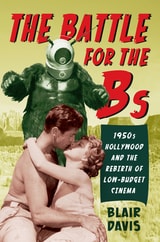
The Battle for the Bs
1950s Hollywood and the Rebirth of Low-Budget CinemaDavis, Blair
Rutgers University Press, 2012
The emergence of the double-bill in the 1930s created a divide between A-pictures and B-pictures as theaters typically screened packages featuring one of each. With the former considered more prestigious because of their larger budgets and more popular actors, the lower-budgeted Bs served largely as a support mechanism to A-films of the major studios—most of which also owned the theater chains in which movies were shown. When a 1948 U.S. Supreme Court antitrust ruling severed ownership of theaters from the studios, the B-movie soon became a different entity in the wake of profound changes to the corporate organization and production methods of the major Hollywood studios.
In The Battle for the Bs, Blair Davis analyzes how B-films were produced, distributed, and exhibited in the 1950s and demonstrates the possibilities that existed for low-budget filmmaking at a time when many in Hollywood had abandoned the Bs. Made by newly formed independent companies, 1950s B-movies took advantage of changing demographic patterns to fashion innovative marketing approaches. They established such genre cycles as science fiction and teen-oriented films (think Destination Moon and I Was a Teenage Werewolf) well before the major studios and also contributed to the emergence of the movement now known as underground cinema. Although frequently proving to be multimillion-dollar box-office draws by the end of the decade, the Bs existed in opposition to the cinematic mainstream in the 1950s and created a legacy that was passed on to independent filmmakers in the decades to come.
The Great Inflation
The Rebirth of Modern Central BankingEdited by Michael D. Bordo and Athanasios Orphanides
University of Chicago Press, 2013
The Rebirth of Classical Political Rationalism
An Introduction to the Thought of Leo StraussLeo Strauss
University of Chicago Press, 1989
"[These essays] display the incomparable insight and remarkable range of knowledge that set Strauss's works apart from any other twentieth-century philosopher's."—Charles R. Kesler, National Review
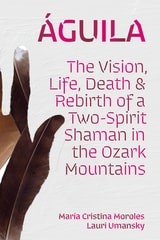
Águila
The Vision, Life, Death, and Rebirth of a Two-Spirit Shaman in the Ozark MountainsMaría Cristina Moroles
University of Arkansas Press, 2024