Results by title
4 books match the query 'Conformity'
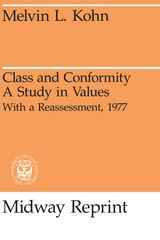
Class and Conformity
A Study in ValuesMelvin Kohn
University of Chicago Press, 1989
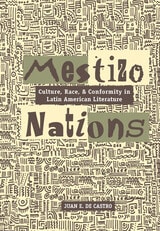
Mestizo Nations
Culture, Race, and Conformity in Latin American LiteratureJuan E. De Castro
University of Arizona Press, 2002
Through them, he delineates some of the ambiguities and contradictions that have beset this discourse. Among texts considered are the Indianist novel Iracema by the nineteenth-century Brazilian author José de Alencar; the Tradiciones peruanas, Peruvian Ricardo Palma's fictionalizations of national difference; and historical and sociological essays by the Peruvian Marxist José Carlos Mariátegui and the Brazilian intellectual Gilberto Freyre. And because questions raised by this discourse are equally relevant to postmodern concerns with national and transnational heterogeneity, De Castro also analyzes such recent examples as the Cuban dance band Los Van Van's use of Afrocentric lyrics; Richard Rodriguez's interpretations of North American reality; and points of contact and divergence between José María Arguedas's novel The Fox from Up Above and the Fox from Down Below and writings of Gloria Anzaldúa and Julia Kristeva.
By updating the concept of mestizaje as a critical tool for analyzing literary text and cultural trends—incorporating not only race, culture, and nationality but also gender, language, and politics—De Castro shows the implications of this Latin American discursive tradition for current critical debates in cultural and area studies. Mestizo Nations contains important insights for all Latin Americanists as a tool for understanding racial relations and cultural hybridization, creating not only an important commentary on Latin America but also a critique of American life in the age of multiculturalism.

Peculiar Places
A Queer Crip History of White Rural NonconformityRyan Lee Cartwright
University of Chicago Press, 2021
Sensationalized accounts of white rural communities’ aberrant sexualities, racial intermingling, gender transgressions, and anomalous bodies and minds, which proliferated from the turn of the century, created a national view of the perversity of white rural poverty for the American public. Cartwright contends that these accounts, extracted and estranged from their own ambivalent forum of community gossip, must be read in kind: through a racialized, materialist queercrip optic of the deeply familiar and mundane. Taking in popular science, documentary photography, news media, documentaries, and horror films, Peculiar Places orients itself at the intersections of disability studies, queer studies, and gender studies to illuminate a racialized landscape both profoundly ordinary and familiar.
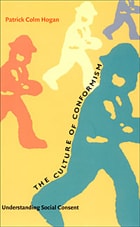
The Culture of Conformism
Understanding Social ConsentPatrick Colm Hogan
Duke University Press, 2001
In this wide-ranging and informative work, Patrick Colm Hogan draws on cognitive science, psychoanalysis, and social psychology to explore the cultural and psychological components of social consent. Focusing in particular on Americans’ acquiescence to a system that underpays and underrepresents the vast majority of the population, Hogan moves beyond typical studies of this phenomenon by stressing more than its political and economic dimensions.
With new insights into particularly insideous forms of consent such as those manifest in racism, sexism, and homophobia, The Culture of Conformism considers the role of emotion as it works in conjunction with belief and with the formation of group identity. Arguing that coercion is far more pervasive in democratic societies than is commonly recognized, Hogan discusses the subtle ways in which economic and social pressures operate to complement the more obviously violent forces of the police and military. Addressing issues of narcissism, self-esteem, and empathy, he also explains the concept of “rational” conformity—that is, the degree to which our social consent is based on self-interest—and explores the cognitive factors that produce and sustain social ideology.
Social activists, economic theorists, social psychologists, and political scientists will be intrigued and informed by this book.