Results by title

16 books match the query 'Conrad, Joseph'
cover of A Personal Record

A Personal Record

Joseph Conrad

Northwestern University Press, 1982
Long unavailable, A Personal Record, the second of Conrad's autobiographical memoirs, originally appeared in 1912. These "reminiscent pages" retrace the author's East European origins, his years at sea, his passionate adoption of English, and the emergence of his career as one of the key figures in modern literature.
[more]
cover of Conrad and Empire

Conrad and Empire

Stephen Ross

University of Missouri Press, 2004
In Conrad and Empire, Stephen Ross challenges the orthodoxy of the last thirty years of Conrad criticism by arguing that to focus on issues of race and imperialism in Conrad’s work is to miss the larger and more important engagement with developing globalization undertaken there. Drawing on the conceptual model provided by Arjun Appadurai and by Michael Hardt and Antonio Negri, Ross maintains that Conrad’s major novels confront an emergent new world order that replaces nation-state-based models of geopolitics with the global rule of capitalism, and shows how Conrad supplements this conceptualization by tracing the concrete effects of such a change on the psyches of individual subjects. Borrowing from Slavoj Žižek and Jacques Lacan, Ross contends that Conrad’s major novels present us with an astute vision of a truly global world order.
Devoting a chapter to each novel, the author analyzes Heart of Darkness,Lord Jim, Nostromo, and The Secret Agent to expose their social vision, their concern with individual experience, and their philosophical synthesis of the two. After showing how Conrad sets the stage, Ross considers selected characters’ personal histories and the family romances by which Conrad sheds light on individual characters’ motives, exposing the penetration of ideological forces into personal lives. He then shows how the drama of slave morality in each of the novels synthesizes their critique of social organization and their attention to personal history by revealing how each novel follows an individual character’s doomed attempt to transcend the totalizing dimensions of Empire.
Ross claims that though postcolonial criticisms of Conrad’s work have produced excellent insights, they remain inadequate to understanding its complexity. Instead, he argues, Conrad’s novels should be read for their compellingly prescient vision of a postnational world under the sway of global capitalism. Although Conrad’s vision of that world is undeniably bleak, Ross believes, his almost willful reaffirmation of the very values he has shown to be bankrupt constitutes a “weak idealism.” Consequently, Ross argues, Conrad’s fiction is profoundly ethical and pertinent to the pressing project of how to live in a bewilderingly variable world.
[more]
cover of Conrad's Shadow: Catastrophe, Mimesis, Theory

Conrad's Shadow

Catastrophe, Mimesis, Theory

Nidesh Lawtoo

Michigan State University Press, 2016
Western thought has often dismissed shadows as fictional, but what if fictions reveal original truths? Drawing on an anti-Platonic tradition in critical theory, Lawtoo adopts ethical, anthropological, and philosophical lenses to offer new readings of Joseph Conrad’s novels and the postcolonial and cinematic works that respond to his oeuvre. He argues that Conrad’s fascination with doubles urges readers to reflect on the two sides of mimesis: one side is dark and pathological, and involves the escalation of violence, contagious epidemics, and catastrophic storms; the other side is luminous and therapeutic, and promotes communal survival, postcolonial reconciliation, and plastic adaptations to changing environments. Once joined, the two sides reveal Conrad as an author whose Janus-faced fictions are powerfully relevant to our contemporary world of global violence and environmental crisis.
[more]
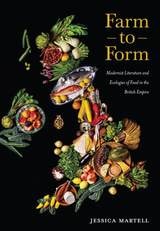
cover of Farm to Form: Modernist Literature and Ecologies of Food in the British Empire

Farm to Form

Modernist Literature and Ecologies of Food in the British Empire

Jessica Martell

University of Nevada Press, 2020

In this groundbreaking book, Jessica Martell investigates the relationship between industrial food and the emergence of literary modernisms in Britain and Ireland. By the early twentieth century, the industrialization of the British Empire’s food system had rendered many traditional farming operations, and attendant agrarian ways of life, obsolete. Weaving insights from modernist studies, food studies, and ecocriticism, Farm to Form contends that industrial food made nature “modernist,” a term used as literary scholars understand it—stylistically disorienting, unfamiliar, and artificial but also exhilarating, excessive, and above all, new. Martell draws in part upon archives in the United Kingdom but also presents imperial foodways as an extended rehearsal for the current era of industrial food supremacy. She analyzes how pastoral mode, anachronism, fragmentation, and polyvocal narration reflect the power of the literary arts to reckon with—and to resist—the new “modernist ecologies” of the twentieth century.

Deeply informed by Martell’s extensive knowledge of modern British, Irish, American, and World Literatures, this progressive work positions modernism as central to the study of narratives of resistance against social and environmental degradation. Analyzed works include those of Thomas Hardy, E. M. Forster, Virginia Woolf, Joseph Conrad, George Russell, and James Joyce.

In light of climate change, fossil fuel supremacy, nutritional dearth, and other pressing food issues, modernist texts bring to life an era of crisis and anxiety similar to our own. In doing so, Martell summons the past as a way to employ the modernist term of “defamiliarizing” the present so that entrenched perceptions can be challenged. Our current food regime is both new and constantly evolving with the first industrial food trades. Studying earlier cultural responses to them invites us to return to persistent problems with new insights and renewed passion.
 
[more]
cover of Joseph Conrad

Joseph Conrad

Martin Ray

University of Iowa Press, 1990
[more]
cover of Modernity At Sea: Melville, Marx, Conrad In Crisis

Modernity At Sea

Melville, Marx, Conrad In Crisis

Cesare Casarino

University of Minnesota Press, 2002

Analyzes nineteenth-century seafaring narratives and their importance to ideas of modernity

At once a literary-philosophical meditation on the question of modernity and a manifesto for a new form of literary criticism, Modernity at Sea argues that the nineteenth-century sea narrative played a crucial role in the emergence of a theory of modernity as permanent crisis.

In a series of close readings of such works as Herman Melville’s White-Jacket and Moby Dick, Joseph Conrad’s The Nigger of the "Narcissus” and The Secret Sharer, and Karl Marx’s Grundrisse, Cesare Casarino draws upon the thought of twentieth-century figures including Giorgio Agamben, Louis Althusser, Walter Benjamin, Leo Bersani, Gilles Deleuze, Félix Guattari, and Antonio Negri to characterize the nineteenth-century ship narrative as the epitome of Michel Foucault’s "heterotopia"—a special type of space that simultaneously represents, inverts, and contests all other spaces in culture.Elaborating Foucault’s claim that the ship has been the heterotopia par excellence of Western civilization since the Renaissance, Casarino goes on to argue that the nineteenth-century sea narrative froze the world of the ship just before its disappearance—thereby capturing at once its apogee and its end, and producing the ship as the matrix of modernity.
[more]
cover of NOMADIC VOICES: CONRAD AND THE SUBJECT OF NARRATIVE

NOMADIC VOICES

CONRAD AND THE SUBJECT OF NARRATIVE

Bruce Henricksen

University of Illinois Press, 1992

 "A highly intelligent and
  successful study exploring the uncanny features of Conrad's art that respond,
  and lend depth, to the concerns of theorists such as Bakhtin and Lyotard."
  -- Suresh Raval, University of Arizona
 
[more]
cover of One of Us: The Mastery of Joseph Conrad

One of Us

The Mastery of Joseph Conrad

Geoffrey Galt Harpham

University of Chicago Press, 1996

The concept of mastery straddles a largely unexamined seam in contemporary thought dividing admirable self-control from a reprehensible will to power. Although Joseph Conrad has traditionally been viewed as an admirable master—master mariner, storyteller, and writer—his reputation has been linked in recent years to the negative masteries of racism, imperialism, and patriarchy.

In this book, Geoffrey Galt Harpham delves not only into Conrad's literary work and reputation but also into the concept of mastery. Outlining a psychology of composition that embraces Conrad's personal as well as historical circumstances, Harpham sheds new light on traditional issues in Conrad criticism, such as his Polish background and his preoccupation with the sea, by linking them to less frequently discussed subjects, including his elusive sexuality and his idiosyncratic relation to the English language.

One of Us represents both a methodological innovation in the practice of literary criticism and an important contribution to our understanding of how masters—and canons based on them—are made.
[more]
cover of Reading Conrad

Reading Conrad

Edited by John G. Peters and Jakob Lothe

The Ohio State University Press, 2017

For half a century, J. Hillis Miller has been a premier figure in English and comparative literature, influencing and leading the direction of literary studies. What is less well-known is that he has been equally influential in Conrad studies with his work on nihilism, language, and narrative in Joseph Conrad’s fiction. Returning to Conrad at different stages of his long career—reading and rereading him in light of new critical trends—Miller continually discovered new aspects of the influential author’s fiction. This volume, edited by John G. Peters and Jakob Lothe, charts Miller’s shifting insights into Joseph Conrad’s fiction and also highlights the potential of Conrad studies to illuminate core questions in studies of narrative theory, aesthetics, and history.
 
Reading Conrad by J. Hillis Miller demonstrates a surprising cohesiveness across Miller’s career as well as the richness of Conrad’s fiction, which affords varied opportunities for critical approaches as different as phenomenology, new criticism, deconstruction, narrative theory, and narrative ethics. Miller’s analyses emphasize literature’s rhetorical and performative power, ultimately suggesting that while narrative fiction is an effect of a series of complex phenomena in society and in the human psyche, as literary language it can also refer to the external world indirectly and contribute to the formation of history from within. 
 
[more]
cover of Rereading Conrad

Rereading Conrad

Daniel R.Schwarz

University of Missouri Press, 2001

Leading Conradian scholar Daniel R. Schwarz assembles his work from over the past two decades into one crucial volume, providing a significant reexamination of a seminal figure who continues to be a major focus in the twenty-first century. Schwarz touches on virtually all of Joseph Conrad's work including his masterworks and the later, relatively neglected fiction.

In his introduction and in the persuasive and insightful essays that follow, Schwarz explores how the study of Conrad has changed and why Conrad is such a focus of interest in terms of gender, postcolonial, and cultural studies. He also demonstrates how Conrad helps define the modernist cultural tradition.

Exploring such essential works as Heart of Darkness, Lord Jim, Nostromo, and "The Secret Sharer," Schwarz addresses issues raised by recent theory, discussing the ways in which contemporary readers, including, of course, himself, have come to read Conrad differently. He does so without abandoning crucial Conradian themes such as the disjunction between interior and articulated motives and the discrepancies between dimly acknowledged needs, obsessions, and compulsions and actual behavior.

Schwarz also touches on the extent to which Conrad's conservative desires for a few simple moral and political ideas were often at odds with his profound skepticism. A powerful close reader of Conrad's complex texts, Schwarz stresses how from their opening paragraphs Conrad's works establish a grammar of psychological, political, and moral cause and effect.

Rereading Conrad sheds new light on an author who has spoken to readers for over a century. Schwarz's essays take account of recent developments in theory and cultural studies, including postcolonial, feminist, gay, and ecological perspectives, and show how reading Conrad has changed in the face of the theoretical explosion that has occurred over the past two decades. Because for over three decades Schwarz has been an important figure in defining how we read Conrad and in studying modernism, including how we respond to the relationship between modern literature and modern art, scholars, teachers, and students will take great pleasure in this new collection of his work.
[more]
cover of Tales of an Eastern Port: The Singapore Novellas of Joseph Conrad

Tales of an Eastern Port

The Singapore Novellas of Joseph Conrad

Joseph Conrad

National University of Singapore Press, 2023

Singapore in the writings of Joseph Conrad: a node in the networks of colonial modernity.

In the 1880s, Joseph Conrad spent three extended stints in the colonial port city of Singapore, while working on ships around the region. Over the next thirty years, he would return to this place many times in his writing. Singapore is the principal, if sometimes obscured, port of call in Conrad’s fiction; it is the center of overlapping networks, colonial and commercial, religious and literary. His characters travel to upriver Borneo and to Bangkok, to Shanghai and to Sydney, and yet they tend to return to Singapore. 

This volume pairs for the first time two Conrad novellas that start in Singapore: The End of the Tether and The Shadow-Line.Together they provide a fleeting portrait of the developing city, through narrators who are uneasy with the trappings and workings of the colonial enterprise. These stories have renewed relevance as part of global modernist and oceanic literatures, and reading them now helps recall one chapter in Singapore’s long history as a vital site of cultural exchange, one that harbors and inspires distinctive storytelling traditions.
 
[more]
cover of The Appropriated Voice: Narrative Authority in Conrad, Forster, and Woolf

The Appropriated Voice

Narrative Authority in Conrad, Forster, and Woolf

Bette London

University of Michigan Press, 1990
The Appropriated Voice: Narrative Authority in Conrad, Forster, and Woolf reassesses questions of voice in three central modernist texts: Heart of Darkness, A Passage to India, and To the Lighthouse. Representing voice as the site of a struggle articulated on a number of fronts, Bette London challenges traditional assumptions about voice as a reliable marker of individuality, originality, self-identity, and aesthetic autonomy—assumptions reinforced in the recent reconstructions of modernism in postmodernism’s discourses.Drawing upon narrative theory, cultural criticism, and cultural ethnography, as well as feminist theory, London provides a sophisticated critique of the conventional categories at work in both traditional and revisionist criticism. Her method reveals the narrative and cultural appropriations through which modernism speaks, and produces what might be called modernism’s other ideology: its performance of its own political and aesthetic complicities; its display of its own second-handedness.The book is a contribution to contemporary theoretical debates as well as to the scholarship pertaining to Conrad, Forster, and Woolf.
[more]
cover of The Mirror of the Sea

The Mirror of the Sea

Joseph Conrad

Northwestern University Press, 1988
First published in 1906, The Mirror of the Sea was the first of Joseph Conrad's two autobiographical memoirs. Discussing it, he called the book "a very intimate revelation. . . . I have attempted here to lay bare with the unreserve of a last hour's confession the terms of my relation with the sea, which beginning mysteriously, like any great passion the inscrutable Gods send to mortals, went on unreasoning and invincible, surviving the test of disillusion, defying the disenchantment that lurks in every day of a strenuous life; went on full of love's delight and love's anguish, facing them in open-eyed exultation without bitterness and without repining, from the first hour to the last."
[more]
cover of The Subject of Modernism: Narrative Alterations in the Fiction of Eliot, Conrad, Woolf, and Joyce

The Subject of Modernism

Narrative Alterations in the Fiction of Eliot, Conrad, Woolf, and Joyce

Tony E. Jackson

University of Michigan Press, 1994
Like other poststructuralist theories, Lacanian theory has long been accused of being ahistorical. In The Subject of Modernism, Tony E. Jackson combines a uniquely graspable explanation of the Lacanian theory of the self with a series of detailed psychoanalytic interpretations of actual texts to offer a new kind of literary history.After exposing the seldom-discussed history of the self found in the work of Lacan, Jackson shows that the basic plot structure of realistic novels reveals an unconscious desire to preserve a certain kind of historically institutionalized self, but that the desire of realism to write the most real representation of reality steadily makes the self-preservation more difficult to sustain. Thus in following through on its own desire to prove the certainty of its being, realism eventually discovers its own impossibility. Jackson charts the resistances to and misrecognitions of this discovery as they are revealed in the changes of narrative form from Eliot's last, most ambitious novel, Daniel Deronda, through Conrad’s most modernist novels, Lord Jim and Heart of Darkness, to Woolf's Mrs. Dalloway and The Waves. He ends with an appended consideration of the ‘‘Cyclops’’ and ‘‘Nausicaa’’ chapters from Joyces’s Ulysses.While other critics have argued that realism structures a certain self and modernism undoes that self, they have not attempted a historical explanation of why this change should have occurred. Jackson reads the emergence of modernism as a kind of generic self-analysis of realism, analogous to the self-analysis performed by Freud: when realism discovers the significance of its own desire to write the most real representation of reality, it has, in that moment, become modernism. It has grasped its own nature and so fully becomes itself, for the first time, as modernism.
[more]
cover of Towards the Ethics of Form in Fiction: Narratives of Cultural Remission

Towards the Ethics of Form in Fiction

Narratives of Cultural Remission

Leona Toker

The Ohio State University Press, 2010

Scholars and critics have long recognized the need for ethical criticism to address not only the idea-content but also the morphological aspects of narrative, yet the search continues for ways to study the ethics of narrative form. In Towards the Ethics of Form in Fiction: Narratives of Cultural Remission, Leona Toker suggests a method of linking formal features of narratives with the types of moral vision that they represent.
 
Toker is especially interested in cultural remissions such as the carnivalesque—that is, the inverting of standard cultural hierarchies or the blurring of boundaries between normally separated social groups, actors and audiences, self and other. She argues that cultural remissions have the potential not simply to provide a break from the determinacies of our quotidian existence but also to return us to that existence with some alteration of our perceptions, beliefs, and values. Toker contends that the ethical consequences of reading fiction result from features of its aesthetics, particularly what she calls, following the semiotician Louis Hjemslev, “the form of the content”—the patterns arising from the artistic deployment of narrative details. In addition to addressing the carnivalesque discourse of Bakhtin as well as the theory of oppositionality developed by de Certeau and Chambers, she puts theory into practice through detailed analyses of canonical texts by Fielding, Sterne, Austen, Hawthorne, Dickens, Conrad, Joyce, and other writers.
 
 
[more]
cover of Who Paid for Modernism?: Art, Money, and the Fiction of Conrad, Joyce and Lawrence

Who Paid for Modernism?

Art, Money, and the Fiction of Conrad, Joyce and Lawrence

Joyce Piell Wexler

University of Arkansas Press, 1997

Examining the ways the publishing experiences of Conrad, Joyce, and Lawrence affected their fiction, Wexler draws on diverse sources of evidence to challenge some of the myths of modernism.
[more]