Results by title

8 books match the query 'Flow'

cover of Black Atlas: Geography and Flow in Nineteenth-Century African American Literature

Black Atlas

Geography and Flow in Nineteenth-Century African American Literature

Judith Madera

Duke University Press, 2015

Black Atlas presents definitive new approaches to black geography. It focuses attention on the dynamic relationship between place and African American literature during the long nineteenth century, a volatile epoch of national expansion that gave rise to the Civil War, Reconstruction, pan-Americanism, and the black novel. Judith Madera argues that spatial reconfiguration was a critical concern for the era's black writers, and she also demonstrates how the possibility for new modes of representation could be found in the radical redistricting of space. Madera reveals how crucial geography was to the genre-bending works of writers such as William Wells Brown, Martin Delany, James Beckwourth, Pauline Hopkins, Charles Chesnutt, and Alice Dunbar-Nelson. These authors intervened in major nineteenth-century debates about free soil, regional production, Indian deterritorialization, internal diasporas, pan–American expansionism, and hemispheric circuitry. Black geographies stood in for what was at stake in negotiating a shared world.
 
[more]
cover of Chinese American Transnationalism: The Flow of People, Resources

Chinese American Transnationalism

The Flow of People, Resources

Sucheng Chan

Temple University Press, 2005
Chinese American Transnationalism considers the many ways in which Chinese living in the United States during the exclusion era maintained ties with China through a constant interchange of people and economic resources, as well as political and cultural ideas. This book continues the exploration of the exclusion era begun in two previous volumes: Entry Denied, which examines the strategies that Chinese Americans used to protest, undermine, and circumvent the exclusion laws; and Claiming America, which traces the development of Chinese American ethnic identities. Taken together, the three volumes underscore the complexities of the Chinese immigrant experience and the ways in which its contexts changed over the sixty-one year period.
[more]
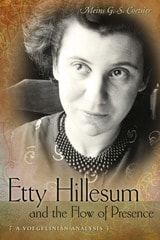
cover of Etty Hillesum and the Flow of Presence: A Voegelinian Analysis

Etty Hillesum and the Flow of Presence

A Voegelinian Analysis

Meins G. S. Coetsier

University of Missouri Press, 2008

Although she died cruelly at Auschwitz at the age of twenty-nine, Etty Hillesum left a lasting legacy of mystical thought in her letters and diaries. Hillesum was a complex and powerful witness to the openness of the human spirit to the call of God, even under the most harrowing circumstances. Her life was as much shaped by Hitler’s regime as was that of philosopher Eric Voegelin, and as Meins Coetsier reveals, her thought lends itself to interpretation from a uniquely Voegelinian perspective.

Etty Hillesum and the Flow of Presence analyzes the life and writings of Hillesum from the standpoint of Voegelin’s views on consciousness—especially his philosophy of luminous participation in the transcendent ground of being. Through a careful reading of her letters and diaries, Coetsier reveals the inner development of Hillesum’s mystically grounded resistance to Nazism as he guides readers through the symbolism of her spiritual journey, making effective use of Voegelin’s analytics of experience and symbolization to trace her path to spiritual truth.

Intertwining the lives, works, and visions of these two mystical thinkers, Coetsier demonstrates his mastery of both Voegelin’s philosophy and Hillesum’s Dutch-language materials. He shows how mystical attunement to the “flow of presence”—Voegelin’s designation for human responsiveness to the divine—is the key to the development of Hillesum’s life and writings. He displays a special affinity for the suffering and grace-filled transformation that she underwent as she approached the end of her life and gained insight into the ultimate purpose of each individual’s contribution to the well-being and maintenance of the human spirit.

Retrieving one of the lesser-known but most compelling figures of the Holocaust, Etty Hillesum and the Flow of Presence is an original contribution to both Voegelin and Hillesum scholarship that reflects these writers’ strong valuation of the human person. It presents Hillesum’s life and work in an original and provocative context, shedding new light on her experiences and their symbolizations while further broadening the application of Voegelin’s thought
[more]
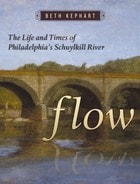
cover of Flow: The Life and Times of Philadelphia's Schuylkill River

Flow

The Life and Times of Philadelphia's Schuylkill River

Beth Kephart

Temple University Press, 2014
The Schuylkill River-the name in Dutch means "hidden creek"-courses many miles, turning through Philadelphia before it yields to the Delaware. "I am this wide. I am this deep. A tad voluptuous, but only in places," writes Beth Kephart, capturing the voice of this natural resource in Flow.
An award-winning author, Kephart's elegant, impressionistic story of the Schuylkill navigates the beating heart of this magnificent water source. Readers are invited to flow through time-from the colonial era and Ben Franklin's death through episodes of Yellow Fever and the Winter of 1872, when the river froze over-to the present day. Readers will feel the silt of the Schuylkill's banks, swim with its perch and catfish, and cruise-or scull-downstream, from Reading to Valley Forge to the Water Works outside center city.
Flow's lush narrative is peppered with lovely, black and white photographs and illustrations depicting the river's history, its people, and its gorgeous vistas. Written with wisdom and with awe for one of the oldest friends of all Philadelphians, Flow is a perfect book for reading while the ice melts, and for slipping in your bag for your own visit to the Schuylkill.
[more]
cover of Knowledge and the Flow of Information

Knowledge and the Flow of Information

Fred I. Dretske

CSLI, 1999
An attempt to develop a theory of knowledge and philosophy of mind using ideas derived from the mathematical theory of communication developed by Claude Shannon. Information is seen as an objective commodity defined by the dependency relations between distinct events. Knowledge is then analyzed as information caused belief. Perception is the delivery of information caused belief. Perception is the delivery of information in analog form (experience) for conceptual utilization by cognitive mechanisms. The final chapters attempt to develop a theory of meaning (or belief content) by viewing meaning as a certain kind of information-carrying role.
[more]
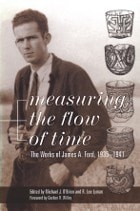
cover of Measuring the Flow of Time: The Works of James A. Ford, 1935-1941

Measuring the Flow of Time

The Works of James A. Ford, 1935-1941

James A. Ford, edited by R. Lee Lyman and Michael J. O'Brien

University of Alabama Press, 1999

This collection of Ford's works focuses on the development of ceramic chronology—a key tool in Americanist archaeology.
[more]
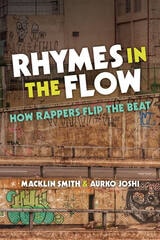
cover of Rhymes in the Flow: How Rappers Flip the Beat

Rhymes in the Flow

How Rappers Flip the Beat

Macklin Smith and Aurko Joshi

University of Michigan Press, 2020

Despite its global popularity, rap has received little scholarly attention in terms of its poetic features. Rhymes in the Flow systematically analyzes the poetics (rap beats, rhythms, rhymes, verse and song structures) of many notable rap songs to provide new insights on rap artistry and performance. Defining and describing the features of what rappers commonly call flow, the authors establish a theory of the rap line as they trace rap’s deepest roots and stylistic evolution—from Anglo-Saxon poetry to Lil Wayne—and contextualize its complex poetics. Rhymes in the Flow helps explain rap’s wide appeal by focusing primarily on its rhythmic and thematic power, while also claiming its historical, cultural, musical, and poetic importance.
[more]
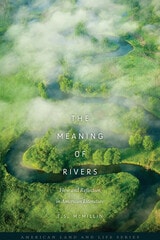
cover of The Meaning of Rivers: Flow and Reflection in American Literature

The Meaning of Rivers

Flow and Reflection in American Literature

T. S. McMillin

University of Iowa Press, 2011

In the continental United States, rivers serve to connect state to state, interior with exterior, the past to the present, but they also divide places and peoples from one another. These connections and divisions have given rise to a diverse body of literature that explores American nature, ranging from travel accounts of seventeenth-century Puritan colonists to magazine articles by twenty-first-century enthusiasts of extreme sports. Using pivotal American writings to determine both what literature can tell us about rivers and, conversely, how rivers help us think about the nature of literature, The Meaning of Rivers introduces readers to the rich world of flowing water and some of the different ways in which American writers have used rivers to understand the world through which these waters flow.
      Embracing a hybrid, essayistic form—part literary theory, part cultural history, and part fieldwork—The Meaning of Rivers connects the humanities to other disciplines and scholarly work to the land. Whether developing a theory of palindromes or reading works of American literature as varied as Henry David Thoreau's A Week on the Concord and Merrimack Rivers and James Dickey’s Deliverance, McMillin urges readers toward a transcendental retracing of their own interpretive encounters.
      The nature of texts and the nature of “nature” require diverse and versatile interpretation; interpretation requires not only depth and concentration but also imaginative thinking, broad-mindedness, and engaged connection-making. By taking us upstream as well as down, McMillin draws attention to the potential of rivers for improving our sense of place and time.
[more]