Results by title
12 books match the query 'Construction industry'
"Without Blare of Trumpets"
Walter Drew, The National Erectors' Association, and the Open Shop Movement, 1903-1957Sidney Fine
University of Michigan Press, 1995
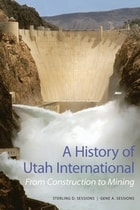
A History of Utah International
From Construction to MiningSterling D Sessions
University of Utah Press, 2005
The story of how the Utah Construction Company, founded in Ogden, Utah in 1900, became Utah International, a multinational corporation, is known to historians of the American West but perhaps not by the general public. The publication of this book remedies that omission.
During its first decades, the company built railroads and dams and was one of the Six Companies Consortium that built Hoover Dam. Utah Construction was also engaged in numerous war-contract activities during World War II. In the postwar period, the company expanded its activities into mining and land development and moved its headquarters to San Francisco. Changing its name to Utah Construction and Mining, and eventually to Utah International, the corporation became one of the most successful multinational mining companies in the world. In 1976, Utah International and General Electric negotiated the largest yet corporate merger in the United States.
Based on the Utah International archives housed in the Stewart Library at Weber State University, the story of Utah International describes more than projects: it is also the story of how two remarkable entrepreneurs, Marriner Stoddard Eccles and Edmund Wattis Littlefield, transformed the company incorporated in 1900 by the Wattis brothers into the largest and most profitable mining company in the United States.
Broken Buildings, Busted Budgets
How to Fix America's Trillion-Dollar Construction IndustryBarry B. LePatner with Robert E. Wright and Timothy C. Jacobson
University of Chicago Press, 2007
With three decades of experience representing clients that include eminent architects and engineers, as well as corporations, institutions, and developers, LePatner has firsthand knowledge of the bad management, ineffective supervision, and insufficient investment in technology that plagues the risk-averse construction industry. In an engaging and direct style, he here pinpoints the issues that underlie the industry’s woes while providing practical tips for anyone in the business of building, including advice on the precise language owners should use during contract negotiations.
Armed with Broken Buildings, Busted Budgets, everyone involved in the purchase or renovation of a building or any structure—from homeowners seeking to remodel to civic developers embarking on large-scale projects—has the information they need to change this antiquated industry, one project at a time.
“LePatner describes what is wrong with the current system and suggests ways that architects can help—by retaking their rightful place as master builders.”—Fred A. Bernstein, Architect Magazine
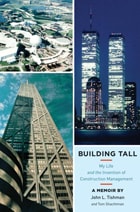
Building Tall
My Life and the Invention of Construction ManagementJohn L. Tishman and Tom Shachtman
University of Michigan Press, 2011
"John Tishman is a true pioneer in the Construction Management industry. Through his CM leadership, some of America's most well-known buildings have been brought to successful completion."
---Bruce D'Agostino, president and chief executive, Construction Management Association of America
"Building Tall will provide readers with insights into John Tishman's career as a visionary engineer, landmark builder, and great businessman. Responsible for some of the construction world's most magnificent projects, John is one of the preeminent alumni in the history of Michigan Engineering. His perspectives have helped me throughout my time as dean, and his impact will influence generations of Construction Management professionals and students."
---David C. Munson, Jr., Robert J. Vlasic Dean of Engineering, University of Michigan
In this memoir, University of Michigan graduate John L. Tishman recounts the experiences and rationale that led him to create the entirely new profession now recognized and practiced as Construction Management. It evolved from his work as the construction lead of the "owner/builder" firm Tishman Realty and Construction, and his personal role as hands-on Construction Manager in the building of an astonishing array of what were at the time the world's tallest and most complex projects. These include
- The world's first three 100-story towers---the original "twin towers" of the World Trade Center in Manhattan and the Hancock Tower in Chicago.
- The Epcot Center at Disney World.
- The Renaissance Center in Detroit.
- New York's Madison Square Garden.
Tishman interweaves the stories behind the construction of these and many other important buildings and projects with personal reminiscences of his dealings with Henry Ford, Jr., Disney's Michael Eisner, casino magnate Steve Wynn, and many others into a practical history of the field of Construction Management, which he pioneered.
This book will be of interest not only to a general public interested in the stories and personalities behind many of the most iconic construction projects of the post–World War II period in the United States but to students of engineering and architecture and members of the new field of Construction Management.
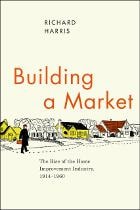
Building a Market
The Rise of the Home Improvement Industry, 1914-1960Richard Harris
University of Chicago Press, 2012
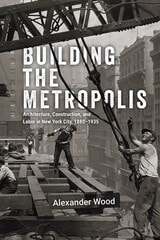
Building the Metropolis
Architecture, Construction, and Labor in New York City, 1880–1935Alexander Wood
University of Chicago Press, 2025
Between the 1880s and the 1930s, New York City experienced explosive growth as nearly a million buildings, dozens of bridges and tunnels, hundreds of miles of subway lines, and thousands of miles of streets were erected to meet the needs of an ever-swelling population. This landscape—jagged with skyscrapers, rattling with the sound of mass transit, alive with people—made the city world-famous.
Building the Metropolis offers a revelatory look at this era of urban development by asking, “Who built New York, and how?” Focusing on the work of architects, builders, and construction workers, Alexander Wood chronicles the physical process of the city’s rapid expansion. New York’s towering buildings and busy thoroughfares aren’t just stylish or structural marvels, Wood shows, but the direct result of the many colorful personalities who worked in one of the city’s largest industries. This development boom drew on the resources of the whole community and required money, political will, creative vision, entrepreneurial drive, skilled workmanship, and hard physical labor. Wood shows this to be an even larger story as well. As cities became nodes in a regional, national, and global economy, the business of construction became an important motor of economic, political, and social development. While they held drastically different views on the course of urban growth, machine politicians, reformers, and radicals alike were all committed to city building on an epic scale.
Drawing on resources that include city archives and the records of architecture firms, construction companies, and labor unions, Building the Metropolis tells the story of New York in a way that’s epic, lively, and utterly original.
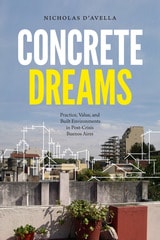
Concrete Dreams
Practice, Value, and Built Environments in Post-Crisis Buenos AiresNicholas D'Avella
Duke University Press, 2019

Craftsmanship and the Michigan Union Carpenter
Philip A. Korth
University of Wisconsin Press, 1991
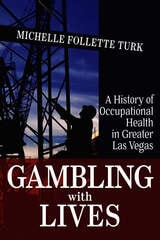
Gambling With Lives
A History of Occupational Health in Greater Las VegasMichelle Follette Turk
University of Nevada Press, 2020
A History of Occupational Health and Safety examines the work, hazards, and health and safety programs from the early building of the railroad through the construction of the Hoover Dam, chemical manufacturing during World War II, nuclear testing, and dense megaresort construction on the Las Vegas Strip. In doing so, this comprehensive chronicle reveals the long and unfortunate history of exposing workers, residents, tourists, and the environment to dangerous work—all while exposing the present and future to crises in the region. Complex interactions and beliefs among the actors involved are emphasized, as well as how the medical community interpreted and responded to the risks posed.
Few places in the United States contain this mixture of industrial and postindustrial sites, the Las Vegas area offers unique opportunities to evaluate American occupational health during the twentieth century, and reminds us all about the relevancy of protecting our workers.
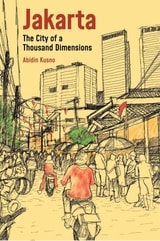
Jakarta
City of a Thousand DimensionsAbidin Kusno
National University of Singapore Press, 2023
Indonesian writer Seno Gumira Ajidarma has called Jakarta a city of a thousand dimensions. A megacity of 30 million under threat from rising sea levels and temperatures, Jakarta and its resilient residents improvise and thrive. This book teases out some of the dimensions that have given shape to contemporary Jakarta, including the city’s expanded flexibility in accommodating capital and labor, and the consistent lack of planning that can be understood as a result of both politics and the poetics of governing in the region. Jakarta is essential reading for those seeking to understand one of Asia's most dynamic cities.
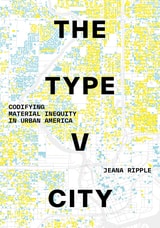
The Type V City
Codifying Material Inequity in Urban AmericaJeana Ripple
University of Texas Press, 2025
How building codes shaped material, social, and environmental landscapes in American cities.
Almost every American city contains neighborhoods dominated by wood frame construction—light, cheap, combustible, and requiring the lowest upfront investment of labor and material in the building industry. Known as a Type V (five) construction in the terminology of building codes, these buildings became ubiquitous in the American urban landscape thanks to the abundance of timber, housing affordability aspirations, and the adoption of a uniform code.
In The Type V City, Jeana Ripple examines the social and spatial history of building codes and material patterns in five cities—New York, Tampa, Chicago, Philadelphia, and Seattle—to reframe the stories of America’s building priorities, methods, negotiations, and assumptions. By examining the development of building materials and codes alongside the environmental, social, economic, and political context of each city’s development, Ripple reveals previously overlooked connections between the power structures underpinning regulatory evolution and the impacts that lay just beyond the frame of city builders’ priorities. Handsomely illustrated and informed by both archival research and insights enabled by contemporary data analysis, The Type V City critiques the homogenous construction practices underlying US urbanization and raises pointed questions for future generations of data-driven city planners and architects.
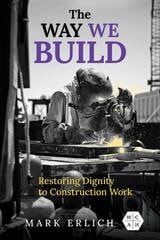
The Way We Build
Restoring Dignity to Construction WorkMark Erlich
University of Illinois Press, 2023
Mark Erlich blends long-view history with his personal experience inside the building trades to explain one of our economy’s least understood sectors. Erlich’s multifaceted account includes the dynamics of the industry, the backdrop of union policies, and powerful stories of everyday life inside the trades. He offers a much-needed overview of construction’s past and present while exploring roads to the future.