Results by title

8 books match the query 'Contemporary Literature'
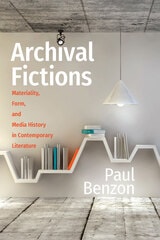
cover of Archival Fictions: Materiality, Form, and Media History in Contemporary Literature

Archival Fictions

Materiality, Form, and Media History in Contemporary Literature

Paul Benzon

University of Massachusetts Press, 2021

Technological innovation has long threatened the printed book, but ultimately, most digital alternatives to the codex have been onscreen replications. While a range of critics have debated the benefits and dangers of this media technology, contemporary and avant-garde writers have offered more nuanced considerations.

Taking up works from Andy Warhol, Kevin Young, Don DeLillo, and Hari Kunzru, Archival Fictions considers how these writers have constructed a speculative history of media technology through formal experimentation. Although media technologies have determined the extent of what can be written, recorded, and remembered in the immediate aftermath of print's hegemony, Paul Benzon argues that literary form provides a vital means for critical engagement with the larger contours of media history. Drawing on approaches from media poetics, film studies, and the digital humanities, this interdisciplinary study demonstrates how authors who engage technology through form continue to imagine new roles for print literature across the late twentieth and early twenty-first centuries.
[more]
cover of Art, Theory, Revolution: The Turn to Generality in Contemporary Literature

Art, Theory, Revolution

The Turn to Generality in Contemporary Literature

Mitchum Huehls

The Ohio State University Press, 2022
Can form be political? Do specific aesthetic and literary forms necessarily point us toward a progressive or reactionary politics? Artists, authors, and critics like to imagine so, but what happens when they lose control of the politics of their forms? In Art, Theory, Revolution: The Turn to Generality in Contemporary Literature, Mitchum Huehls argues that art’s interest in revolution did not end with the twentieth century, as some critics would have it, but rather that the relationship between literary forms and politics has been severed, resulting in a twenty-first century investment in forms of generality such as genre, gesture, constructivism, and abstraction. Focusing on three particular domains (art, theory, and revolution) in which the relationship between form and politics has collapsed, Huehls shows how twenty-first-century US fiction writers such as Chris Kraus, Percival Everett, Jonathan Safran Foer, Rachel Kushner, Salvador Plascencia, and Sheila Heti are turning to forms of generality that lead us toward a more modest, ad hoc, context-dependent way to think about the politics of form. The result is the first major study of generality in literature.
[more]
cover of Between Human and Divine: The Catholic Vision in Contemporary Literature

Between Human and Divine

The Catholic Vision in Contemporary Literature

Mary Reichardt

Catholic University of America Press, 2010
Between Human and Divine is the first collection of scholarly essays published on a wide variety of contemporary (post 1980) Catholic literary works and artists. Its aim is to introduce readers to recent and emerging writers and texts in the tradition.
[more]
cover of Contemporary Literature and the State: A special issue of Contemporary Literature 49:4 (Winter 2008)

Contemporary Literature and the State

A special issue of Contemporary Literature 49:4 (Winter 2008)

Matthew Hart

University of Wisconsin Press, 2009
Contemporary Literature and the State challenges the critical opposition between the monolithic state and the individual artist. The volume collects essays on writers as different as Samuel Beckett and Ngozi Adichie and covers historical and geographical contexts from Yorkshire to Singapore, San Francisco to Cape Town. Featuring new and established critical voices, Contemporary Literature and the State is an important new contribution to debates about the politics of literature, coming at a time when state power appears both more arbitrary and more necessary than ever.
[more]
cover of Curating Worlds: Museum Practices in Contemporary Literature

Curating Worlds

Museum Practices in Contemporary Literature

Emma Bond

Northwestern University Press, 2025

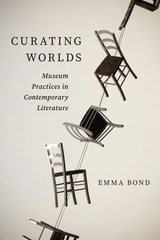
Showing how museum practices shed new light on literary form

How and why do books deploy objects in order to narrate the past? To answer this question, Emma Bond sifts through collections of objects stored in boxes, drawers, baskets, and displayed on shelves in contemporary texts by authors such as Valeria Luiselli, Maaza Mengiste, Orhan Pamuk, and Olga Tokarczuk and interprets them using a framework of museum practices. These practices, which include collection, curation, conservation, and display, have helped to turn real-life museums into three-dimensional narrative spaces. Curating Worlds: Museum Practices in Contemporary Literature shows how we can use this same set of practices to shed light on literary form itself: how stories are created, shaped, and communicated. Harnessing museum practices as an innovative lens for critical interpretation, Bond provides a fresh theoretical framework to engage with the meanings of object collections in literature and to make sense of the lives, and afterlives, of things today.
[more]
cover of Futurity: Contemporary Literature and the Quest for the Past

Futurity

Contemporary Literature and the Quest for the Past

Amir Eshel

University of Chicago Press, 2012
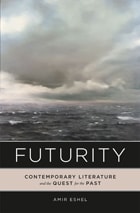
When looking at how trauma is represented in literature and the arts, we tend to focus on the weight of the past. In this book, Amir Eshel suggests that this retrospective gaze has trapped us in a search for reason in the madness of the twentieth century’s catastrophes at the expense of literature’s prospective vision. Considering several key literary works, Eshel argues in Futurity that by grappling with watershed events of modernity, these works display a future-centric engagement with the past that opens up the present to new political, cultural, and ethical possibilities—what he calls futurity.
 
Bringing together postwar German, Israeli, and Anglo-American literature, Eshel traces a shared trajectory of futurity in world literature. He begins by examining German works of fiction and the debates they spurred over the future character of Germany’s public sphere. Turning to literary works by Jewish-Israeli writers as they revisit Israel’s political birth, he shows how these stories inspired a powerful reconsideration of Israel’s identity. Eshel then discusses post-1989 literature—from Ian McEwan’s Black Dogs to J. M. Coetzee’s Diary of a Bad Year—revealing how these books turn to events like World War II and the Iraq War not simply to make sense of the past but to contemplate the political and intellectual horizon that emerged after 1989. Bringing to light how reflections on the past create tools for the future, Futurity reminds us of the numerous possibilities literature holds for grappling with the challenges of both today and tomorrow.
[more]
cover of Immigrant Fictions: Contemporary Literature in an Age of Globalization

Immigrant Fictions

Contemporary Literature in an Age of Globalization

Rebecca L. Walkowitz

University of Wisconsin Press, 2007
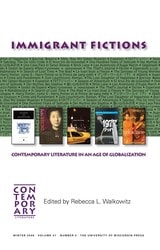
Immigrant Fictions is a groundbreaking collection that brings together studies of world literature, book history, narrative theory, and the contemporary novel to challenge methods of critical reading based on national models of literary culture. Contributors suggest that contemporary novels by immigrant writers need to be read across several geographies of production, circulation, and translation. Analyzing work by David Peace, George Lamming, Caryl Phillips, Iva Pekarkova, Yan Geling, Theresa Hak Kyung Cha, Anchee Min, and Monica Ali, these essays take up a range of critical topics, including the transnational book and the migrant writer, the comparative reception history of postcolonial fiction, transnational criticism and Asian-American literature in the U. S., mobility and feminism in translation, linguistic mediation and immigrating fictions, migration and the politics of narrative form.
[more]
cover of Make Waves: Water in Contemporary Literature and Film

Make Waves

Water in Contemporary Literature and Film

Paula Anca Farca

University of Nevada Press, 2019

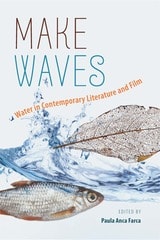
Water is a symbol of life, wisdom, fertility, purity, and death. Water also sustains and nourishes, irrigates our crops, keeps us clean and healthy, and contributes to our energy needs. But a strain has been put on our water resources as increased energy demands combine with the effects of climate change to create a treacherous environment. Individuals and communities around the globe increasingly face droughts, floods, water pollution, water scarcity, and even water wars. We tend to address and solve these concerns through scientific and technological innovations, but social and cultural analyses and solutions are needed as well.

In this edited collection, contributors tackle current water issues in the era of climate change using a wide variety of recent literature and film. At its core, this collection demonstrates that water is an immense reservoir of artistic potential and an agent of historical and cultural exchange. Creating familiar and relatable contexts for water dilemmas, authors and directors of contemporary literary texts and films present compelling stories of our relationships to water, water health, ecosystems, and conservation. They also explore how global water problems affect local communities around the world and intersect with social and cultural aspects such as health, citizenship, class, gender, race, and ethnicity.

This transformative work highlights the cultural significance of water—the source of life and a powerful symbol in numerous cultures. It also raises awareness about global water debates and crises.

 
[more]