Results by title
13 books match the query 'Innocence'
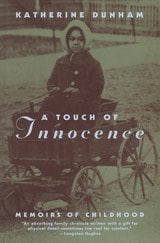
A Touch of Innocence
A Memoir of ChildhoodKatherine Dunham
University of Chicago Press, 1994
In stark prose, she tells of growing up in both black and white households and of the divisions of race and class in Chicago that become the harsh realities of her young life. A riveting narrative of one girl's struggle to transcend the painful confusions of a family and culture in turmoil, Dunham's story is full of the clarity, candor, and intelligence that lifted her above her troubled beginnings.
"A Touch of Innocence is an absorbing family chronicle written with a gift for physical detail sometimes too real for comfort. In quietly graphic prose the growing girl, the slightly older brother, the ambitious father and the kind stepmother are pictured in such human terms that when their lives get tied into harder and harder knots beyond their undoing, one can only continue to read helplessly as doom closes in upon the household."—Langston Hughes, New York Herald Tribune
"A Touch of Innocence is one of the most extraordinary life stories I have ever read . . . . The content of this book is so heartbreaking that only the strongest artistic skills can keep it from leaking out into sobbing self-pity, but Katherine Dunham's art contains it, understands it and refuses to be overwhelmed by its terrors."—Elizabeth Janeway, New York Times
"The first eighteen years of the famous dancer and choreographer's life are brought vividly to the reader in this first volume of her autobiography. She writes of what it is like to be a special, gifted young woman growing up in a racially mixed family in the American Middle West. A beautiful, touching and sometimes discomforting book."—Publishers Weekly
"As writing it is honest, searing, graphic and touching, giving us a rather heartbreaking early view of the young American Negro who was later to make a name for herself as a dancer and choreographer."—Arthur Todd, Saturday Review
Accounts of Innocence
Sexual Abuse, Trauma, and the SelfJoseph E. Davis
University of Chicago Press, 2004
Focusing on the case of adult survivors of childhood sexual abuse, Joseph E. Davis shows how the idea of innocence shaped the emergence of trauma psychology and continues to inform accounts of the past (and hopes for the future) in therapy with survivor clients. His findings shed new light on the ongoing debate over recovered memories of abuse. They challenge the notion that victim accounts are an evasion of personal responsibility. And they suggest important ways in which trauma psychology has had unintended and negative consequences for how victims see themselves and for how others relate to them.
An important intervention in the study of victimization in our culture, Accounts of Innocence will interest scholars of clinical psychology, social work, and sociology, as well as therapists and victim activists.
INNOCENCE
JEAN NORDHAUS
The Ohio State University Press, 2006
Innocence And Power
Individualism in Twentieth-century AmericaEdited by Gordon H. Mills
University of Texas Press, 1965
America believes in individualism—but what is individualism? This question leads into unexpected areas of life and thought. It touches upon almost every intellectual discipline concerned with human life. Any answer, to be taken seriously, must recognize this complexity. A broad understanding of the meaning of individualism can be reached only through the insight of many workers in many different fields.
This volume brings together seven of the United States' most distinguished scholars, representing the fields of anthropology, economics, government, history, literature, and philosophy. The trend of their thinking can be suggested by a few excerpts from their essays:
• "An individual divorced from a cultural milieu would not be a human being; he would be a mere hominid."—Leslie A. White
• "The trouble is that 'individual' is a stop-thought word. It numbs the mind, so that once it has been uttered, inquiry stops."—Clarence E. Ayres
• "Not even an individual's perfections are his alone; like his imperfections, they are group-made."— Paul A. Samuelson
• "The twentieth century has witnessed the emergence of a new kind of American individualism, the individualism of nonconformity, which actually challenges the compulsive democracy of the Lockean individualism by which the nation has centrally and historically lived."—Louis Hartz
• "The individualism of the American frontier was an individualism of personal self-reliance and of hardihood and stamina rather than an individualism of intellectual independence and personal self-expression."—David M. Potter
• "The present conditions in which the self must be preserved are radically different from those of a generation, even a decade ago. . . . The dogmatics of present self-assertion are defined and pursued in an existential circumstance."—Frederick J. Hoffman
• "Individuality means creativity, and 'laws of creativity,' other than statistical ones, are, I hold, a contradiction in terms."—Charles Hartshorne
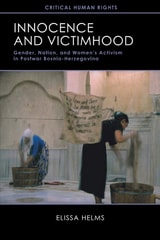
Innocence and Victimhood
Gender, Nation, and Women’s Activism in Postwar Bosnia-HerzegovinaElissa Helms
University of Wisconsin Press, 2013
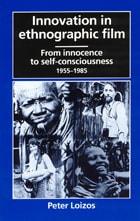
Innovation in Ethnographic Film
From Innocence to Self-Consciousness, 1955-1985Peter Loizos
University of Chicago Press, 1993
Loizos begins by reviewing works of John Marshall and Timothy Asch in the 1950s and moves through those of Jean Rouch, Robert Gardner, and many more recent filmmakers. He reveals a steady course of innovations along four dimensions: production technology, subject matter, strategies of argument, and ethnographic authentication. His analyses of individual films address questions of realism, authenticity, genre, authorial and subjective voice, and representation of the films' creators as well as their subjects.
Innovation in Ethnographic Film, as a systematic and iluminating review of developments in ethnographic film, will be an important resource for the growing number of anthropologists and other scholars who use such films as tools for research and teaching.
New Songs of Innocence
S. J. Hodson
St. Augustine's Press, 2025
But poetry isn't just play, however clever. Language is a serious matter. It's not working unless it opens us up to our world. Beauty is at once at odds with and requires truth. In this ancient quarrel between poetry and philosophy, S.J. Hodson comes down squarely on both sides. At its best poetry teaches without preaching. If Blake's Songs of Innocence calls established religion into question to recover wonder at the religious spirit that gives birth to it, Hodson's New Songs of Innocence means to call into question science, the established religion of our time, to wonder again at what gives birth to it, the scientific spirit. […]
[Hodson] writes not so much to please his audience as to tease and teach his audience-and what a pleasure it is to be taught this way. Making poetry is for him serious-a way to think, a way to wonder. But he is also masterful at playfully seducing others to wonder. If 'philosophy begins in wonder,' these poems are invitations to philosophize. S.J. Hodson is one of the most interesting and talented poets of his generation, and yet he remains known to only a very few. In New Songs of Innocence, we are graced with his first published book of poetry. We should be thankful and hope it will not be his last." Taken from the Introduction by Michael Davis
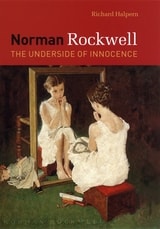
Norman Rockwell
The Underside of InnocenceRichard Halpern
University of Chicago Press, 2006
Norman Rockwell’s scenes of everyday small-town life are among the most indelible images in all of twentieth-century art. While opinions of Rockwell vary from uncritical admiration to sneering contempt, those who love him and those who dismiss him do agree on one thing: his art embodies a distinctively American style of innocence.
In this sure-to-be controversial book, Richard Halpern argues that this sense of innocence arises from our reluctance—and also Rockwell’s—to acknowledge the often disturbing dimensions of his works. Rockwell’s paintings frequently teem with perverse acts of voyeurism and desire but contrive to keep these acts invisible—or rather, hidden in plain sight, available for unacknowledged pleasure but easily denied by the viewer.
Rockwell emerges in this book, then, as a deviously brilliant artist, a remorseless diagnostician of the innocence in which we bathe ourselves, and a continuing, unexpected influence on contemporary artists. Far from a banal painter of the ordinary, Halpern argues, Rockwell is someone we have not yet dared to see for the complex creature he is: a wholesome pervert, a knowing innocent, and a kitschy genius.
Provocative but judicious, witty but deeply informed, Norman Rockwell is a book rich in suggestive propositions and eye-opening details—one that will change forever the way we think about this American icon and his works.
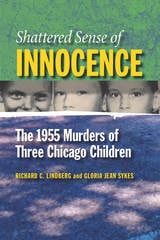
Shattered Sense of Innocence
The 1955 Murders of Three Chicago ChildrenRichard C. Lindberg and Gloria Jean Sykes
Southern Illinois University Press, 2006
In October 1955, three Chicago boys were found murdered, their bodies naked and dumped in a ditch in Robinson Woods on the city’s Northwest Side. A community and a nation were shocked. In a time when such crimes against children were rare, the public was transfixed as local television stations aired stark footage of the first hours of the investigation. Life and Newsweek magazines published exclusive stories the following week. When Kenneth Hansen was convicted and sentenced for the murders, the case was considered solved—until questions were raised about Hansen’s presumed guilt.
Shattered Sense of Innocence: The 1955 Murders of Three Chicago Children tells the gripping story of the three murdered boys—thirteen-year-old John Schuessler, his eleven-year-old brother, Anton, and thirteen-year-old Bobby Peterson—and the quest to find and bring to justice their killer. Authors Richard C. Lindberg and Gloria Jean Sykes recount the bungled 1955 police investigation, the failures of multiple law enforcement agencies, and the subsequent convictions of Kenneth Hansen, in 1995 and 2002, and present new information concerning two suspects overlooked by police for five decades.
The authors deftly examine all sides of this tragic story, drawing on exclusive interviews with law enforcement agents, with horse trainers affiliated with the so-called horse mafia, and with the man convicted of the murders, Kenneth Hansen. This intensely intimate account offers a rare glimpse into one community and examines how these atrocious crimes altered public perceptions nationwide. Shattered Sense of Innocence, which is also a story of political controversy, a determined federal agent’s quest for justice, and a community’s loss of innocence, includes fifty illustrations.
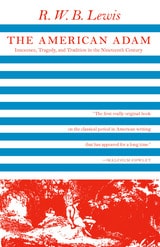
The American Adam
Innocence, Tragedy, and Tradition in the Nineteenth CenturyR. W. B. Lewis
University of Chicago Press, 1959

The American Adam
Innocence, Tragedy, and Tradition in the Nineteenth CenturyR. W. B. Lewis
University of Chicago Press, 1959
Intellectual history is viewed in this book as a series of "great conversations"—dramatic dialogues in which a culture's spokesmen wrestle with the leading questions of their times. In nineteenth-century America the great argument centered about De Crèvecoeur's "new man," the American, an innocent Adam in a bright new world dissociating himself from the historic past. Mr. Lewis reveals this vital preoccupation as a pervasive, transforming ingredient of the American mind, illuminating history and theology as well as art, shaping the consciousness of lesser thinkers as fully as it shaped the giants of the age. He traces the Adamic theme in the writings of Emerson, Thoreau, Hawthorne, Melville, Henry James, and others, and in an Epilogue he exposes their continuing spirit in the works of F. Scott Fitzgerald, William Faulkner, Ralph Ellison, J. D. Salinger, and Saul Bellow.

The End of Innocence?
Indonesian Islam and the Temptations of RadicalismAndrée Feillard, Rémy Madinier
National University of Singapore Press, 2013
The Temptation of Innocence in the Dramas of Arthur Miller
Terry Otten
University of Missouri Press, 2002