Results by title
9 books match the query 'Cookbooks'
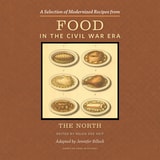
A Selection of Modernized Recipes from Food in the Civil War
The NorthJennifer Billock
Michigan State University Press, 2015
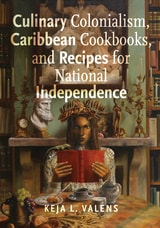
Culinary Colonialism, Caribbean Cookbooks, and Recipes for National Independence
Keja L. Valens
Rutgers University Press, 2024
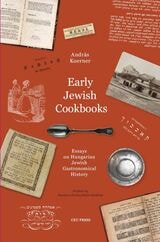
Early Jewish Cookbooks
Essays on Hungarian Jewish Gastronomical HistoryAndrás Koerner
Central European University Press, 2022
Winner of the Association of Jewish Libraries' 2022 Judaica Bibliography Award.
The seven essays in this volume focus such previously unexplored subjects as the world’s first cookbook printed in Hebrew letters, published in 1854, and a wonderful 19th-century Jewish cookbook, which in addition to its Hungarian edition was also published in Dutch in Rotterdam. The author entertainingly reconstructs the history of bólesz, a legendary yeast pastry that was the specialty of a famous, but long defunct Jewish coffeehouse in Pest, and includes the modernized recipe of this distant relative of cinnamon rolls. Koerner also tells the history of the first Jewish bookstore in Hungary (founded as early as in 1765!) and examines the influence of Jewish cuisine on non-Jewish food.
In this volume András Koerner explores key issues of Hungarian Jewish culinary culture in greater detail and more scholarly manner than what space restrictions permitted in his previous work Jewish Cuisine in Hungary: A Cultural History, also published by CEU Press, which received the prestigious National Jewish Book Award in 2020. The current essays confirm the extent to which Hungarian Jewry was part of the Jewish life and culture of the Central European region before their almost total language shift by the turn of the 20th century.
Food in the Civil War Era
The NorthHelen Zoe Veit
Michigan State University Press, 2014
Food in the Civil War Era
The SouthHelen Zoe Veit
Michigan State University Press, 2015
Food, Texts, and Cultures in Latin America and Spain
Rafael Climent-Espino
Vanderbilt University Press, 2020
The studies span from the Middle Ages to the twenty-first century, and the contributing scholars occupy diverse fields within Latin American and Hispanic Studies. As such, their essays showcase eclectic critical and theoretical approaches to the subject of Latin American and Iberian food.
Food, Texts, and Cultures in Latin America and Spain also introduces the first English-language publication of works from such award-winning scholars as Adolfo Castañón of the Mexican Academy of Language; Sergio Ramírez, winner of the 2017 Miguel de Cervantes Prize in Literature; and Carmen Simón Palmer, winner of the 2015 Julián Marías Prize for Research.
Inventing Authenticity
How Cookbook Writers Redefine Southern IdentityCarrie Helms Tippen
University of Arkansas Press, 2018
Tippen discusses the act of cooking as a way to perform—and therefore reinforce—the identity associated with a recipe, and the complexities inherent in attempts to portray the foodways of a region marked by a sometimes distasteful history. Inventing Authenticity meets this challenge head-on, delving into problems of cultural appropriation and representations of race, thorny questions about authorship, and more. The commonplace but deceptively complex southern cookbook can sustain our sense of where we come from and who we are—or who we think we are.
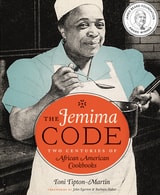
The Jemima Code
Two Centuries of African American CookbooksBy Toni Tipton-Martin; forewords by John Egerton and Barbara Haber
University of Texas Press, 2015
Winner, James Beard Foundation Book Award, 2016
Art of Eating Prize, 2015
BCALA Outstanding Contribution to Publishing Citation, Black Caucus of the American Library Association, 2016
Women of African descent have contributed to America’s food culture for centuries, but their rich and varied involvement is still overshadowed by the demeaning stereotype of an illiterate “Aunt Jemima” who cooked mostly by natural instinct. To discover the true role of black women in the creation of American, and especially southern, cuisine, Toni Tipton-Martin has spent years amassing one of the world’s largest private collections of cookbooks published by African American authors, looking for evidence of their impact on American food, families, and communities and for ways we might use that knowledge to inspire community wellness of every kind.
The Jemima Code presents more than 150 black cookbooks that range from a rare 1827 house servant’s manual, the first book published by an African American in the trade, to modern classics by authors such as Edna Lewis and Vertamae Grosvenor. The books are arranged chronologically and illustrated with photos of their covers; many also display selected interior pages, including recipes. Tipton-Martin provides notes on the authors and their contributions and the significance of each book, while her chapter introductions summarize the cultural history reflected in the books that follow. These cookbooks offer firsthand evidence that African Americans cooked creative masterpieces from meager provisions, educated young chefs, operated food businesses, and nourished the African American community through the long struggle for human rights. The Jemima Code transforms America’s most maligned kitchen servant into an inspirational and powerful model of culinary wisdom and cultural authority.
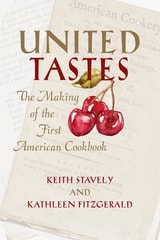
United Tastes
The Making of the First American CookbookKeith Stavely
University of Massachusetts Press, 2017
Winner of the 2017 Bruce Fraser Award from the Association for the Study of Connecticut History
The Library of Congress has designated American Cookery (1796) by Amelia Simmons one of the eighty-eight “Books That Shaped America.” Its recognition as “the first American cookbook” has attracted an enthusiastic modern audience of historians, food journalists, and general readers, yet until now American Cookery has not received the sustained scholarly attention it deserves. Keith Stavely and Kathleen Fitzgerald's United Tastes fills this gap by providing a detailed examination of the social circumstances and culinary tradition that produced this American classic.
Situating American Cookery within the post-Revolutionary effort to develop a distinct national identity, Stavely and Fitzgerald demonstrate the book's significance in cultural as well as culinary terms. Ultimately the separation between these categories dissolves as the authors show that the formation of “taste,” in matters of food as well as other material expressions, was essential to building a consensus on what it was to be American. United Tastes explores multiple histories—of food, cookbooks, printing, material and literary culture, and region—to illuminate the meaning and affirm the importance of America's first cookbook.