Results by title
19 books match the query 'Corrections'
COVID Diagnosed the System
Lessons from the Pandemic in Massachusetts PrisonsBridget Conley
Rutgers University Press, 0
The American criminal justice system was in flux in 2020, a clash of possibilities for reform, retrenchment, and radical change—nowhere more so than in Massachusetts, which had just passed major criminal justice reform. The COVID-19 pandemic interrupted the moment with life-threatening force, ravaging people held in prisons and jails across the country. However, it did not so much create new deprivations and suffering as it exposed prisons as sites of physical, institutional, and psychological violence that do not make communities safer. At the same time, advocates for people in prisons—including many incarcerated and formerly incarcerated people—seized on the pandemic’s disruptions to demand change. Detailing the first year of the pandemic inside the Massachusetts state prison system, this book argues that the history of the pandemic inside prisons exposed both the cruelties of incarceration and the power of change when it is led by directly affected people.

Crime, Corrections, and the COVID-19 Pandemic
Responses and Adaptations in the U.S. Criminal Justice SystemEdited by Breanne Pleggenkuhle and Joseph A. Schafer
Southern Illinois University Press, 2025
Analyses of crime and justice in an unprecedented time
While COVID-19 lockdowns affected nearly everyone worldwide, feelings of anxiety and fear were exacerbated for those already entangled in the criminal justice system. Scholars recognized the unique opportunity to study crime and the justice system’s response during this period, though they soon realized that determining the pandemic’s effects would be a complicated, nuanced process.
Crime, Corrections, and the COVID-19 Pandemic features analyses and findings from more than thirty contributors in eleven essays. The collection examines the multifaceted social, economic, cultural, legislative, and policy responses to COVID-19 and their impacts on crime and justice. It also explores how professionals across the criminal justice system—police officers, campus police officers, attorneys, judges, correctional staff, and community supervision agents—adapted to unprecedented challenges.
The book provides real-world evidence of how unconventional solutions and groundbreaking practices were implemented in response to a global crisis. Contributors analyze how incarcerated individuals, their families, and their supervisors dealt with the fear of transmission, medical care, and death. Their findings, which are necessarily dependent on timing, place, measurement, and operationalization, include both change and stasis, both negative and positive outcomes. For instance, while minor and property-related offenses initially declined, violent crimes like homicide and intimate partner violence increased. Drug usage patterns changed, leading to a rise in opioid overdoses, and despite the rise in digital interactions, there was no significant difference in self-reported cybervictimization. Furthermore, rates of gang-related crimes did not decrease. Policy and public health responses reshaped criminal activities, influencing the methods and motivations behind theft, child and elder abuse, and other offenses. This volume includes in-depth examinations of certain often-overlooked crimes, such as labor trafficking, and provides direct insights into the job challenges faced by criminal justice professionals, from probation personnel to labor rights advocates.
Emerging innovations in health risk management within correctional facilities led to increased awareness and focus on specific types of crime. Responses to the pandemic revealed significant challenges, such as burnout among justice system personnel, difficulties in adapting and innovating, and challenges in providing services to vulnerable populations.
Through diverse perspectives and empirical approaches ranging from advanced statistical analysis to qualitative interviews, Crime, Corrections, and the COVID-19 Pandemic offers a comprehensive exploration of the complexities that affect research results. It showcases the resilience and innovation within the criminal justice field and details the challenges professionals in this area tackled during a universally trying time, presenting valuable lessons for future crises.
Do Prisons Make Us Safer?
The Benefits and Costs of the Prison BoomSteven Raphael
Russell Sage Foundation, 2009
Incarceration and Race in Michigan
Grounding the National Debate in State PracticeLynn O. Scott
Michigan State University Press, 2019
Intermediate Sanctions in Corrections
Gail Caputo
University of North Texas Press, 2004

Japanese Corrections
Managing Convicted Offenders in an Orderly SocietyElmer H. Johnson
Southern Illinois University Press, 1996
In his analysis of the current Japanese corrections system, internationally respected criminologist Elmer H. Johnson focuses on three basic questions: What are the characteristics of the major programmatic elements? How do various personnel carry out their programmatic responsibilities? Why are the various duties and activities carried out in a particular way?
Johnson points out that compared with the United States, where prison populations are huge and often violent, Japan incarcerates relatively few criminals. In 1989, for example, Japan locked up only 34 out of every 100,000 citizens while the United States imprisoned people at a rate of 271 per 100,000. Examining the cultural differences leading to this disparity, Johnson notes that in Japan prosecutors are reluctant to refer defendants for trial and the courts often suspend sentences for convicted felons.
In Japan, two bureaus—the Correction Bureau and the Rehabilitation Bureau—administer all Japanese correctional activities. Placing these bureaus in the organizational scheme of the Ministry of Justice, Johnson traces the history, describes the organizational ideologies, and outlines the special features of each.
A central feature of the Japanese penal system is the industrial prison, a concept that met such fierce opposition in the United States that it lost almost all access to the free market by the 1940s. Johnson traces the history of the industrial prison, noting particularly that the industrial operations in adult institutions explain in part why there is almost no violence and why few try to escape. Juvenile institutions enjoy similar success; even though they produce no industrial products, the juvenile training schools emphasize education, vocational training, and counseling.
Japanese correctional officers rely heavily on the community and on unsalaried volunteer probation officers for supervision of probationers and parolees. Although Japanese courts regard probationary supervision as too punitive for most convicted defendants and return many to the community without supervision, the probation caseload is weighty. Johnson describes the responsibilities and operations of the Regional Parole Boards. He also discusses the aid hostels (halfway houses) that are primarily operated by private organizations and that serve released or paroled prisoners.
Johnson sums up by noting that both the Correction Bureau and the Rehabilitation Bureau depend on the overall operations of police, prosecutors, and judges. More broadly, he asserts, both bureaus are creatures of Japanese society and culture. The assets and disadvantages of the bureaus reflect society’s reluctance to sentence defendants to prison and, to a lesser extent, the reluctance to place them on probationary supervision.
Life beside Bars
Confinement and Capital in an American Prison TownHeath Pearson
Duke University Press, 2024
Linking Community and Corrections in Japan
Elmer H. Johnson with Carol H. Jonnson
Southern Illinois University Press, 2000
Completing Elmer H. Johnson’s impressive three-volume examination of corrections in Japan, Linking Community and Corrections in Japan (written with the assistance of Carol H. Johnson) focuses on the Rehabilitation Bureau’s responsibilities regarding probation, parole, and aftercare as well as the Correction Bureau’s role in Japan’s version of community-oriented corrections. Johnson first outlines the tasks of the Rehabilitation Bureau, then turns to historical and contemporary views of community and corrections. In discussions of the probation and parole system for both adults and juveniles, he describes in detail the Japanese version of supervision and the return of prisoners to the community. One strength of this study is Johnson’s impartiality. As an investigator, he functions as a "friend of the court," an adviser who is free to conduct an objective pursuit of the fundamental strengths and shortcomings of the Japanese prison system. He also follows the Foucauldian dictum: "With the prisons there would be no sense of limiting oneself to discourses about prisons; just as important are the discourses which arise within the prison, the decisions and regulations which are among its constituent elements, its means of functioning, along with its strategies."
Mean Lives, Mean Laws
Oklahoma's Women PrisonersSharp, Susan F
Rutgers University Press, 2014
The culmination of over a decade of original research, Mean Lives, Mean Laws exposes a Kafkaesque criminal justice system, one that has no problem with treating women as collateral damage in the War on Drugs or with stripping female prisoners of their parental rights. Yet it also reveals the individual histories of women who were jailed in Oklahoma, providing intimate portraits of their lives before, during, and after their imprisonment. We witness the impoverished and abusive conditions in which many of these women were raised; we get a vivid portrait of their everyday lives behind bars; and we glimpse the struggles that lead many ex-convicts to fall back into the penal system.
Through an innovative methodology that combines statistical rigor with extensive personal interviews, Sharp shows how female incarceration affects not only individuals, but also families and communities. Putting a human face on a growing social problem, Mean Lives, Mean Laws raises important questions about both the state of Oklahoma and the state of the nation.
Prison Land
Mapping Carceral Power across Neoliberal AmericaBrett Story
University of Minnesota Press, 2019
From broken-window policing in Detroit to prison-building in Appalachia, exploring the expansion of the carceral state and its oppressive social relations into everyday life
Prison Land offers a geographic excavation of the prison as a set of social relations—including property, work, gender, and race—enacted across various landscapes of American life. Prisons, Brett Story shows, are more than just buildings of incarceration bound to cycles of crime and punishment. Instead, she investigates the production of carceral power at a range of sites, from buses to coalfields and from blighted cities to urban financial hubs, to demonstrate how the organization of carceral space is ideologically and materially grounded in racial capitalism.
Story’s critically acclaimed film The Prison in Twelve Landscapes is based on the same research that informs this book. In both, Story takes an expansive view of what constitutes contemporary carceral space, interrogating the ways in which racial capitalism is reproduced and for which police technologies of containment and control are employed. By framing the prison as a set of social relations, Prison Land forces us to confront the production of new carceral forms that go well beyond the prison system. In doing so, it profoundly undermines both conventional ideas of prisons as logical responses to the problem of crime and attachment to punishment as the relevant measure of a transformed criminal justice system.
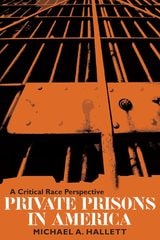
Private Prisons in America
A Critical Race PerspectiveMichael A. Hallett
University of Illinois Press, 2006
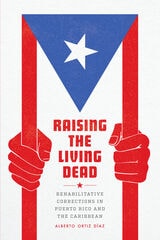
Raising the Living Dead
Rehabilitative Corrections in Puerto Rico and the CaribbeanAlberto Ortiz Díaz
University of Chicago Press, 2023
Raising the Living Dead is a history of Puerto Rico’s carceral rehabilitation system that brings to life the interactions of incarcerated people, their wider social networks, and health care professionals. Alberto Ortiz Díaz describes the ways that multiple communities of care came together both inside and outside of prisons to imagine and enact solution-oriented cultures of rehabilitation from the 1930s to the 1960s. Scientific and humanistic approaches to well-being were deliberately fused to raise the “living dead,” an expression that reemerged in the modern Caribbean to refer to prisoners. These reform groups sought to raise incarcerated people physically, mentally, socially, spiritually, and civically.
The book is based on deep, original archival research into the Oso Blanco (White Bear) penitentiary in Puerto Rico, yet it situates its study within Puerto Rico’s broader carceral archipelago and other Caribbean prisons. The agents of this history include not only physical health professionals, but also psychologists and psychiatrists, social workers, spiritual and religious practitioners, and, of course, the prisoners and their families. By following all these groups and emphasizing the interpersonal exercise of power, Ortiz Díaz tells a story that goes beyond debates about structural and social control.
The book addresses key issues in the history of prisons and the histories of medicine and belief, including how prisoners’ different racial, class, and cultural identities shaped their incarceration and how professionals living in a colonial society dealt with the challenge of rehabilitating prisoners for citizenship.
Raising the Living Dead is not just about convicts, their immediate interlocutors, and their contexts, however, but about how together these open a window into the history of social uplift projects within the (neo)colonial societies of the Caribbean. There is no book like this in Caribbean historiography; few examine these themes in the larger literature on the history of prisons.
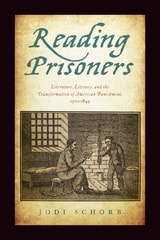
Reading Prisoners
Literature, Literacy, and the Transformation of American Punishment, 1700–1845Schorb, Jodi
Rutgers University Press, 2014
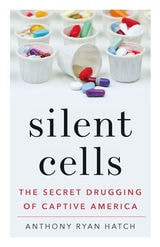
Silent Cells
The Secret Drugging of Captive AmericaAnthony Ryan Hatch
University of Minnesota Press, 2019
A critical investigation into the use of psychotropic drugs to pacify and control inmates and other captives in the vast U.S. prison, military, and welfare systems
For at least four decades, U.S. prisons and jails have aggressively turned to psychotropic drugs—antidepressants, antipsychotics, sedatives, and tranquilizers—to silence inmates, whether or not they have been diagnosed with mental illnesses. In Silent Cells, Anthony Ryan Hatch demonstrates that the pervasive use of psychotropic drugs has not only defined and enabled mass incarceration but has also become central to other forms of captivity, including foster homes, military and immigrant detention centers, and nursing homes.
Silent Cells shows how, in shockingly large numbers, federal, state, and local governments and government-authorized private agencies pacify people with drugs, uncovering patterns of institutional violence that threaten basic human and civil rights. Drawing on publicly available records, Hatch unearths the coercive ways that psychotropics serve to manufacture compliance and docility, practices hidden behind layers of state secrecy, medical complicity, and corporate profiteering.
Psychotropics, Hatch shows, are integral to “technocorrectional” policies devised to minimize public costs and increase the private profitability of mass captivity while guaranteeing public safety and national security. This broad indictment of psychotropics is therefore animated by a radical counterfactual question: would incarceration on the scale practiced in the United States even be possible without psychotropics?
The Corrigible and the Incorrigible
Science, Medicine, and the Convict in Twentieth-Century GermanyGreg Eghigian
University of Michigan Press, 2015
The Powers that Punish
Prison and Politics in the Era of the "Big House", 1920-1955Charles Bright
University of Michigan Press, 1996
In a pathbreaking study of a major state prison, Michigan's Jackson State Penitentiary during the middle years of this century, Charles Bright addresses several aspects of the history and theory of punishment. The study is an institutional history of an American penitentiary, concerned with how a carceral regime was organized and maintained, how prisoners were treated and involved in the creation of a regime of order and how penal practices were explained and defended in public. In addition, it is a meditation upon punishment in modern society and a critical engagement with prevailing theories of punishment coming out of liberal, Marxist and post structuralist traditions. Deploying theory critically in a historic narrative, it applies new, relational theories of power to political institutions and practices. Finally, in studying the history of the Jackson prison, Bright provides a rich account, full of villains and a few heroes, of state politics in Michigan during a period of rapid transition between the 1920s to the 1950s.
The book will be of direct relevance to criminologists and scholars of punishment, and to historians concerned with the history of punishment and prisons in the United States. It will also be useful to political scientists and historians concerned with exploring new approaches to the study of power and with the transformation of state politics in the 1930s and 1940s. Finally Bright tells a story which will fascinate students of modern Michigan history.
Charles Bright is a historian and Lecturer at the Residential College of the University of Michigan.
Whose Rights?
Counterterrorism and the Dark Side of American Public OpinionClem Brooks
Russell Sage Foundation, 2013
Why Are So Many Americans in Prison?
Steven Raphael
Russell Sage Foundation, 2013
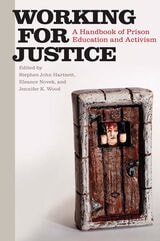
Working for Justice
A Handbook of Prison Education and ActivismEdited by Stephen John Hartnett, Eleanor Novek, and Jennifer K. Wood
University of Illinois Press, 2013