Results by title
28 books match the query 'Cosmos'
A Cosmos of Desire
The Medieval Latin Erotic Lyric in English ManuscriptsThomas C Moser, Jr.
University of Michigan Press, 2004
Thomas C. Moser, Jr. explores the fascinating body of medieval Latin erotic poetry found in English manuscripts. His study describes the intellectual and social context from which the great erotic songs of the twelfth century emerged, and examines a variety of erotic poems, from school exercises to the magnificent lyrics found in Arundel 384. He also illuminates the influence of neoplatonic philosophy on this poetry, explicating key neoplatonic texts and applying that analysis in close readings of erotic lyrics from the same period and milieu.
A Cosmos of Desire will interest scholars of medieval literature as well as specialists in Latin poetry and philosophy. Students of Middle English literature will find that it fills an important gap in our understanding of English intellectual life between the twelfth and the fourteenth century. All Latin prose and poetry is translated, some works for the first time, and the book is generously illustrated with photographs of the manuscripts discussed.
Thomas C. Moser, Jr. is Associate Professor of English at the University of Maryland, College Park.
Alcman and the Cosmos of Sparta
Gloria Ferrari
University of Chicago Press, 2008
Anthropomorphizing the Cosmos
Middle Preclassic Lowland Maya Figurines, Ritual, and TimePrudence M. Rice
University Press of Colorado, 2019
Presenting original data, Anthropomorphizing the Cosmos offers insight into the synchronous appearance of fired-clay figurines with the emergence of societal complexity in and beyond Mesoamerica. Rice situates these Preclassic Maya figurines in the broader context of Mesoamerican human figural representation, identifies possible connections between anthropomorphic figurine heads and the origins of calendrics and other writing in Mesoamerica, and examines the role of anthropomorphic figurines and zoomorphic musical instruments in Preclassic Maya ritual. The volume shows how community rituals involving the figurines helped to mitigate the uncertainties of societal transitions, including the beginnings of settled agricultural life, the emergence of social differentiation and inequalities, and the centralization of political power and decision-making in the Petén lowlands.
Literature on Maya ritual, cosmology, and specialized artifacts has traditionally focused on the Classic period, with little research centering on the very beginnings of Maya sociopolitical organization and ideological beliefs in the Middle Preclassic. Anthropomorphizing the Cosmos is a welcome contribution to the understanding of the earliest Maya and will be significant to Mayanists and Mesoamericanists as well as nonspecialists with interest in these early figurines
Being and the Cosmos
Robert E. Wood
Catholic University of America Press, 2018
In Being and the Cosmos<\i>, the tack against both is to make explicit the character of the mind that sees and thinks, that actively takes up commitment to the truth available in the disciplines involved. The basic ground of this position rests upon the functioning of the notion of Being that opens up the question of the character of the Whole and the human being’s place in it. Thus position the treatment of the notion of Being as foundation and as orientation toward the Whole between the attack on reductionism and on deconstruction and anti-foundationalism. Wood concludes with a multidimensional sketch of an evolutionary view of the cosmos whose initial phases contain the potentialities for life, sensibility, and intellect as cosmic telos. The holism of contemporary physics has to be reconfigured in terms of this observation. Both reductionists and dualists should know that matter itself has to be re-minded and that mind itself matters.
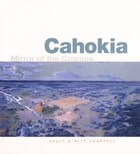
Cahokia
Mirror of the CosmosSally A. Kitt Chappell
University of Chicago Press, 2002
Chappell seeks to answer fundamental questions about this unique, yet still relatively unknown space, which was designated a UNESCO World Heritage Site in 1982. How did this swampy land become so amenable to human life? Who were the remarkable people who lived here before the Europeans came? Why did the whole civilization disappear so rapidly? What became of the land in the centuries after the Mississippians abandoned it? And finally, what can we learn about ourselves as we look into the changing meaning of Cahokia through the ages?
To explore these questions, Chappell probes a wide range of sources, including the work of astronomers, geographers, geologists, anthropologists, and archaeologists. Archival photographs and newspaper accounts, as well as interviews with those who work at the site and Native Americans on their annual pilgrimage to the site, bring the story up to the present.
Tying together these many threads, Chappell weaves a rich tale of how different people conferred their values on the same piece of land and how the transformed landscape, in turn, inspired different values in them-cultural, spiritual, agricultural, economic, and humanistic.
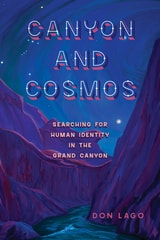
Canyon and Cosmos
Searching for Human Identity in the Grand CanyonDon Lago
University of Nevada Press, 2025
Named one of the 2026 Southwest Books of the Year
Throughout history, humans have sought creation stories to define our identity and affirm our connections with the universe, diverse life forms, and one another. Over the last two centuries, science has delivered a bold new creation story full of immense time and space, extraordinary objects, and powerful natural forces. Science ideas can seem mere abstractions, but at the Grand Canyon, better than anywhere else on Earth, our new creation story is manifested physically and powerfully.
A major work of literary nature writing, Canyon and Cosmos takes readers on a journey through the Grand Canyon's deep time, geological forces, and biological evolution, making them very real, personal, and meaningful. Through decades of hiking and kayaking, author Don Lago has gotten to know the canyon intimately. Ranging through world mythologies and Native American spirituality, he explores how humans have sought to understand the universe. He confronts existential questions of whether humans can find enough meaning in the scientific cosmos. Through poetic prose, symbolism, and philosophical insight, he shows how existence itself is our deepest source of life and meaning.
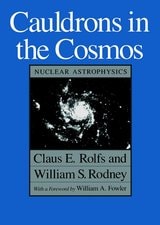
Cauldrons in the Cosmos
Nuclear AstrophysicsClaus E. Rolfs and William S. Rodney
University of Chicago Press, 1988
"One could not wish for a better account of the current state of knowledge (and uncertainty) about nuclear reactions in stars."—B. E. J. Pagel, Nature
"Written in an informal style that those uninitiated into the jargon of nuclear astrophysics and astronomy will find readable and illuminating. . . . A useful and long-awaited introduction to nuclear astrophysics."—G. J. Mathews, Science

Chaos to Cosmos
Studies in Biblical Patterns of CreationSusan Niditch
SBL Press, 2000
Now Available from Duke University Press
A fresh look at Genesis 1:11 from the perspectives of comparative literature and cultural anthropology. Susan Niditch reveals how Hebrew narratives of chaos, creation, and cosmos structure a mythic-literary world and create an order for human existence. Both the scholar and the student will find Niditch’s imaginative interpretation illuminating.
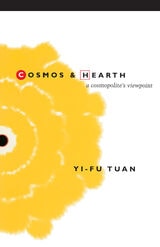
Cosmos And Hearth
A Cosmopolite’s ViewpointYi-Fu Tuan
University of Minnesota Press, 1999
In a volume that represents the culmination of his life’s work in considering the relationship between culture and landscape, eminent scholar Yi-Fu Tuan argues that “cosmos” and “hearth” are two scales that anchor what it means to be fully and happily human. Illustrating this contention with examples from both his native China and his home of the past forty years, the United States, Tuan proposes a revised conception of culture, one thoroughly grounded in one’s own society but also embracing curiosity about the world. Optimistic and deeply human, this important volume lays out a path to being “at home in the cosmos.”
Hardcover:In this moving meditation on the difficult choices facing humanity in the next millennium, celebrated scholar Yi-Fu Tuan reaffirms his faith in the value of a cosmopolitan worldview. In a volume that represents the culmination of his life's work in considering the relationship between culture and landscape, Tuan argues that “cosmos” and “hearth” are two scales that anchor what it means to be fully and happily human. Hearth is our house and neighborhood, family and kinfolk, habit and custom. Cosmos, by contrast, is the larger reality-world, civilization, and humankind. Tuan addresses the extraordinary revival of interest in the hearth in recent decades, examining both the positive and negative effects of this renewed concern. Among the beneficent outcomes has been a revival of ethnic culture and sense of place. Negative repercussions abound, however, manifested as an upsurge in superstition, excessive pride in ancestry and custom, and a constricted worldview that when taken together can inflame local passions, leading at times to violent conflict-from riots in American cities to wars in the Balkans. In Cosmos and Hearth, Tuan takes the position that we need to embrace both the sublime and the humble, drawing what is valuable from each. Illustrating the importance of both cosmos and hearth with examples from his country of birth, China, and from his home of the past forty years, the United States, Tuan proposes a revised conception of culture, the “cosmopolitan hearth,” that has the coziness but not the narrowness and bigotry of the traditional hearth. Tuan encourages not only being thoroughly grounded in one’s own culture but also the embracing of curiosity about the world. Optimistic and deeply human, Cosmos and Hearth lays out a path to being “at home in the cosmos.” Born in China and educated in Australia, the Philippines, England, and the United States, Yi-Fu Tuan is professor of geography at the University of Wisconsin, Madison, and the author of Space and Place: The Perspective of Experience (Minnesota, 1977), Landscapes of Fear (Minnesota, 1982), The Good Life (1986), and Passing Strange and Wonderful: Aesthetics, Nature, and Culture (1993). Excerpt: “Thinking yields a twofold gain: although it isolates us from our immediate group it can link us both seriously and playfully to the cosmos-to strangers in other places and times; and it enables us to accept a human condition that we have always been tempted by fear and anxiety to deny, namely, the impermanence of our state wherever we are, our ultimate homelessness. A cosmopolite is one who considers the gain greater than the loss. Having seen something of the splendid spaces, he or she will not want to return, permanently, to the ambiguous safeness of the hearth.”
Cosmos, Self, and History in Baniwa Religion
For Those UnbornBy Robin M. Wright
University of Texas Press, 1998
The Baniwa Indians of the Northwest Amazon have engaged in millenarian movements since at least the middle of the nineteenth century. The defining characteristic of these movements is usually a prophecy of the end of this present world and the restoration of the primordial, utopian world of creation. This prophetic message, delivered by powerful shamans, has its roots in Baniwa myths of origin and creation.
In this ethnography of Baniwa religion, Robin M. Wright explores the myths of creation and how they have been embodied in religious movements and social action—particularly in a widespread conversion to evangelical Christianity. He opens with a discussion of cosmogony, cosmology, and shamanism, and then goes on to explain how Baniwa origin myths have played an active role in shaping both personal and community identity and history. He also explores the concepts of death and eschatology and shows how the mythology of destruction and renewal in Baniwa religion has made the Baniwa people receptive to both Catholic and Protestant missionaries.
Cosmos
An Illustrated History of Astronomy and CosmologyJohn North
University of Chicago Press, 2008
Organizing his history chronologically, North begins by examining Paleolithic cave drawings that clearly chart the phases of the moon. He then investigates scientific practices in the early civilizations of Egypt, Greece, China, and the Americas (among others), whose inhabitants developed sophisticated methods to record the movements of the planets and stars. Trade routes and religious movements, North notes, brought these ancient styles of scientific thinking to the attention of later astronomers, whose own theories—such as Copernicus’ planetary theory—led to the Scientific Revolution.
The work of master astronomers, including Ptolemy, Galileo, Kepler, and Newton, is described in detail, as are modern-day developments in astrophysics, such as the advent of radio astronomy, the brilliant innovations of Einstein, and the many recent discoveries brought about with the help of the Hubble telescope. This new edition brings North’s seminal book right up to the present day, as North takes a closer look at last year’s reclassification of Pluto as a “dwarf” planet and gives a thorough overview of current research.
With more than two hundred illustrations and a comprehensive bibliography, Cosmos is the definitive history of astronomy and cosmology. It is sure to find an eager audience among historians of science and astronomers alike.
Critique and Cosmos
After Misao MiyoshiRob Wilson and Paul A. Bové, special issue editors
Duke University Press, 0
Contributors. Tsering Wangmo Dhompa, Arif Dirlik, Harry Harootunian, Reginald Jackson, Mary Layoun, Christine L. Marran, George Solt, Keijiro Suga, Stefan Tanaka, Chih-ming Wang, Rob Wilson
Fictions of the Cosmos
Science and Literature in the Seventeenth CenturyFrédérique Aït-Touati
University of Chicago Press, 2011
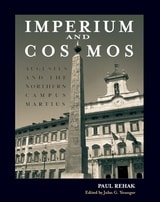
Imperium and Cosmos
Augustus and the Northern Campus MartiusPaul Rehak; Edited by John G. Younger
University of Wisconsin Press, 2006
Rehak closely examines the artistic imagery on these monuments, providing numerous illustrations, tables, and charts. In an analysis firmly contextualized by a thorough discussion of the earlier models and motifs that inspired these Augustan monuments, Rehak shows how the princeps used these on such an unprecedented scale as to truly elevate himself above the common citizen.
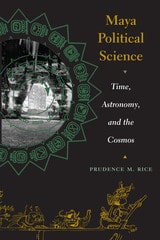
Maya Political Science
Time, Astronomy, and the CosmosBy Prudence M. Rice
University of Texas Press, 2004
How did the ancient Maya rule their world? Despite more than a century of archaeological investigation and glyphic decipherment, the nature of Maya political organization and political geography has remained an open question. Many debates have raged over models of centralization versus decentralization, superordinate and subordinate status—with far-flung analogies to emerging states in Europe, Asia, and Africa. But Prudence Rice asserts that neither the model of two giant "superpowers" nor that which postulates scores of small, weakly independent polities fits the accumulating body of material and cultural evidence.
In this groundbreaking book, Rice builds a new model of Classic lowland Maya (AD 179-948) political organization and political geography. Using the method of direct historical analogy, she integrates ethnohistoric and ethnographic knowledge of the Colonial-period and modern Maya with archaeological, epigraphic, and iconographic data from the ancient Maya. On this basis of cultural continuity, she constructs a convincing case that the fundamental ordering principles of Classic Maya geopolitical organization were the calendar (specifically a 256-year cycle of time known as the may) and the concept of quadripartition, or the division of the cosmos into four cardinal directions. Rice also examines this new model of geopolitical organization in the Preclassic and Postclassic periods and demonstrates that it offers fresh insights into the nature of rulership, ballgame ritual, and warfare among the Classic lowland Maya.

Measuring the Cosmos
How Scientists Discovered the Dimensions of the UniverseDavid H. Clark and Matthew D.H. Clark
Rutgers University Press, 2004
Humans have always viewed the heavens with wonder and awe. The skies have inspired reflection on the vastness of space, the wonder of creation, and humankind’s role in the universe. In just over one hundred years, science has moved from almost total ignorance about the actual distances to the stars and earth’s place in the galaxy to our present knowledge about the enormous size, mass, and age of the universe. We are reaching the limits of observation, and therefore the limits of human understanding. Beyond lies only our imagination, seeded by the theories of physics. In Measuring the Cosmos, science writers David and Matthew Clark tell the stories of both the well-known and the unsung heroes who played key roles in these discoveries. These true accounts reveal ambitions, conflicts, failures, as well as successes, as the astonishing scale and age of the universe were finally established. Few areas of scientific research have witnessed such drama in the form of ego clashes, priority claims, or failed (or even falsified) theories as that resulting from attempts to measure the universe. Besides giving credit where long overdue, Measuring the Cosmos explains the science behind these achievements in accessible language sure to appeal to astronomers, science buffs, and historians.
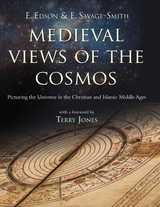
Medieval Views of the Cosmos
E. Edson and E. Savage-Smith
Bodleian Library Publishing, 2004
In the medieval world system—inherited by Christians and Muslims from the Greeks and Romans, and modified by their own religious tenets—spheres bearing the planets and stars wheeled around the earth, and at every level there was a moral lesson for humanity and a satisfying metaphor for the nature of God. The authors of this volume explain how the medieval view of the universe was harmonious on theological and practical levels, providing answers to the most puzzling of questions.
Medieval Views of the Cosmos is an engaging and beautifully illustrated introduction to a world where every moment was a theater of human drama directed by the hand of God.

Picturing the Cosmos
A Visual History of Early Soviet Space EndeavorIina Kohonen
Intellect Books, 2017
Kohonen ably examines each image, elucidating how visual media helped to anchor otherwise abstract political and intellectual concepts of the future and modernization within the Soviet Union. The USSR mapped and named the cosmos, using new media to stake a claim to this new territory and incorporating it into the daily lives of its citizens. Soviet cosmonauts, meanwhile, were depicted as prototypes of the perfect Communist man, representing modernity, good taste, and the aesthetics of the everyday. Across five heavily illustrated chapters, Picturing the Cosmos navigates and critically examines these utopian narratives, highlighting the rhetorical tension between propaganda, censorship, art, and politics.

Picturing the Cosmos
Hubble Space Telescope Images and the Astronomical SublimeElizabeth A. Kessler
University of Minnesota Press, 2012
The vivid, dramatic images of distant stars and galaxies taken by the Hubble Space Telescope have come to define how we visualize the cosmos. In their immediacy and vibrancy, photographs from the Hubble show what future generations of space travelers might see should they venture beyond our solar system. But their brilliant hues and precise details are not simply products of the telescope’s unprecedented orbital location and technologically advanced optical system. Rather, they result from a series of deliberate decisions made by the astronomers who convert raw data from the Hubble into spectacular pictures by assigning colors, adjusting contrast, and actively composing the images, balancing the desire for an aesthetically pleasing representation with the need for a scientifically valid one.
In Picturing the Cosmos, Elizabeth A. Kessler examines the Hubble’s deep space images, highlighting the remarkable resemblance they bear to nineteenth-century paintings and photographs of the American West and their invocation of the visual language of the sublime. Drawing on art history and the history of science, as well as interviews with astronomers who work on the Hubble Heritage Project, Kessler traces the ways that the sublime, with its inherent tension between reason and imagination, not only forms the appearance of the images, but also operates on other levels. The sublime informs the dual expression—numeric and pictorial—of digital data and underpins the relevance of the frontier for a new era of exploration performed by our instruments rather than our bodies. Through their engagement with the sublime the Hubble images are a complex act of translation that encourages an experience of the universe as simultaneously beyond humanity’s grasp and within the reach of our knowledge.
Strikingly illustrated with full-color images, this book reveals the scientific, aesthetic, and cultural significance of the Hubble pictures, offering a nuanced understanding of how they shape our ideas—and dreams—about the cosmos and our places within it.
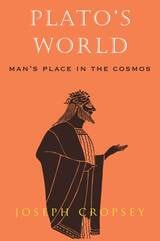
Plato's World
Man's Place in the CosmosJoseph Cropsey
University of Chicago Press, 1995
Cropsey interprets seven of Plato's dialogues—Theaetetus, Euthyphro, Sophist, Statesman, Apology, Crito, and Phaedo—in light of their dramatic consecutiveness and thus as a conceptual and dramatic whole. The cosmos depicted by Plato in these dialogues, Cropsey argues, is often unreasonable, and populated by human beings unaided by gods and dealt with equivocally by nature. Masterfully leading the reader through the seven scenes of the drama, Cropsey shows how they are, to an astonishing degree, concerned with the resources available to help us survive in such a world.
This is a world—and a Plato—quite at odds with most other portraits. Much more than a summary of Plato's thinking, this book is an eloquent, sometimes amusing, often moving guide to the paradoxes and insights of Plato's philosophy.

The Discovery of the World
Maps of the Earth and the CosmosElizabeth Hale
University of Chicago Press, 1985
The Fold
From Your Body to the CosmosLaura U. Marks
Duke University Press, 2024
The Human Place in the Cosmos
Max Scheler; Translated from the German by Manfred S. Frings, Introduction by Eugene Kely
Northwestern University Press, 2009
The Individual and the Cosmos in Renaissance Philosophy
Ernst Cassirer
University of Chicago Press, 2010
This provocative volume, one of the most important interpretive works on the philosophical thought of the Renaissance, has long been regarded as a classic in its field. Ernst Cassirer here examines the changes brewing in the early stages of the Renaissance, tracing the interdependence of philosophy, language, art, and science; the newfound recognition of individual consciousness; and the great thinkers of the period—from da Vinci and Galileo to Pico della Mirandola and Giordano Bruno. The Individual and the Cosmos in Renaissance Philosophy discusses the importance of fifteenth-century philosopher Nicholas Cusanus, the concepts of freedom and necessity, and the subject-object problem in Renaissance thought.
“This fluent translation of a scholarly and penetrating original leaves little impression of an attempt to show that a ‘spirit of the age’ or ‘spiritual essence of the time’ unifies and expresses itself in all aspects of society or culture.”—Philosophy
The Passage to Cosmos
Alexander von Humboldt and the Shaping of AmericaLaura Dassow Walls
University of Chicago Press, 2009
Explorer, scientist, writer, and humanist, Alexander von Humboldt was the most famous intellectual of the age that began with Napoleon and ended with Darwin. With Cosmos, the book that crowned his career, Humboldt offered to the world his vision of humans and nature as integrated halves of a single whole. In it, Humboldt espoused the idea that, while the universe of nature exists apart from human purpose, its beauty and order, the very idea of the whole it composes, are human achievements: cosmos comes into being in the dance of world and mind, subject and object, science and poetry.
Humboldt’s science laid the foundations for ecology and inspired the theories of his most important scientific disciple, Charles Darwin. In the United States, his ideas shaped the work of Emerson, Thoreau, Poe, and Whitman. They helped spark the American environmental movement through followers like John Muir and George Perkins Marsh. And they even bolstered efforts to free the slaves and honor the rights of Indians.
Laura Dassow Walls here traces Humboldt’s ideas for Cosmos to his 1799 journey to the Americas, where he first experienced the diversity of nature and of the world’s peoples—and envisioned a new cosmopolitanism that would link ideas, disciplines, and nations into a global web of knowledge and cultures. In reclaiming Humboldt’s transcultural and transdisciplinary project, Walls situates America in a lively and contested field of ideas, actions, and interests, and reaches beyond to a new worldview that integrates the natural and social sciences, the arts, and the humanities.
To the end of his life, Humboldt called himself “half an American,” but ironically his legacy has largely faded in the United States. The Passage to Cosmos will reintroduce this seminal thinker to a new audience and return America to its rightful place in the story of his life, work, and enduring legacy.
The Pursuit of Harmony
Kepler on Cosmos, Confession, and CommunityAviva Rothman
University of Chicago Press, 2017
Harmony, Rothman shows, was both the intellectual bedrock for and the primary goal of Kepler’s disparate endeavors. But it was also an elusive goal amid the deteriorating conditions of his world, as the political order crumbled and religious war raged. In the face of that devastation, Kepler’s hopes for his theories changed: whereas he had originally looked for a unifying approach to truth, he began instead to emphasize harmony as the peaceful coexistence of different views, one that could be fueled by the fundamentally nonpartisan discipline of mathematics.
Tibes
People, Power, and Ritual at the Center of the CosmosEdited by L. Antonio Curet and Lisa M. Stringer
University of Alabama Press, 2009
The prehistoric civic-ceremonial center of Tibes is located on the southern coast of Puerto Rico, just north of the modern coastal city of Ponce. Protected on two sides by a river, and on the other two sides by hills, this approximately 10.5-acre site remains as fertile and productive today as when first occupied over 2,000 years ago. Such a rich region would have been a choice location for native peoples because of the diversity in all resources, from land, air, and sea--and also symbolically crucial as a liminal space within the landscape. It may have been regarded as a space charged with numen or cosmic energy where different parts of the cosmos (natural vs. supernatural, or world of the living vs. world of the dead) overlap. Archaeological evidence reveals a long occupation, about 1,000 years, possibly followed by an extensive period of sporadic ceremonial use after the site itself was practically abandoned.
In this volume, nineteen Caribbeanists, across a wide academic spectrum, examine the geophysical, paleoethnobotanical, faunal, lithics, base rock, osteology, bone chemistry and nutrition, social landscape, and ceremonial constructs employed at Tibes. These scholars provide a concise, well-presented, comprehensive analysis of the evidence for local level changes in household economy, internal organization, accessibility to economic, religious, and symbolic resources related to the development and internal operation of socially stratified societies in the Caribbean.
World Below
Body and Cosmos in Otomí Indian RitualJacques Galinier
University Press of Colorado, 2004
Drawing upon both Freud and theories of the carnivalesque, Galinier argues that the "world below" (the lower half of the body) provides the foundation for an indigenous metapsychology that is at once very close to and very far away from the Freudian conceptual apparatus.